
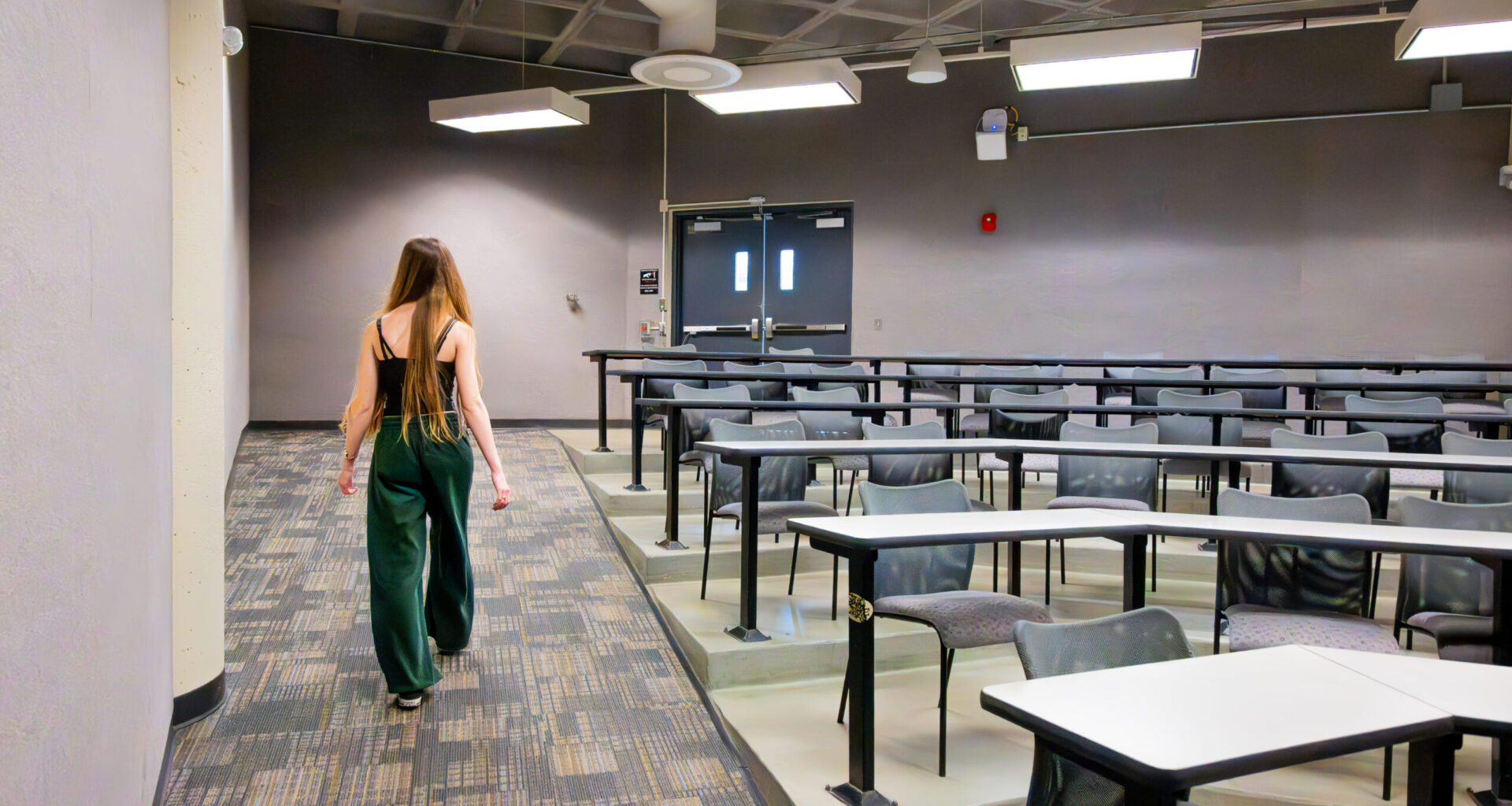
 If you are paying for your classes, you should be able to choose when you go. ORACLE PHOTO/DYLAN SABOL
I woke up for class a few weeks ago and was exhausted. I had a late night doing homework and wasn’t ready mentally to attend a full day of classes.
I was fully prepared to stay asleep and take a day for myself. But then I remembered that my class required attendance.
That meant missing one day wasn’t just about catching up later — it would directly impact my grade.
What should have been a simple decision about my own well-being turned into a calculation of consequences.
Strict attendance policies can feel less like support and more like pressure.
Instead of encouraging students to show up engaged and ready to learn, these rules often push us into classrooms where we are distracted or simply not at our best.
Professors should be more lenient with attendance policies, taking into account that students have lives outside the classroom and sometimes need a break for a day or two.
Related: OPINION: How to survive class registration at USF
The pressure isn’t accidental — it is built into how USF’s attendance policies work.
USF’s general attendance policy states that students are “expected to attend classes.”
But the specifics — like how many absences are allowed or how attendance affects grades — are determined by professors and outlined in their syllabi, according to USF.
This means that, depending on the course, missing even one class can directly affect your overall grade or your enrollment status.
The realization that I could fail based on attendance alone changed the situation completely.
It wasn’t about whether I needed rest anymore. It was about whether I could afford to take it.
I am taking five classes this semester. One of the attendance policies states that I can miss two classes, but after that, my attendance grade drops by 5% for each unexcused absence.
That small margin for absence turns every missed class into a risk and reason to be anxious.
Suddenly being sick, overwhelmed or dealing with something unexpected feels less like a valid reason and more like a penalty.
What makes it even more complicated is that not every class follows the same rules.
Related: USF students trade textbooks for taste tests in these classes
Some professors are strict like mine, enforcing detailed attendance policies.
Others are more lenient and laid-back — like previous professors who didn’t require me to attend class at all.
This inconsistency leaves students trying to navigate a different set of expectations in every classroom.
It raises the questions of what an ideal, university-wide attendance policy should look like — and whether USF should implement a consistent standard across all classes to avoid confusion.
Danila Tuazon, a sophomore health sciences major, said there should be changes to the professor’s attendance policies.
“There should be a guideline more flexible to students because most have other priorities besides school,” Tuazon said. “They should provide resources and flexibility where they can learn in and out of the classroom.”
Her words reflect a reality many students face, but few policies acknowledge.
Professors can offer alternatives such as posting class slides on Canvas, offering reasonable deadline extensions or prioritizing weekly check-ins for students who weren’t able to attend class.
Education should not punish students for balancing responsibilities — it should support them in navigating them.
By rethinking rigid attendance rules, professors can prioritize creating an environment that sets students up to succeed, both in and out of the classroom.