
GULFPORT, Fla. — A vulnerability assessment requested by the city of Gulfport shows storm surge is a significant threat, and officials are working hard to mitigate the effects of future natural disasters.
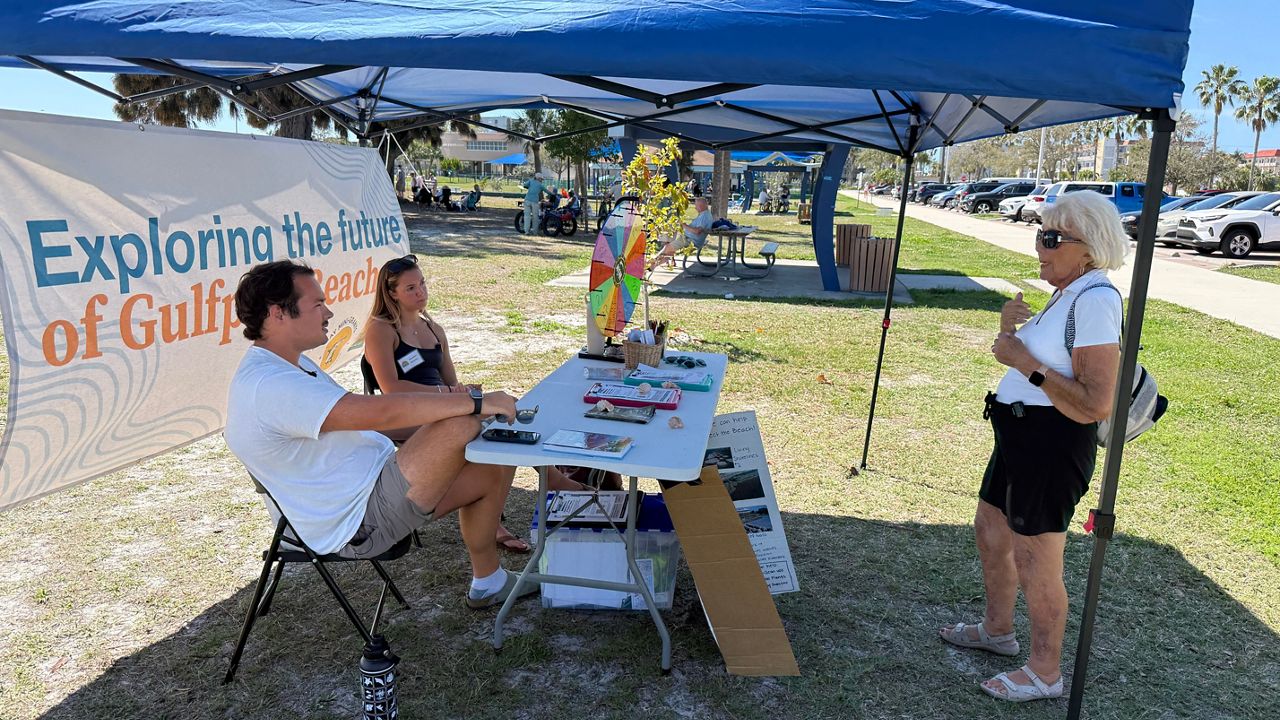
To help in the effort, Eckerd College students are canvassing the community, talking to residents about the solutions they want to see.
What You Need To Know
The city of Gulfport said it’s making sure that Gulfport Beach is strong for potential future storms
The city has already added sand and built a sheet piling head wall
Eckerd College students are surveying Gulfport residents to see what kind of beach resilience projects they want to see
Students will present their results to the city in May
Residents in the area say Gulfport Beach is like a slice of heaven that can’t be found anywhere else.
“It’s peaceful,” resident Jake Glasse said. “As you can hear, it’s quiet. You can lay down near the sand and water.”
Glassey and his wife come to the beach multiple times a week. Not only is it close to home, but he said it’s in better shape than other beaches that were damaged by 2024’s storms.
“They have to preserve what they have here because, as I’m sure you have seen, some places really got beat up bad here and devastated and are not even open yet,” Glassey said.
The city said it wants to make sure the beach infrastructure is strong for the future, focusing on what they learned from Hurricanes Helene and Milton. Kendrix Anderson, the interim Gulfport Public Works director, said crews have already brought in 2,000 cubic yards of sand and installed a sheet piling head wall to help prevent storm surge, and other projects are in the works.
“We’re currently in the infancy stage — working with coastal engineers to look at the feasibility of applying certain measures to help reduce the impact,” Anderson said. “It could be a hardened infrastructure, like rock, or it could be soft infrastructure like mangroves or Florida native plants.”
John Carreiro and Summer Sorensen are student-interns in Eckerd College’s Gulf Scholars program and have been surveying beachgoers all semester.
“The survey goes into how much they would support different resilience-style approaches, such as a living shoreline, how much they know about a living shoreline and how much they would like to see it in their community,” said Carreiro.
The student researchers are hoping to collect 500 surveys, and once they gather the results, that data will be logged and analyzed. In May, they will present their findings to the Gulfport City Council.
Amanda Hagood, the program’s co-director, said some priorities have already emerged.
“So far, high on the list of concerns are things like erosion. Things like wildlife habitat availability on the beach,” she said. “Water quality is another topper on the list.”
Glassey filled out the survey and said he supports cultivating a living shoreline at the beach.
“It has to be done, or this will not survive,” Glassey said.
It’s one idea under consideration to ensure people can enjoy the beach for generations to come.
The city is already working on other resilience projects outside the beach.
Anderson said the city received a grant to build a living shoreline in the marina district, and construction is expected start in June.
The city also applied for another grant to build a living shoreline on 54th Street and Shore Boulevard.