
TAMPA, Fla. — A Tampa company aiming to manufacture lithium batteries in the United States is facing delays as critical equipment remains stuck at the port due to tariff policies.
What You Need To Know
The Lithium Battery Company plans to produce batteries in the U.S.
The company’s equipment has been stuck in Port Tampa Bay for months
The CEO says the company is facing struggles, but is confident the business has a bright future
The project aligns with President Donald Trump’s “America First” agenda, which called for a resurgence in domestic manufacturing.
The Lithium Battery Company had expected to begin production last year after purchasing machinery from China. However, that equipment is currently held at Port Tampa Bay, creating delays that the company’s owner says are costing time, money, and jobs before production has even started.
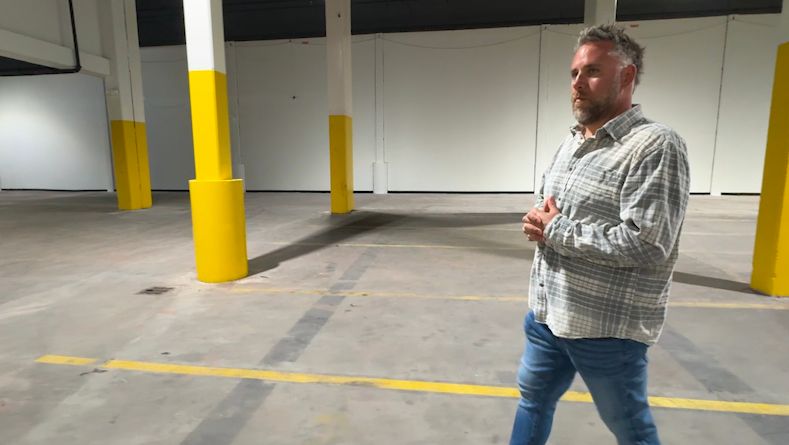
At the company’s facility in South Tampa, CEO Nathan Staron walks through an empty factory, pointing out where the equipment should be installed.
“It’s a very large, sophisticated machine—we have five production lines that are going to fill up this entire space,” Staron said.
Staron said he purchased the equipment in China because it can only be found there, and had planned to have it installed in the U.S.
“We had everything planned out to get our equipment installed,” he said.
Instead, the machinery remains at the port.
“We have 18 40-foot shipping containers sitting at the port outside—stacked on top of each other,” Staron said.
He had hoped to be in full production mode by May last year.
“It has been a long journey since we’ve ordered this equipment—it’s sad,” he said.
Staron said the issue began after applying for tariff exemptions through the Office of the United States Trade Representative. The exemption process is intended to provide relief for importing specialized equipment used in automated assembly lines.
He later learned that the application is on hold. The delay is costing the company both time and money.
“We have rent to pay—bills to pay—unfortunately, we have had to lay off our entire team,” Staron said.
He said the application is under review as part of the USTR’s Section 301 investigation into China.
In 2024, the exclusion process was opened under President Joe Biden, allowing companies to seek tariff relief on specialized manufacturing equipment.
Staron said his company filed before the March 2025 deadline. The application remains active but on hold.
The company is now facing $1,500 per day in storage fees, totaling hundreds of thousands of dollars.
“This is a really unfortunate example of what tariffs do,” Abby Hall, an associate professor of economics at the University of Tampa, said.
She says that onshoring manufacturing can be complex.
“What the U.S. government is asking for is a justification for importing these materials,” Hall said. “Here you have an example of someone who is attempting to do what the policy is intended to do—but is finding he’s actually caught in the crossfire of the policy itself.”
Despite the delays, Staron said he remains determined.
“It has been a long journey since we’ve ordered this equipment—it’s sad—but I’m very determined to get this place moving and rolling and making battery packs,” he said.
Spectrum News reached out to the USTR for an update on the company’s application but has not received a response.
Staron also applied for an exclusionary trade zone, which would allow him to move the equipment into the facility and begin preparations. That request has not yet been approved.