
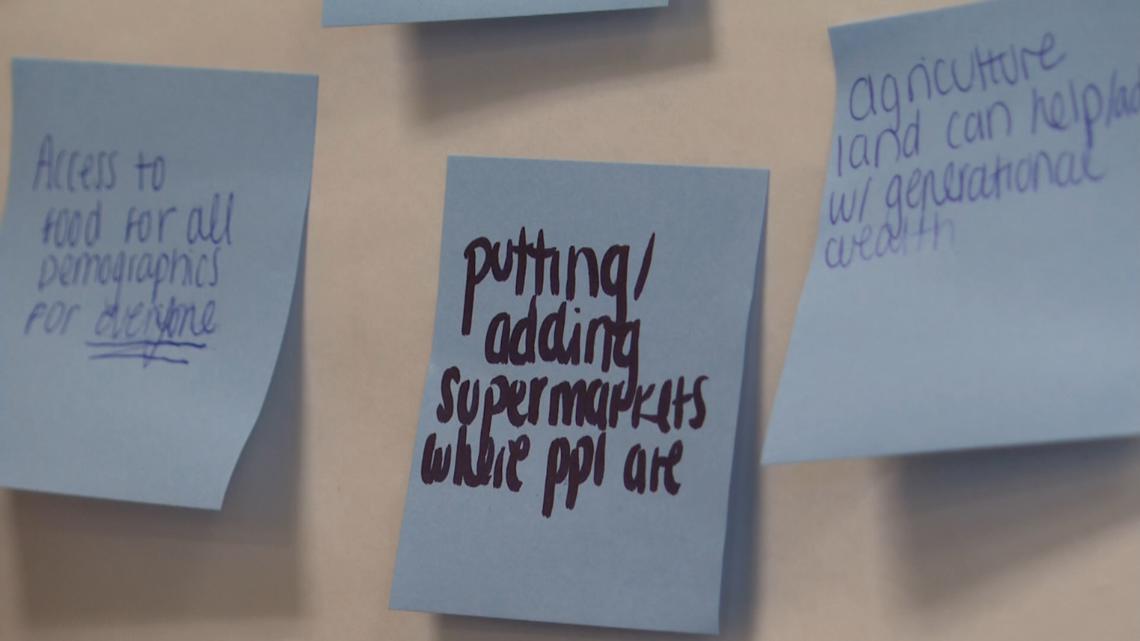
The plan is aimed at reducing food insecurity, waste and access issues in Jacksonville. Monday night, city staff received community input to help shape the plan.
JACKSONVILLE, Fla. — A new effort is underway in Jacksonville to take a closer look at how food is produced, distributed and accessed across the city.
City leaders are developing a “State of the Food” plan aimed at tackling food insecurity, reducing waste, and preparing for future growth, and they are asking the community to help shape it.
At a public meeting Monday night, residents were asked what a successful food plan for Jacksonville would look like. Many pointed to the need for better transportation to and from grocery stores, curbside composting options and efforts to minimize food deserts.
“I think it sounds like an interesting thing the city needs to be doing, help advance food issues,” said Alan Cordova, a longtime Jacksonville resident.
The plan will serve as a roadmap to address food-related needs as the city continues to expand.
City data shows Jacksonville residents generate more than 500 million pounds of food waste each year, something that surprised some attendees.
“I didn’t realize how much food is wasted,” Cordova said.
Community members suggested solutions such as composting programs and stronger food recovery efforts.
Leaders are also examining food access. About 1 in 7 people in Duval County face food insecurity, and nearly 160,000 residents rely on SNAP benefits.
Residents raised concerns about a lack of fresh food at some stores and the need for more grocery locations in underserved areas.
“I noticed that whenever they build a new community of homes, they automatically put in a store, but they fail to remember that there’s other issues where people live,” Cordova said.
City staff say partnerships, funding and education will all play a role in building a more sustainable and resilient food system.
“This is a great, great plan to do, and I just pray everybody gets involved and other organizations get involved,” said Jacksonville resident Muzette Thomas.
Officials say community feedback gathered during meetings like this will help shape the final plan.
“We can’t judge a book by its cover and just say everybody’s okay and they’re not,” Thomas said. “There’s more people out there that’s hungrier than you expect.”
Cordova said he believes the plan could make a meaningful difference.
“It’ll help a lot with people who have desperate needs for food and help enhance the distribution of it,” he said.
The city will continue collecting public input before finalizing the plan this summer. The next community meeting is scheduled for Wednesday from 5:30 to 7 p.m. at the Highlands Regional Library.