
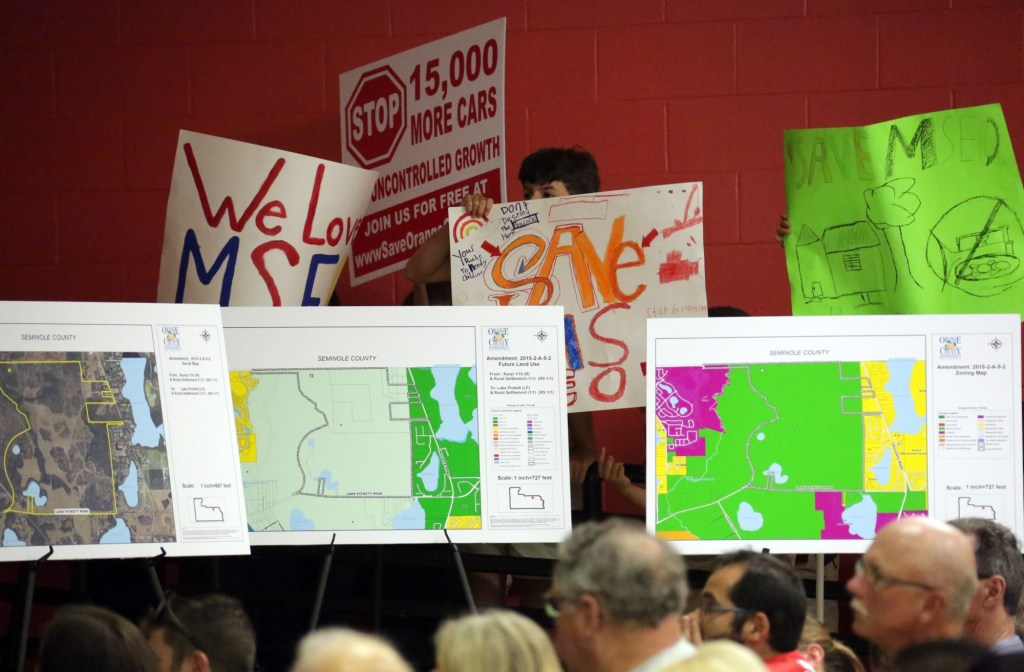
After the Florida Legislature ended its 2026 session without making any changes to a controversial law that restricts local governments’ ability to regulate land development, cities and counties that want to challenge SB 180 are left with one immediate chance for a respite: two related lawsuits challenging the constitutionality of the statute.
But that legal effort, in which Orange County and the Town of Windermere are plaintiffs, is hanging by a thread after Leon County Circuit Judge Angela Dempsey dismissed four of the five counts in the primary complaint in late February, according to a report in GrowthSpotter.
It was the latest in a series of rulings that went against the local governments after Dempsey refused to grant an injunction last December and ruled that one of the plaintiffs in a companion case, environmental group 1000 Friends of Florida, lacked standing to challenge the law.
Now the public case hinges on a single claim, that the law should be overturned because it creates an unfunded mandate, forcing cities and counties to spend money that the state doesn’t provide. Attorneys for the state and Florida Homebuilders Association have until April 14 to submit their answers and defenses to the claim.
Passed into law as a hurricane relief measure in 2025, SB 180 has wreaked unexpected havoc for land-use planners across the Sunshine State since then. Landowners have argued that its broad language goes beyond the legislature’s intended purpose of easing regulations on storm-damaged properties to thwart any local government efforts to tighten development rules — although existing rules are left intact. The DeSantis administration has backed the developers’ argument that SB 180’s impact is broader than just hurricane relief, pushing the issue into court.
Jamie Cole, a South Florida attorney representing the more than two dozen cities and counties challenging SB 180, said he disagrees with the judge’s ruling but will continue to litigate the unfunded mandates claim.
“Basically, what the Florida Constitution says is that in order for the legislature to enact any law that requires local governments to spend, in the aggregate, a significant amount of money, they need to do certain things, and one of the things that they’re required to do is make an express finding of great public importance. In this case, they did not make that finding,” Cole said.
Orange County, for example, was forced to pay legal expenses after it was sued by developers of the proposed Sustanee project in rural east Orange County that county commissioners denied.
“But even the ones that haven’t been sued are also spending money on other things,” Cole told GrowthSpotter. For example, at least 20 jurisdictions had spent money on planners, consultants and lawyers for updates to their comprehensive plans — including Orange County’s long-labored-over Vision 2050 master plan — that were rejected or voided by the Department of Commerce because they conflicted with SB 180.
“That then forces those cities and counties to expend funds to redo those amendments,” Cole said.
And since the planning restrictions were part of a larger hurricane recovery bill, there were other unfunded costs passed to local governments related to staff training and storm debris removal, he argued.
In addition, SB 180 prohibits local governments from charging impact fees for reconstruction or replacement of storm-damaged structures or from increasing the tax valuation of those properties if they are homesteaded. Such provisions “cause financial injury” because they negatively impact a municipality’s ability to raise revenue, according to a court filing.
Lawyers for the state officers argued in their court filings that the law doesn’t create unfunded mandates, and even if it did, the litigation wouldn’t solve the problem.
“Even if SB 180 constitutes an unfunded mandate the relief is not what the Public Plaintiffs request — striking the law as unconstitutional — but being excused from complying with the infringing law,” they wrote.
In a companion case brought by 1000 Friends of Florida and Orange County resident Rachel Hildebrand, Judge Dempsey found that only Hildebrand, who lives across the street from the county’s disputed rural boundary, had shown a direct negative impact as a result of SB 180.
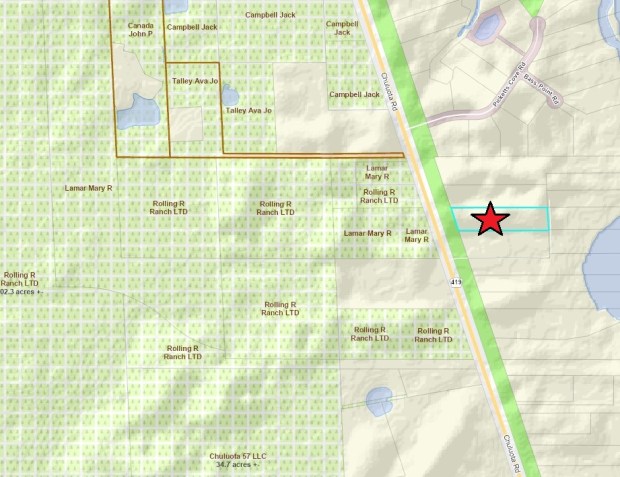 Rolling Ranch LTD and Mary R Lamar sued Orange County under the provisions of SB 180 after county commissioners denied their proposal for an 1,800-home community in rural east Orange County. Rachel Hildebrand lives directly across from the property. (Source: Orange County Property Appraiser)
“Hildebrand has standing due to the proximity of her property and home to land that now may be developed more intensively under SB 180 than they could before it was adopted and applied by the Department of Commerce to the Orange County Comprehensive Plan,” Dempsey wrote.
The judge dismissed two of the four counts in the environmental case but allowed two claims by Hildebrand — that SB 180 is arbitrary and capricious and that it should be voided for vagueness — to move forward.
“Hildebrand has identified the particular provisions of the bill that would directly affect or harm her,” Dempsey wrote.
Efforts by the state senator who authored SB 180 to find a legislative solution to the matter and restore local control over land regulations failed during the 2026 session. Sen. Nick DiCeglie, R-St. Petersburg, filed SB 840, to clarify and narrow the scope of SB 180 while striking parts of the law entirely. It unanimously passed the Senate but died in the House.
“It’s unfortunate that the legislation didn’t pass because that would have certainly rectified the situation to a large extent,” Cole said.
Have a tip about Central Florida development? Contact me at lkinsler@GrowthSpotter.com or (407) 420-6261. Follow GrowthSpotter on Facebook and LinkedIn.