
Leaving behind their war-hardened hometown, a Ukrainian couple crossed an ocean to open the United States’ first Jellyfish Museum in Pompano Beach.
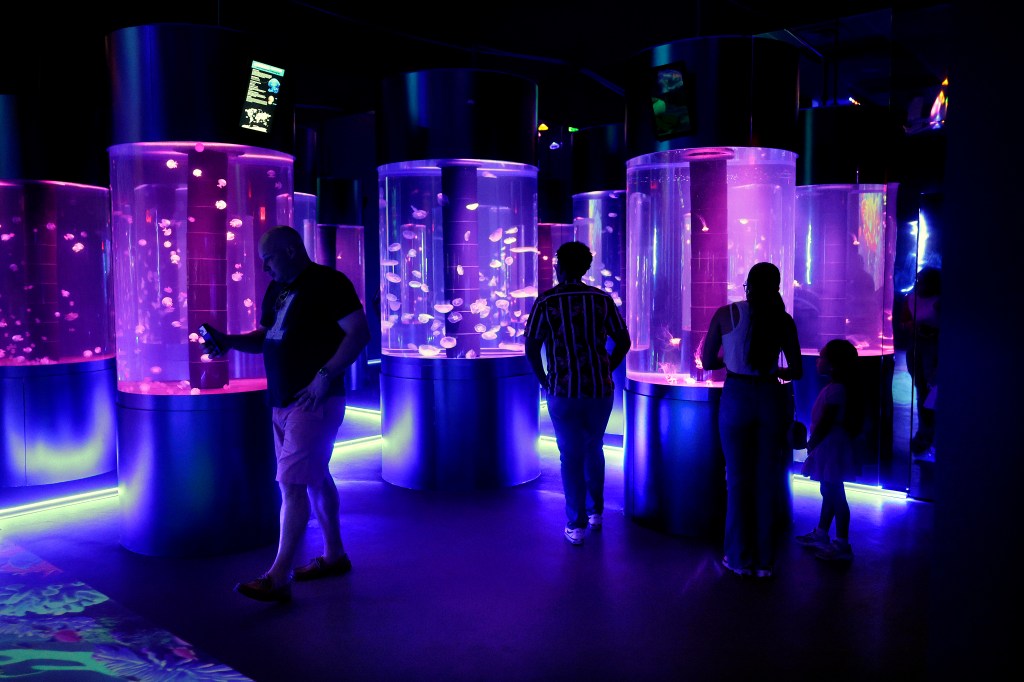
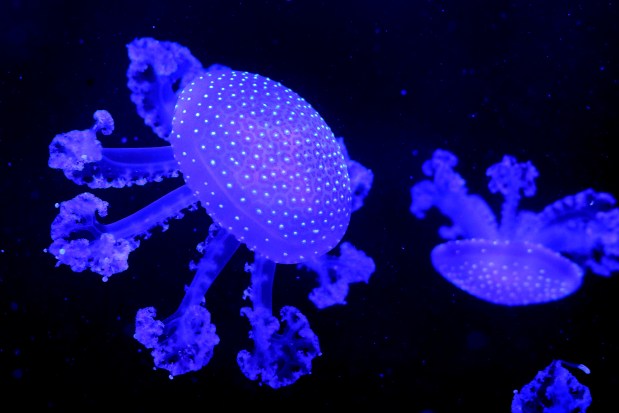
Created by Yana Yanovska and Alex Yanovskyi, the museum threw its grand opening on March 27 in a two-story building three blocks west of the city’s ocean pier. Peek inside the 20,000-square-foot museum at 199 N. Ocean Blvd., and you see dozens of mysterious jellies shimmering and glowing in a mesmerizing sea dance. Against immersive ocean-blue walls, 21 aquariums line the main floor in illuminated columns of hypnotic neon-purples and tangerines, each filled with floating creatures pulsing their bell-shaped bodies like aquatic heartbeats.
There’s the reddish-brown sea nettle, with its radial stripes and long, trailing tentacles, next to a tank with fried-egg-looking tuberculata and upside-down, saucer-shaped cassiopea. By far, Yanovska’s favorite are the reddish-orange lion’s manes, with their umbrella-shaped bells and wispy manes of hairlike tendrils.
The therapeutic effects of gazing at the gelatinous jellies drifting aimlessly and endlessly is, in a word, “relaxing,” says Yanovska, who can admire them for hours a day when she isn’t working.
“They’re beautiful, ethereal creatures that have this amazing ability to make people just stop talking and just stare for a while, which is rare these days,” Yanovska tells the South Florida Sun Sentinel through a translator.
 More than 20 species of cold- and warm-water jellyfish will be on display at one time at the newly opened Jellyfish Museum in Pompano Beach on Tuesday, March 31, 2026. (Mike Stocker/South Florida Sun Sentinel)
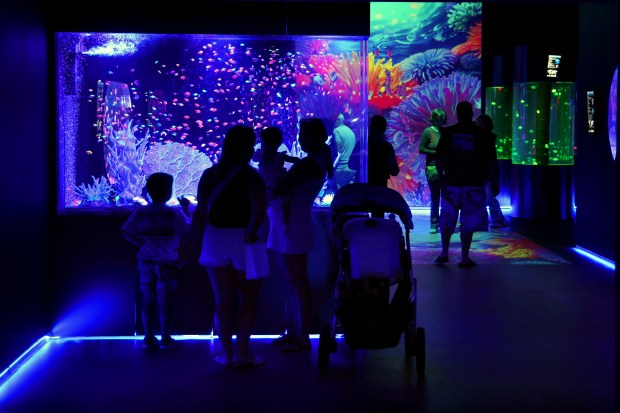
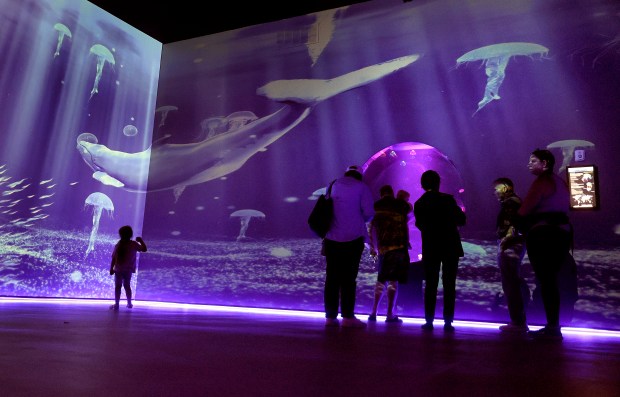
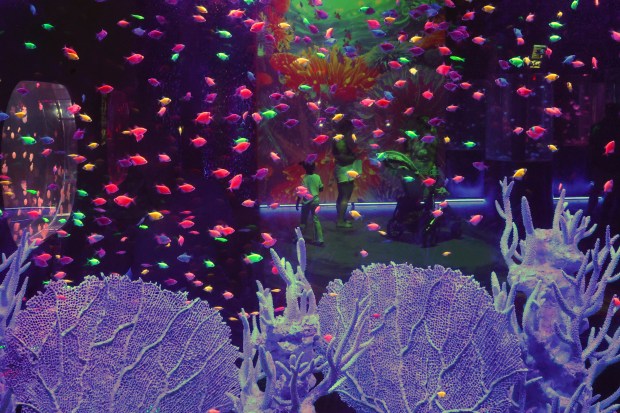
Nearby, immersive projection-mapped walls that ripple with the touch of a visitor’s finger feature hundreds more jellyfish drifting among schools of colorful fish and coral. Each aquarium offers interactive education displays that show how jellyfish move in bodies of water around the planet. A mini laboratory investigates the range of their poison and how polluted water makes more jellyfish grow and reproduce.
Educational displays teach visitors that touching their brainless bulbs can be safe — it’s really the tentacles that deliver poisonous stings ranging from mild to deadly, Yanovska says. Another fun fact: Jellyfish feast on plankton, krill and even other jellyfish, though at this museum, they’re fed a diet of brine shrimp.
No two visits to the museum will ever look the same because jellyfish have shortish lifespans of three months to two years, “so we’ll be changing our collection around every six or eight months,” she adds.
More than 2,000 known species of jellyfish thrive in freshwater rivers and salty oceans worldwide, but only 20 species will be on display at one time in Pompano Beach, eight of them in cold-water aquariums, she says.
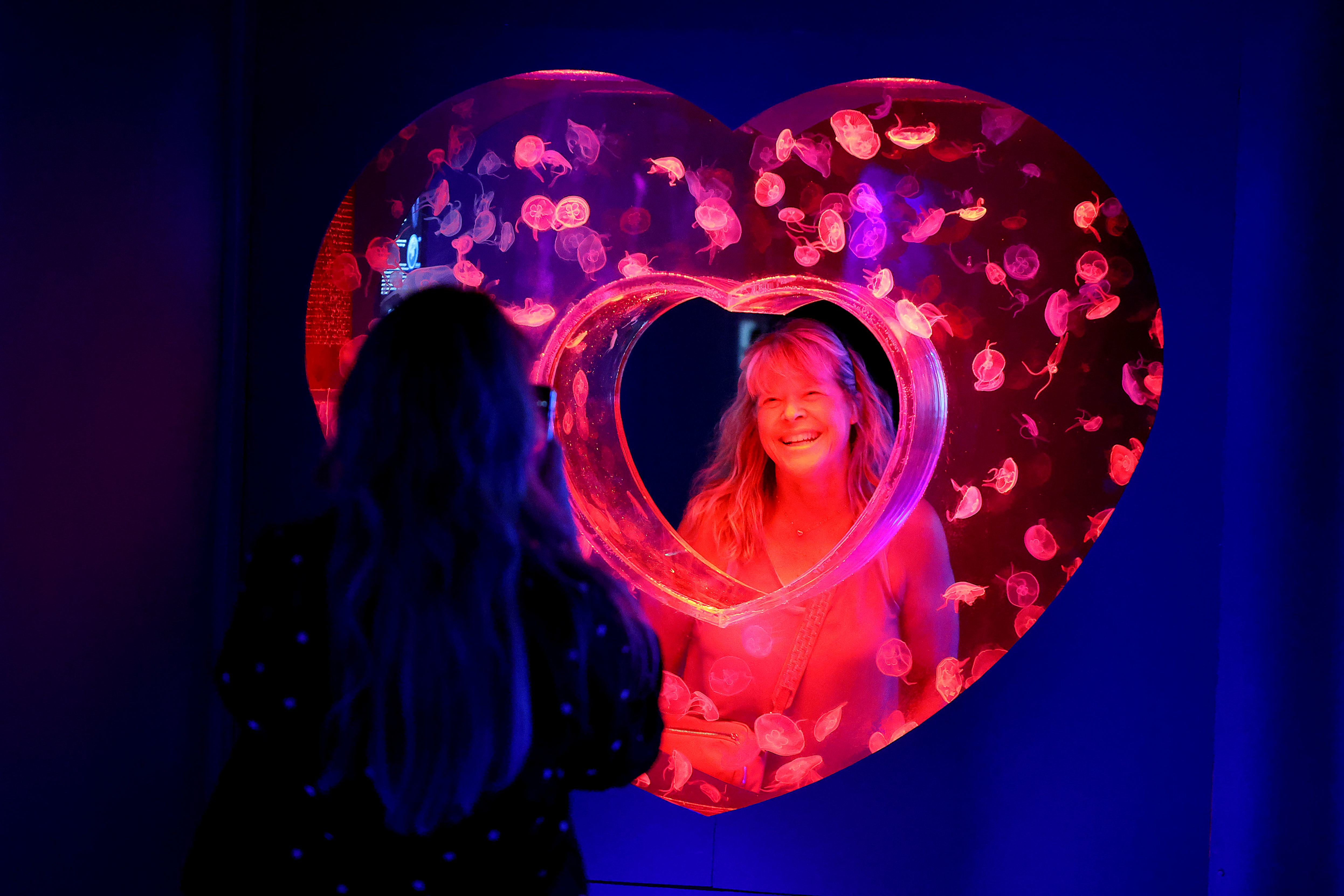
Jan Smith takes photos of her friend, Valerie Gonzalo, at the newly opened Jellyfish Museum in Pompano Beach on Tuesday, March 31, 2026. (Mike Stocker/South Florida Sun Sentinel)
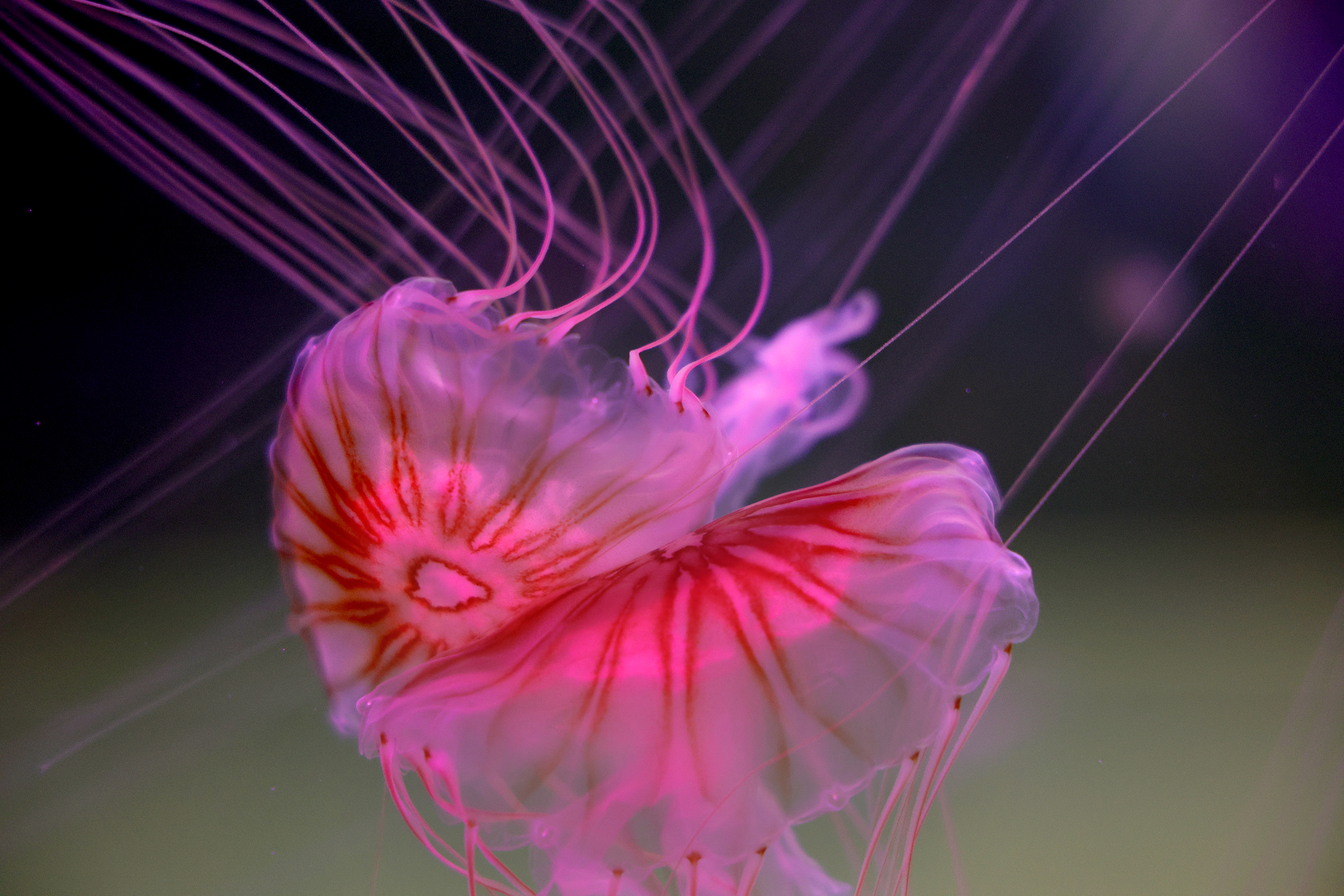
Brown sea nettle jellyfish swim at the Jellyfish Museum in Pompano Beach, on Thursday, March 26, 2026. (Amy Beth Bennett / South Florida Sun Sentinel)
Mike Stocker/South Florida Sun Sentinel
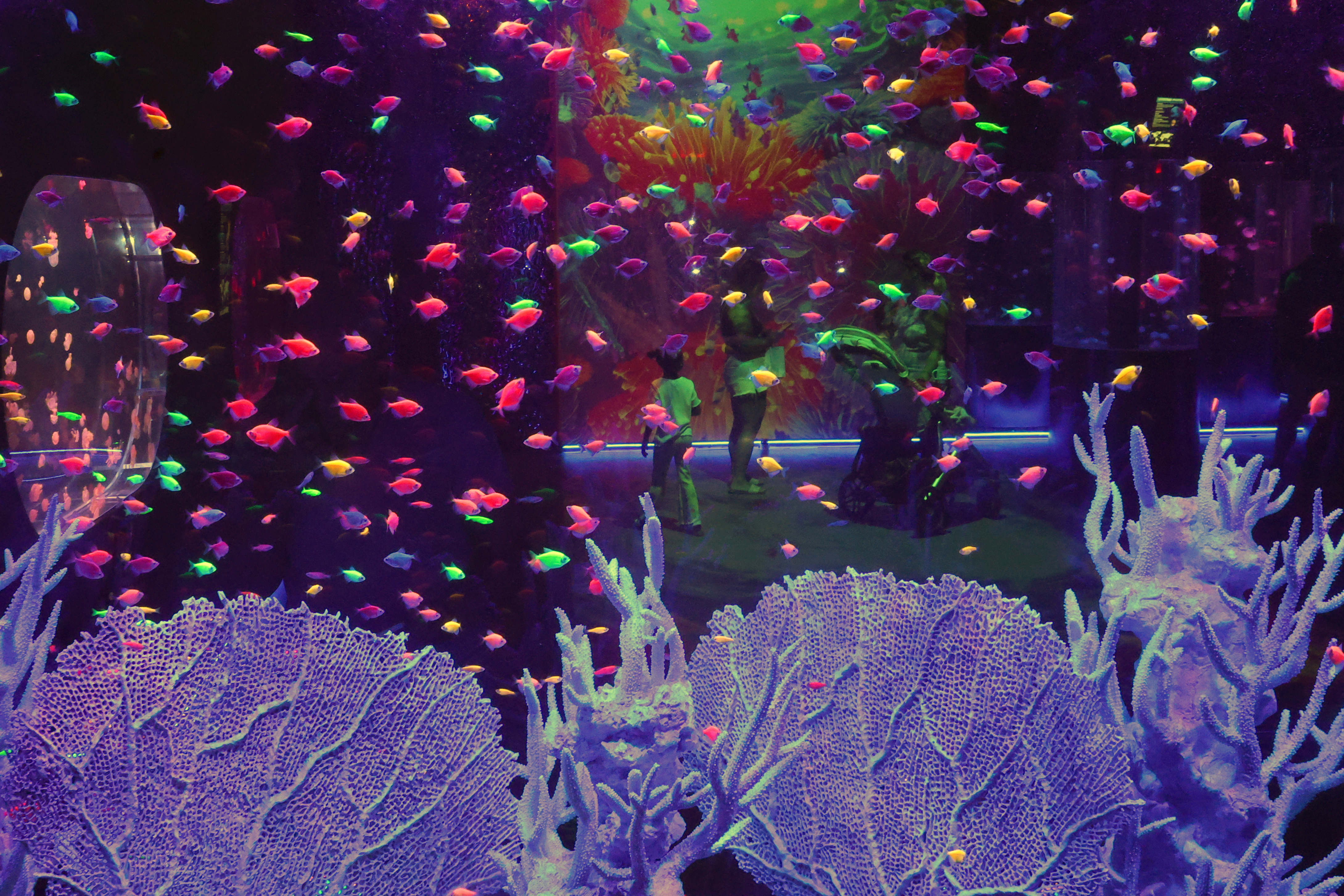
Schools of fish race around aquarium tanks at the Jellyfish Museum in Pompano Beach. (Mike Stocker/South Florida Sun Sentinel)

A plocamia jellyfish swims at the Jellyfish Museum in Pompano Beach, on Thursday, March 26, 2026. (Amy Beth Bennett / South Florida Sun Sentinel)
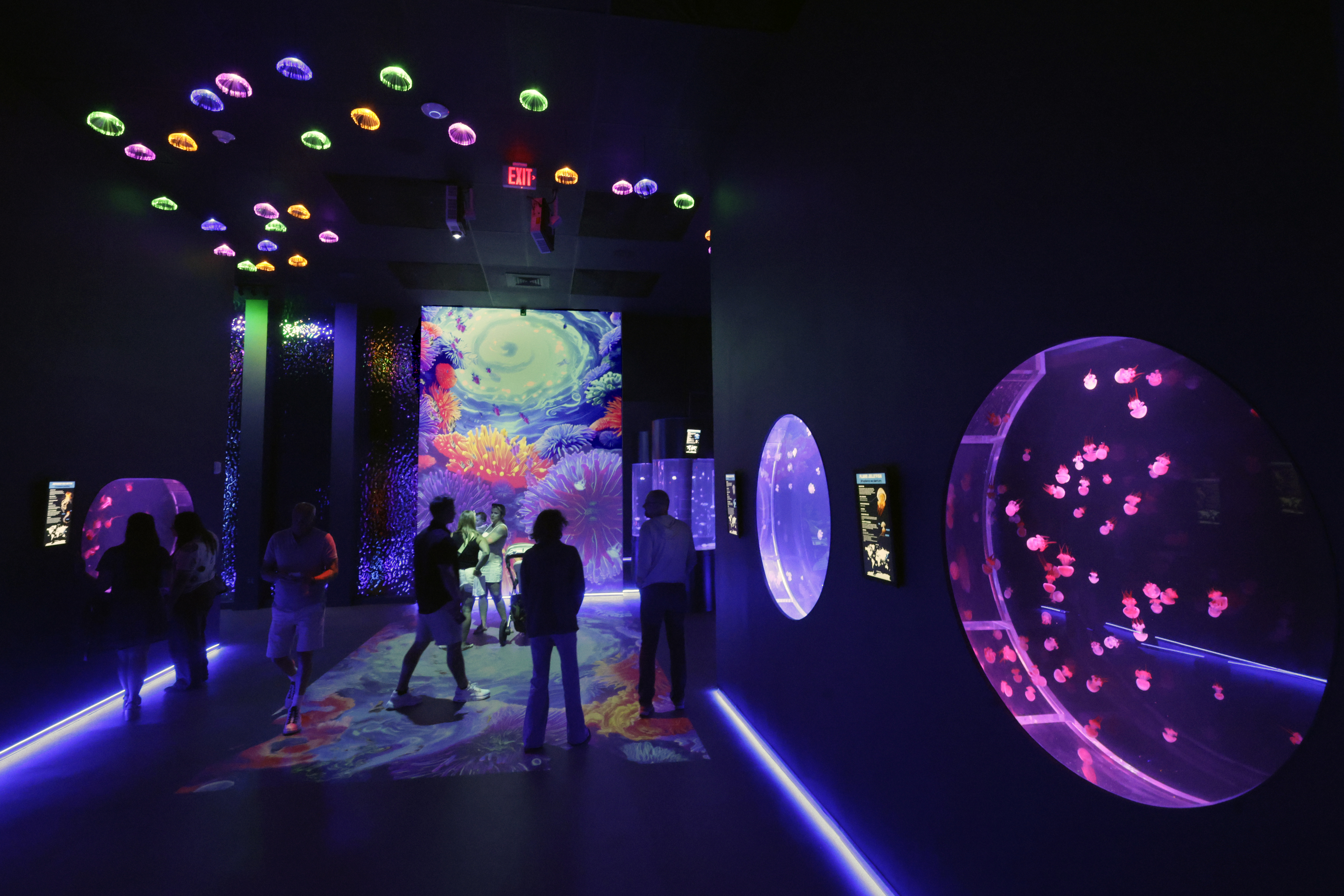
Visitors discover the newly opened Jellyfish Museum in Pompano Beach on Tuesday, March 31, 2026. (Mike Stocker/South Florida Sun Sentinel)
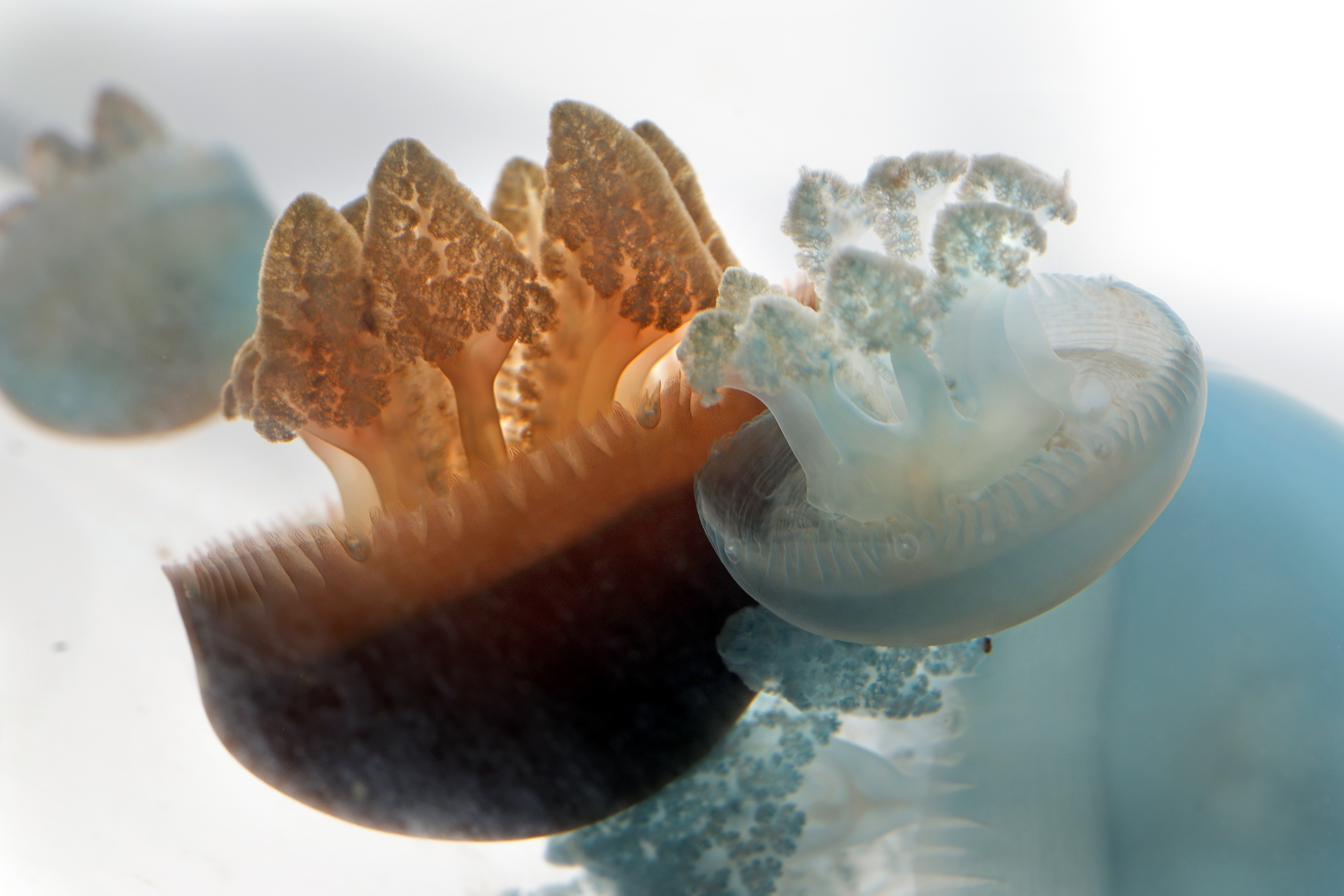
Blue bladder jellyfish swim at the Jellyfish Museum in Pompano Beach, on Thursday, March 26, 2026. (Amy Beth Bennett / South Florida Sun Sentinel)

Mike Stocker/South Florida Sun Sentinel
Visitors experience a 3D projection-mapped room at the Jellyfish Museum in Pompano Beach. (Mike Stocker/South Florida Sun Sentinel)
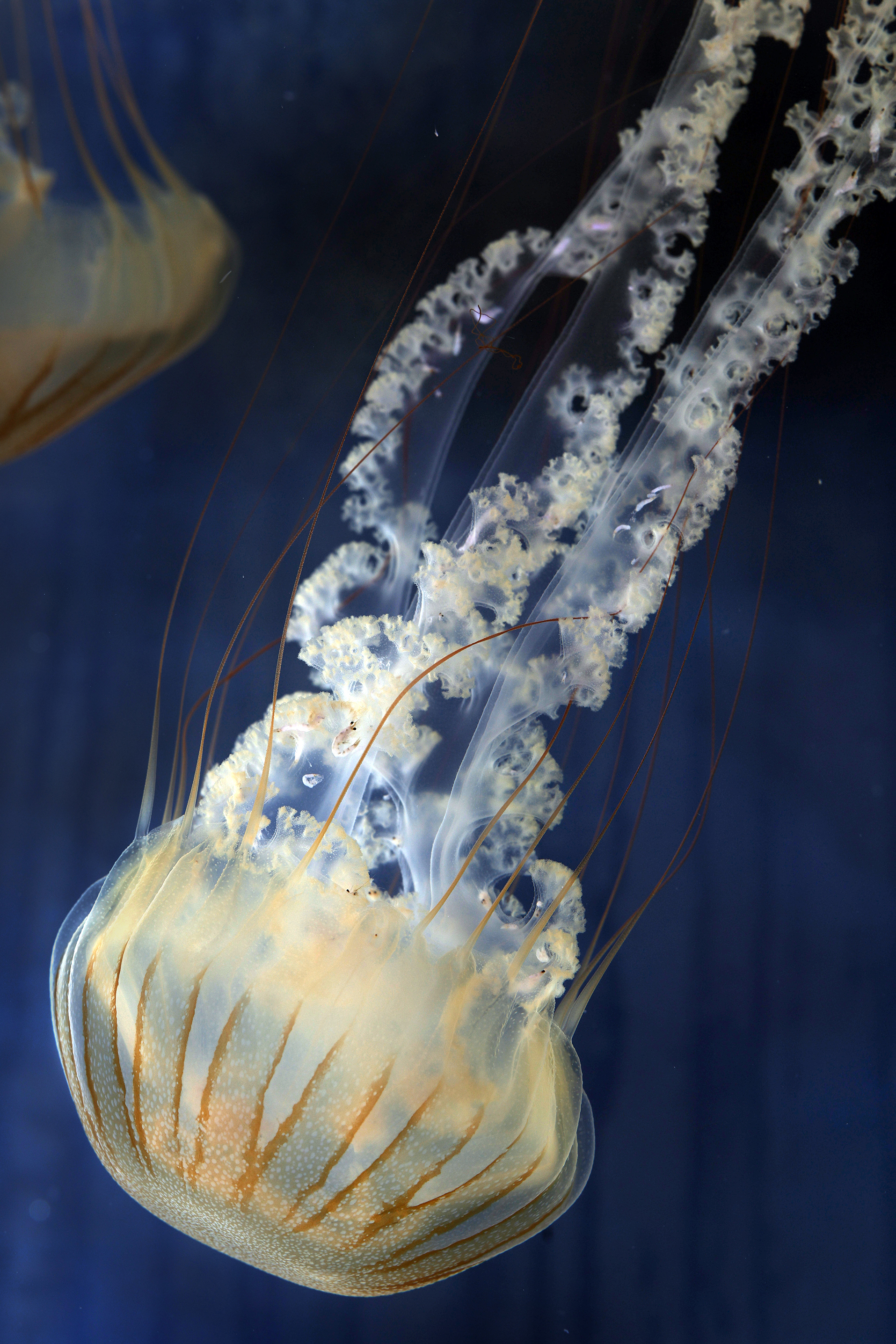
Plocamia jellyfish swim at the Jellyfish Museum in Pompano Beach, on Thursday, March 26, 2026. (Amy Beth Bennett / South Florida Sun Sentinel)
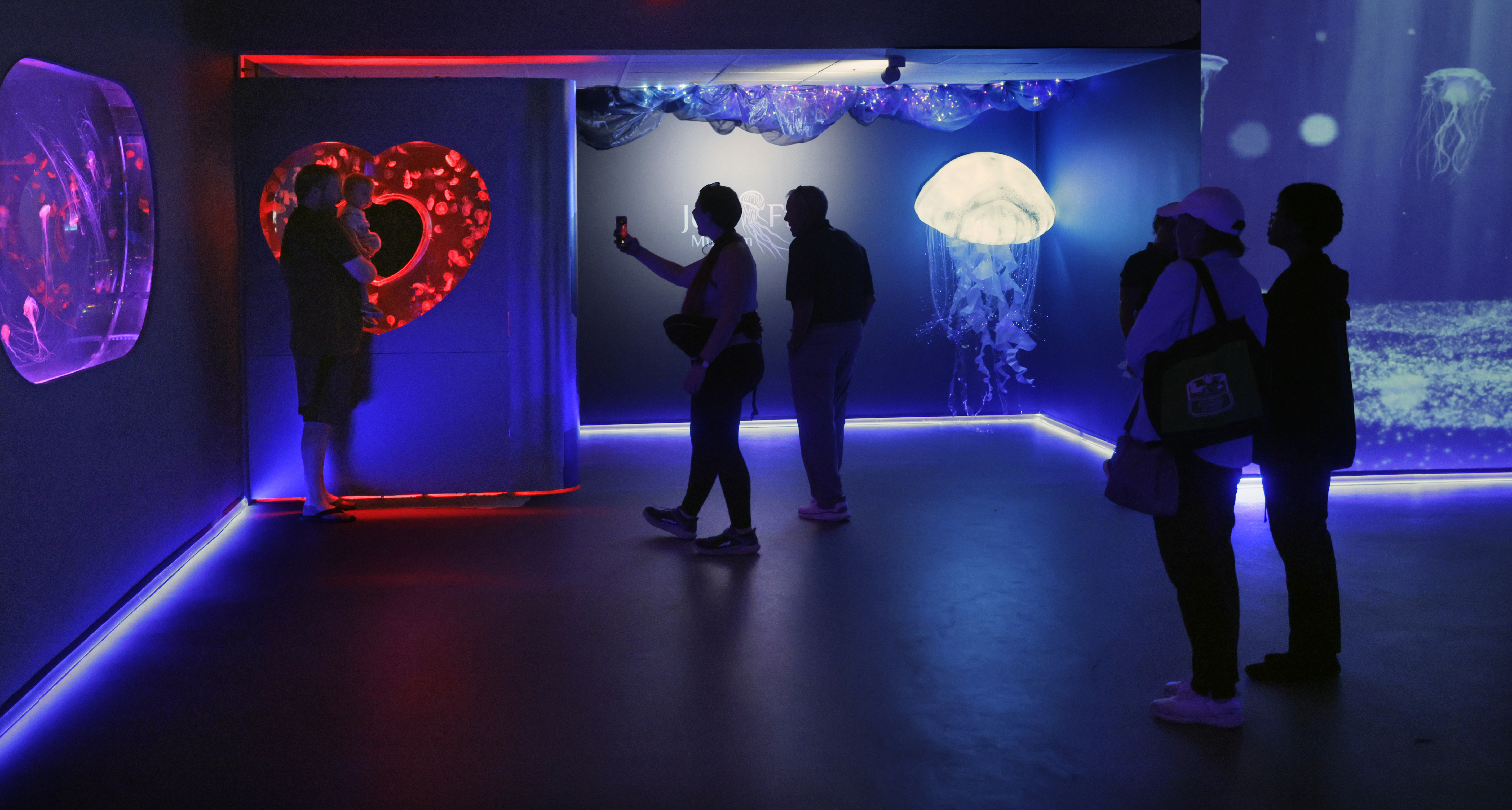
Visitors take photos at the newly opened Jellyfish Museum in Pompano Beach on Tuesday, March 31, 2026. (Mike Stocker/South Florida Sun Sentinel)
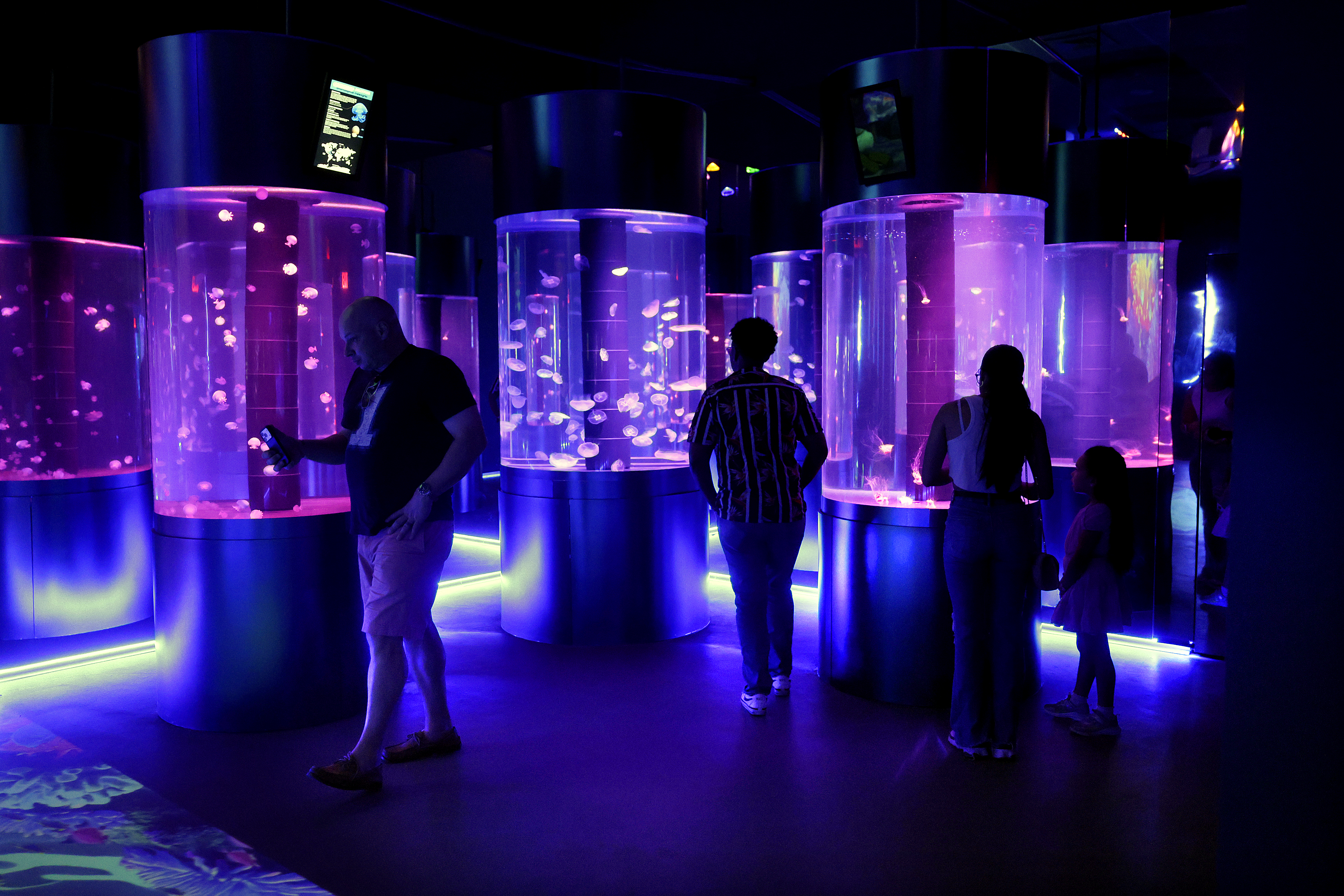
Mike Stocker/South Florida Sun Sentinel
Visitors discover the newly opened Jellyfish Museum in Pompano Beach on Tuesday, March 31, 2026. The 20,000-square-foot museum had its grand opening on March 27. (Mike Stocker/South Florida Sun Sentinel)
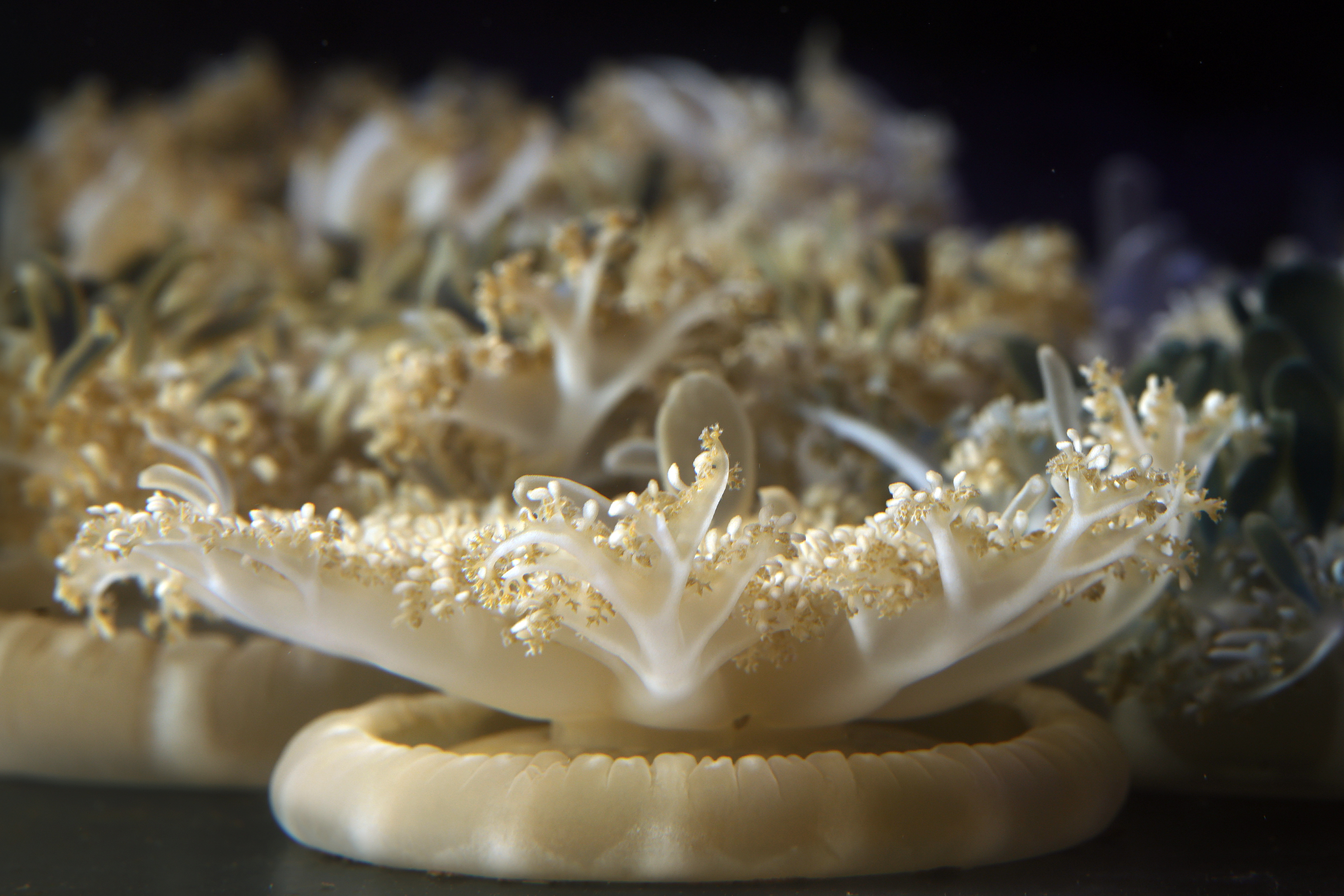
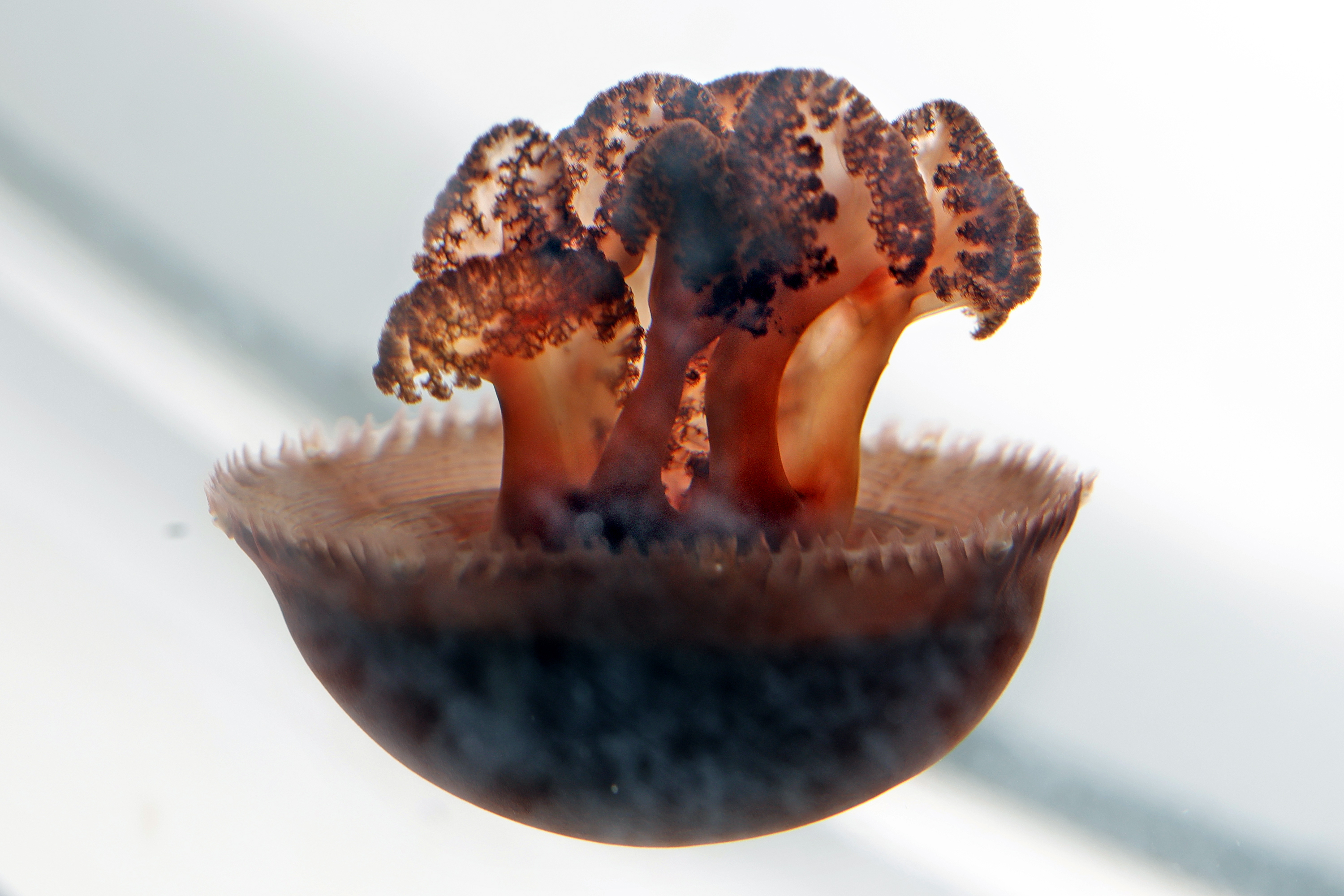
Bottom feeder jellyfish rest on the bottom of a tank at the Jellyfish Museum in Pompano Beach, on Thursday, March 26, 2026. (Amy Beth Bennett / South Florida Sun Sentinel)
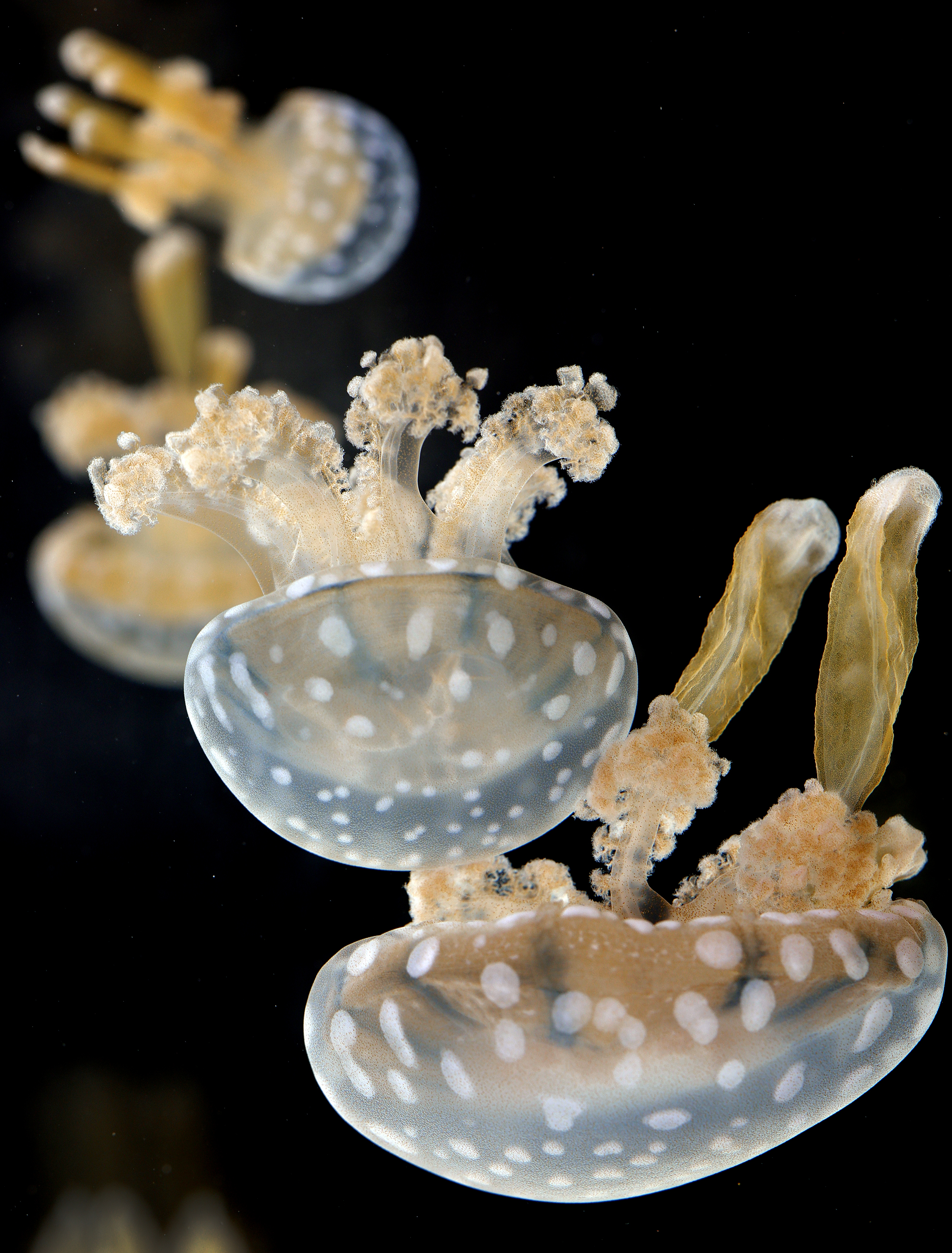
Spotted jellyfish swim at the Jellyfish Museum in Pompano Beach, on Thursday, March 26, 2026. (Amy Beth Bennett / South Florida Sun Sentinel)

More than 20 species of cold- and warm-water jellyfish will be on display at one time at the newly opened Jellyfish Museum in Pompano Beach on Tuesday, March 31, 2026. (Mike Stocker/South Florida Sun Sentinel)

Visitors take photos at the newly opened Jellyfish Museum in Pompano Beach on Tuesday, March 31, 2026. (Mike Stocker/South Florida Sun Sentinel)
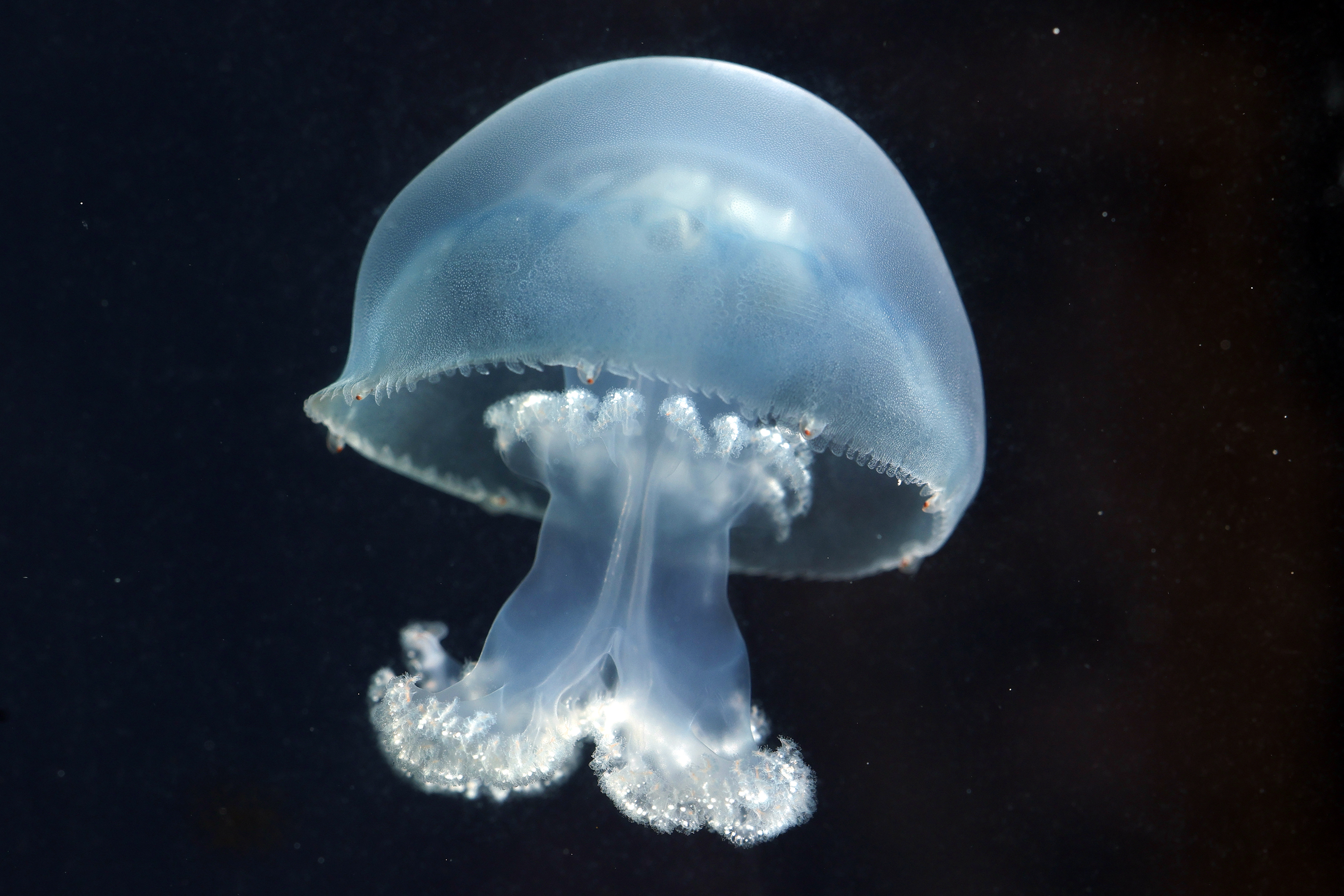
A cannon ball jellyfish swims at the Jellyfish Museum in Pompano Beach, on Thursday, March 26, 2026. (Amy Beth Bennett / South Florida Sun Sentinel)
Amy Beth Bennett / South Florida Sun Sentinel
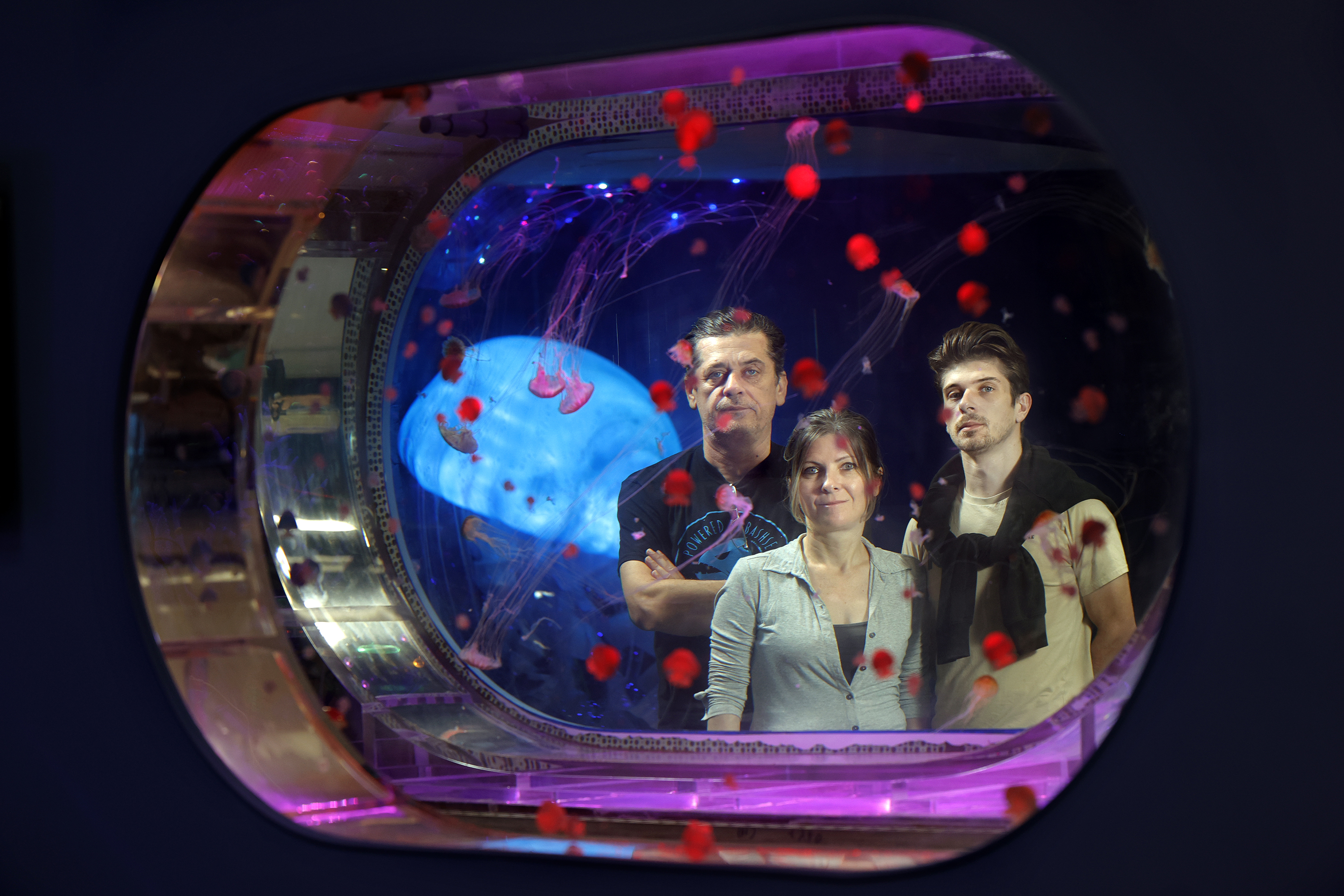
Yana Yanovska with husband Alex Yanovskyi, left, and son Yan Yanovskyi behind cannonball and Japanese sea nettle jellyfish at the new museum in Pompano Beach. (Amy Beth Bennett/South Florida Sun Sentinel)
Amy Beth Bennett / South Florida Sun Sentinel
A blue bladder jellyfish swims at the Jellyfish Museum in Pompano Beach. (Amy Beth Bennett / South Florida Sun Sentinel)

Amy Beth Bennett / South Florida Sun Sentinel
Brown sea nettle jellyfish swim as aquarist Ashley Feick cleans the tank at the Jellyfish Museum in Pompano Beach. (Amy Beth Bennett/South Florida Sun Sentinel)
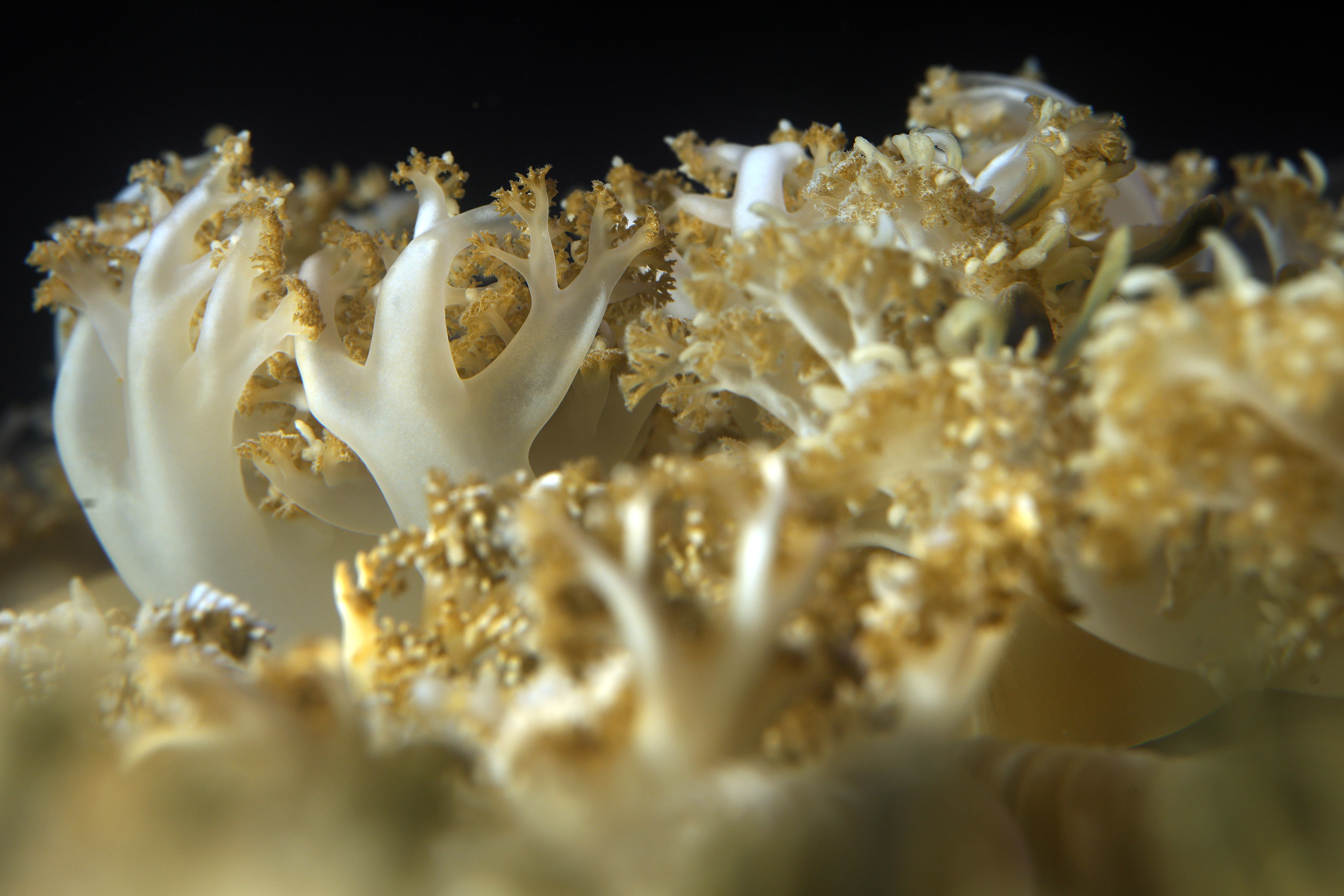
Bottom feeder jellyfish rest on the bottom of a tank at the Jellyfish Museum in Pompano Beach, on Thursday, March 26, 2026. (Amy Beth Bennett / South Florida Sun Sentinel)
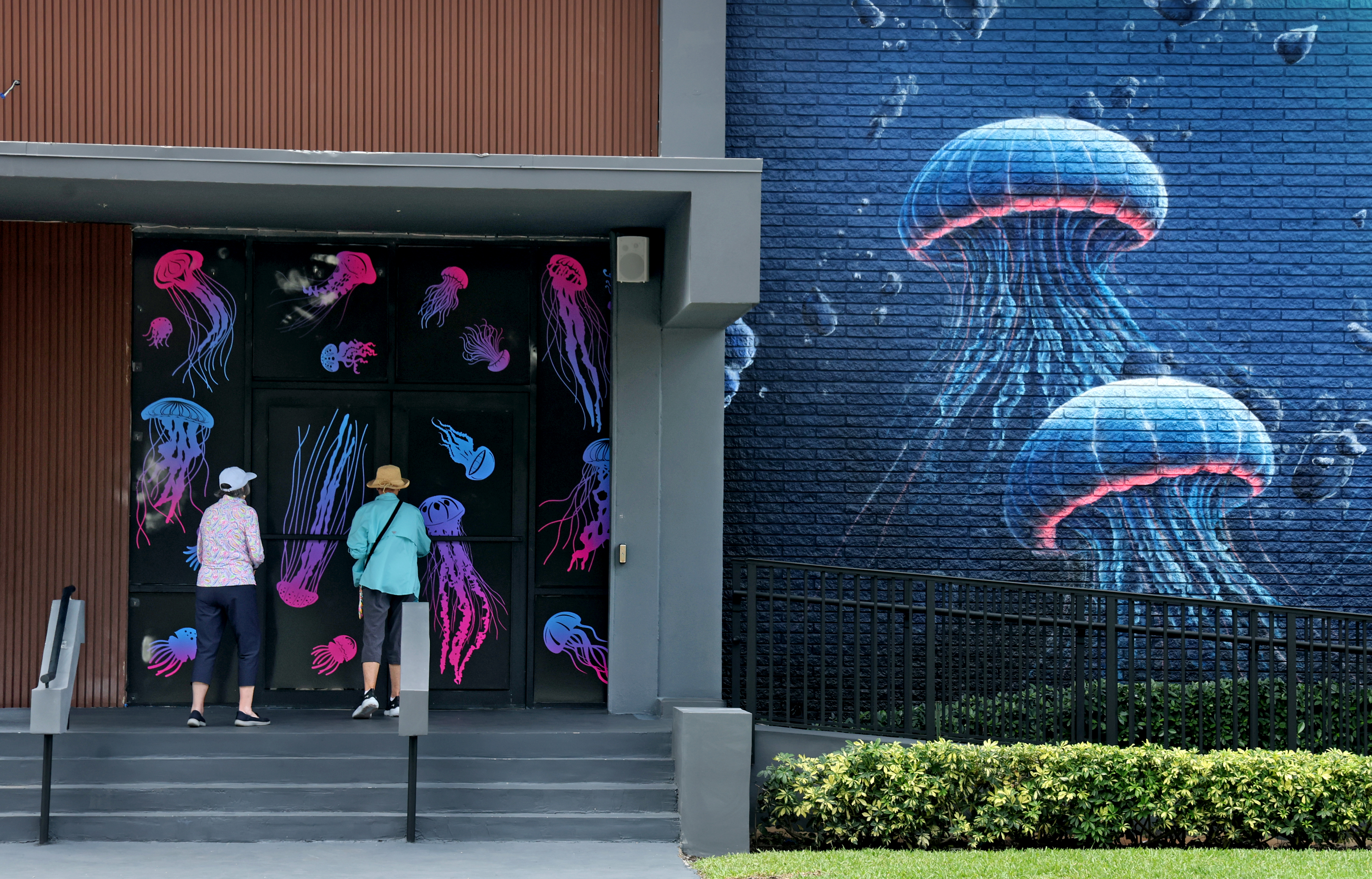
Visitors enter the newly opened Jellyfish Museum in Pompano Beach on Tuesday, March 31, 2026. (Mike Stocker/South Florida Sun Sentinel)

A spotted jellyfish swims at the Jellyfish Museum in Pompano Beach, on Thursday, March 26, 2026. (Amy Beth Bennett / South Florida Sun Sentinel)
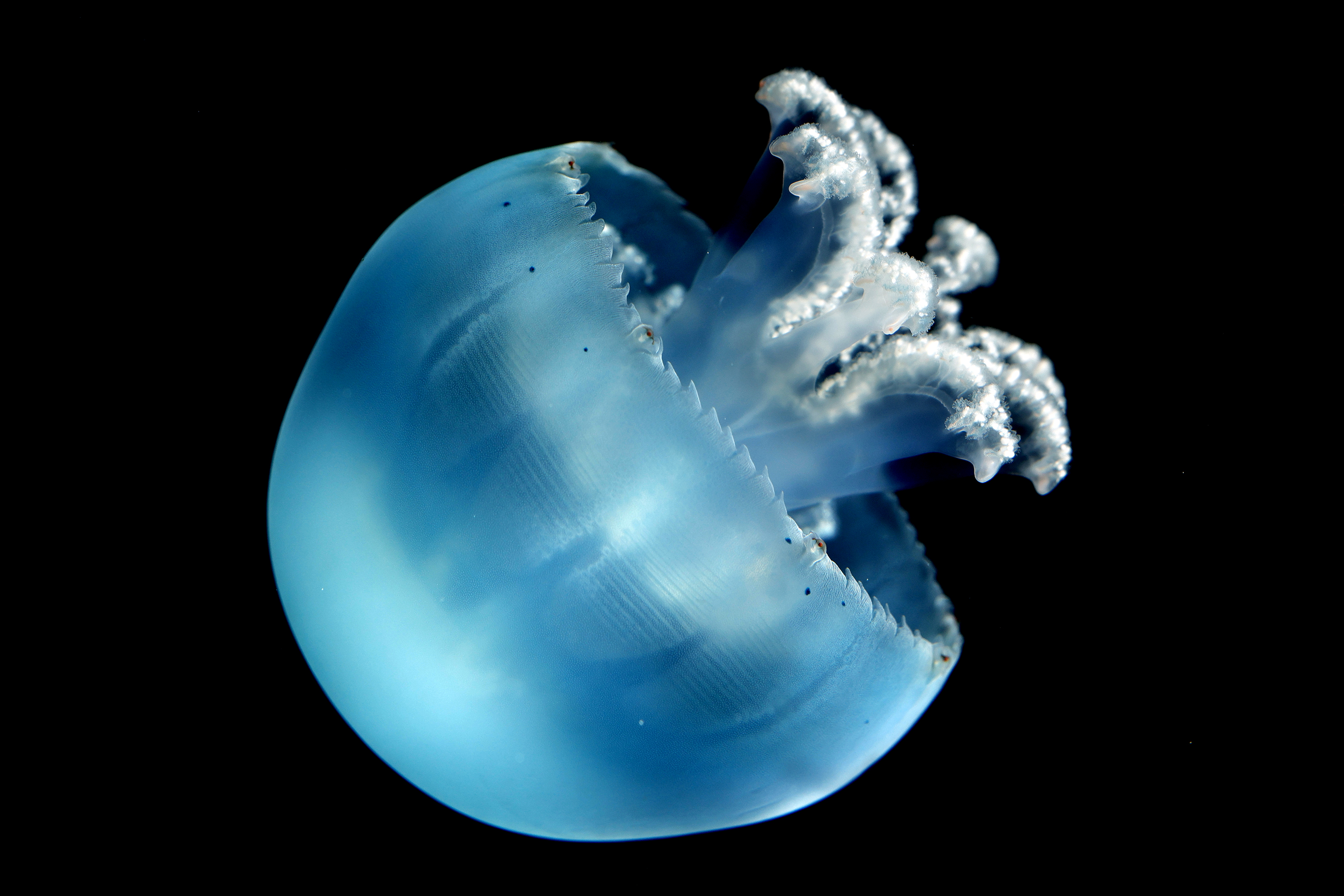
A cannon ball jellyfish swims at the Jellyfish Museum in Pompano Beach, on Thursday, March 26, 2026. (Amy Beth Bennett / South Florida Sun Sentinel)

Jellyfish are illuminated on display at the newly opened Jellyfish Museum in Pompano Beach on Tuesday, March 31, 2026. (Mike Stocker/South Florida Sun Sentinel)
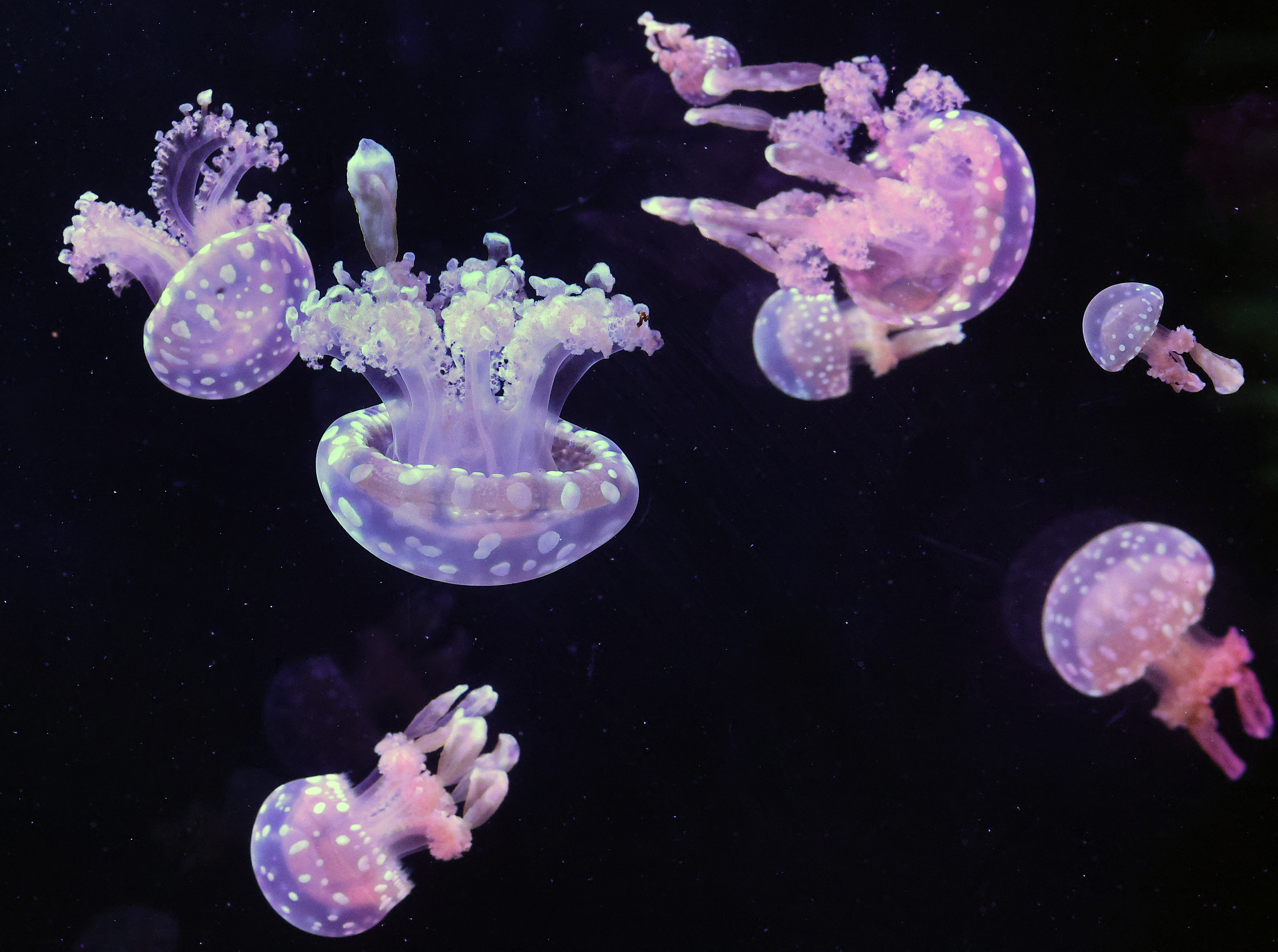
Spotted jellyfish are illuminated on display at the newly opened Jellyfish Museum in Pompano Beach on Tuesday, March 31, 2026. (Mike Stocker/South Florida Sun Sentinel)

Mike Stocker/South Florida Sun Sentinel
Jellyfish are illuminated on display at the newly opened Jellyfish Museum in Pompano Beach. (Mike Stocker/South Florida Sun Sentinel)
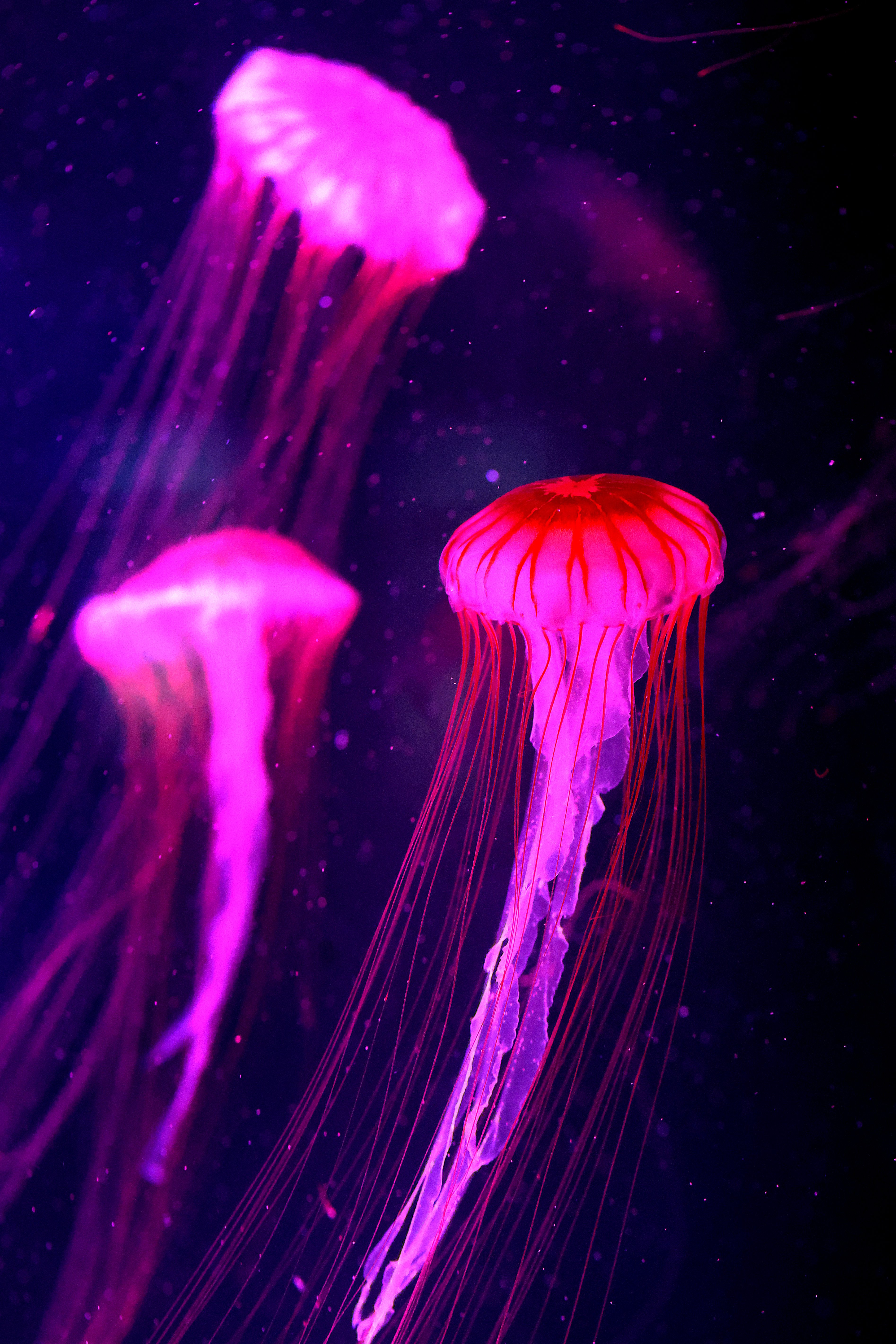
Brown sea nettle jellyfish are illuminated on display at the newly opened Jellyfish Museum in Pompano Beach on Tuesday, March 31, 2026. (Mike Stocker/South Florida Sun Sentinel)
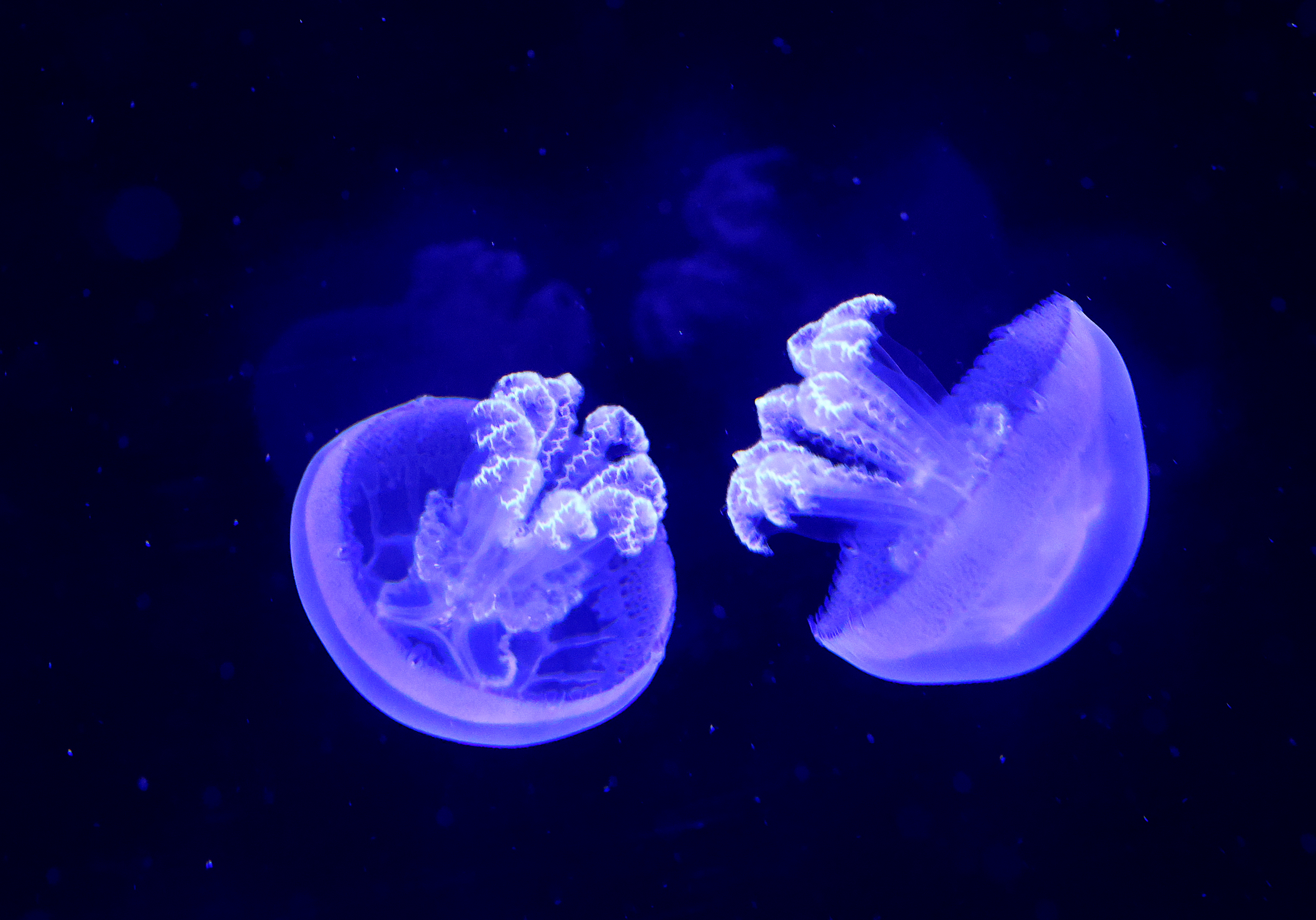
Cannon ball jellyfish are illuminated on display at the newly opened Jellyfish Museum in Pompano Beach on Tuesday, March 31, 2026. (Mike Stocker/South Florida Sun Sentinel)
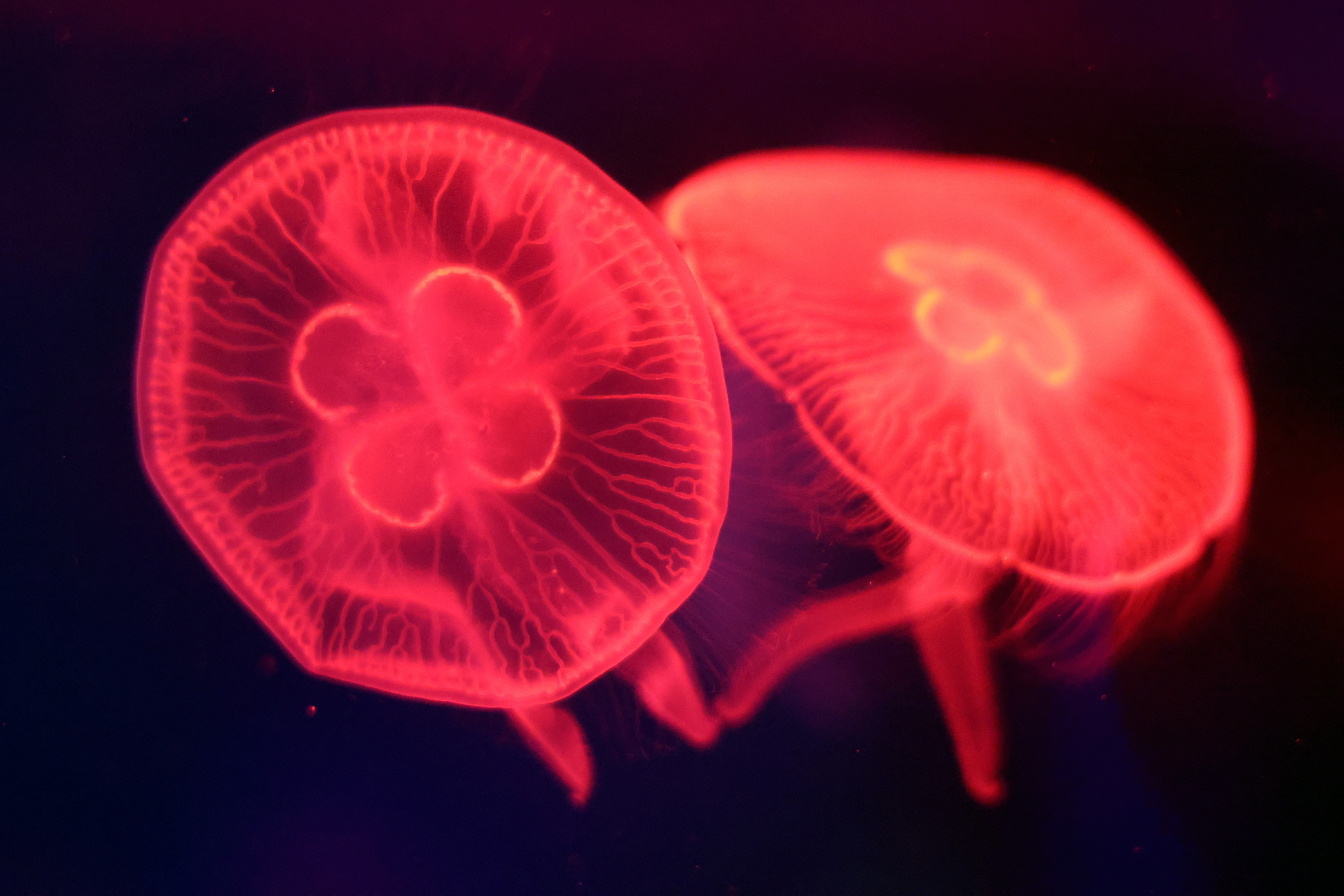
Jellyfish are illuminated on display at the newly opened Jellyfish Museum in Pompano Beach on Tuesday, March 31, 2026. (Mike Stocker/South Florida Sun Sentinel)
Show Caption
1 of 28
Jan Smith takes photos of her friend, Valerie Gonzalo, at the newly opened Jellyfish Museum in Pompano Beach on Tuesday, March 31, 2026. (Mike Stocker/South Florida Sun Sentinel)
The $1.5 million museum, which occupies a former Wells Fargo bank, came together over two years with about $100,000 in grants from the city’s Community Redevelopment Agency, Pompano Beach CRA director Nguyen Tran says.
“It’s really unique and it will set Pompano apart, because what we don’t have enough of are edutainment venues,” Tran says, referring to venues combining education and entertainment.
Amy Beth Bennett / South Florida Sun Sentinel
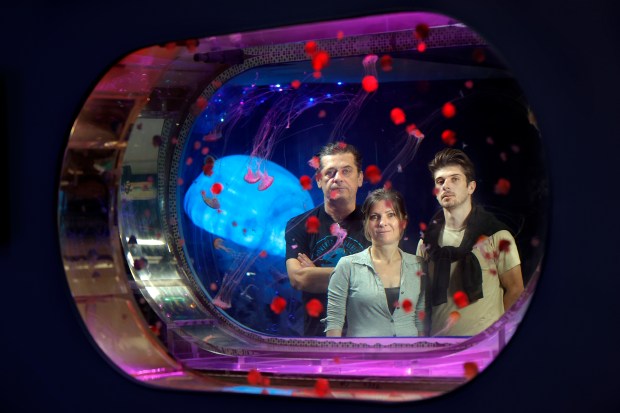
Yana Yanovska with husband Alex Yanovskyi, left, and son Yan Yanovskyi behind cannonball and Japanese sea nettle jellyfish at the new museum in Pompano Beach. (Amy Beth Bennett/South Florida Sun Sentinel)
‘You can’t say we left Ukraine forever’
This is the second Jellyfish Museum from the husband-and-wife team, who operated their first in Kiev from 2018, until the Russia-Ukraine war forced them to evacuate their business.
That prior experience made the couple a perfect fit for Pompano Beach, says Kimberly Vazquez, the CRA’s senior project manager.
“Who else is more capable?” Vazquez says. “They ran a jellyfish museum in the middle of a war.”
A museum full of jellyfish is meant to bring calm and joy, so Yanovska doesn’t like thinking about the personal sacrifice of leaving family and friends behind on the frontlines of war.
Amy Beth Bennett / South Florida Sun Sentinel
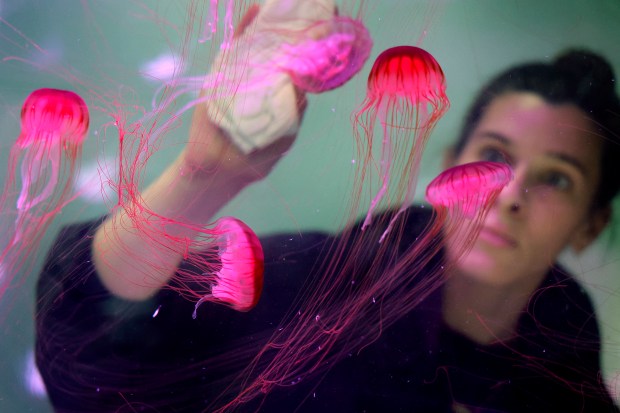
Brown sea nettle jellyfish swim as aquarist Ashley Feick cleans the tank at the Jellyfish Museum in Pompano Beach. (Amy Beth Bennett/South Florida Sun Sentinel)
The couple’s first museum in downtown Kyiv’s Independence Square was locked down by the Ukrainian military when Russia invaded in February 2022, because of its proximity to the presidential palace, she says. Then missiles hit the electrical grid in Kyiv. Power outages switched off the aquarium’s electrical pumps, throwing their aquariums into darkness. One by one, its resident creatures began to die.
Seeing her majestic creatures extinguished devastated Yanovska so much, she says she packed her belongings and emigrated with her husband, a marine biologist, to South Florida, hoping to resurrect their jellyfish dreams in a new country.
Mike Stocker/South Florida Sun Sentinel
Jellyfish are illuminated on display at the newly opened Jellyfish Museum in Pompano Beach. (Mike Stocker/South Florida Sun Sentinel)
Even now, Yanovska says the opening of her new Pompano Beach museum sometimes feels like a mixed blessing.
“If it weren’t for the war, this idea and this dream of ours in the U.S. probably wouldn’t have actually come true,” she says. “You can’t say we left Ukraine forever. But for now, we’ve made the decision to continue our work here, because everything is very extreme and unstable over there. Today that museum is still in Kyiv, but tomorrow it might not be.”
For now, she says, museum employees continue running the Kyiv museum in their stead, and often give her updates. She says workers have spotted soldiers on leave who stare transfixed at jellyfish swirling through the water for hours on end.
“It’s not just the soldiers but just regular people and citizens who are enduring a lot of pain and misery right now,” Yanovska says. “It’s become this place where people just distract themselves a bit and relax a little and get away from the realities of what’s happening.”
Mike Stocker/South Florida Sun Sentinel
Visitors experience a 3D projection-mapped room at the Jellyfish Museum in Pompano Beach. (Mike Stocker/South Florida Sun Sentinel)
She has similar goals for the new Jellyfish Museum, describing the venue as “our child, a living organism near the ocean that will constantly need to evolve.”
Future plans include repurposing the building’s former drive-thru lane into an outdoor cafe and adding new jellyfish murals to its front facade. On Fridays beginning April 3, the venue will offer 7 p.m. magic shows from a Ukrainian illusionist.
“He can do magic tricks with the jellyfish,” Yanovska says. “I’m mostly focused on education through imagination. Kids don’t want to only read books anymore. They need to see and feel nature come alive.”
The Jellyfish Museum is at 199 N. Ocean Blvd., Pompano Beach. Self-guided general admission costs $24 for adults, $23 for seniors and $21 for children age 12 and younger on weekdays and $25 for adults and seniors and $22 for children age 12 and younger on weekends. Visit Jellyfish-Museum.com or call 866-535-5935.
Staff writer Phillip Valys can be reached at pvalys@sunsentinel.com or Twitter/X @philvalys.
Mike Stocker/South Florida Sun Sentinel
Schools of fish race around aquarium tanks at the Jellyfish Museum in Pompano Beach. (Mike Stocker/South Florida Sun Sentinel)