
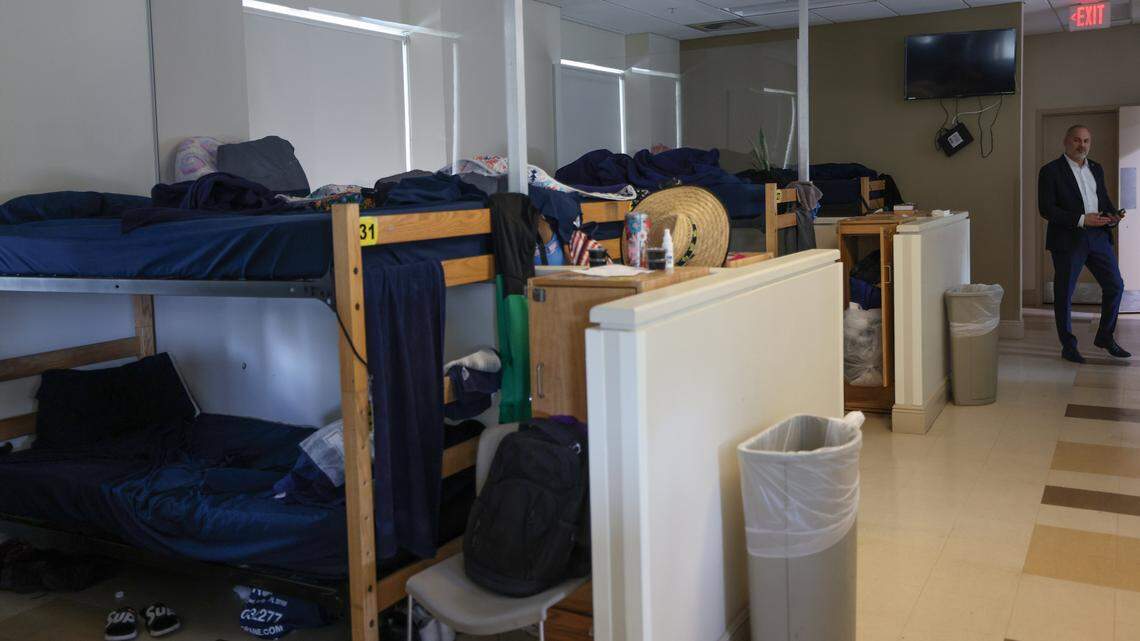
Camillus House CEO Eddie Gloria, right, walks through the shelter facility in Miami on Nov. 11, 2024.
Carl Juste
cjuste@miamiherald.com
In Miami Beach, police can arrest homeless people under a city law banning public camping, but they must first offer someone the choice to go to a shelter instead.
But those offers are usually rejected, arrest reports show. Officers have made six times more camping arrests than shelter placements since January 2024.
There are many reasons why someone may prefer the street to a shelter bed on a given night. Those include bad past experiences at shelters, strict shelter rules and limits on how much people can bring inside.
As of the latest count in January, there are nearly 2,500 homeless people across Miami-Dade County who are in some sort of shelter, while more than 1,100 are living on the street.
Ron Book, who leads the Miami-Dade County Homeless Trust, said most “chronically” homeless people refuse shelter offers.
“Only with consistent and persistent outreach efforts, when trained outreach workers are able to develop a relationship and trust, [do] we see people accepting help and coming off the street,” he said.
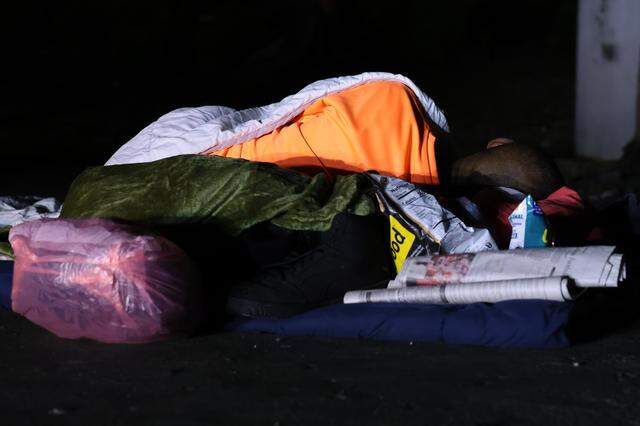 A man sleeps under the Interstate 95 overpass during the Homeless Trust’s biannual census in downtown Miami on Jan. 22, 2026. SAM NAVARRO Special for the Miami Herald
Several factors may help explain the particular resistance to shelter in Miami Beach, where 93 people are living on the street, according to the January census.
The city has a relatively transient homeless population, officials say. Some homeless people come to Miami Beach precisely because of its outdoor conditions — warm weather, sand and public showers along the boardwalk.
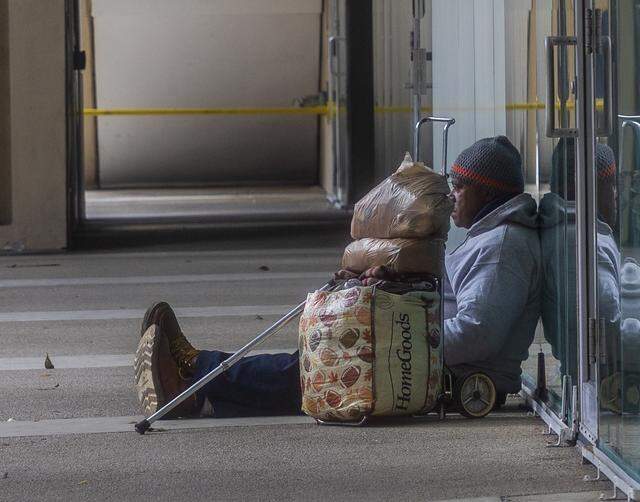 A man sits in downtown Miami near the Stephen P. Clark Center on Jan. 31, 2026. Pedro Portal pportal@miamiherald.com
There are no shelter beds in Miami Beach, but the city has contracts for more than 90 beds at multiple locations in Miami.
Offers of assistance made by police often seem “designed to elicit a ‘no,’” said Trey Santorine, a University of Miami doctoral student who surveyed almost 200 homeless people in the city of Miami as part of a recent study that also looked at homelessness in Fort Lauderdale.
When Miami Beach officers ask people if they want shelter, they typically don’t provide details about what’s being offered, according to arrest reports reviewed by the Miami Herald.
Beds offered by police are typically only available for 24 hours at the Salvation Army in Miami, meaning people may return to the street the next day — though Miami Beach officials do meet with them at the shelter to discuss potential alternatives.
“Are you offering them a three-month bed in Chapman [Partnership’s shelters], which I think people would jump at, or is this an overnight [bed] so they can decline and you can continue to arrest them?” Santorine said.
Santorine’s research indicated that most homeless people would enter a shelter if given the chance. Out of 194 respondents in Miami, 62% said they would be “very likely” or “somewhat likely” to accept shelter if offered. Only 28% said they would be very unlikely or somewhat unlikely to accept.
Most people surveyed by Santorine said they can never or rarely get into a shelter when they try to do so, and about half said they have given up on getting into a shelter altogether.
Here are some of the reasons why someone might turn down an offer for a shelter bed.
Skepticism about police
The nature of interactions between police and homeless individuals plays a role, experts say.
Homeless people may be hesitant to accept services from law enforcement, even if they are facing arrest.
Book said that’s especially true of people dealing with addiction, mental illness and past trauma.
“Expecting them to respond favorably to an officer who [is] threatening them with arrest is not just irrational and shortsighted, it’s heartless,” Book said.
Concerns about the shelters
Eugene “Gino” Gordon, who is homeless in Miami Beach, said he feels safer sleeping outside than in a shelter, where people often struggle with their mental health.
Shelter rules, which can include requirements that people leave each day before returning at night, also feel too restrictive, he said.
“It doesn’t make me feel like I’m a human being,” said Gordon, 47. “It makes me feel like I’m a high school kid.”
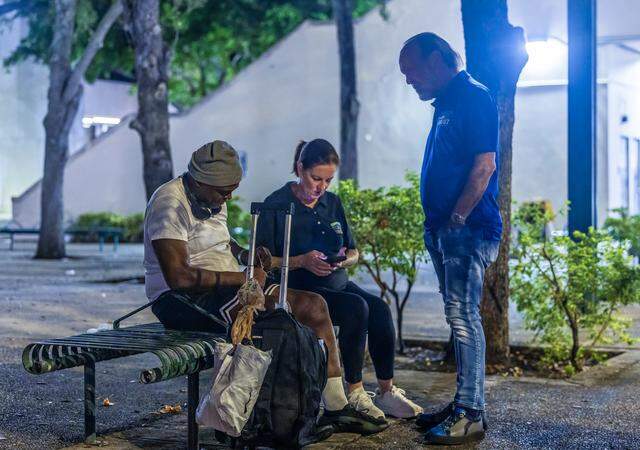 Ron Book, chair of the Miami-Dade County Homeless Trust, and Victoria Mallette, the Trust’s executive director, talk to a homeless man in downtown Miami as part of an overnight census on Aug. 21, 2025. Pedro Portal pportal@miamiherald.com
David Peery, who was homeless for years and was a plaintiff in the landmark Pottinger lawsuit on homelessness in the city of Miami, said he believes shelters can be useful for people who are “situationally homeless” — meaning they generally had housing until something happened that landed them on the street.
But for people who are “chronically homeless,” Peery said, he views shelter as “effectively useless.” Strict rules can make it feel like a “minimum security prison,” where it’s difficult to avoid rule violations and where staff sometimes treat people with “contempt.”
“In general, because of all the rules, it strips you of the last remaining possession you have: autonomy over your body,” Peery said.
Lack of trust about next steps
Many people living on the street struggle with mental illness and simply don’t trust the shelter system, said Eddie Gloria, CEO of Camillus House, which has a shelter in the city of Miami.
When people do enter a shelter, it’s essential that they have access to treatment and resources that bring them closer to stability, Gloria said.
The goal, he said, is to get people back into the community and into long-term housing, including 1,400 permanent supportive housing units that are part of Camillus’ system.
“The real issue is, where do you go from here?” Gloria said.
Employment is a part of that, too.
At Chapman Partnership, which has over 800 shelter beds at two campuses in Miami and Homestead, residents are asked to comply with an evening curfew and to look for jobs during the day. Scott Hansel, the president and CEO at Chapman, said people are surprised to learn that more than 40% of people staying there are employed in some capacity. The organization offers education and career training for its clients.
“A lot of people that come to us have made the mental shift,” Hansel said. “They want to be in a good spot. They want to be self-sustaining.”
Peery, who founded the Miami Coalition to Advance Racial Equity, said shelters can be effective when they act as a bridge to permanent housing.
He said that approach was taken at the Bikini Hostel in South Beach, which took in more than 100 homeless people in late 2024 and early 2025 after Camillus House reduced its number of emergency shelter beds.
Several people being housed there said at the time that they had positive experiences and felt supported by caseworkers. Peery said last March that about half of the people placed there had since moved into permanent or transitional housing.
“You feel like you’re a part of the community,” one resident, Michael Black, said last year of his time at the hostel, which was demolished last month as part of a development deal.
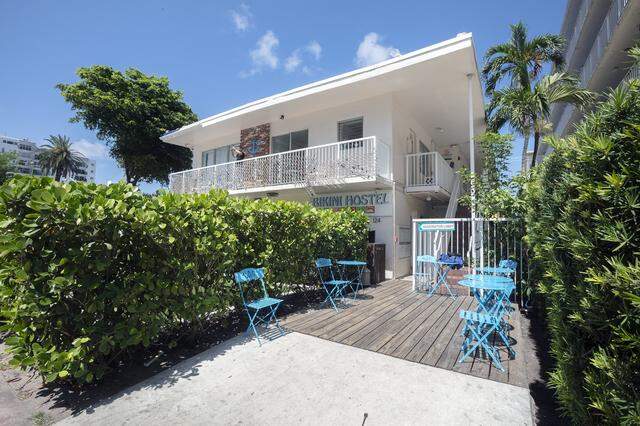 The Bikini Hostel in Miami Beach is pictured on June 9, 2025. Alexia Fodere for Miami Herald
Ultimately, Peery said, people need to be allowed to make their own decisions about shelter and paths out of homelessness.
“Forced treatment never works,” he said.

Miami Herald
Aaron Leibowitz covers the city of Miami Beach for the Miami Herald, where he has worked as a local government reporter since 2019. He was part of a team that won a 2022 Pulitzer Prize for coverage of the collapse of the Champlain Towers South condo building in Surfside. He is a graduate of Columbia Journalism School’s Toni Stabile Center for Investigative Journalism.