
We are having an important conversation in Key Biscayne about infrastructure, but it is not yet fully grounded in the realities we face.
This is not simply a debate about drainage design, cost or timing. It is about something more fundamental: What kind of community we intend to remain and whether we are willing to protect it.
A Community Defined by Everyday Life
Key Biscayne is one of the last places in South Florida that still retains the defining characteristics of a small-town USA.
People choose to live here for a reason. They choose it because children can walk or bike to school. Because neighbors know each other and, in many cases, have grown up alongside one another. Because there is an expectation, not just a hope, that daily life will be safe, stable, and predictable.
We have a Fourth of July parade that has been marching down Crandon Boulevard for more than six decades. We have our Village Green, our Community Center, our churches. We even have our own hardware store. We are nestled between Crandon Park and Bill Baggs, with a historic lighthouse that is one of the oldest standing structures in all of Miami Dade County. This is a place where people still know each other by name. That is not nostalgia. That is what we are fighting to protect.
However, there are mornings now when that daily life no longer looks the way it should. Parents see it. Residents see it. I have lived it myself. I have picked up my daughter and carried her through standing water just to get her to school. Not during a hurricane, but on a regular morning after a normal heavy rainfall event. I am not alone. Parents across this island are watching their children walk through flooded streets to get to class. That is not an inconvenience. It is a safety concern. When standing water rises on active streets, we should not have to debate whether that is acceptable.
It is not just the walk to school. It is our streets. It is our homes. It is a slow, steady erosion of the quality of life we came here to build.
Is that acceptable as a normal condition of life here? Is that the standard we are willing to settle into?
The Bay Is Part of Who We Are
The issue does not stop at what we see in front of our homes.
Just beyond it is Biscayne Bay. For many of us, the Bay is the reason we are here. It is the water our children swim in, the view at the end of the day, the first thing we point to when someone asks why we chose this island.
The Bay is under stress. Water quality conditions have shown ongoing stress across multiple indicators, with nutrient loading, declining water clarity and localized degradation that continues to be closely monitored by scientists and regulators. Regulatory oversight is tightening as a result. What we discharge into that water matters.
This is not an ordinary municipal drainage problem. We live on a barrier island at the edge of a tropical ecosystem. That means the standard for how we manage stormwater is inherently higher. Not because regulators demand it, although they increasingly do, but because this place demands it.
At the same time, coastal communities like ours are facing increasing financial pressure. Discussions at the state level around property taxes and municipal funding are introducing real uncertainty into how infrastructure will be funded over time.
So this is not just about water on the street. It is about a convergence of pressures: more frequent flooding, a more constrained environmental system in the Bay, and a more complex financial framework for addressing both.
Moving Forward with the Right Standard
I hear this question often: How can we push to move forward and at the same time insist on getting the system right?
These are not competing ideas. They are the same idea.
We must move forward because the cost of waiting is real and growing. But we must move forward with a system designed for the conditions where we live, not a conventional solution borrowed from a municipality that does not sit on a barrier island next to a stressed tropical bay.
Any system we build must move water and manage water quality at the same time. Increasing capacity alone is not enough. That does not mean solutions are unavailable. It means the bar is higher, and it should be.
The Financial Weight of Getting It Wrong
If flooding continues or if solutions fail to perform, the effects compound over time. Insurance costs rise. Coverage becomes more limited. Property values begin to reflect that uncertainty.
We are beginning to see this dynamic emerge across coastal Florida.
And here is something that deserves more attention. We tend to talk about flooding in terms of specific events: how many inches fell, which streets were affected. But that is not how the insurance industry sees it. That is not how lenders or credit agencies see it.
They are not measuring events. They are pricing risk.
While we debate individual rainfall events, financial markets and insurers are making long term assessments about whether communities like ours represent a sound investment. Those assessments are based on patterns, on trajectories, and on whether a community is taking credible action to address its vulnerabilities.
Behind all of this sits a constraint that often goes unspoken: insurability. If flooding is not effectively managed, premiums increase, options decrease, and some properties may struggle to obtain coverage at all. This is not just about managing water. It is about maintaining the ability to insure homes and protect our long term investments.
The Cost of Waiting
It is natural to want more information, more options, and more certainty before making major decisions.
But waiting is not neutral. Costs increase. Conditions evolve. Funding becomes more complicated. And the problem itself does not pause while we debate it.
A Responsibility Beyond Ourselves
Every community that endures has a moment where the people in it decide to build something that outlasts them.
The Matheson family donated the land that became Crandon Park so it would belong to the public forever. Bill Baggs fought to protect the southern tip of this island from development. And according to parish history, the families who founded St. Agnes started with just a few dozen parishioners holding flashlights during mass in a borrowed house on Mashta Point.
They did not build for themselves. They built for us.
Now it is our turn. This is not just about what we experience today. It is about whether the next generation inherits a community that was cared for, or one that was allowed to quietly decline because the decisions were hard and the costs were high.
Who We Are and What We Are Willing to Accept
At its core, this is not a technical discussion. It is a question of standards.
What are we willing to accept as normal? Streets that flood regularly. Daily disruption as a condition of life. Gradual decline in the quality of a place people chose for its stability and safety.
Or do we decide, clearly, that we are not willing to accept that.
A Framework for Moving Forward
Before choosing any solution, we need clarity on the fundamentals. What environmental standards must be met. What level of performance is required under real conditions. What long term costs, including operation and maintenance, will be incurred. And what risks remain if assumptions prove wrong.
Only then can any option be evaluated responsibly.
Key Biscayne has always been more than a place on a map. It is a community people choose for their families, for their children, for a way of life that is increasingly rare.
That does not sustain itself.
It requires decisions, sometimes difficult ones, that protect it. Because the reality is simple: if we accept conditions that slowly degrade daily life, we will not lose this community all at once. We will lose it gradually, and quietly, until the place we chose no longer resembles the place we remember.
That is the decision in front of us. Not whether to act, but whether we act before the opportunity to act meaningfully begins to narrow.
I hope we make the right one. We are all in this together. Let us do what the founders of this community did before us. Let us do our part to protect and maintain Key Biscayne, the natural, beautiful, historical paradise that it is.
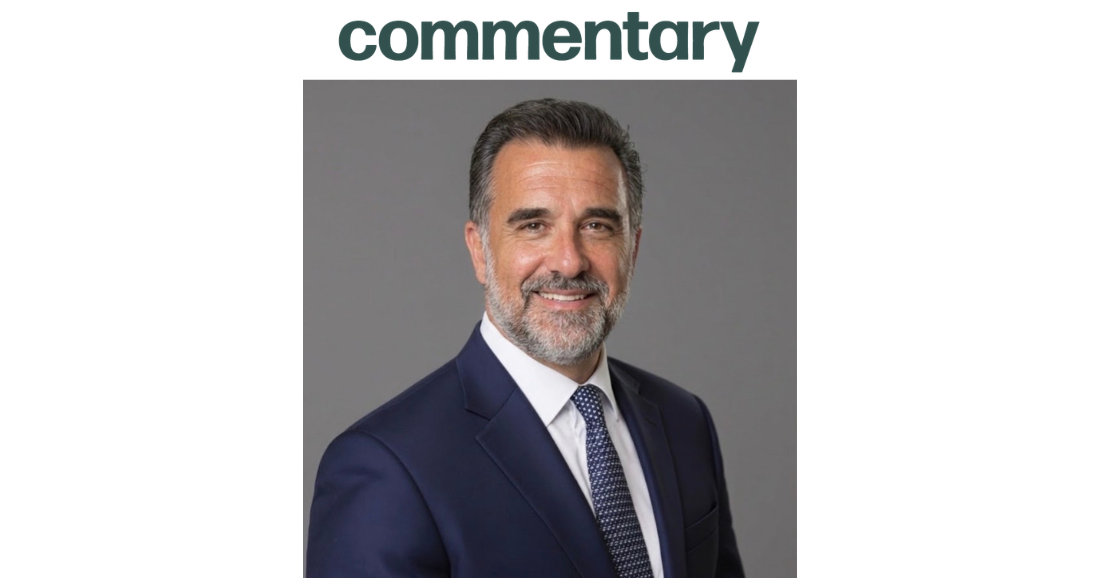
Fernando A. Vazquez, PE
Resident and Councilmember
Village of Key Biscayne