
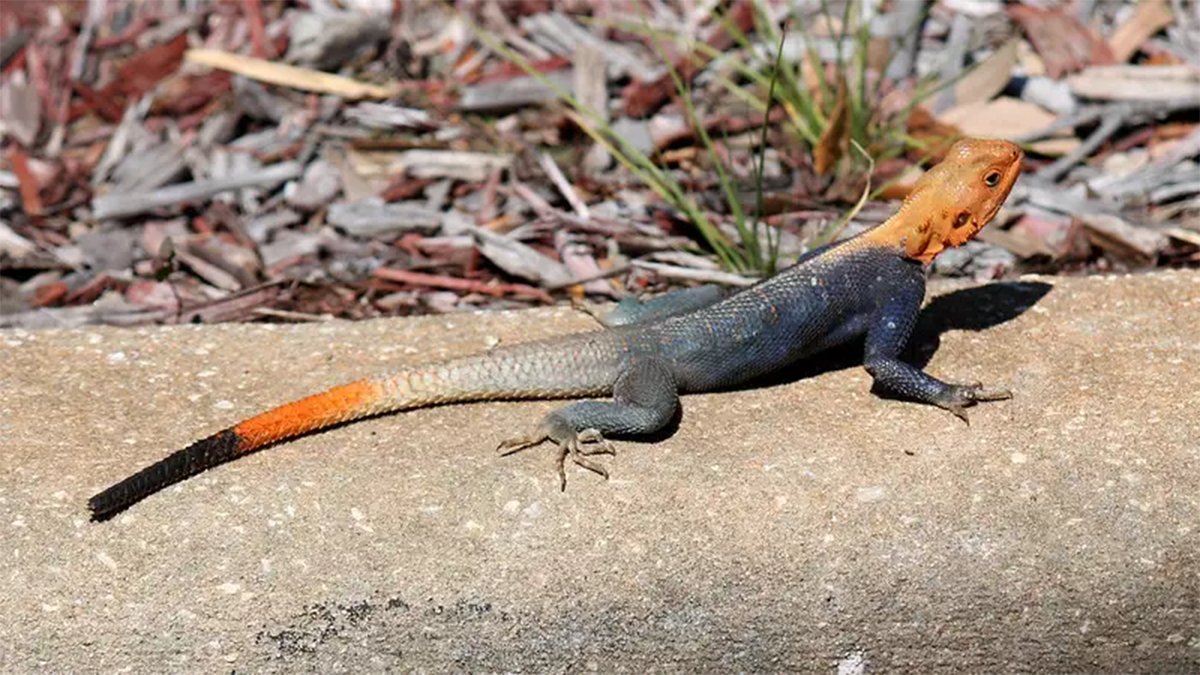
One of the many introduced lizard species in Florida might be increasing transmissions of mosquito-borne illnesses to humans, according to a University of Florida research team.
The Peter’s rock agama is a nonnative lizard, which has been observed in South Florida’s environments since 1976, according to UF’s Institute of Food and Agricultural Sciences (IFAS).
The orange-headed lizard is native to East Africa and was introduced to Florida through the pet trade after some of them escaped or were released on purpose by pet owners, the Florida Fish and Wildlife Commission said.
Although they are most concentrated in South Florida, they have been observed to appear in the northern areas of the state in recent years.
EDDMapS. 2025. Early Detection & Distribution Mapping System. The University of Georgia – Center for Invasive Species and Ecosystem Health. Available online at http://www.eddmaps.org/; last accessed October 24, 2025.
Even though little research has been done on this species, IFAS says they are capable of predation and competition against other lizards, like the brown anole, but it is unlikely that they have a significant negative impact on Florida’s environment.
However, a research team at UF looked into THE effect these agama lizards could be causing for the public health of Floridians.
Peter’s rock agama lizard could be indirectly increasing transmissions rates of mosquito-borne illnesses to humans, according to Nathan Burkett-Cadena, an associate professor at the UF/IFAS Florida Medical Entomology Laboratory.
The idea behind this reasoning comes from the selection of hosts by mosquitoes, which end up transmitting a virus.
“Any time a mosquito bites a lizard, it doesn’t bite a bird or a human. This could result in fewer cases of mosquito-borne disease, because birds are natural hosts of some dangerous mosquito-transmitted viruses,” stated Burkett-Cadena.
And because agama lizards may decrease the brown anole population, and because they tend to sleep in crevices and won’t be bitten by mosquitoes, this could lead to higher mosquito bites on humans or other animals, such as a bird, which could eventually transmit a virus to a human, according to Burkett-Cadena.