
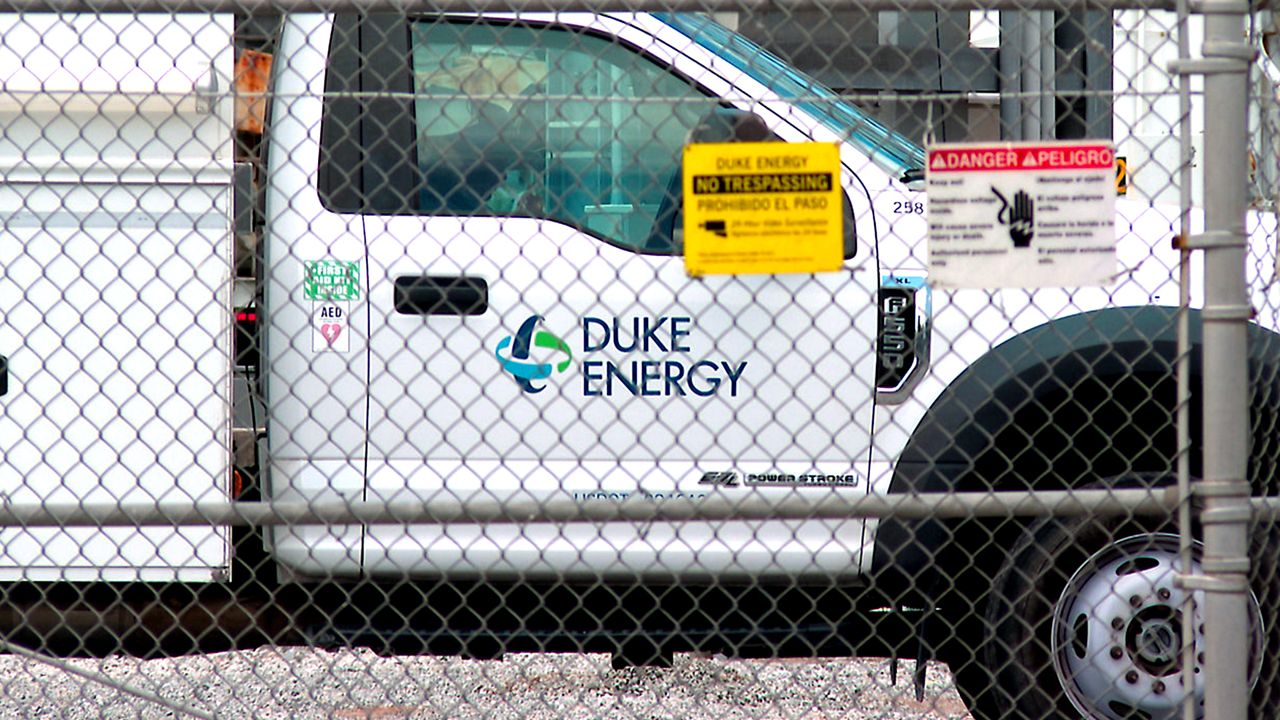
ST. PETERSBURG, Fla. — On Friday, the City of St. Petersburg will be evaluating bids for a feasibility study to understand how much it would cost to leave Duke Energy and create its own municipal electric utility.
St. Pete isn’t the only city looking into this. Clearwater recently finished its study, which showed immediate savings to customers.
But it’s a years-long process that, by any estimate, would cost hundreds of millions of dollars.
According to the Florida Municipal Electrical Association, Duke Energy, which provides power to 1.7 million Floridians, has among the highest rates in the state.
It’s why the City of St. Petersburg is considering leaving the massive investor-owned utility.
“We have an opportunity, for the first time in 30 years, to see is this really the best we can be doing for our residents. Are these the cheapest energy rates we can provide for our residents?” said Richie Floyd, vice chair of St. Pete’s City Council.
For the last 30 years, St. Pete has been in what’s called a “franchise agreement” with Duke Energy. It allows only Duke to operate, install and maintain energy infrastructure within the city.
But that agreement ends in August 2026. The city can either re-sign with Duke, or get into the power game themselves.
“As of right now, the City of St. Pete has no other option than to explore this, because we wouldn’t be doing right by our citizens if we blindly signed another contract with a company that’s charging us the highest rates in the state,” Floyd said.
Clearwater has been working for a year and a half to explore its energy options. A feasibility study, paid for by the city, showed, “The Clearwater [municipal electric utility] could provide service to its customers at a lower annual average cost than Duke.”
But to get there, the study indicated the city would have to spend at least $572 million to buy all of Duke’s infrastructure.
Duke, meanwhile, paid for its own study, which estimates the cost much higher at more than a billion dollars.
On its website, Duke makes clear, “our system is not for sale.”
That means if Clearwater wants to pursue this, studies say they may have to take the infrastructure through eminent domain. Even if the city wins, they’re required by law to pay for Duke’s attorney costs.
Citing active negotiations, neither the City of Clearwater nor Duke would speak to Spectrum Bay News 9 for this story.
But we wanted to know what the process is really like, from a city that’s already done it. The last time a municipality took over an electric utility was 20 years ago in Winter Park, just north of Orlando.
Randy Knight led the project back then and is now city manager.
“The biggest challenge was that constant political battle,” Knight said. “They were playing the card that we didn’t know what we were doing, we’re going to be too small, we’re going to have five guys in a pickup truck trying to restore power after a hurricane,” said Knight.
Knight says the energy company at the time filed several lawsuits against Winter Park, trying to stop the process. The city succeeded, but that was just the first battle.
“You still got to do all the work to disconnect yourself from their system and become your own system. It’s just a very long and detailed process,” Knight said.
For the first five years, Winter Park’s energy rates mirrored that of the prior utility.
But as the years went on, the rates came down. Today, the average Winter Park resident is paying $35 less than a Duke customer.
At points over the last two decades, Knight says Winter Park customers have paid as much as 40% less than investor-owned utilities.
Spectrum News asked Knight if, 20 years on, the process was worth it.
“For us, it was a good idea. I tell anyone thinking about it, ‘If your ‘why’ is big enough — why are you doing it? — and if that’s big enough, it’s a good idea,” said Knight.
For St. Petersburg and Clearwater, the “why” comes down to cost.
Marley Price has been canvassing with her group, Dump Duke, which alerts residents to the energy discussions happening in their communities.
“Most people we talked to have had an experience with Duke Energy that they’re willing to see what the options are otherwise,” Price said.
More than 4,000 people have signed their petition, encouraging elected officials to explore public power.
“If it’s going to show that it’s never going to pay off, maybe it’s not the best option and negotiating with Duke is. But if this study shows that there would be savings in the first year, like it shows in Clearwater, that’s only going up from there,” said Price.
It’s a sentiment echoed by Floyd.
“Ultimately, the decision is about community control versus corporate control,” he said.
In Winter Park, Knight says a big concern for residents was reliability, going from a large corporation to just a small city operation. But Winter Park is part of an interstate power alliance that takes advantage of other municipal power workers to help fix widespread outages, if and when they happen.