
A carved axe-handle; a southside wood yard; churches of fellowship; businesses of fellowship; a promise to a thriving, Black community; the Historic Gas Plant District. Of this list, only the axe handle remains.
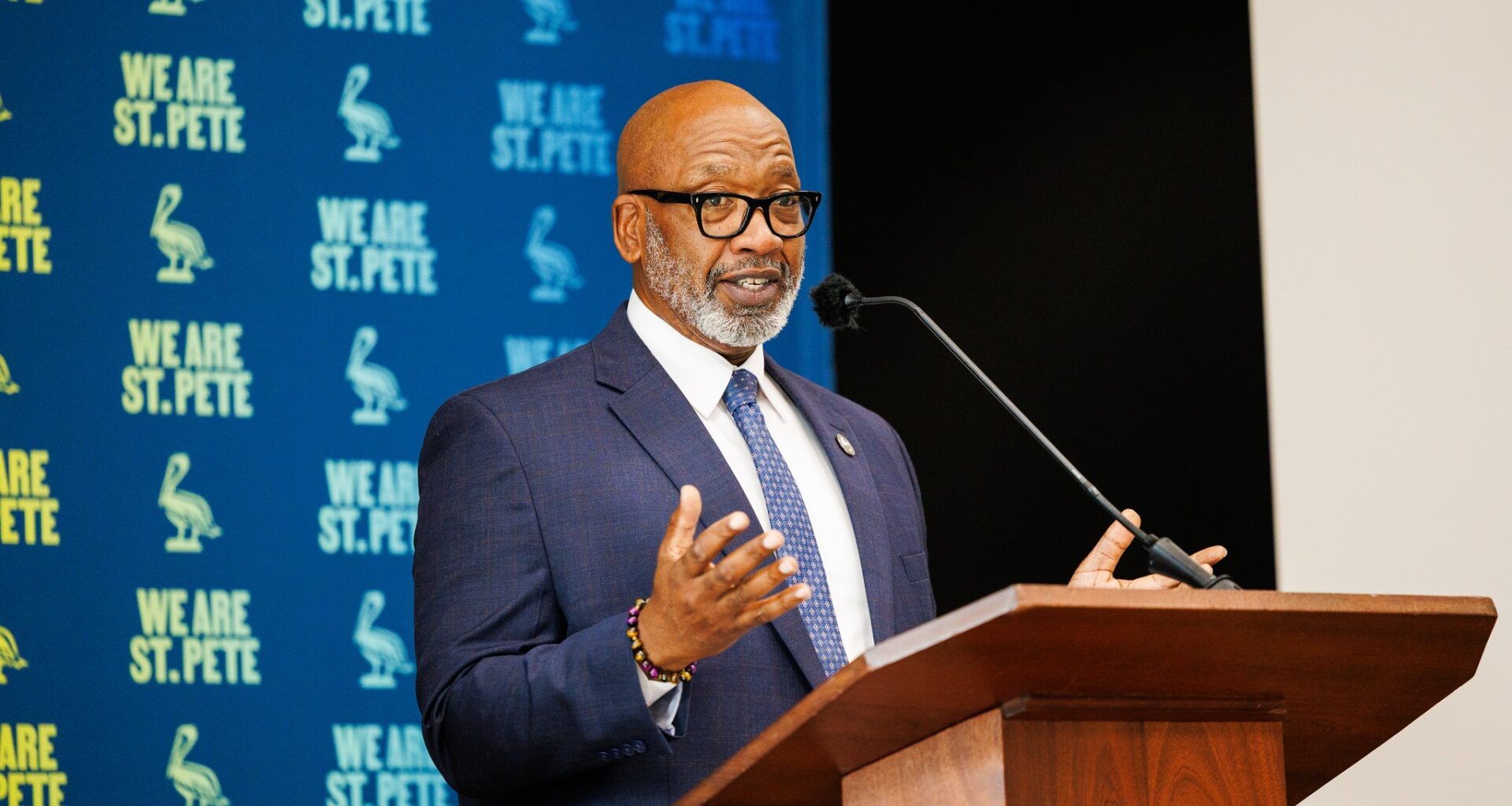
St. Pete Mayor Kenneth Welch keeps that axe handle in his study – a reminder of the wood yard he worked as a boy under the watchful eye of his grandfather, Flagmon Welch. The wood yard, along with the churches, businesses and homes of the Gas Plant District, were relinquished on the grounds that a promise would be kept.
The promise: jobs, opportunities and development for the displaced Black community.
So far, those promises haven’t been realized by previous administrations, and, ironically, Welch’s first mayoral campaign was to make good on the very promise that was made to him. As of Thursday, the city has officially narrowed the Historic Gas Plant redevelopment proposals, recommended by city staff, down to four: ARK Ellison Horus, Blake Investment Partners, Foundation Vision Partners and the Pinellas County Housing Authority.
“It comes down to JHOP principles,” Welch said, referring to Jobs, Housing, Opportunities and Promises. “I said I would bring together partners at county, city, faith-based and business levels – you name it – and that we were going to give that our best effort in honoring a bid aligned with JHOP principles.”
The decision to raze the Gas Plant District during Welch’s youth, however, had a different purpose than JHOP: eminent domain for I-75, the dozing of the Historic Gas Plant, the flat, black tar pooling around what is now called Tropicana Field, for cars to tuck in next to each other. That’s how St. Pete became major league, though not immediately.
The then-dubbed Tampa Bay Devil Rays, now simply the Rays, occupied the former Historic Gas Plant District’s slant-roofed dome in 1998, nearly a decade after residents living in the Historic Gas Plant were displaced in the mid ’80s.
“Looking at that axe handle I keep, I remember that time in life,” Welch told the Catalyst. “I remember those promises.”
Taking agency to fulfill that promise himself, rather than it be given to him from those who promised it in the first place, was an unexpected journey. While his grandfather owned a wood yard, his father was the second African American on St. Pete City Council, elected in 1981, during Welch’s senior year of high school, at a time when he was determined not to follow in his dad’s footsteps.
Though an incident at church prompted him to push back against narratives. His pastor said something Welch did not find aligned with scripture, and, with the encouragement of his mother, Alletha Welch, he penned a refutational letter. His first, but not his last. Many more followed for the op-ed section, “My View,” of the Tampa Bay Times.
Writing op-eds graduated him to the School Board, then later the Pinellas County Commission, a seat he held for nearly 20 years before becoming mayor. As a commissioner, he devised the Homeless Leadership Board.
“I was the first chairman,” said Welch. “I created the first housing trust fund for the county.”
Those early efforts on the commission echo today.
“Out of the Homeless Leadership Board came a financial source which has funded affordable housing all over the county,” Welch said. “It went on to fund Pinellas Hope and other sites that are still active. Penny for Pinellas for affordable housing is also still using some of those dollars.”
“Biggest lesson I learned from Dad was it isn’t about your name on a plaque. People don’t remember who was mayor, but they do know if there’s affordable housing, projects for the homeless. It’s always about impact.”
Welch’s mayoral tenure, though, was quickly complicated by circumstance: he was sworn into office remotely during the Covid pandemic, responded to unprecedented consequences following major hurricanes, and received significant public backlash for his handling of debris, disparagingly called “Welch piles.”
“It was an unprecedented set of challenges. Some criticism was about debris removal, but we removed more debris in 90 days than has ever been removed before. We moved over 2 million cubic yards of debris after (Hurricane) Helene.”
The debris removal was the largest in the city’s history, five times the total from previously combined storms, before Hurricane Milton swiftly followed Helene.
Those storms also forced a recalibration of city priorities, as the damage exposed major infrastructure flaws. Two of the city’s three sewer plants, for instance, needed to go offline due to storm surge.
Quoting what the owner of Naked Farmer, a St. Pete restaurant, said during a public feedback session, Welch reframed the situation: “The obstacle is the way forward,” adding that “we see the work we need to be a resilient community.”
The Gas Plant, a long simmer in Welch’s life from youth to adulthood, has similarly been criticized. After the collapse of the Rays and Hines deal following damage to Tropicana Field’s roof, a roughly $60 million repair, development rights returned to the city.
That has made the Historic Gas Plant District redevelopment politically central to the upcoming election cycle.
When asked how he helps today’s community understand the significance of the site, Welch said: “It’s a great example of equity as we implement it. Equity is equal opportunity informed by history.”
“There’s a lot of folks who don’t have that history,” he added. “That’s why we renamed the effort from Tropicana Field redevelopment to what it was before baseball, and that is the Historic Gas Plant.”
Despite criticism that he lost the Rays and mishandled the redevelopment, Welch argues, “I kept my promise, but the Rays didn’t honor theirs.”