
As part of the Orlando Sentinel’s 150th anniversary, this month we are looking back at the history and growth of the area’s arts and entertainment scene.
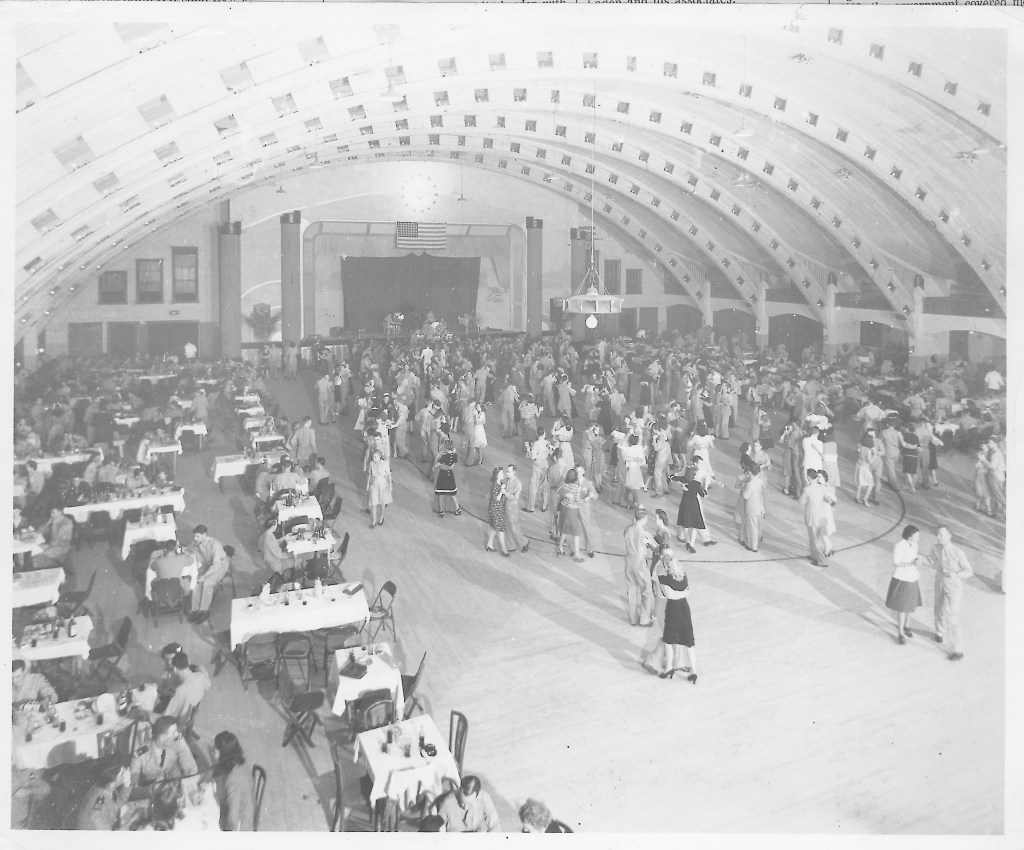
One early popular entertainment venue for Orlando was known as Kemp’s Coliseum, which opened nearly 100 years ago.
Here’s a story about Kemp’s Coliseum from the Sentinel’s Mark Andrews. It was first published in November 1997:
Orange County was enjoying the last savory months of the 1920s real estate boom, and times were good when developers announced plans to build a coliseum on North Orange Avenue in Orlando, near Lake Ivanhoe, in 1926.
Before the Coliseum opened, Orlando’s entertainment venues included several movie theaters and the old Opera House, built in 1884. Orlando Municipal Auditorium on west Livingston Street opened in February 1927.
For nearly 50 years, the Coliseum served as a social focal point for Orlando. It sat on a triangular piece of land that pointed toward Lake Ivanhoe. The site featured the city’s first public swimming pool on the lake side.
The Coliseum, which opened in December 1926, had a solid maple floor 114 feet wide and 132 feet long. The 36-foot-high ceiling was buttressed by curved trusses that eliminated the need for view-obstructing supports.
But soon after the Coliseum’s completion, its builders went broke. In an attempt to lure motion-picture producers to Orlando in 1932, the Coliseum was offered for $30,000 with the pitch that it was big enough to hold four film studios. Hollywood didn’t bite.
In 1937, a Georgia-born promoter named W.R. “Bill” Kemp took over the Coliseum. He immediately converted the front of the building’s second story into living quarters for his family. Next door, he built the Bowliseum bowling alley and next to the swimming pool added locker facilities, which he named the Aquaseum.
A fortress-like building, the facility then known as Kemp’s Coliseum housed big-band dances, auto shows, rock concerts, basketball games, wrestling matches, high school proms, firemen’s balls, civic events, political rallies, a roller rink and even a National Guard company. During its heyday in the 1940s and ’50s, the Coliseum hosted the bands of Tommy Dorsey, Harry James, Guy Lombardo, Gene Krupa, Sammy Kaye, Count Basie and Louis Armstrong.
“It was a very nice place in its day – the nicest and biggest we had around here,” Joseph Wittenstein, who had booked big bands into the Coliseum as an enterprising teenager, told The Orlando Sentinel for a 1986 story. “It was a one-of-a-kind thing. Everybody knew where the Coliseum was.”
In late January 1934, the American Legion sponsored a walk-athon in the Coliseum to raise funds. It lasted three months, to the surprise of civic officials, and stirred up considerable controversy because of the large amount of money that left town, Eve Bacon recorded in Orlando: A Centennial History. After the walkathon ended in late April, the city passed an ordinance prohibiting anymore such events from taking place.
In the 35 years that Kemp operated the Coliseum, he turned the facility from a white elephant into the closest thing Orlando had to a civic center.
But times changed. Eventually, the big bands priced themselves out of the market for the Coliseum. Also, Orlando’s high school built a gymnasium for its basketball team, and the city renovated its auditorium – what is now Carr Performing Arts Centre – to draw away many of the civic events.
Today, the remains of the Aquaseum swimming pool are buried beneath an office parking lot. The site of its bowling alley, the Bowliseum, is now a warehouse. Kemp’s Coliseum was torn down in November 1972.