
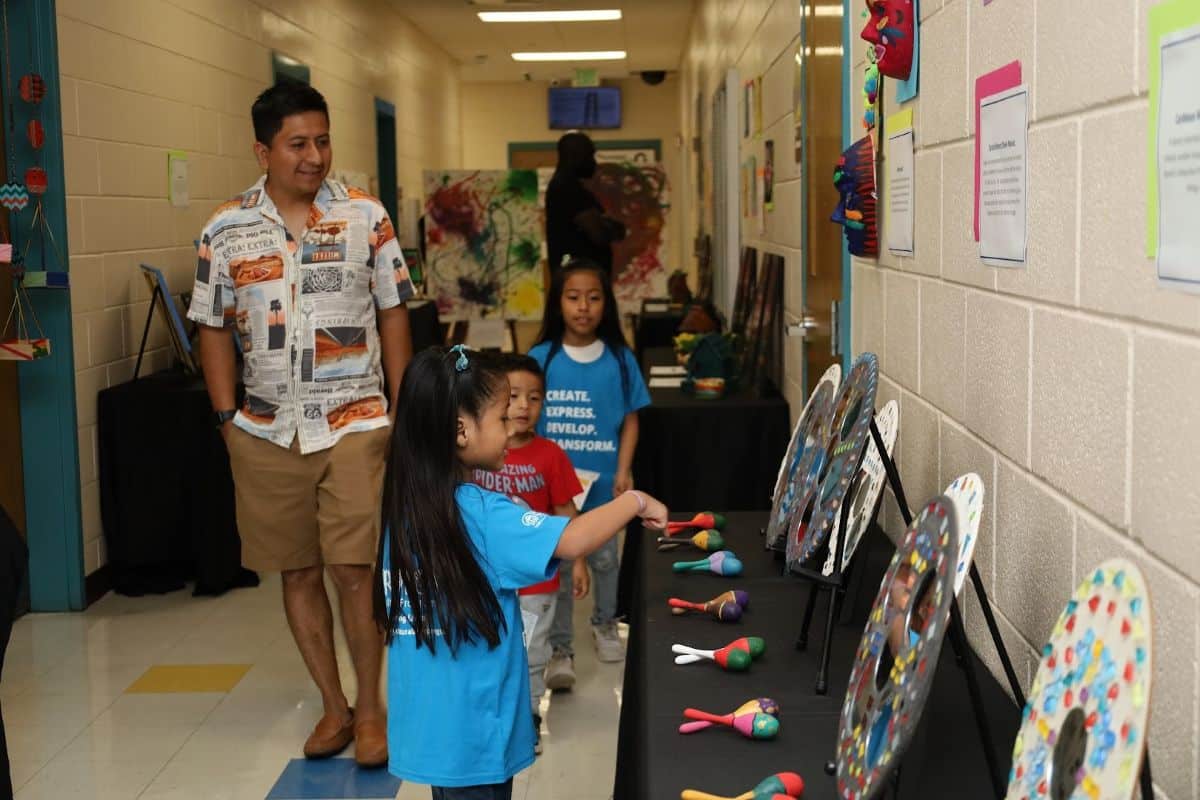
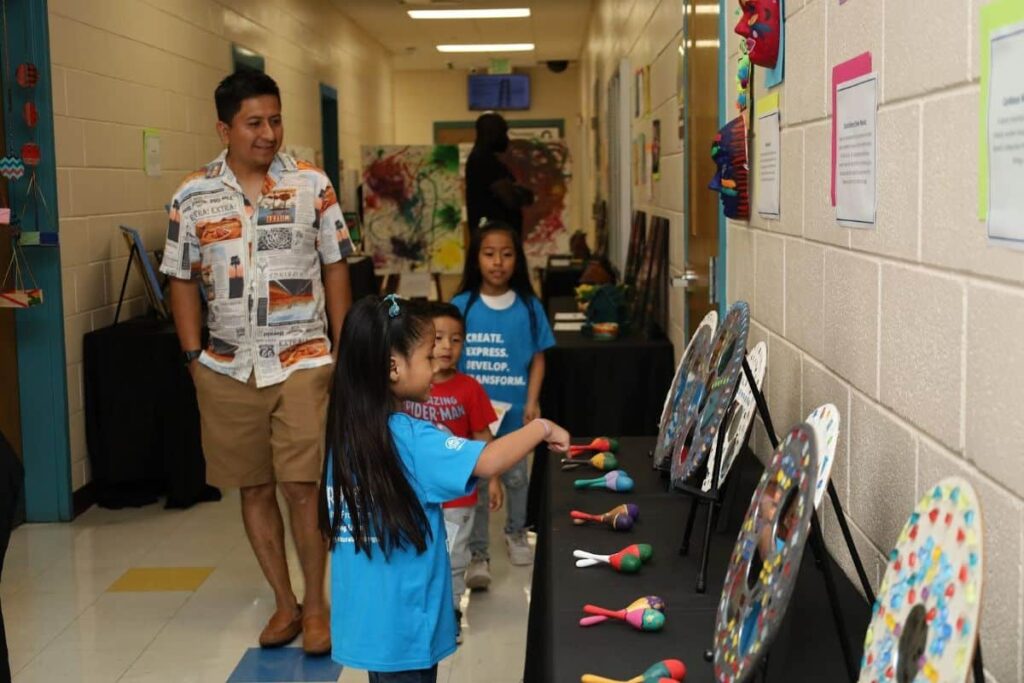
 Prodigy uses the arts to develop children and teens’ life skills. (University Area CDC)
For a quarter century and counting, the Prodigy Cultural Arts Program has helped young people discover their voice, confidence, and capacity to lead.
University Area Community Development Corporation founder and former State Senator Victor Crist’s bold idea for an arts-based youth intervention program in North Tampa’s University Area neighborhood launched Prodigy in 2000. Since then, it’s grown with funding from the Department of Juvenile Justice to 20 locations across seven counties, providing an average of 1,000 youths a year a space where dance, music, visual art, and mentorship become catalysts for change. Prodigy is the story of a community that refused to accept the limits placed upon it and instead chose to build something extraordinary.
The beginning
Crist recalls the University Area in the years before the University Area CDC and Prodigy, when eight separate civic groups were struggling to make meaningful progress.
“We joined forces and became one organization called the USF Area Community Civic Association in 1987,” he says. “I became president, and I’m still president today.”
That unified effort grew into a civic movement, attracting federal, state, and local funding and public-private partnerships that helped revitalize the community. A turning point came in 1992, when the University Area was one of only seven communities selected out of 3,800 for federal Weed and Seed designation.
“It was the most coveted designation to receive from the federal government at the time because of the empowerment and monies that came with it,” Crist says.
The program’s grassroots approach caught the attention of then-Attorney General Janet Reno, who made the site “her number one training site” in the country, Crist says
As Weed and Seed neared its end, Crist wanted to keep the momentum going. In 1998, he founded the University Area CDC and began designing a new kind of program, one that would use the arts not as enrichment, but as intervention.
“I wanted to create a program that was science‑based, that would use the visual performing arts to modify deviant behavior and improve learning skills and document it,” he says.
With the University of South Florida and McGill University of Canada as research partners, Prodigy was born. The early years were rigorous, data‑driven, and groundbreaking.
“What we were also doing that no other juvenile justice program in the country was doing was documenting recidivism, not six months, not 12 months, not 18 months, but 24 months after graduating from the program,” Crist says.
The results were astonishing.
“We were maintaining a 94 percent non‑recidivism rate, and we were measuring it out past six months to 24,” Crist says.
In 2008, the Best Practices in Mental Health International Journal recognized Prodigy as one of the best arts‑based intervention and prevention programs worldwide.
Shaping today’s youth
Today, Prodigy’s focus is prevention rather than intervention. But it remains a place where young people learn to trust themselves, express themselves, and discover who they can become. Few students embody that journey more than eighth grader Danaja Khahaifa, a Prodigy Cultural Arts ambassador who was recently the youngest nominee, and the only African‑American female nominee, for the Children’s Week Florida Youth Advocate Award.
Danaja has been involved with Prodigy since before she could walk. When she was a baby, both of her parents worked at Prodigy. Still, she felt nervous walking into her first class. The welcoming environment washed away her anxiety.
Over the years, Prodigy has shaped Danaja’s sense of identity, helping her build the confidence to “speak up and lead other people.” She’s also grown as an artist. This year, she stepped into a new kind of leadership, traveling to Tallahassee with other Prodigy students to advocate for the program that helped mold her. Speaking with lawmakers, her nerves faded quickly.
“Once you get in there, it’s like, ‘Oh, I got this,’” she says. “Because the legislators are so welcoming, they’re so nice and sweet.”
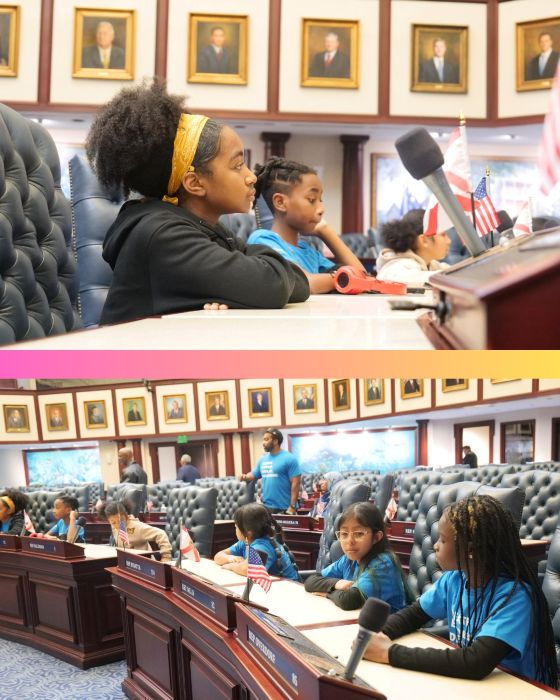 Prodigy ambassadors at the Florida Capitol (University Area CDC)
She and her peers also put on a dance performance in the Capitol courtyard, a moment that blended artistry, advocacy, and courage. Crist says seeing young people step into that advocacy and visibility role is proof of Prodigy’s purpose.
“It makes my heart shine,” he says. “To see these young people out there making good of themselves and their lives with skills they never realized they had, and a voice that’s being heard that they never thought would have a chance to be seen or heard, it’s incredible.”
Behind every student there’s a teacher who helps guide that transformation. For dance instructor Carrie Harmon, who has taught at Prodigy for 15 years, the work is deeply personal. She discovered her calling through dance and now helps today’s youth find their own.
“I reassure them that they’re going to be fine,” she says. “It’s just a dance class.”
She pushes when she knows a student is close to a breakthrough, telling them, “I know you’re about to get this move, do it. Just do it.”
Through the years, Harmon has watched countless young people evolve through movement, discipline, and community. One student entered the program so shy she could barely speak.
“Now that very kid is like a leader in the class,” Harmon says.
Dance becomes a form of meditation for many of them.
“When you can really get to a point where you’re freestyling, it’s just you and the music,” Harmon says. “You’re present, you’re in the moment, and that’s meditation.”
She sees that same growth in Danaja.
“She’s a really sweet person and very wise for her age,” Harmon says. “Her enthusiasm for coming to class and being in class has really impacted me.”
Commitment to the arts
Prodigy is just one result of Crist’s commitment to the arts. He notes that he’s led the effort to fund and build two theaters. There’s the theater at the University Area CDC’s Victor Crist Community Center Complex, formerly the University Area Community Center. While serving on the Hillsborough County Commission, Crist and Doug Wall, the late co-founder of the New Tampa Players, led the charge to fund, design, and build the New Tampa Performing Arts Center, an effort County Commissioner Ken Hagan carried forward after Crist left office.
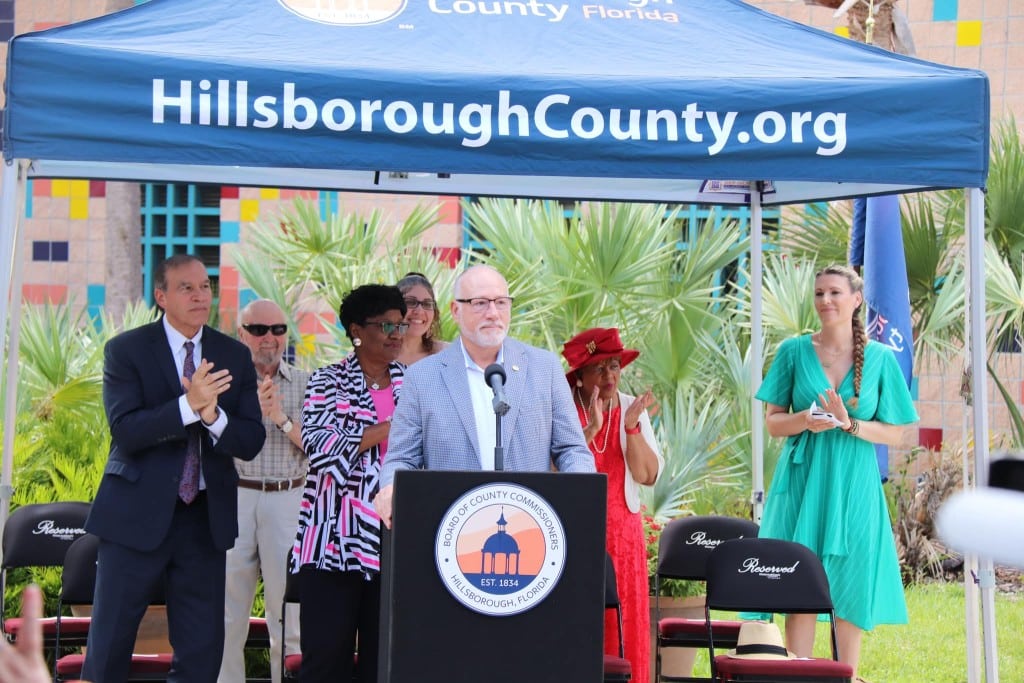 Victor Crist at 2024 naming ceremony for the Victor Crist Community Ceremony Complex (UACDC)
He also envisioned a school where young children could grow up immersed in creativity. The Hillsborough County Public Schools told him that if he raised the money and built a school, the school district would run it. The result is Mueller Elementary, adjacent to the Victor Crist Victor Community Center Complex, the state’s first visual performing arts magnet elementary school, Crist says.
These spaces, like Prodigy itself, were created to give young people a place to grow, imagine, and transform. They’re proof of what happens when someone believes deeply enough in the power of the arts to change lives.
As Prodigy looks to the future, Crist’s hope is simple and urgent. He wants elected officials and anyone who has ever questioned the value of the arts to understand that a program like Prodigy is not an extracurricular activity. It is a lifeline.
He has spent decades building Prodigy and watching it grow from an idea to a model for programs around the world. After all these years, his connection to the program remains deeply personal.
“This is my passion,” he says. “This is my love. And it’s my baby.”
For more information, go to Prodigy Cultural Arts