
ORLANDO, Fla. — After sending threats of annihilation to Iran, President Donald Trump announced this week that a two-week ceasefire agreement is underway between all countries involved and that negotiation points have been shared.
That announcement between the U.S., Israel and Iran saw reactions from people worldwide as uncertainty still looms.
What You Need To Know
President Trump announced a two-week ceasefire agreement between the U.S., Israel and Iran Tuesday
Iranian Americans in Central Florida feel that the ceasefire may not last long and want a regime change in Iran
Central Floridians with loved stationed in the Middle East are asking for a peaceful end to the war that brings the troops back safely
For Iranian Americans, they’re hoping that a regime change is still possible to free the Iranian people from what they call an evil administration.
But for people in Central Florida paying close attention to this conflict, they believe the ceasefire won’t last long.
“This is really an intentional break to be able to reposition the military lineup by both the U.S. and Israel,” said former Iranian America Community Center President Pooyan Balouchian.
Balouchian says that most Iranians are in favor of this fight against the Islamic Republic of Iran regime.
While they’re not too worried about what’s being called a fragile ceasefire, Balouchian says they are worried that this conflict will end with the same Islamic Republic in power as before.
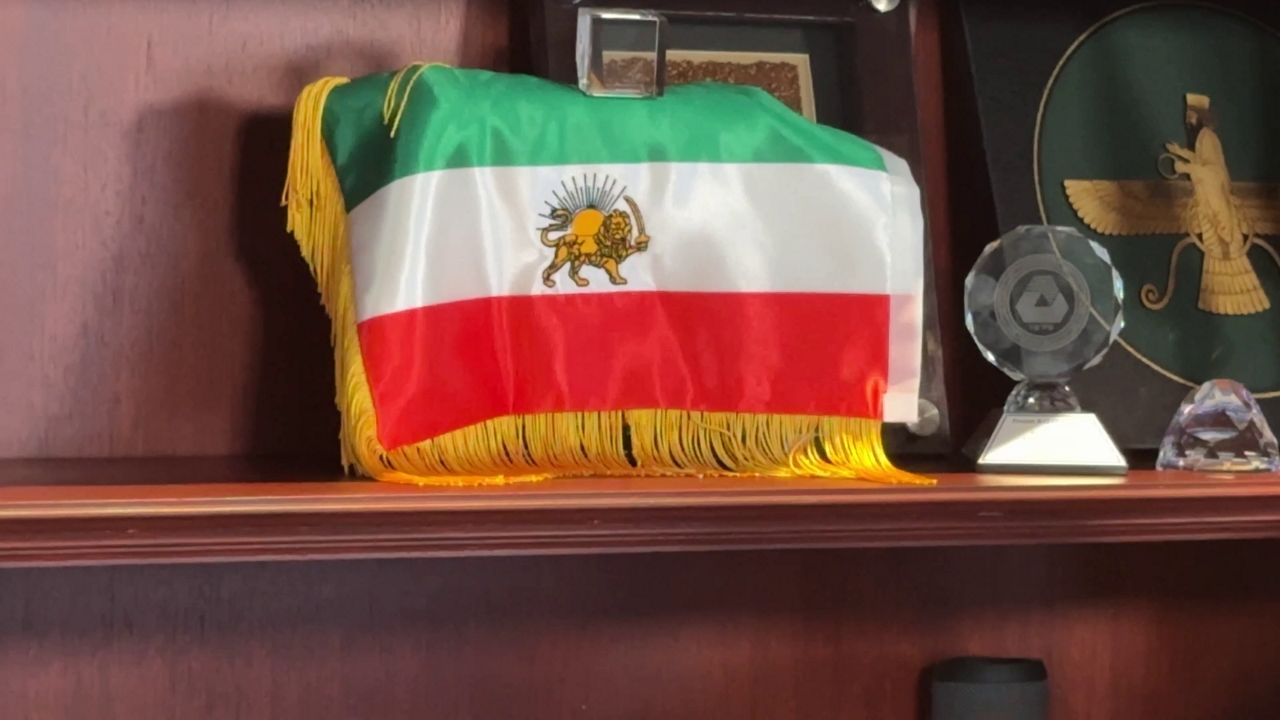
“So, by no stretch of the imagination would we call this a regime change in fact,” said Balouchian. “Regime change by the people of Iran is going to be accepted only when the crown prince Reza Pahlavi helps lead the transition to a democratic government.”
The perspective on the war is a little different for Central Florida residents with loved ones deployed in the Middle East.
Victoria Pera says her boyfriend is in the U.S. Air Force and was deployed to the Middle East back in October.
She says he was originally set to come back home this month but the start of this conflict put his homecoming in limbo.
“I can just tell by the tone of his voice that it’s just really hard for them to keep that motivation, and I think that’s the hardest part to be honest,” Pera said.
Pera says that she is cautiously optimistic that this ceasefire will start the process of peace talks but doesn’t feel that it is the end all be all.
But she ultimately wants this conflict to be over and for the solution to come in a peaceful way.
“I think the best-case scenario, and everyone would probably agree with me, would be that it’s done. And that no more people have to die,” said Pera. “No more children will have to die, no more families have to die that have no part in this war. And it’s peace across the whole Persian Gulf and across the entire Middle East.”
One part of the conflict that Balouchian says is not talked about enough is how the Iranian people need help.
For more than 40 days, they have been without the internet, making it hard to communicate outside of the country. He’s hoping the U.S. and Israel can step in to help make technology available, like Direct To Cell using Starlink.