
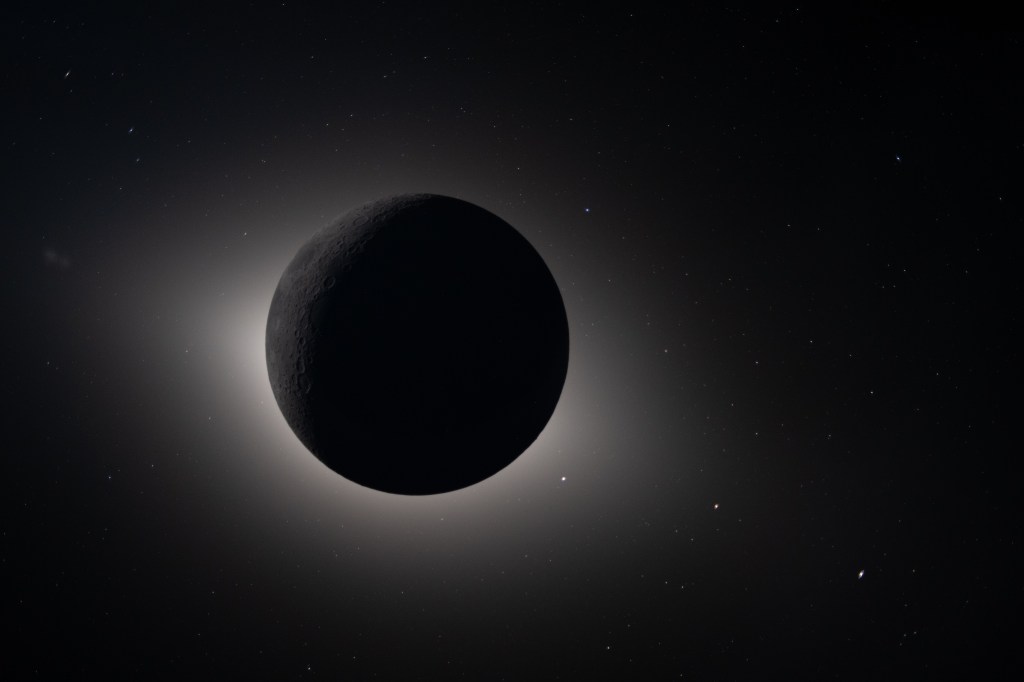
NASA has released several images of the Artemis II mission from space including their historic trip around the far side of the moon and an eclipse by the moon of the sun.
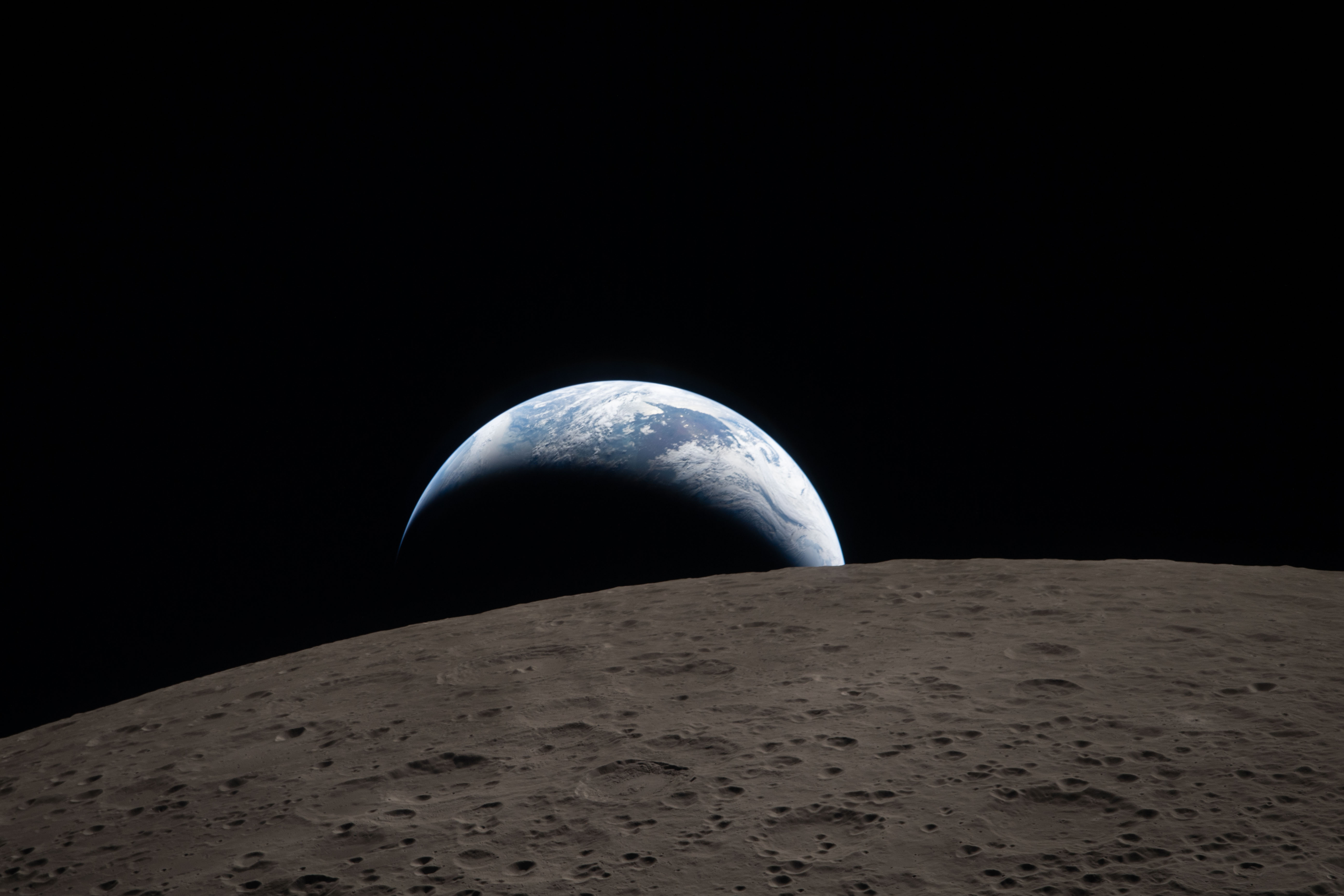
Earthset captured through the Orion spacecraft window at 6:41 p.m. on April 6, 2026, during the Artemis II crew’s flyby of the moon. A muted blue Earth with bright white clouds sets behind the cratered lunar surface. The dark portion of Earth is experiencing nighttime. On Earth’s day side, swirling clouds are visible over the Australia and Oceania region.
In the foreground, Ohm crater has terraced edges and a flat floor interrupted by central peaks. Central peaks form in complex craters when the lunar surface, liquefied on impact, splashes upwards during the crater’s formation. (Courtesy/NASA)
The lunar surface fills the frame in sharp detail, as seen during the Artemis II lunar flyby, while a distant Earth sets in the background on April 6, 2026. (Courtesy/NASA)
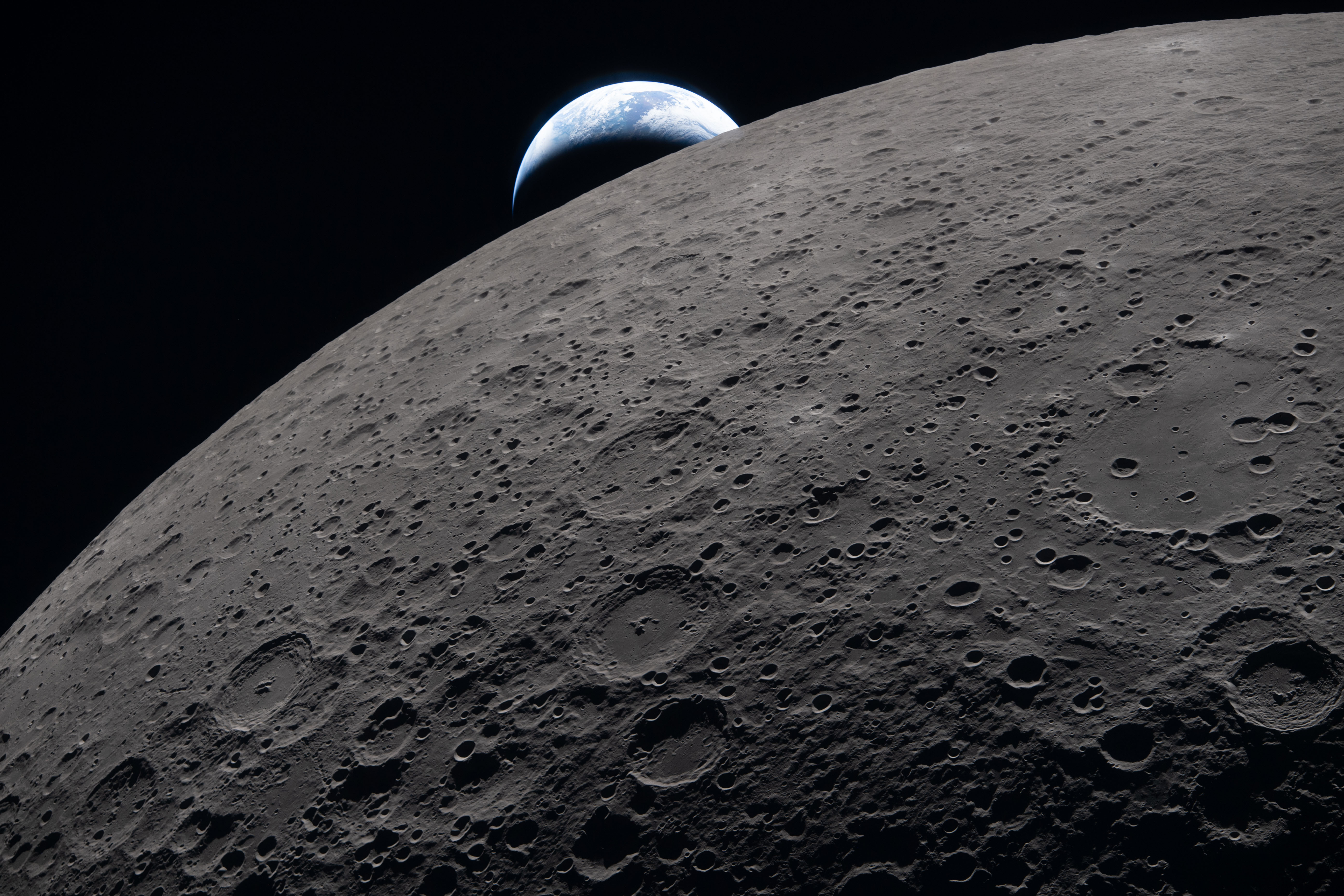
The lunar surface fills the frame in sharp detail, as seen during the Artemis II lunar flyby, while a distant Earth sets in the background. This image was captured at 6:41 p.m. EDT, on April 6, 2026, just three minutes before the Orion spacecraft and its crew went behind the moon and lost contact with Earth for 40 minutes before emerging on the other side. In this image, the dark portion of Earth is experiencing nighttime, while on its day side, swirling clouds are visible over the Australia and Oceania region. In the foreground, Ohm crater shows terraced edges and a relatively flat floor marked by central peaks — formed when the surface rebounded upward during the impact that created the crater. (Courtesy/NASA)
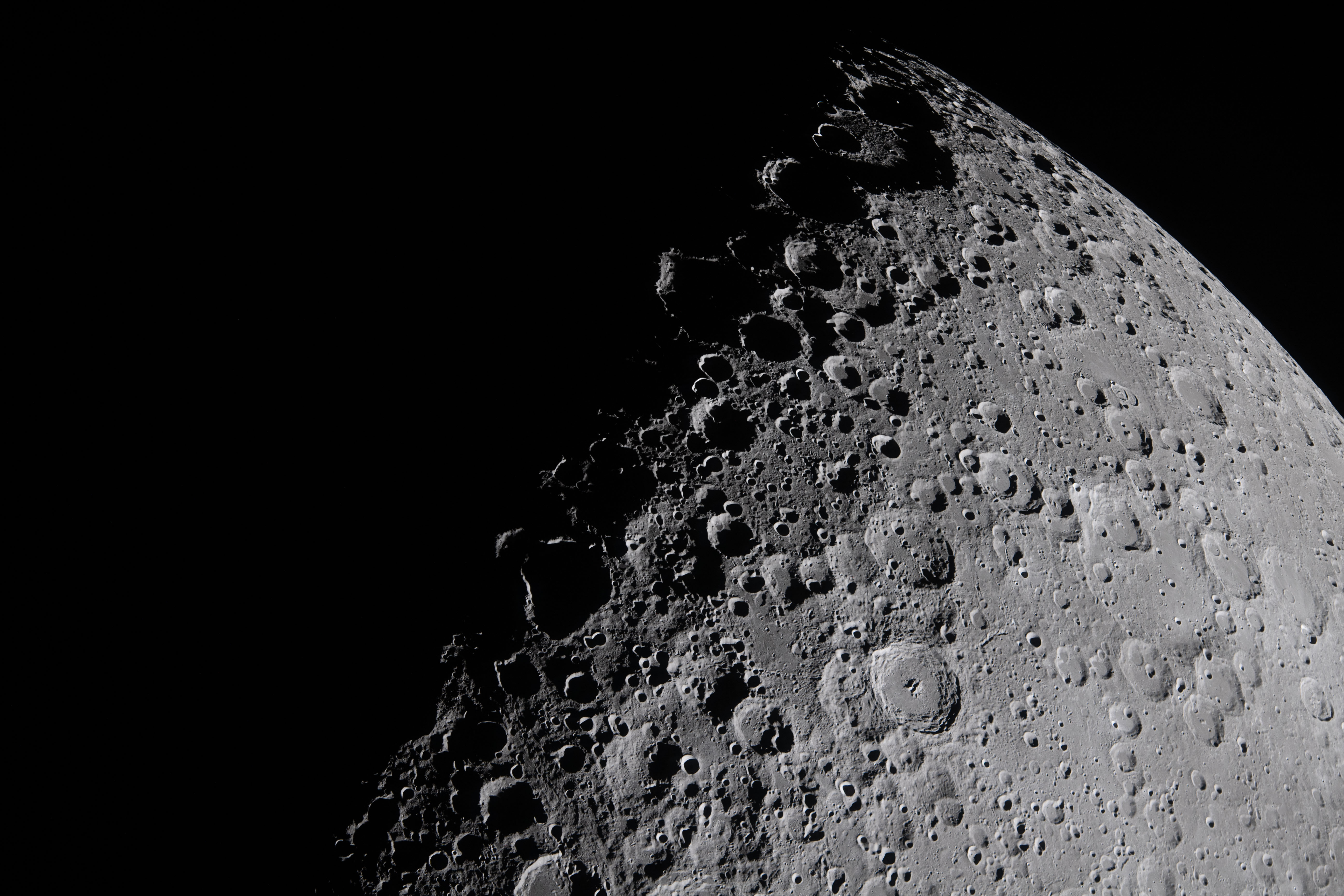
The Artemis II crew captures a portion of the moon coming into view Monday, April 6, 2026 along the terminator – the boundary between lunar day and night – where low-angle sunlight casts long, dramatic shadows across the surface. This grazing light accentuates the moon’s rugged topography, revealing craters, ridges, and basin structures in striking detail. Features along the terminator such as Jule Crater, Birkhoff Crater, Stebbins Crater, and surrounding highlands stand out. From this perspective, the interplay of light and shadow highlights the complexity of the lunar surface in ways not visible under full illumination. The image was captured about three hours into the crew’s lunar observation period, as they flew around the far side of the moon on the sixth day of the mission. (Courtesy/NASA)
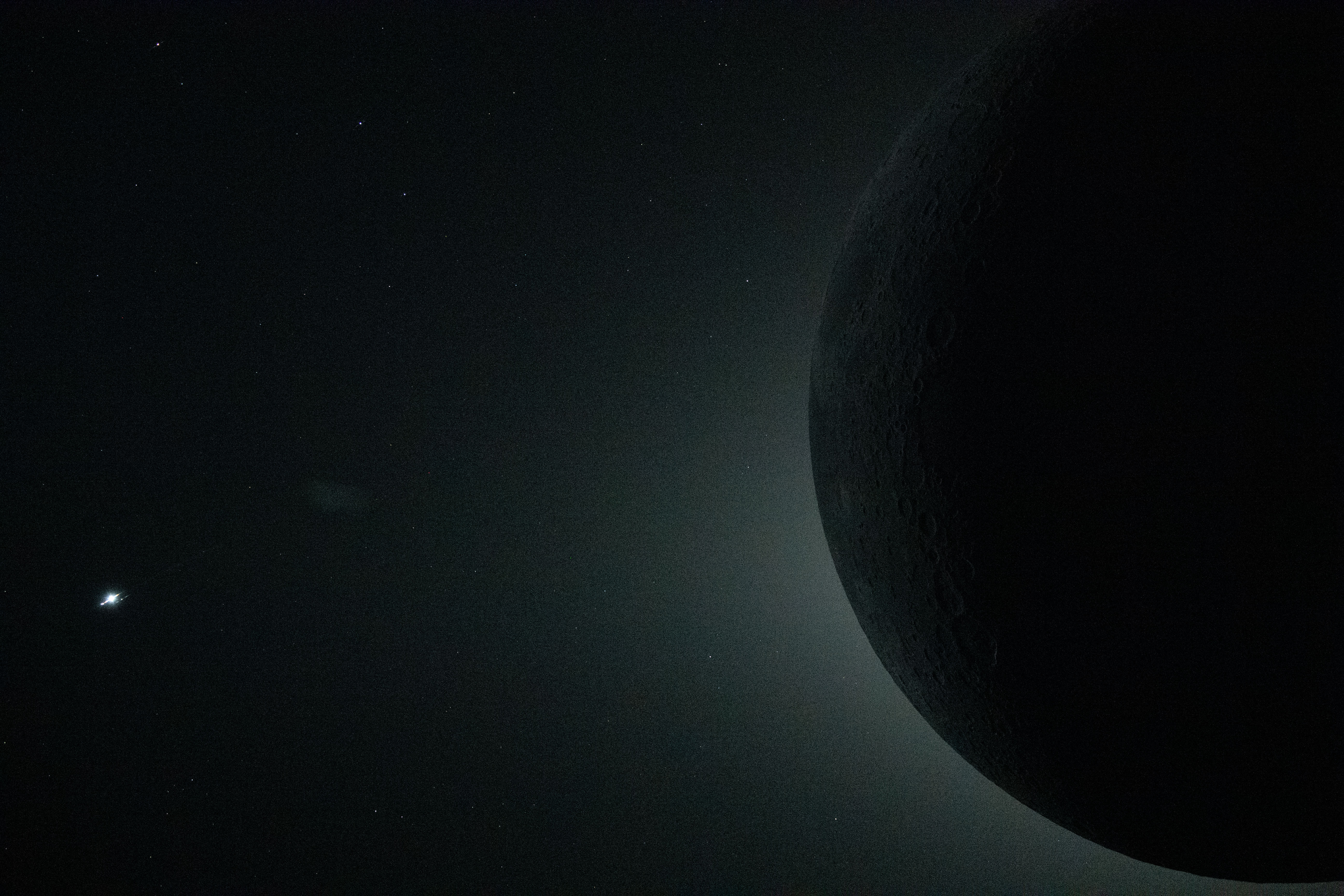
A close-up view from the Orion spacecraft during the Artemis II crew’s lunar flyby on April 6, 2026, captures a total solar eclipse, with only part of the moon visible in the frame as it fully obscures the sun. Although the full lunar disk extends beyond the image, the sun’s faint corona remains visible as a soft halo of light around the moon’s edge. From this deep-space vantage point, the moon appeared large enough to sustain nearly 54 minutes of totality, far longer than total solar eclipses typically seen from Earth. This cropped perspective emphasizes the scale of the alignment and reveals subtle structure in the corona during the rare, extended eclipse observed by the crew. The bright silver glint on the left edge of the image is the planet Venus. The round, dark gray feature visible along the Moon’s horizon between the 9 and 10 o’clock positions is Mare Crisium, a feature visible from Earth. Faint lunar features can be seen because light reflected off of Earth provides a source of illumination. (Courtesy/NASA)
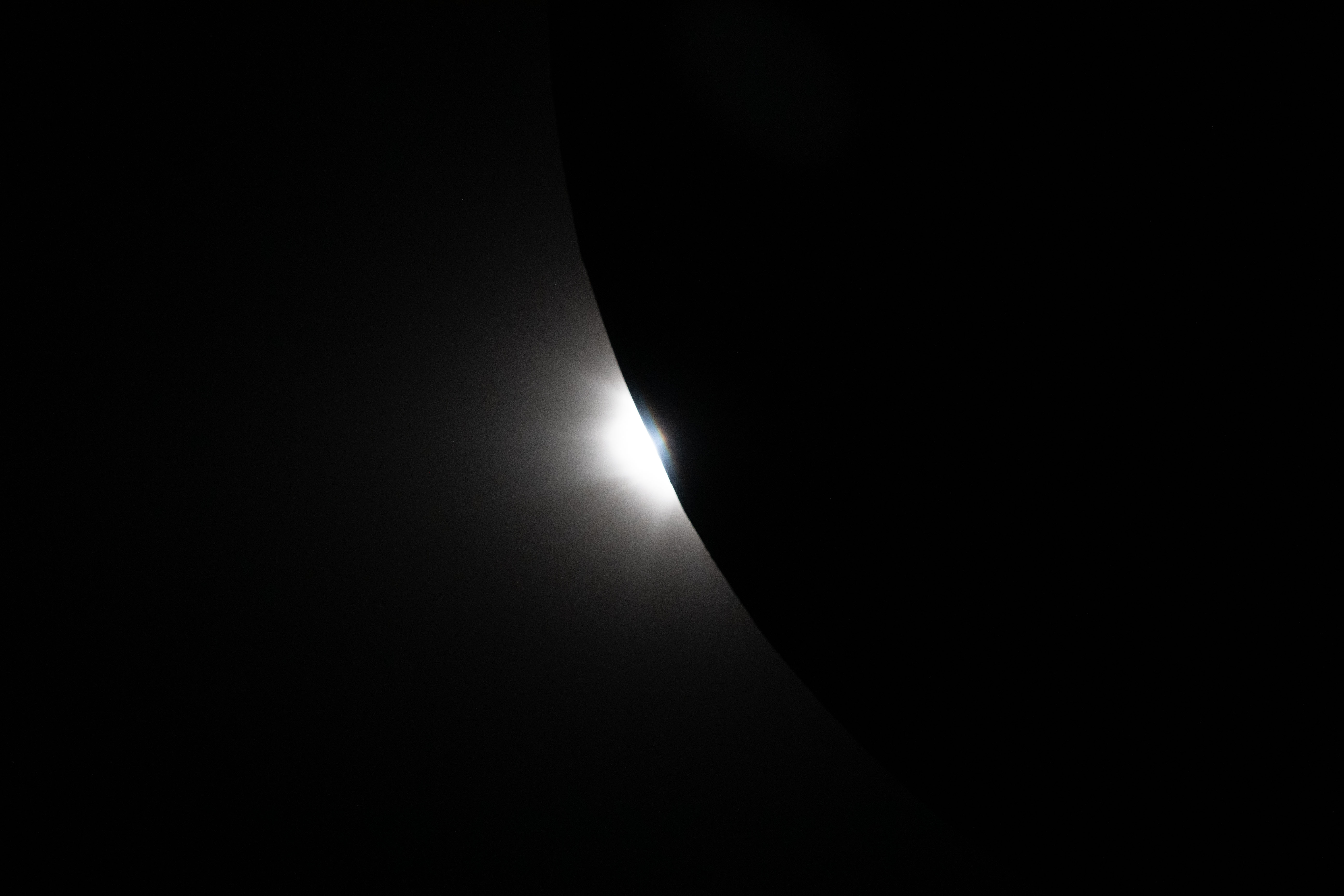
Captured from the Orion spacecraft near the end of the Artemis II lunar flyby on April 6, this image shows the sun beginning to peek out from behind the moon as the eclipse transitions out of totality. Only a portion of the moon is visible in frame, its curved edge revealing a bright sliver of sunlight returning after nearly an hour of darkness. In final moments of the eclipse observed by the crew, the reemerging light creates a sharp contrast against the moon’s silhouette and reveals lunar topography not usually visible along the lunar limb. This fleeting phase captures the dynamic alignment of the sun, moon, and spacecraft as Orion continues its journey back from the far side of the moon. (Courtesy/NASA)
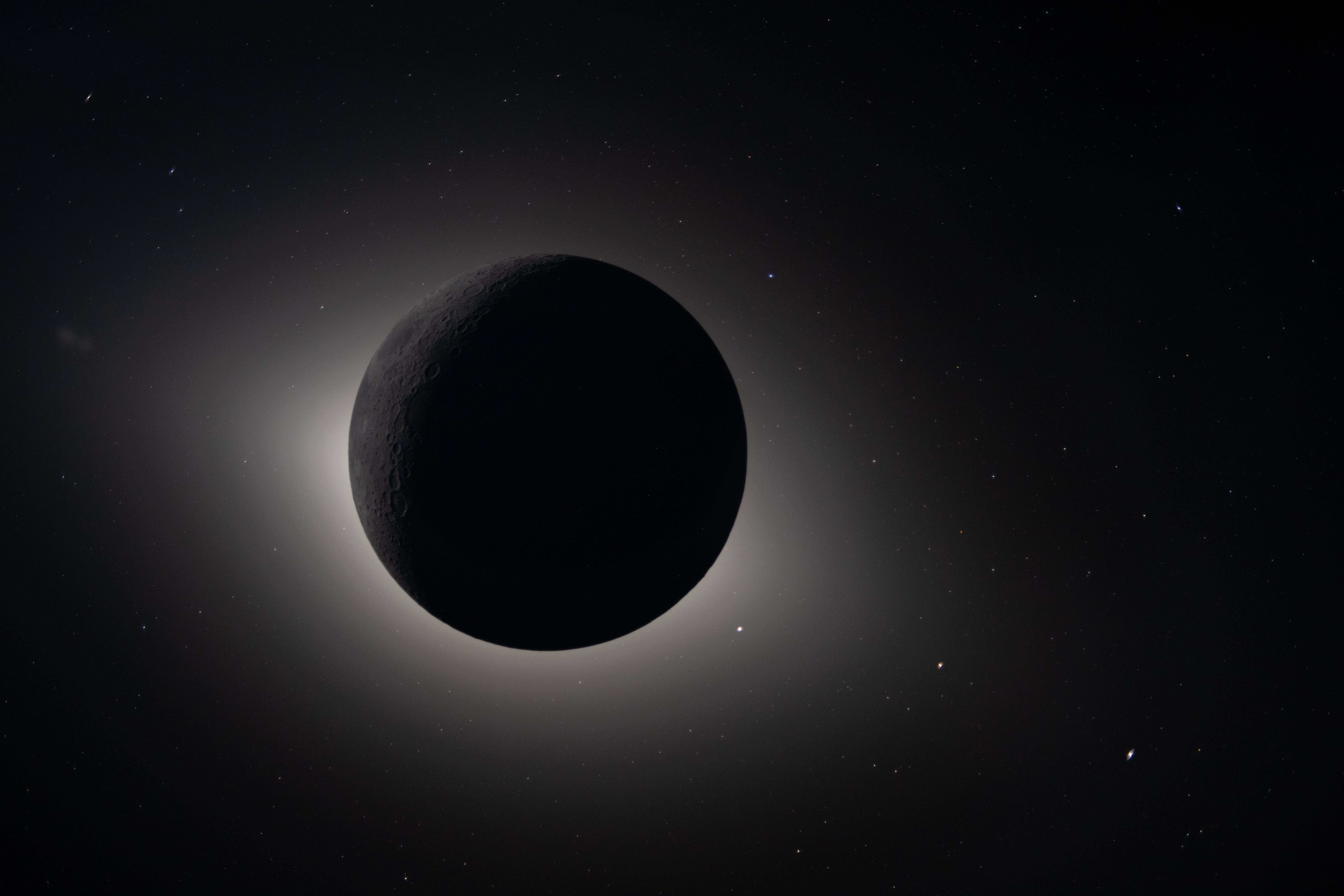
Captured by the Artemis II crew during their lunar flyby on April 6, 2026, this image shows the moon fully eclipsing the sun. From the crew’s perspective, the moon appears large enough to completely block the sun, creating nearly 54 minutes of totality and extending the view far beyond what is possible from Earth. The corona forms a glowing halo around the dark lunar disk, revealing details of the sun’s outer atmosphere typically hidden by its brightness. Also visible are stars, typically too faint to see when imaging the moon, but with the moon in darkness stars are readily imaged. The faint glow of the nearside of the moon is visible in this image, having been illuminated by light reflected off the Earth. (Courtesy/NASA)
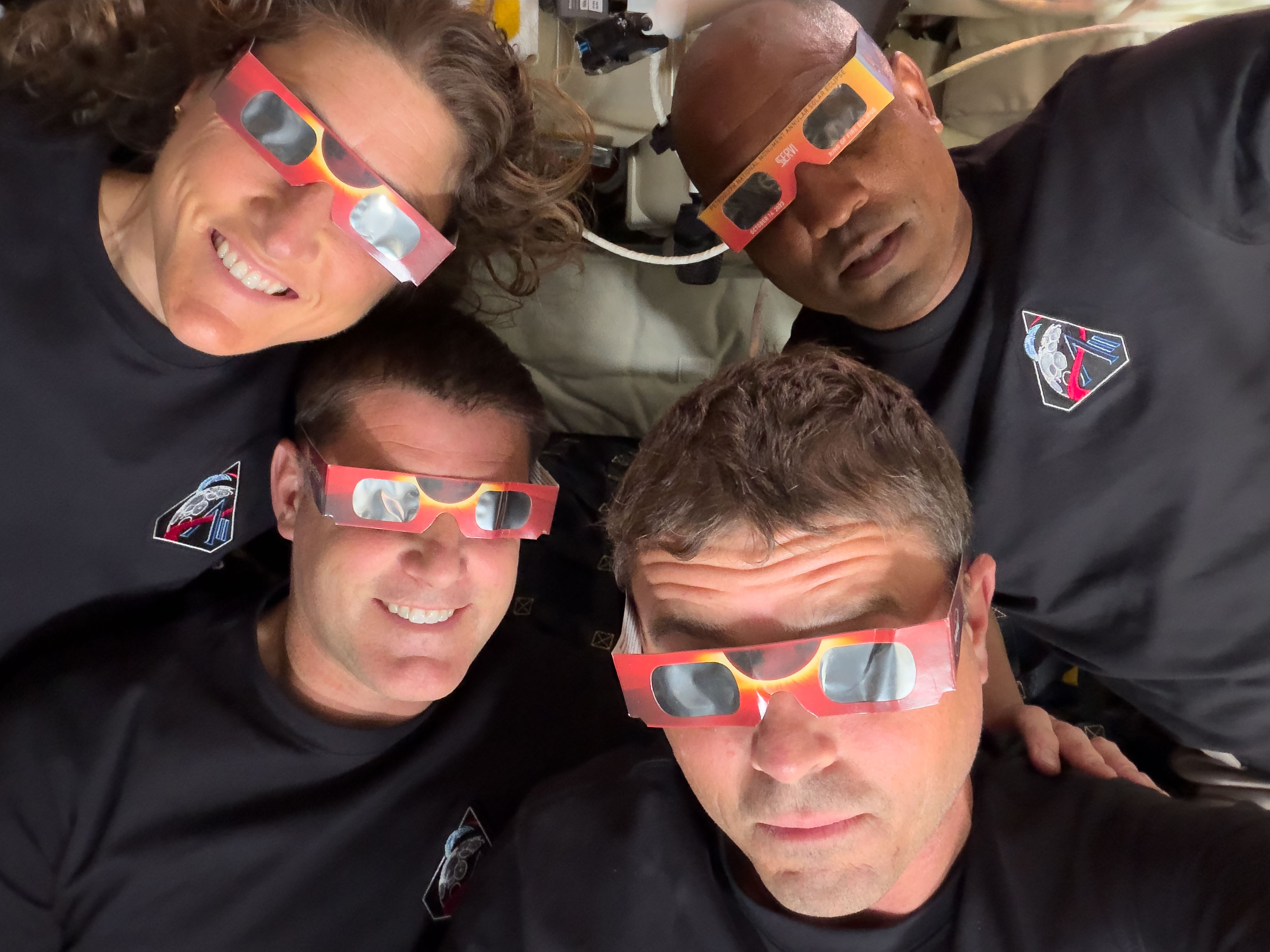
The Artemis II crew – mission specialist Christina Koch (top left), mission specialist Jeremy Hansen (bottom left), commander Reid Wiseman (bottom right), and pilot Victor Glover (top right) – uses eclipse viewers on April 6, 2026, identical to what NASA produced for the 2023 annular eclipse and 2024 total solar eclipse, to protect their eyes at key moments during the solar eclipse they experienced during their lunar flyby. This was the first use of eclipse glasses at the moon to safely view a solar eclipse. (Courtesy/NASA)
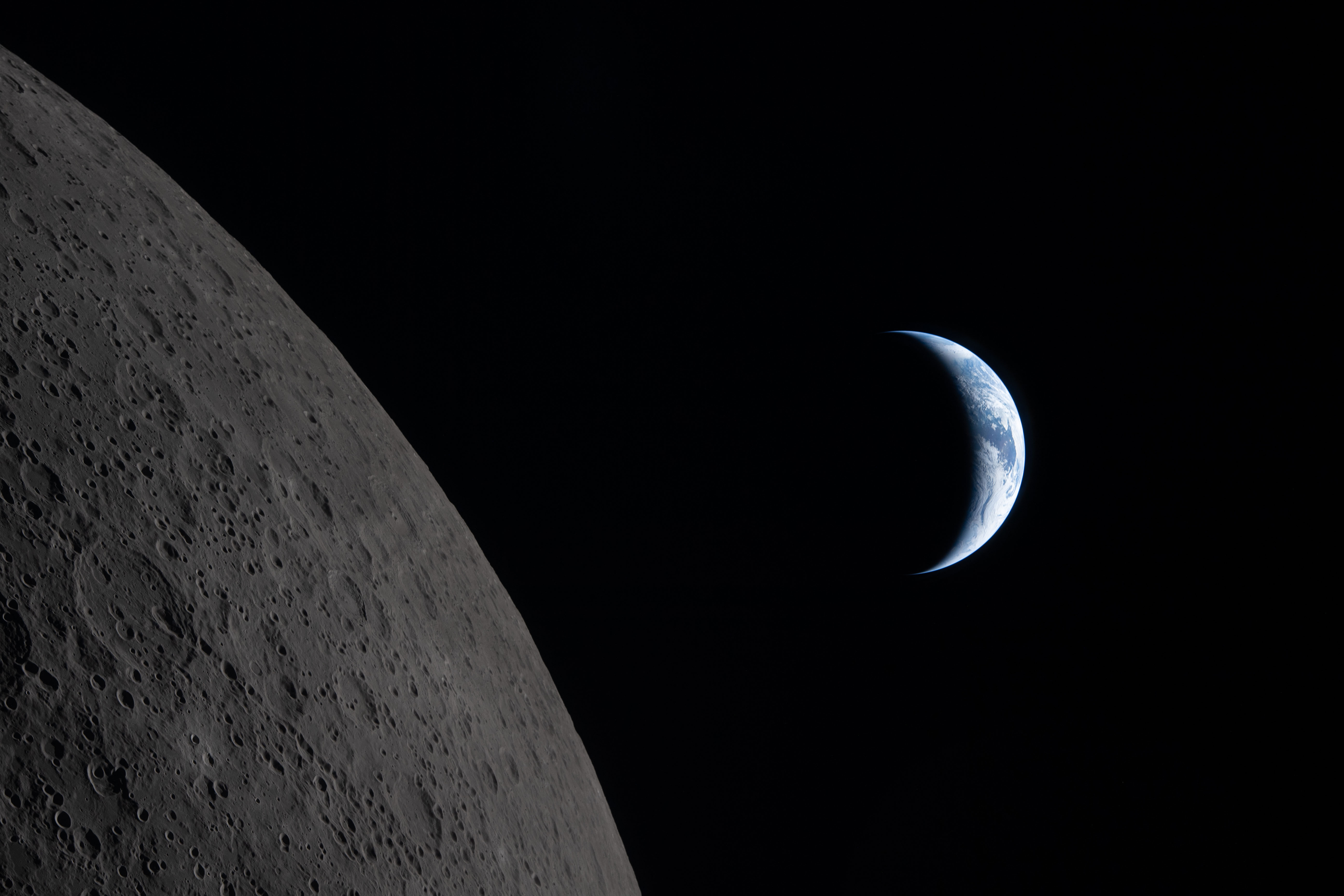
Earth draws closer to passing behind the moon in this image captured by the Artemis II crew during their lunar flyby on April 6, 2026, about six minutes before Earthset. Earth is in a crescent phase, with sunlight coming from the right. The dark portion of Earth is experiencing nighttime. On Earth’s day side, swirling clouds are visible over muted blue in the Australia and Oceania region. The lines of small indentations on the moon’s rugged surface are secondary crater chains. These structures are formed by material ejected during a violent primary impact. (Courtesy/NASA)
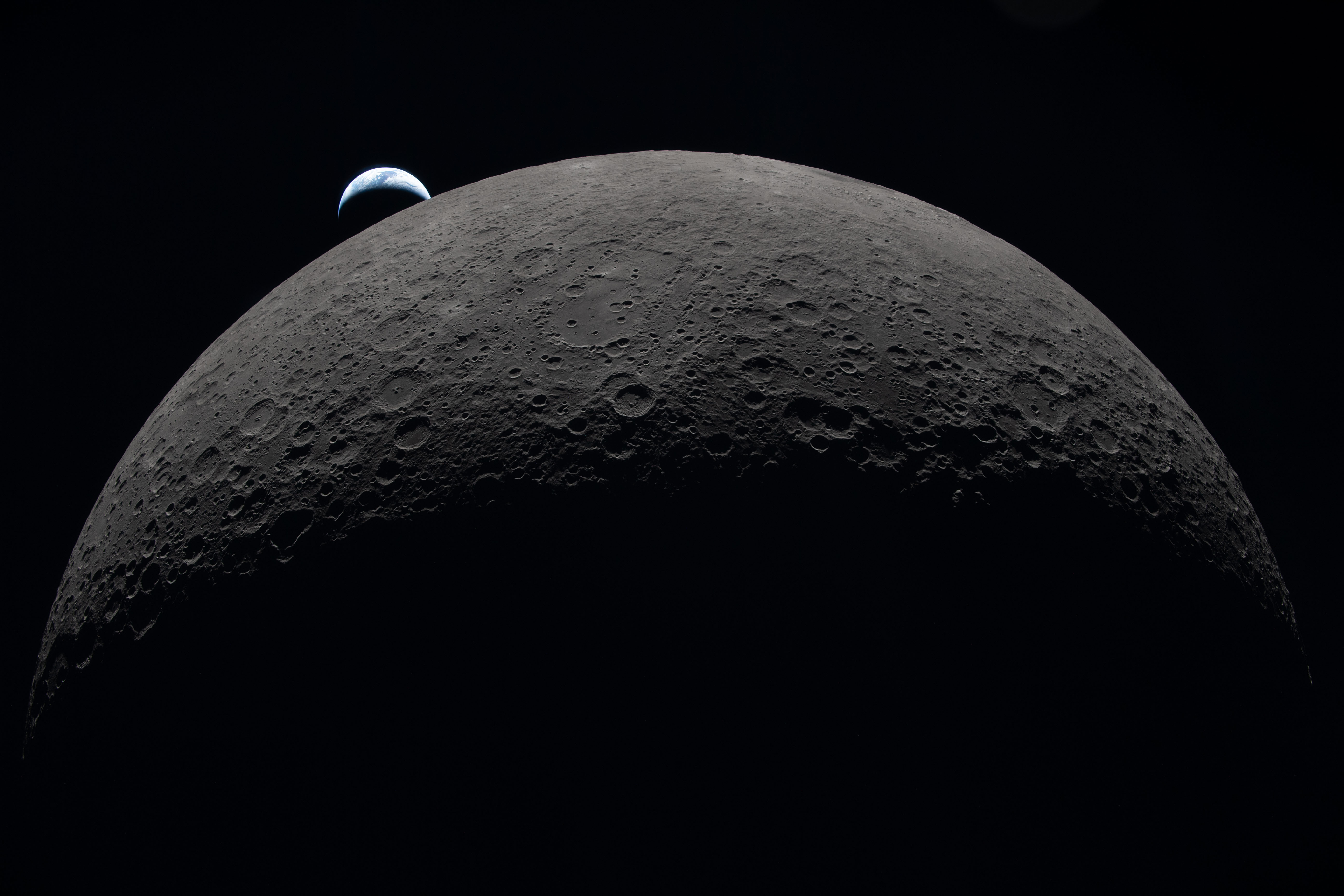
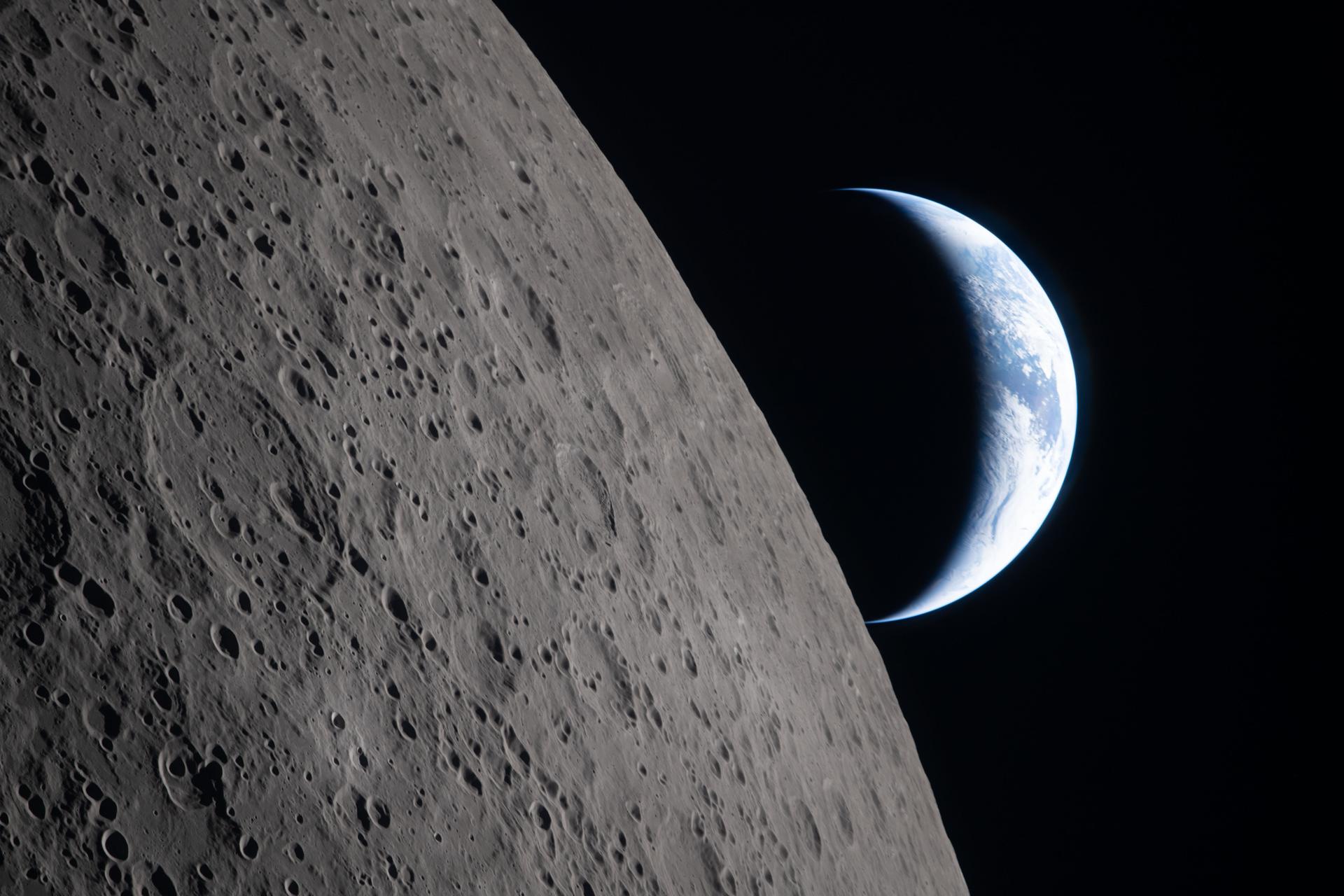
Earth sets at 6:41 p.m. EDT, April 6, 2026, over the moon’s curved limb in this photo captured by the Artemis II crew during their journey around the far side of the Moon. Orientale basin is perched on the edge of the visible lunar surface. Hertzsprung Basin appears as two subtle concentric rings, which are interrupted by Vavilov, a younger crater superimposed over the older structure. The lines of indentations are secondary crater chains formed by ejecta from the massive impact that created Orientale.
The dark portion of Earth is experiencing nighttime. On Earth’s day side, swirling clouds are visible over the Australia and Oceania region. (Courtesy/NASA)
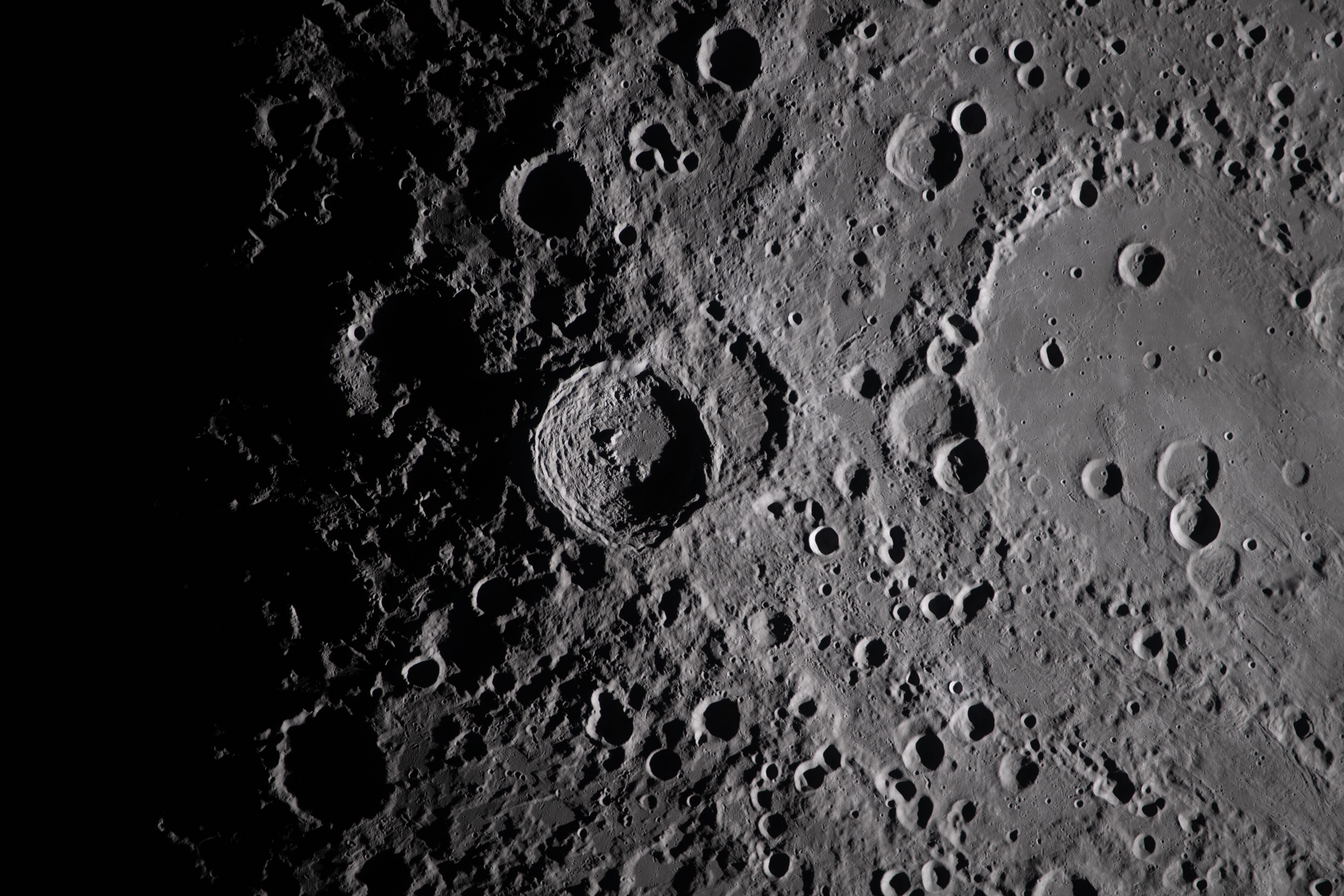
A close-up view taken April 6, 2026 by the Artemis II crew of Vavilov Crater on the rim of the older and larger Hertzsprung basin. The right portion of the image shows the transition from smooth material within an inner ring of mountains to more rugged terrain around the rim. Vavilov and other craters and their ejecta are accentuated by long shadows at the terminator, the boundary between lunar day and night. The image was captured with a handheld camera at a focal length of 400 mm, as the crew flew around the far side of the moon. (Courtesy/NASA)
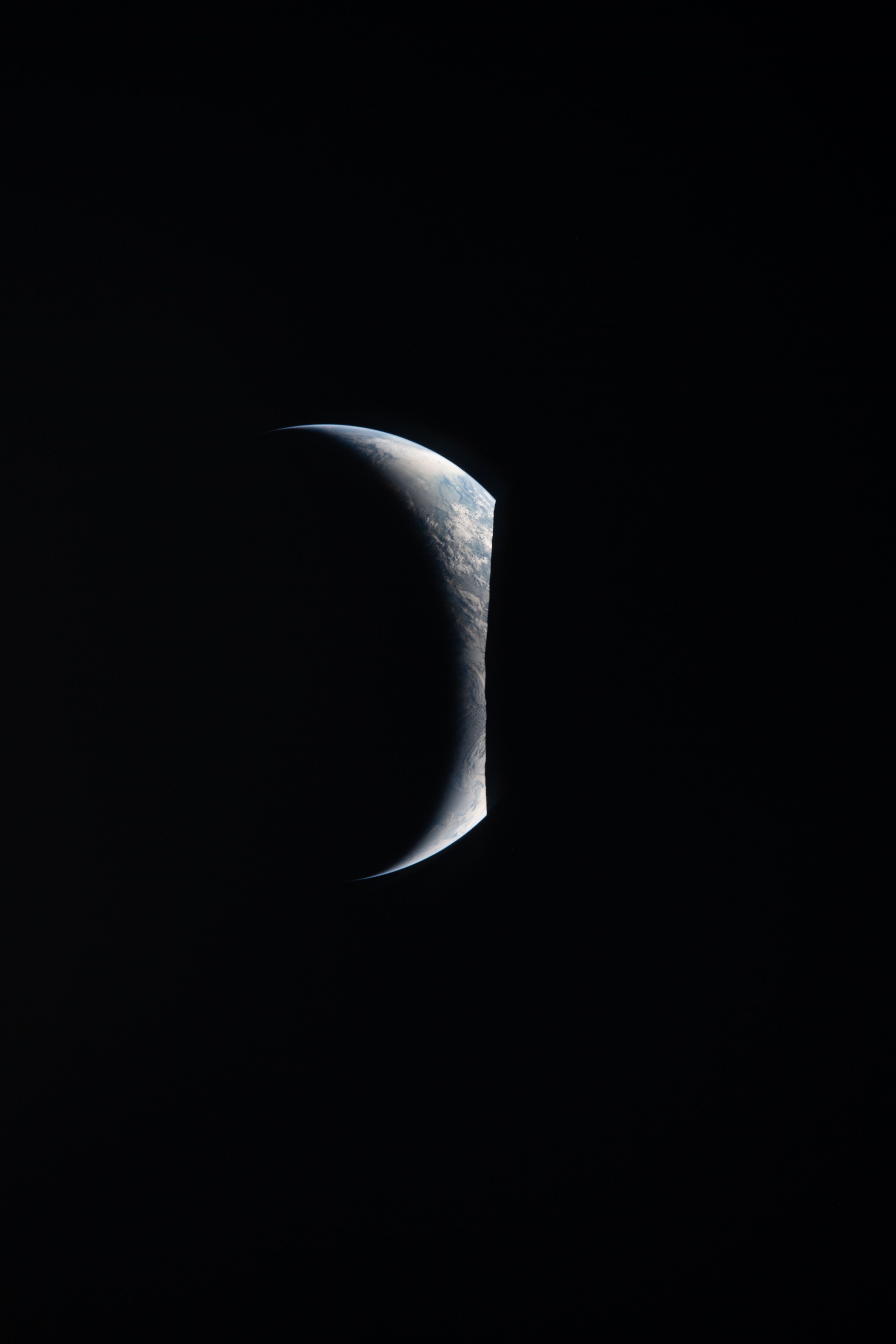
Earthrise captured through the Orion spacecraft window at 7:22 p.m. ET April 6, 2026 during the Artemis II crew’s flyby of the moon’s far side. Earth appears as a delicate crescent, with only its upper edge illuminated. The planet’s soft blue hue and scattered white cloud systems stand out against the blackness of space, while the lower portion fades into night.
Taken with a 400 mm lens, the image, Earthrise, reveals a striking alignment of Earth and moon, with the moon in the top foreground and the Earth below. Along the lunar horizon, rugged terrain is silhouetted against the bright crescent Earth. (Courtesy/NASA)
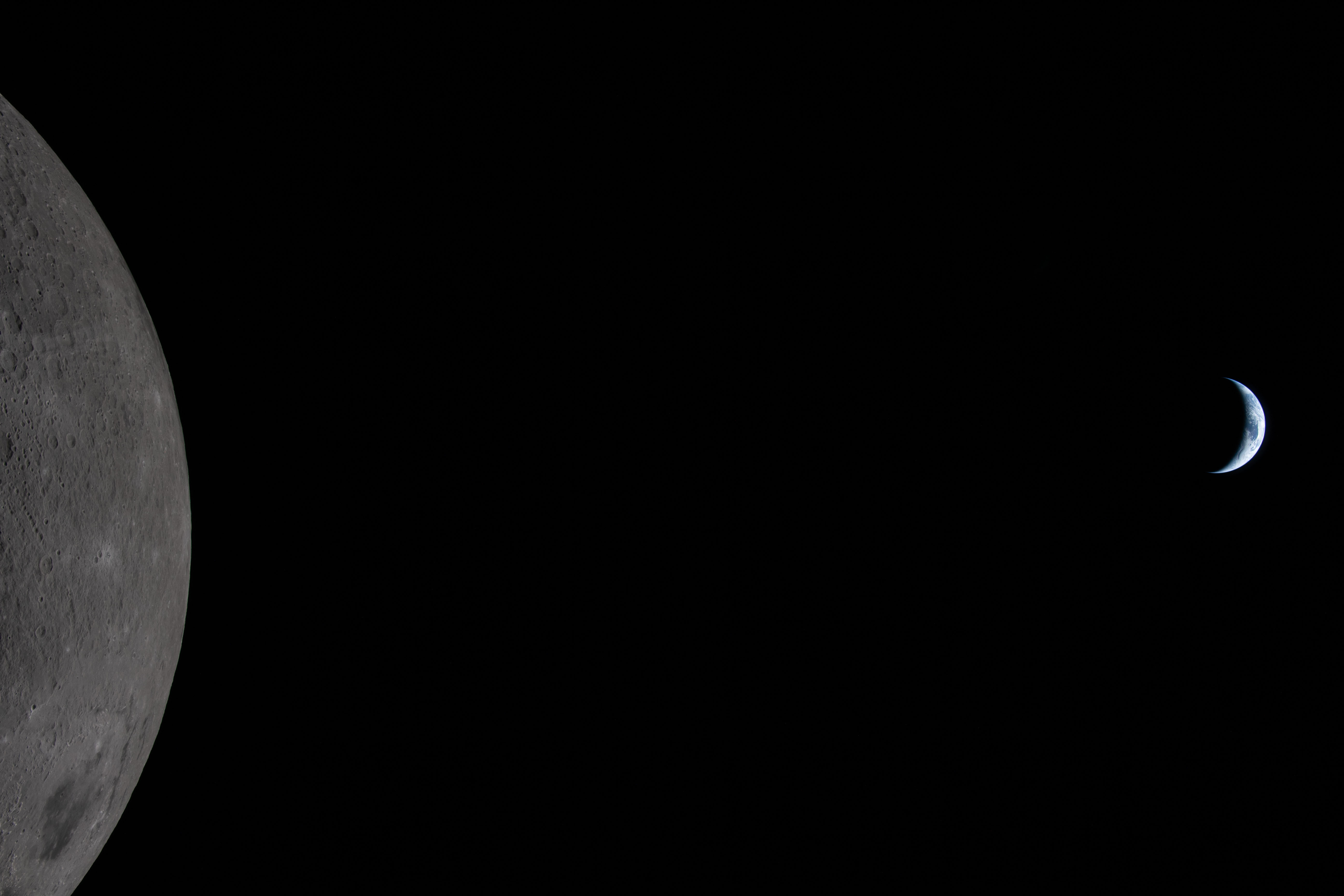
Earth appears tiny as the moon looms large in this photo taken by the Artemis II crew during their lunar flyby on April 6, 2026. Taken 36 minutes before Earthset, the planet is visible in the blackness of space off the limb of the illuminated moon. Earth is in a crescent phase, with sunlight coming from the right. Orientale mare basin, with its dark floor of cooled lava and outer rings of mountains, covers nearly the lower third of the imaged lunar surface. Different colors in the mare hint at its mineral composition. The lines of small indentations above Orientale are secondary crater chains, formed by material ejected during a violent primary impact. Both of the new craters that the Artemis II crew has suggested names for – Integrity and Carroll – are in full view. The edge of the visible surface of the moon is called the “lunar limb.” Seen from afar, it almost looks like a circular arc – except when backlit, as in other images captured by the Artemis II crew. (Courtesy/NASA)
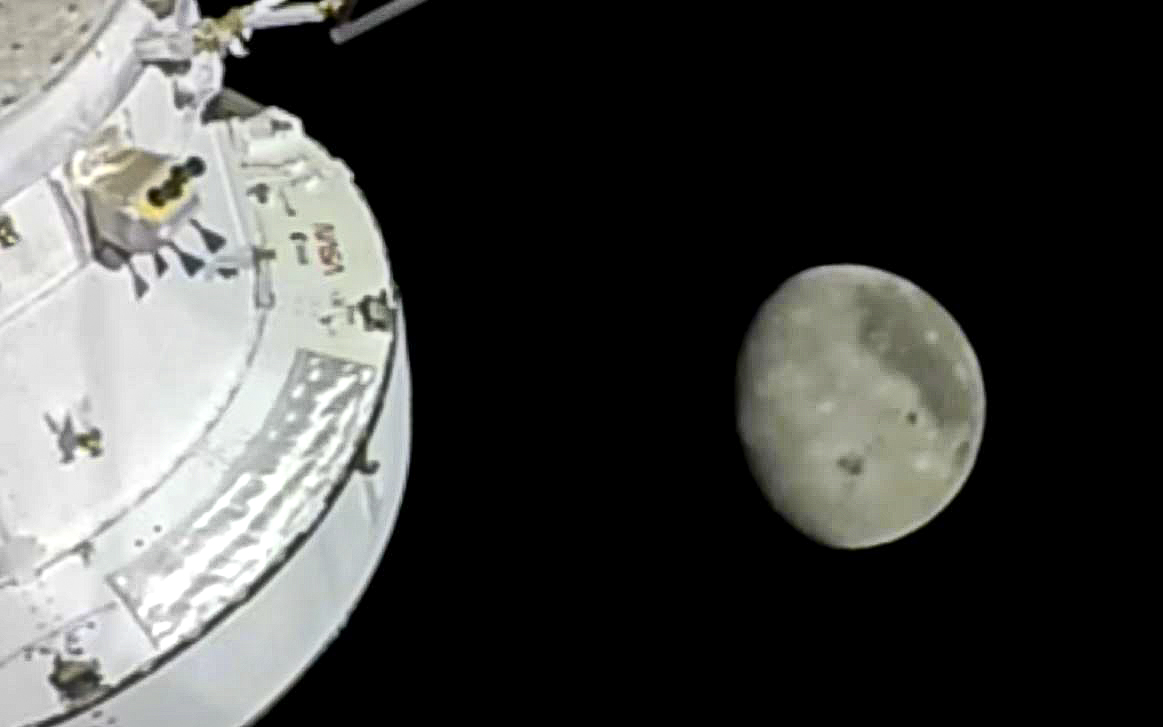
The Moon is seen from a camera outside the Orion Spacecraft after the Artemis II astronauts surpassed the farthest distance ever traveled by humans from Earth, Monday, April 6, 2026. (NASA)
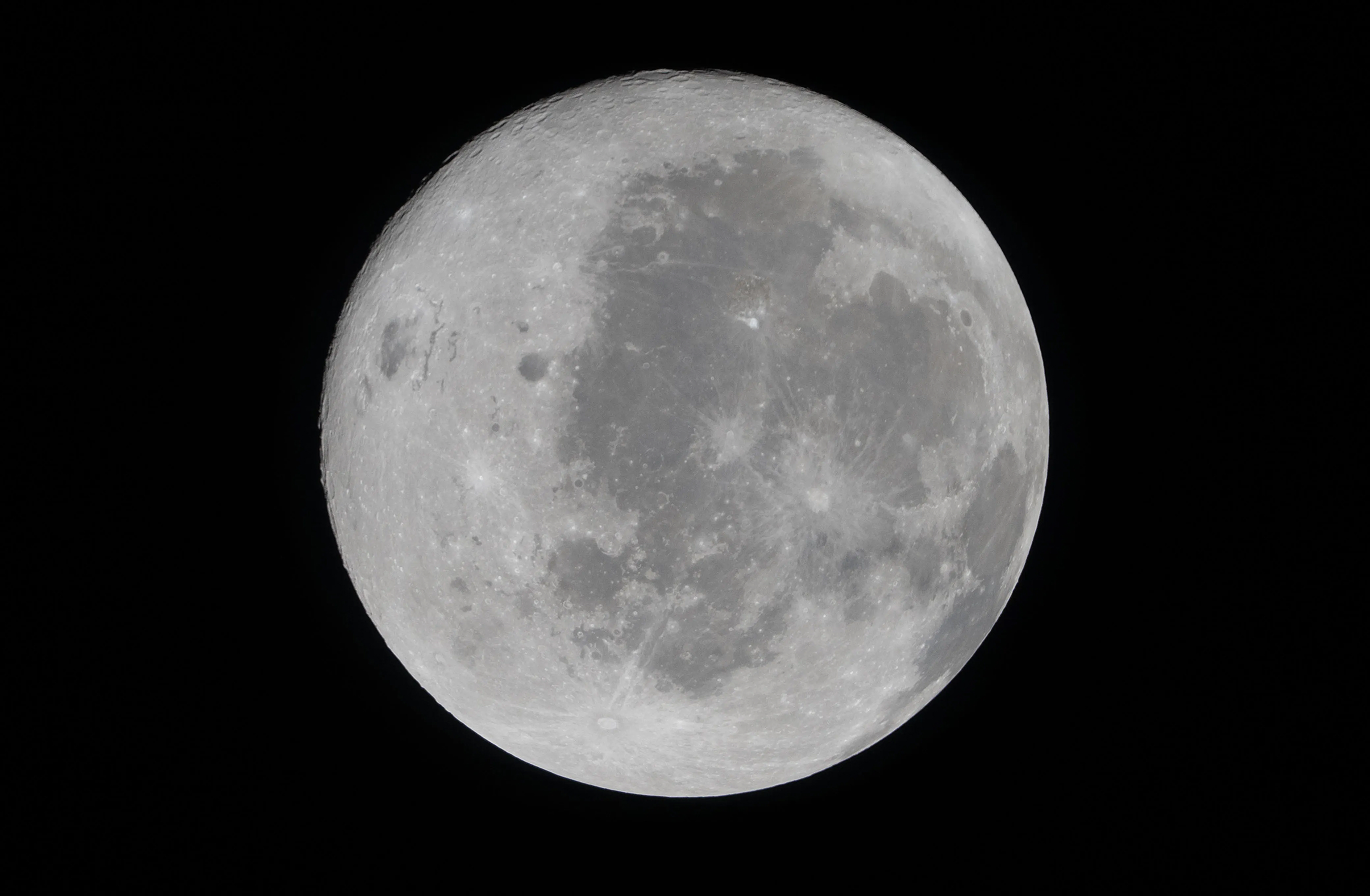
This image of the moon was taken during Orion’s transit on on flight day 4 during the Artemis II mission on Sunday, April 4, 2026. (Courtesy/NASA)
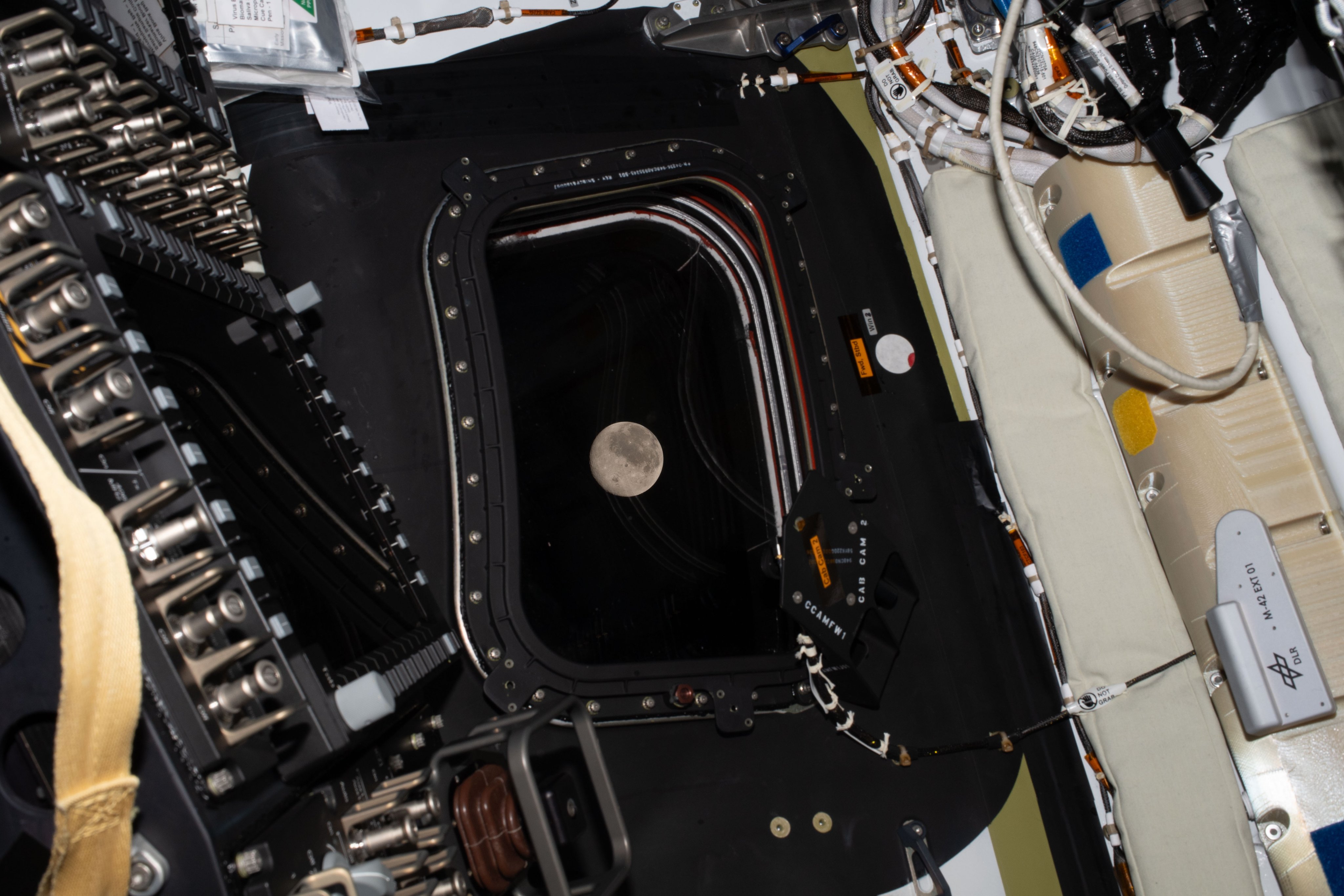
The moon can be seen out a window of the Orion spacecraft as the Artemis II crew make their approach Monday, April 6, 2026. (Courtesy/NASA)
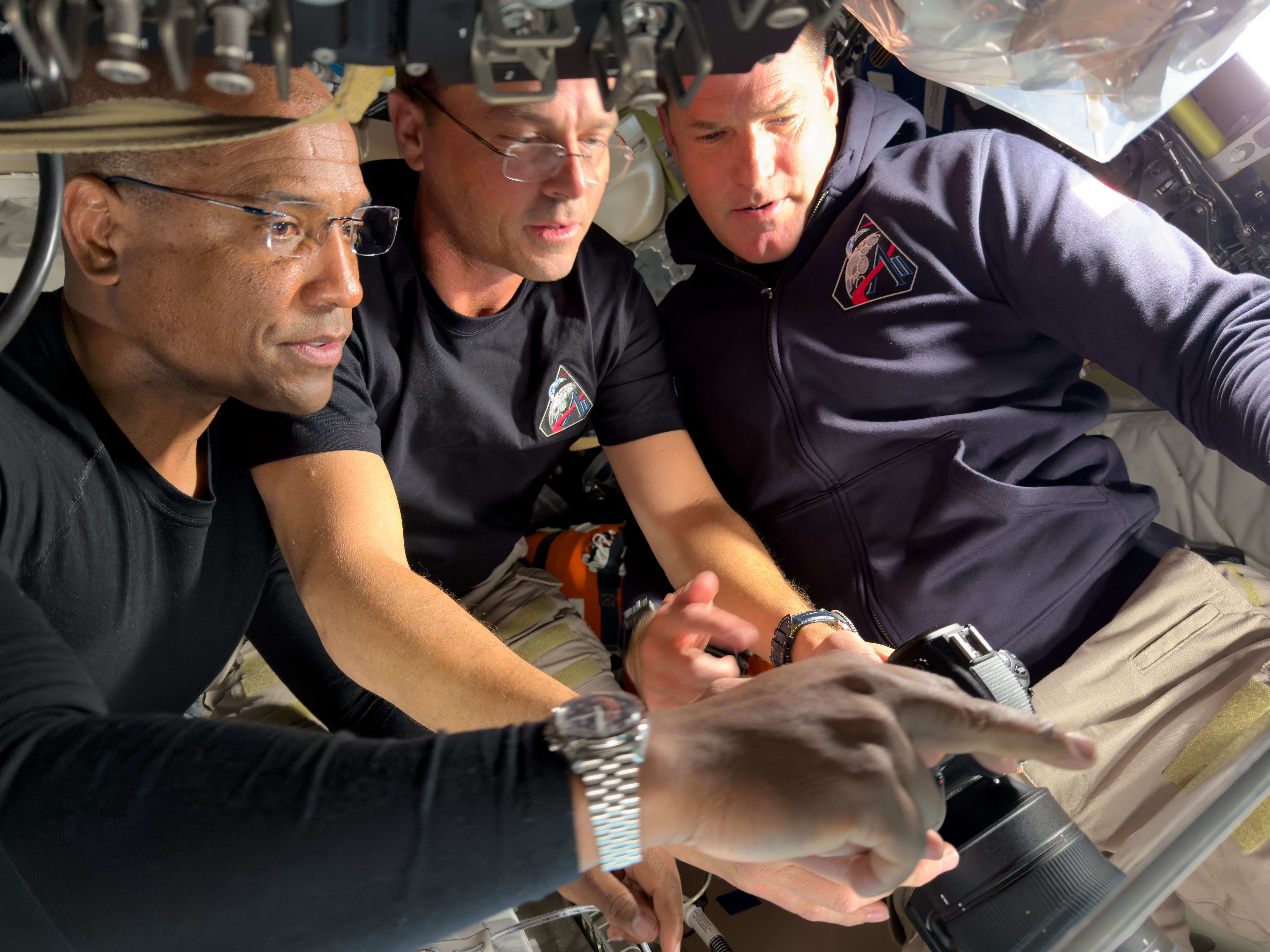
Left to right, Artemis II pilot Victor Glover, commander Reid Wiseman, and mission specialist Jeremy Hansen prepare for their journey around the far side of the moon by configuring their camera equipment shortly before beginning their lunar flyby observations on April 6, 2026. (Courtesy/NASA)
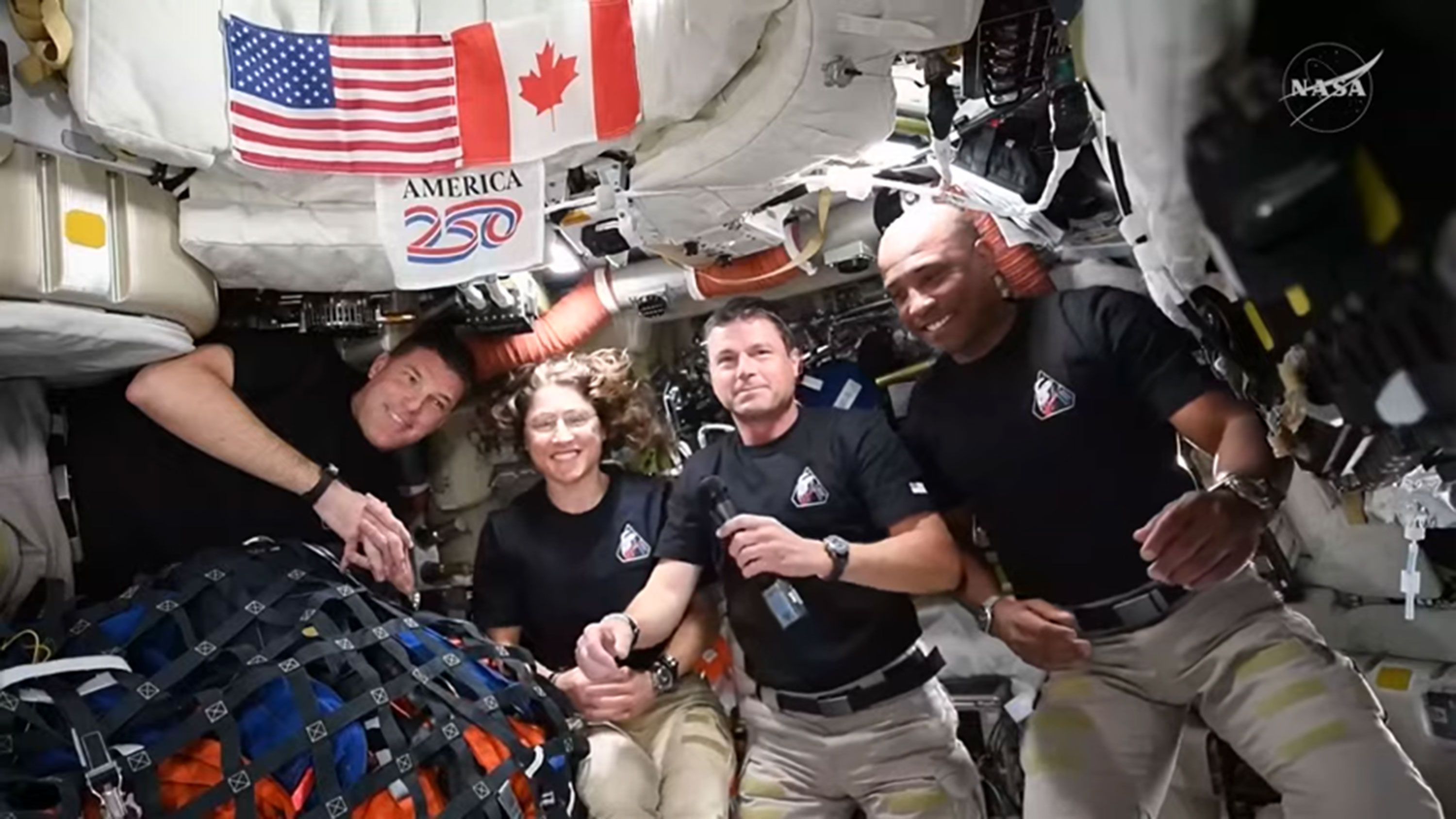
The Artemis II crew, from left, Canadian Space Agency astronaut Jeremy Hansen, NASA astronaut Christina Koch, NASA astronaut and commander Reid Wiseman, and NASA astronaut Victor Glover, gather for a call with President Donald Trump after completing their trip around the moon late Monday, April 6, 2026 during the 10-day mission. (Courtesy/NASA)

In this fully illuminated view of the moon from April 6, 2026 taken from Orion on the Artemis II mission, the near side (the hemisphere seen from Earth), is visible on the right. It is identifiable by the dark splotches that cover its surface. These are ancient lava flows from a time early in the moon’s history when it was volcanically active. The large crater west of the lava flows is Orientale basin, a nearly 600-mile-wide crater that straddles the moon’s near and far sides. Orientale’s left half is not visible from Earth, but in this image is full view of the crater. Everything to the left of the crater is the far side, the hemisphere not seen from Earth because the moon rotates on its axis at the same rate that it orbits round us. (Courtesy/NASA)
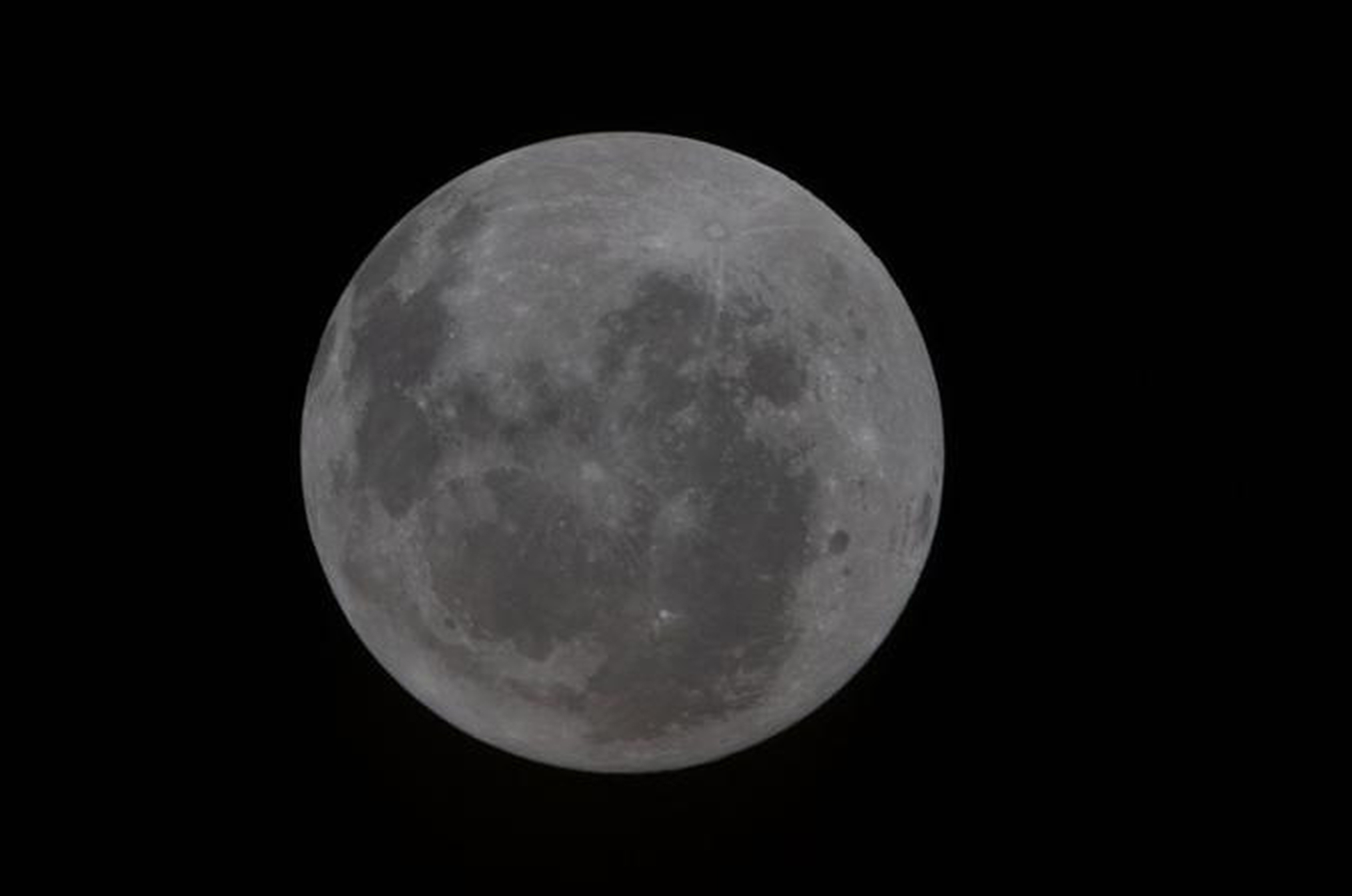
This image of the moon was taken during Orion’s transit on on flight day 4 during the Artemis II mission on Sunday, April 4, 2026. (Courtesy/NASA)
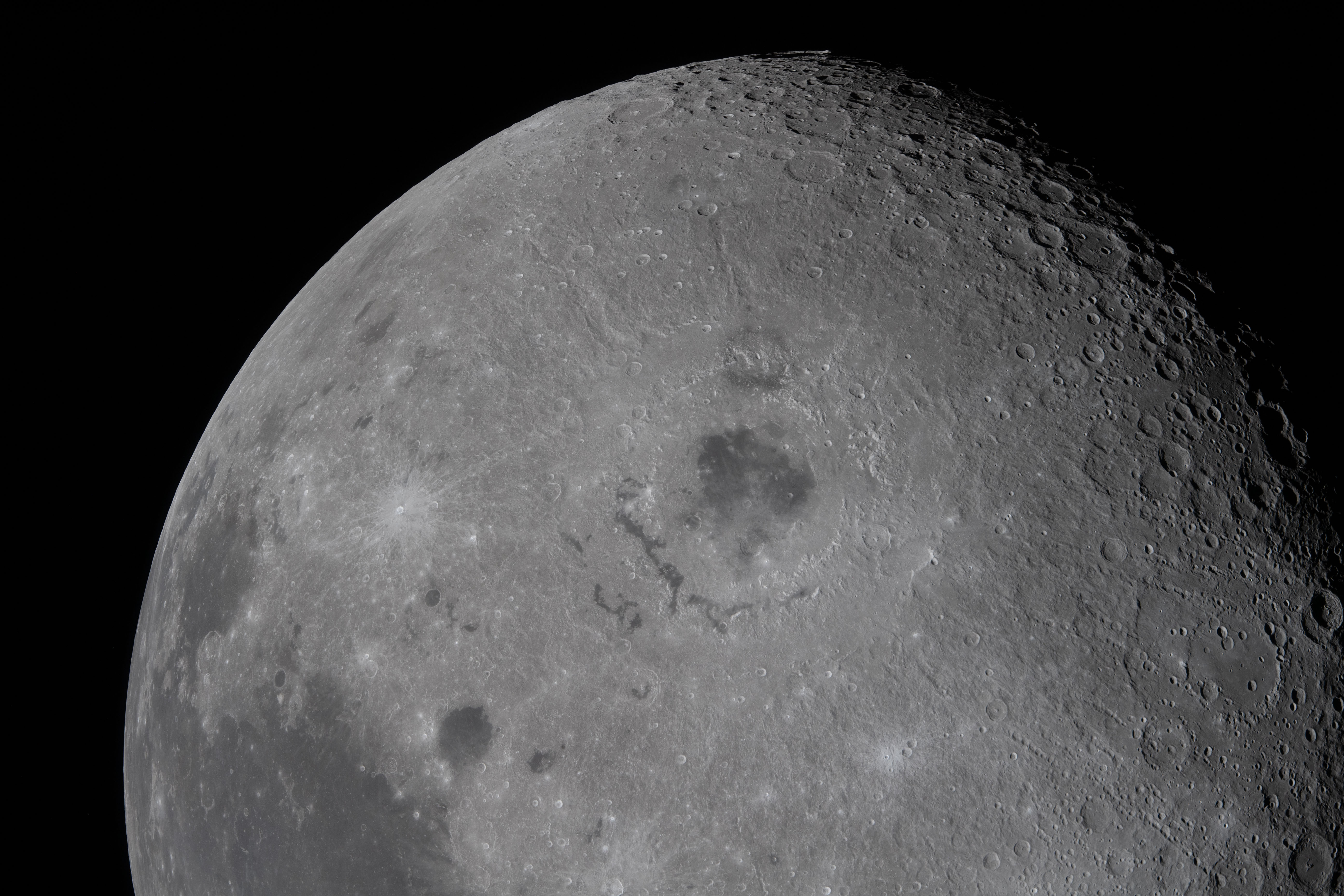
In this view of the moon, taken by the Artemis II crew at 2:19 p.m. EDT, April 6, 2026, just before the crew began their observation period, Orientale basin is visible in the center, with a black patch of ancient lava in the center that punched through the Moon’s crust in an eruption billions of years ago. This 600-mile-wide impact crater lies along the transition between the near and far sides and is sometimes partly visible from Earth. The small, bright crater to its left is Byrgius, which has 250-mile rays extending out from its basin. (Courtesy/NASA)
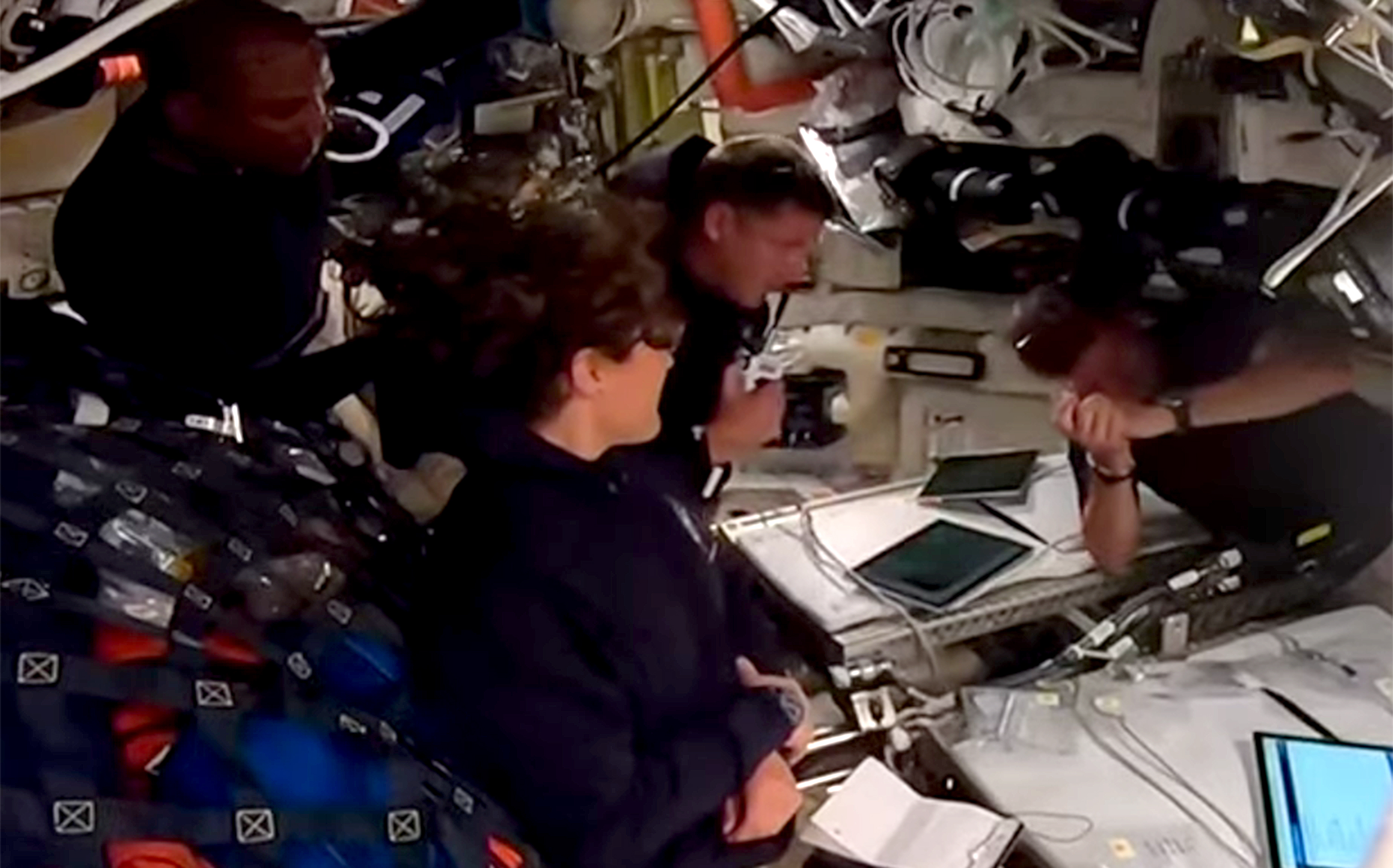
NASA astronaut Reid Wiseman, right, clasps his hands in reaction as Canadian Space Agency astronaut Jeremy Hansen announces the crew’s request to name one of two craters on the moon in honor of Wiseman’s late wife Carroll on Monday, April 6, 2026. Also in the photo are NASA astronauts Christina Koch and Victor Glover at right. (Courtesy/NASA)

A view of Earth taken by NASA astronaut and Artemis II Commander Reid Wiseman from one of the Orion spacecraft’s window after completing the translunar injection burn on April 2, 2026. The image features two auroras (top right and bottom left) and zodiacal light (bottom right) is visible as the Earth eclipses the sun. Venus is shown on the bottom right of the image. (Reid Wiseman/NASA)

A view of a backlit Earth taken by NASA astronaut and Artemis II Commander Reid Wiseman from one of the Orion spacecraft’s window after completing the translunar injection burn on April 2, 2026. (Reid Wiseman/NASA)
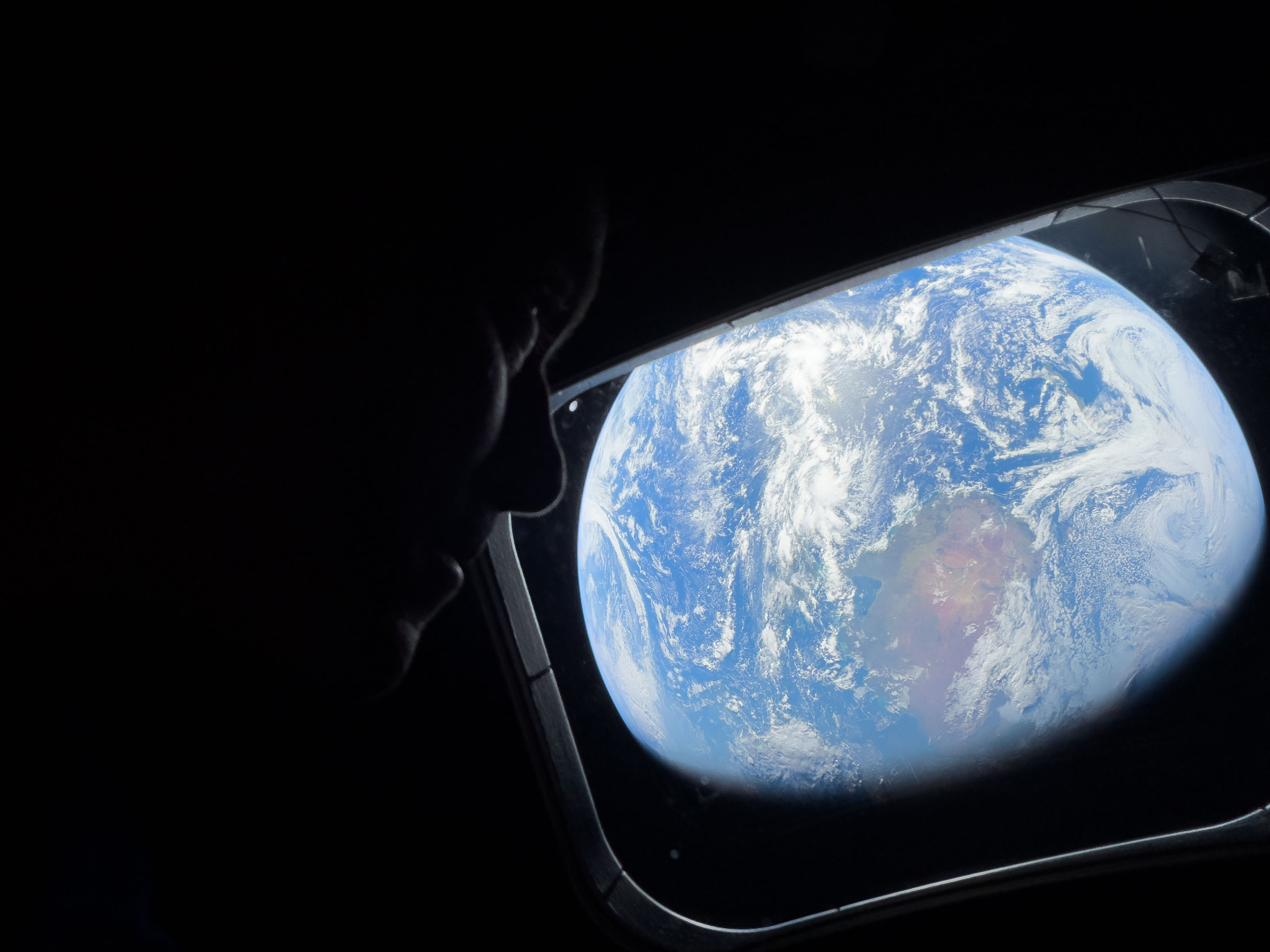
NASA astronaut and Artemis II Commander Reid Wiseman peers out of one of the Orion spacecraft’s main cabin windows, looking back at Earth, as the crew travels towards the moon on April 4, 2026. (Courtesy/NASA)
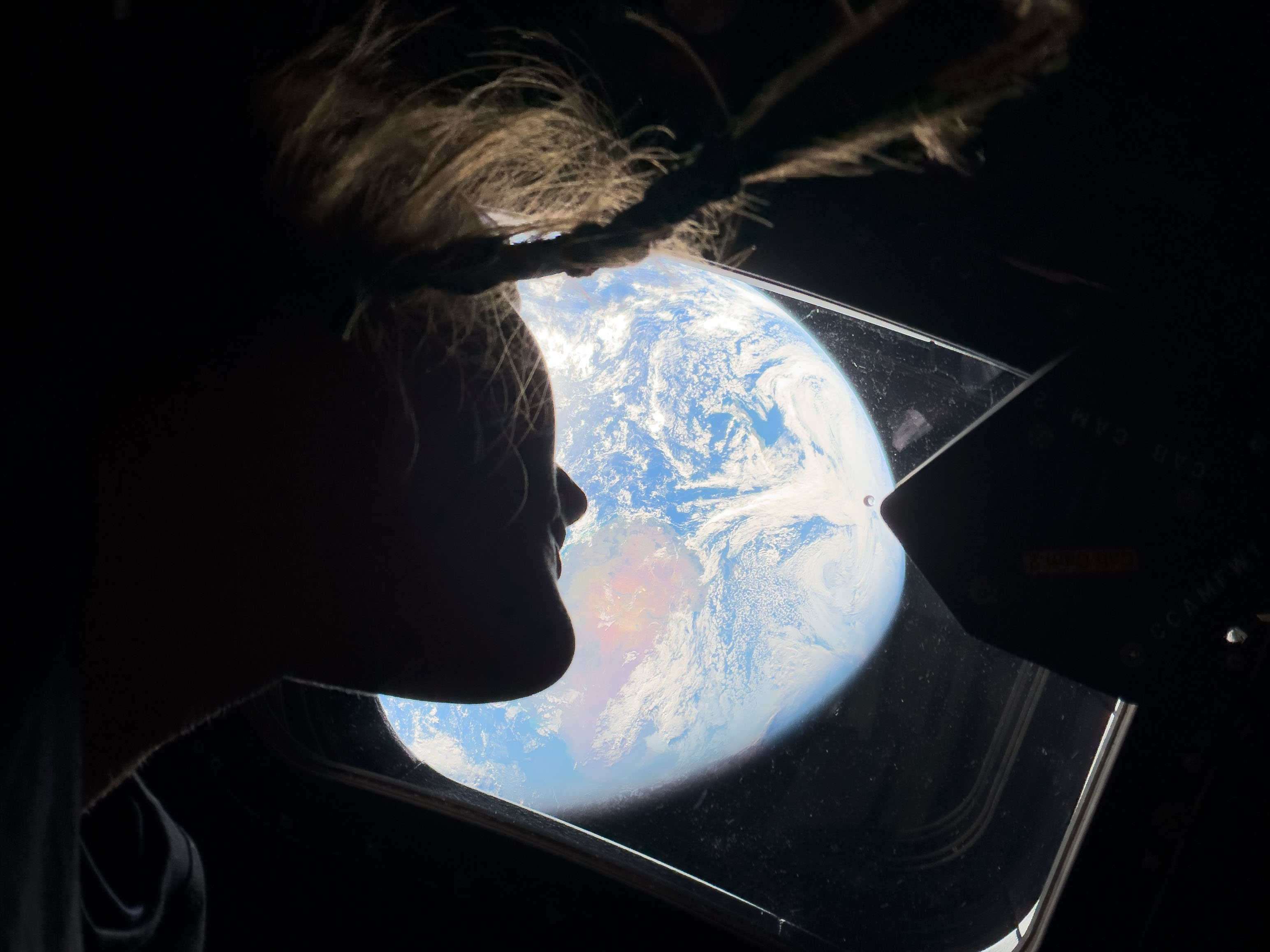
NASA astronaut and Artemis II mission specialist Christina Koch peers out of one of the Orion spacecraft’s main cabin windows, looking back at Earth, as the crew travels towards the moon on April 4, 2026. (Courtesy/NASA)
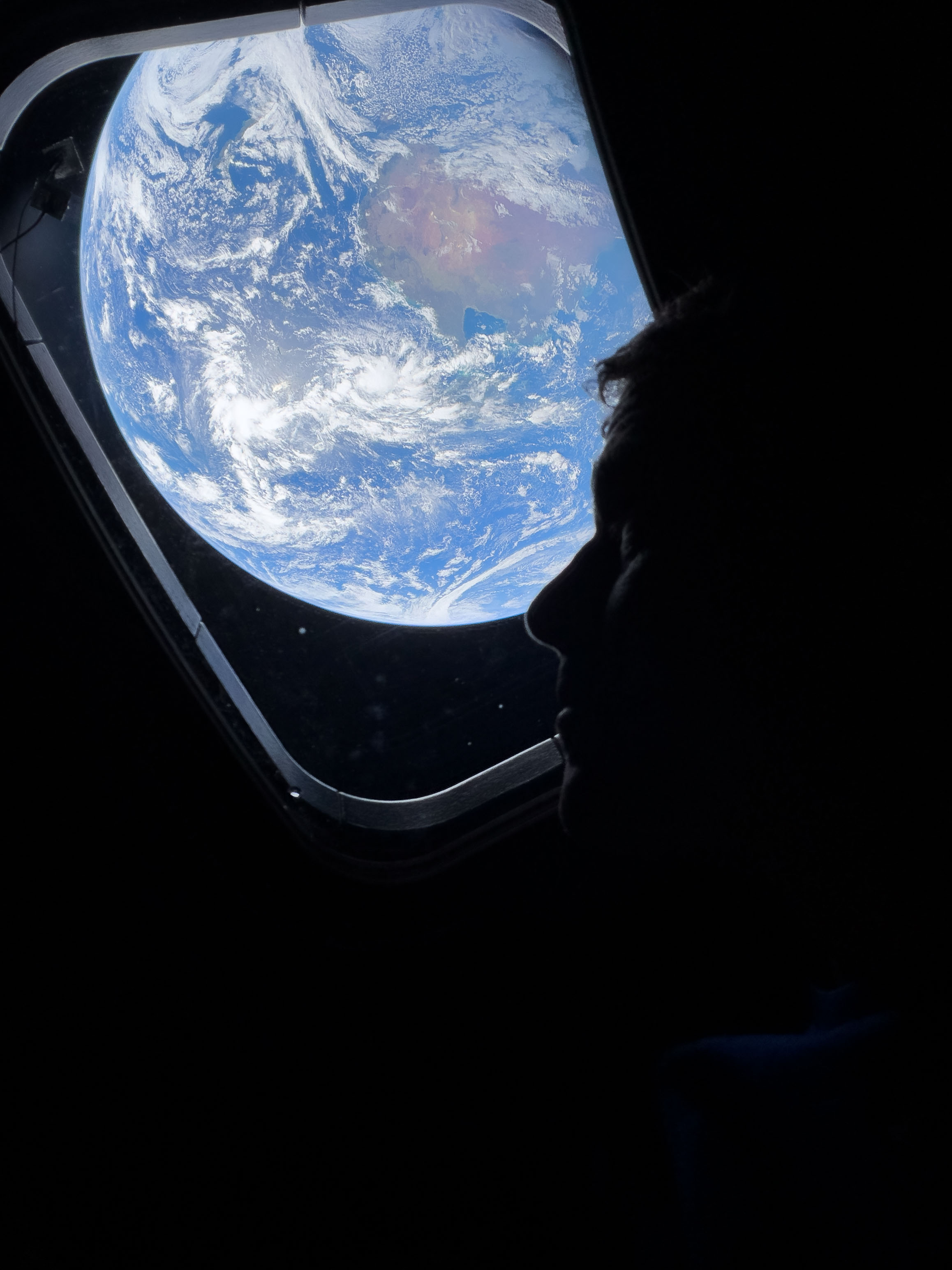
NASA astronaut and Artemis II Commander Reid Wiseman peers out of one of the Orion spacecraft’s main cabin windows, looking back at Earth, as the crew travels towards the moon on April 2, 2026 on Orion’s second day of its mission. (Courtesy/NASA)
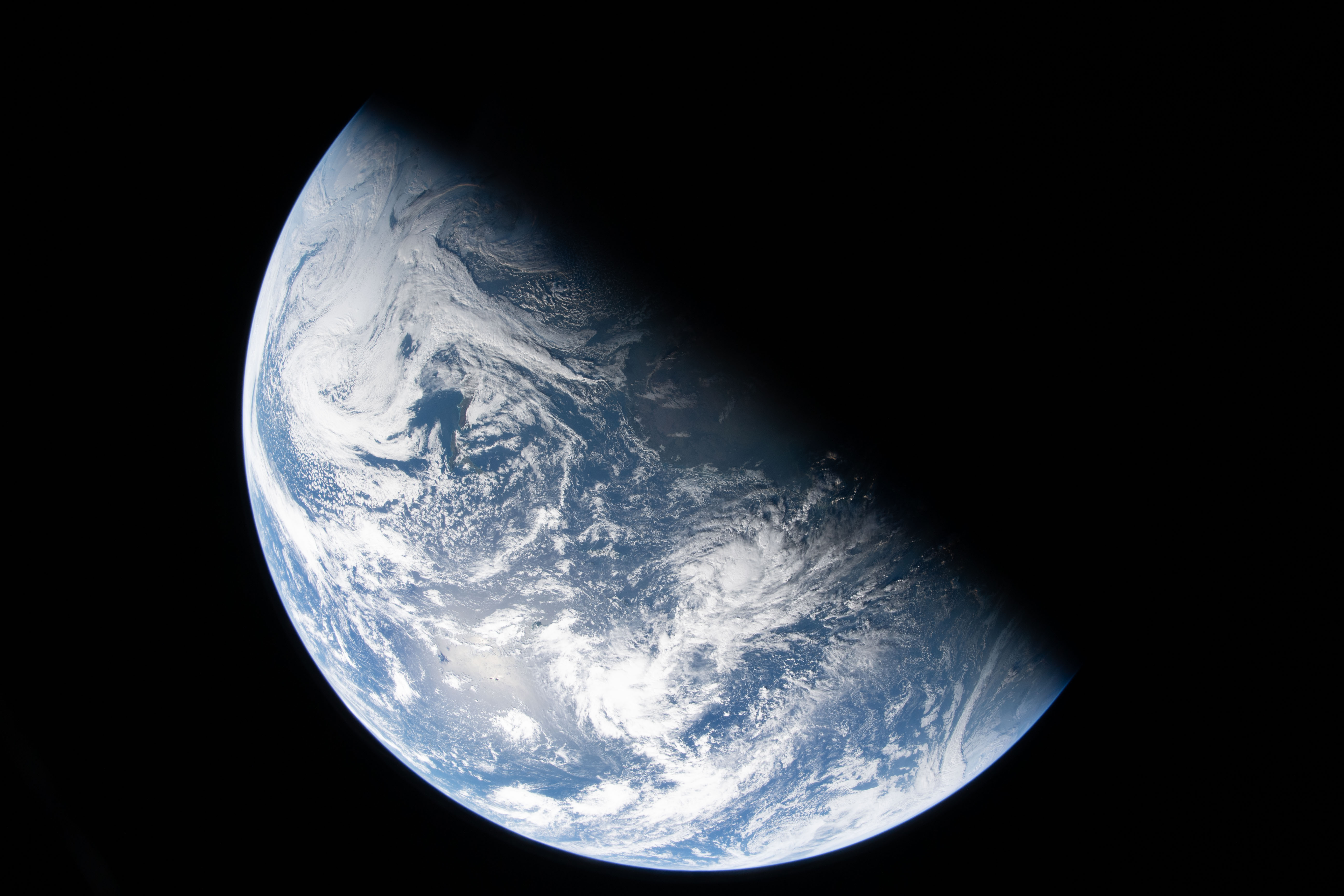
A view of Earth taken by NASA astronaut and Artemis II Commander Reid Wiseman from one of the Orion spacecraft’s four windows after completing the translunar injection burn on April 2, 2026. (Reid Wiseman/NASA)
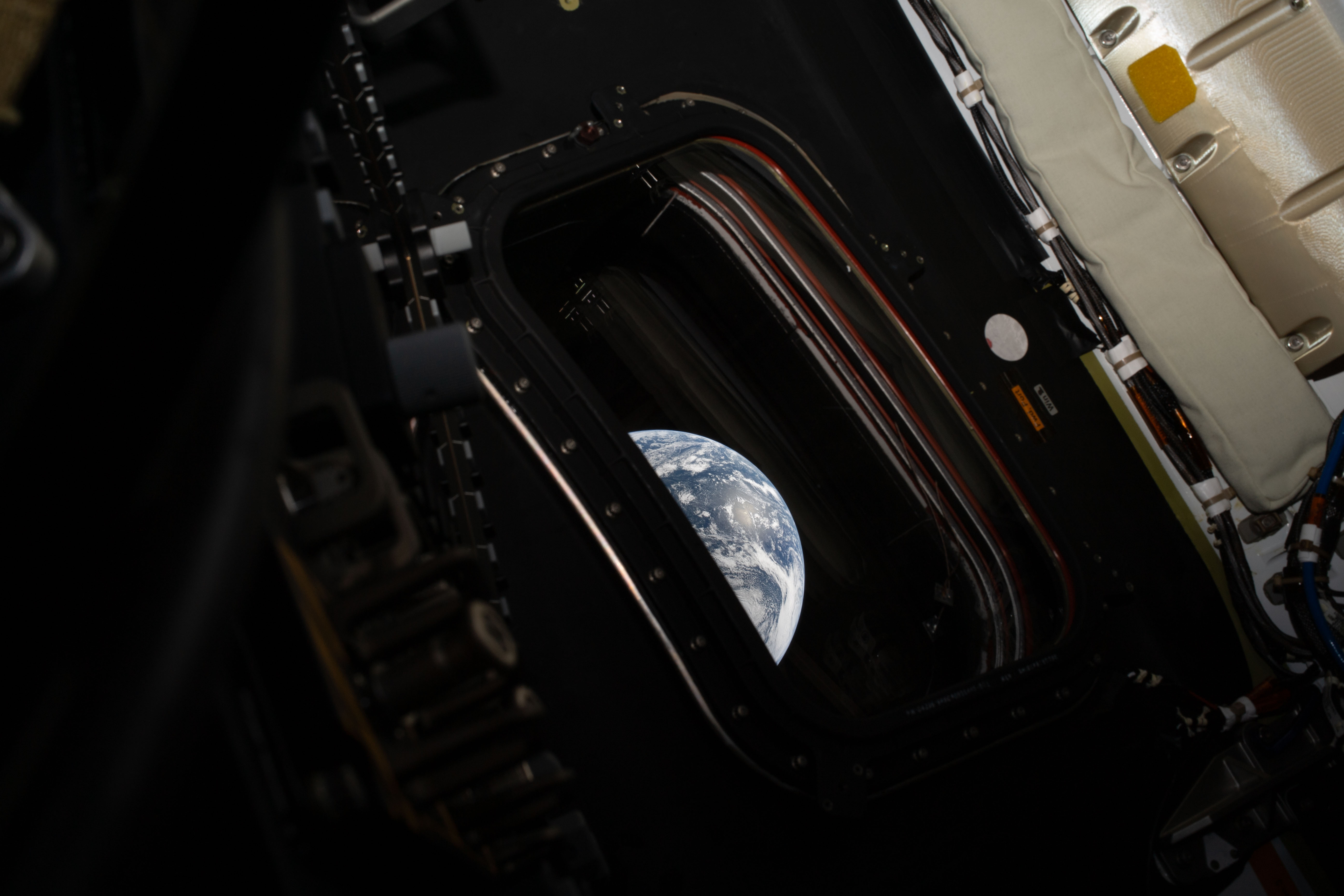
A view of Earth taken by NASA astronaut and Artemis II commander Reid Wiseman from one of the Orion spacecraft’s four main windows after completing the translunar injection burn on April 2, 2026. (Reid Wiseman/NASA)
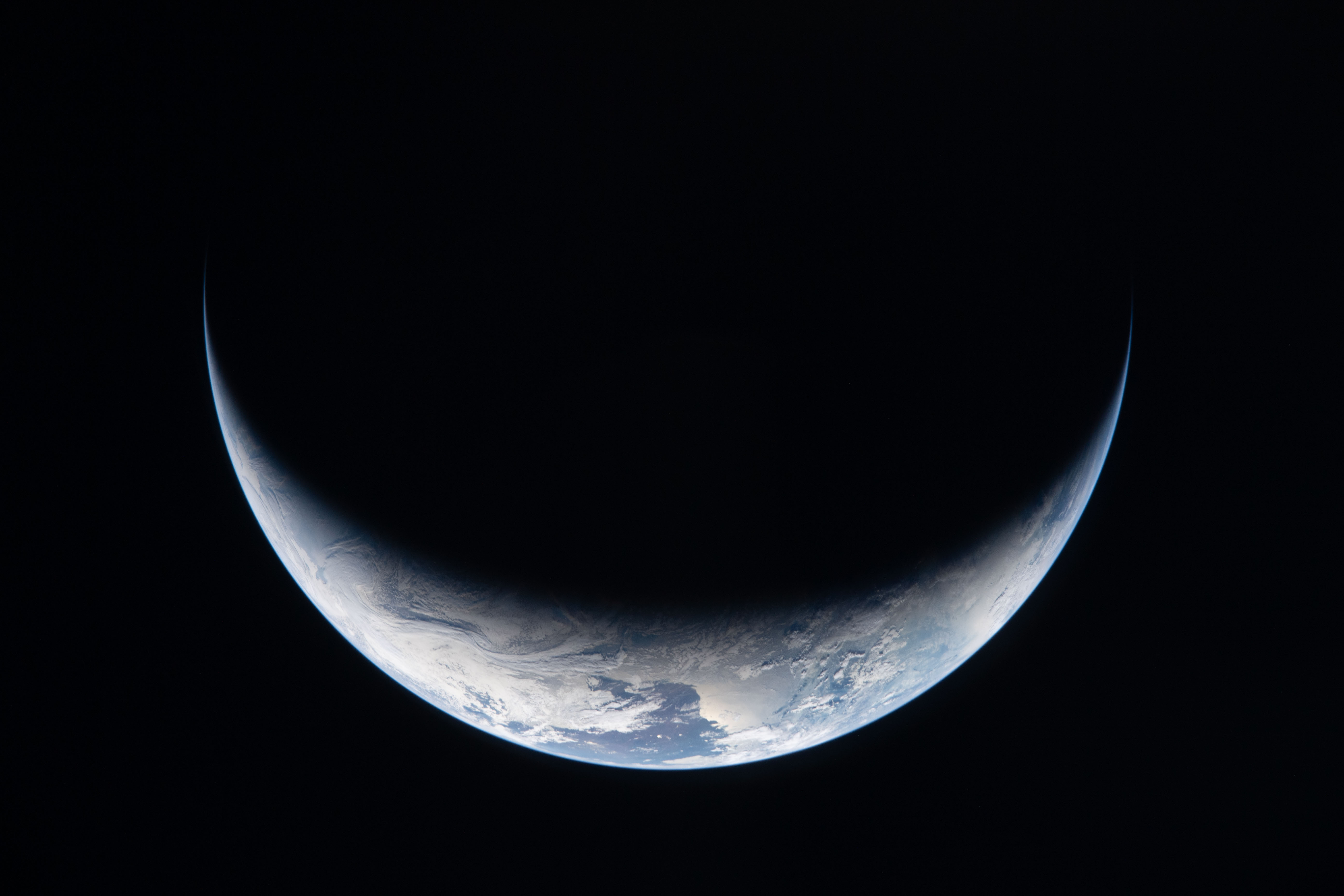
A sliver of Earth is illuminated against the blackness of space in this photo taken by an Artemis II crew member through an Orion spacecraft window on the third day of the mission, April 3, 2026. (Courtesy/NASA)
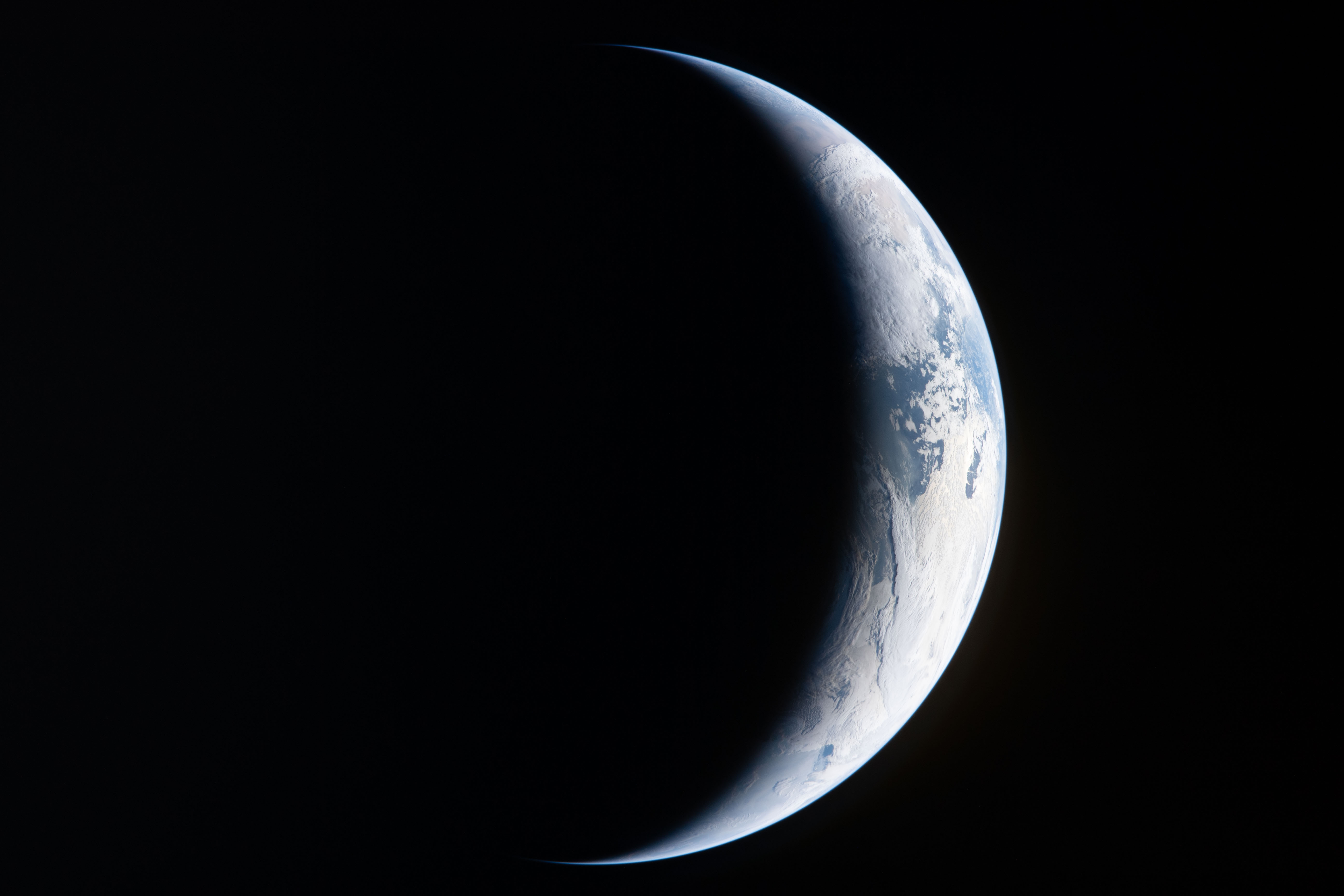
A sliver of Earth is illuminated against the blackness of space in this photo taken by an Artemis II crew member through an Orion spacecraft window on April 4, 2026. (Courtesy/NASA)
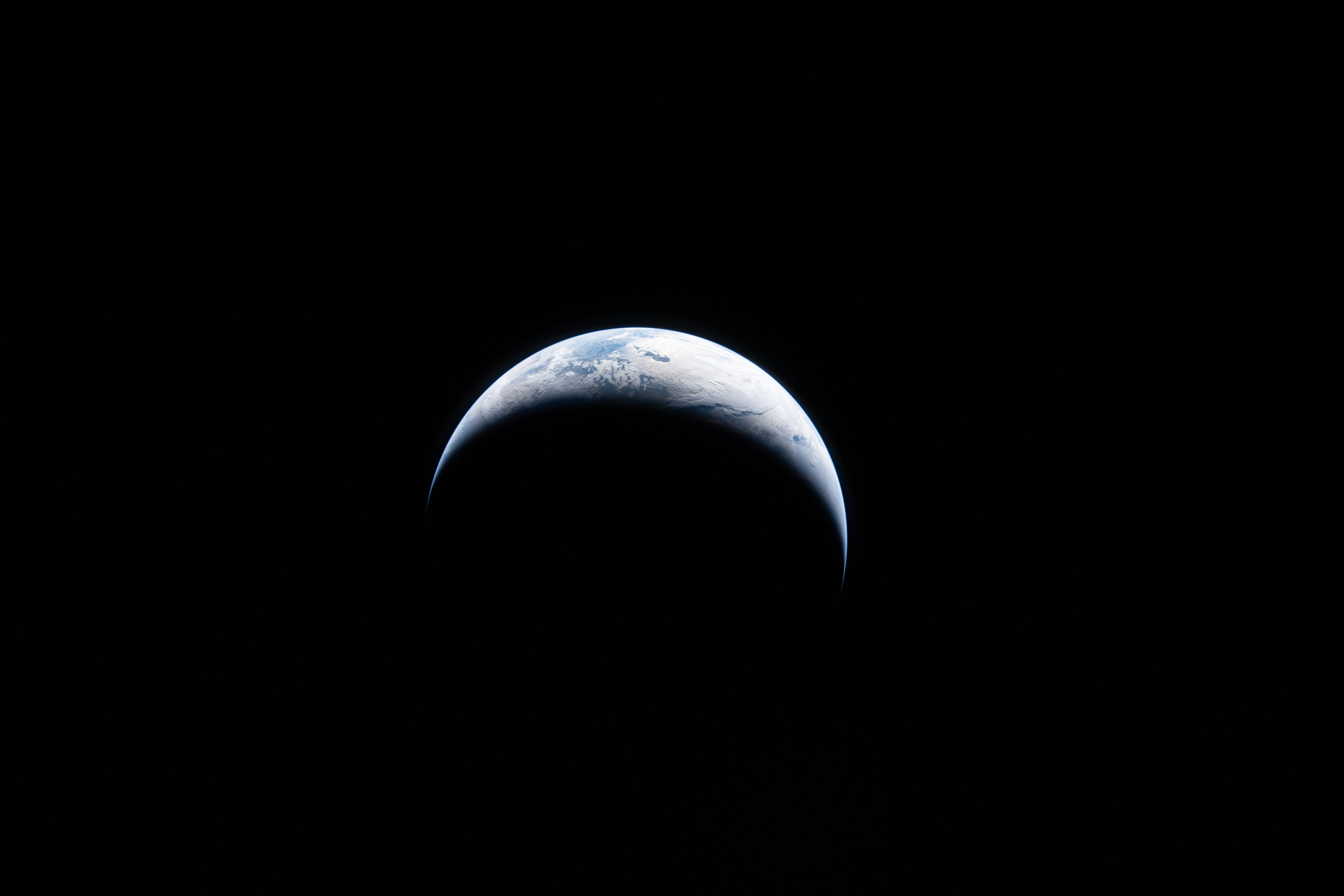
Earth is illuminated against the blackness of space in this photo taken by an Artemis II crew member through an Orion spacecraft window on April 4, 2026. (Courtesy/NASA)
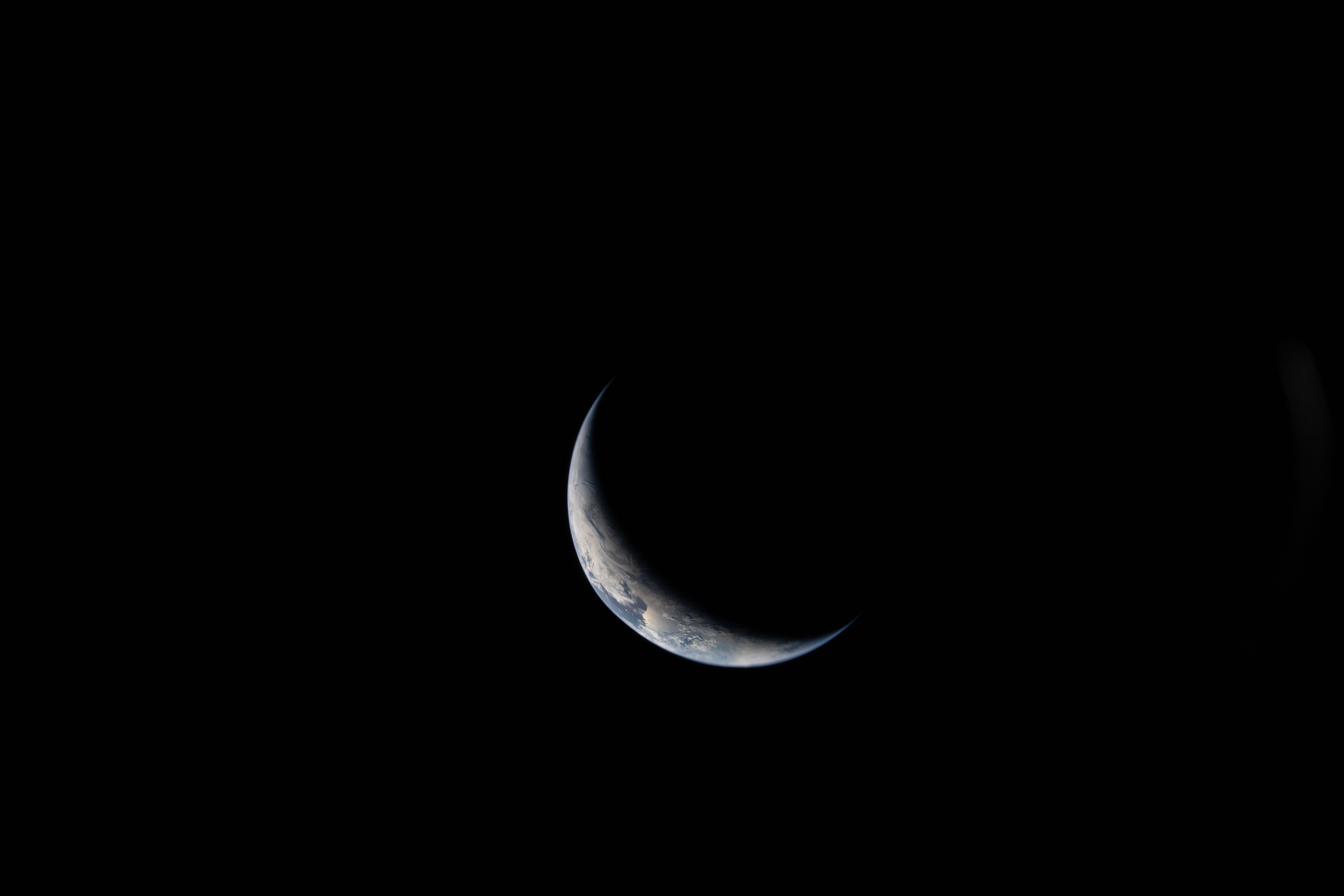
A sliver of Earth is illuminated against the blackness of space in this photo taken by an Artemis II crew member through an Orion spacecraft window on the third day of the mission, April 3, 2026. (Courtesy/NASA)
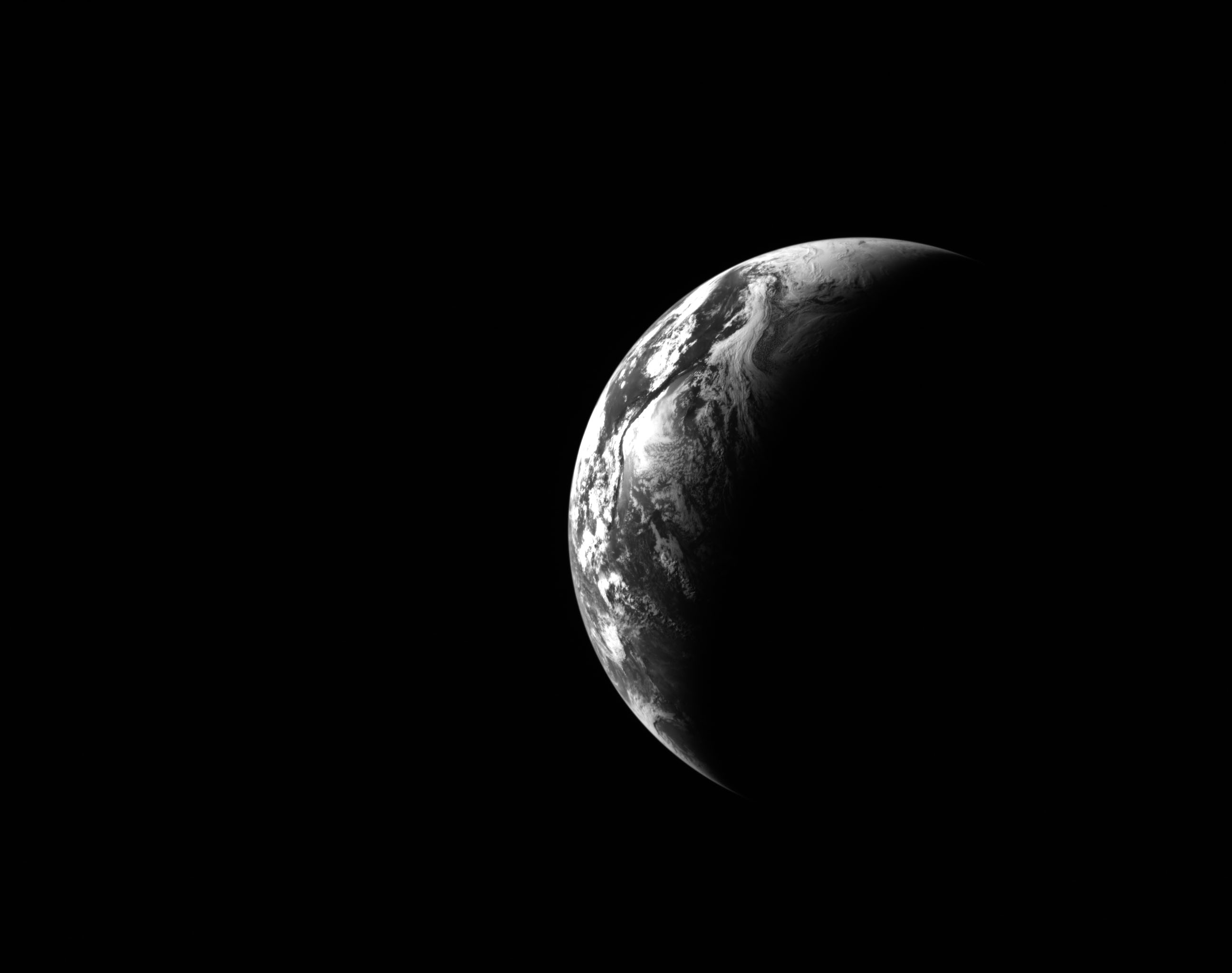
This black and white image of Earth was captured by the optical navigation sensor on the exterior of the Orion spacecraft April 1, 2026, the first day of the 10-day Artemis II mission, as the four astronauts inside began their journey that would take them farther than any humans have ventured from Earth. (Courtesy/NASA)
Show Caption
1 of 34
Earthset captured through the Orion spacecraft window at 6:41 p.m. on April 6, 2026, during the Artemis II crew’s flyby of the moon. A muted blue Earth with bright white clouds sets behind the cratered lunar surface. The dark portion of Earth is experiencing nighttime. On Earth’s day side, swirling clouds are visible over the Australia and Oceania region.
In the foreground, Ohm crater has terraced edges and a flat floor interrupted by central peaks. Central peaks form in complex craters when the lunar surface, liquefied on impact, splashes upwards during the crater’s formation. (Courtesy/NASA)
NASA astronauts Reid Wiseman, Victor Glover and Christina Koch along with Canadian Space Agency astronaut Jeremy Hansen launches from Kennedy Space Center on Wednesday, April 1 becoming the first humans to fly in the Orion spacecraft.
They began their historic lunar flyby on April 6 capturing images of parts of the moon never seen by human eyes and breaking a record held by Apollo 13 set in 1970 for the farthest from Earth any humans have ever flown.
They are headed back to Earth for a splashdown landing targeting Friday, April 10.