
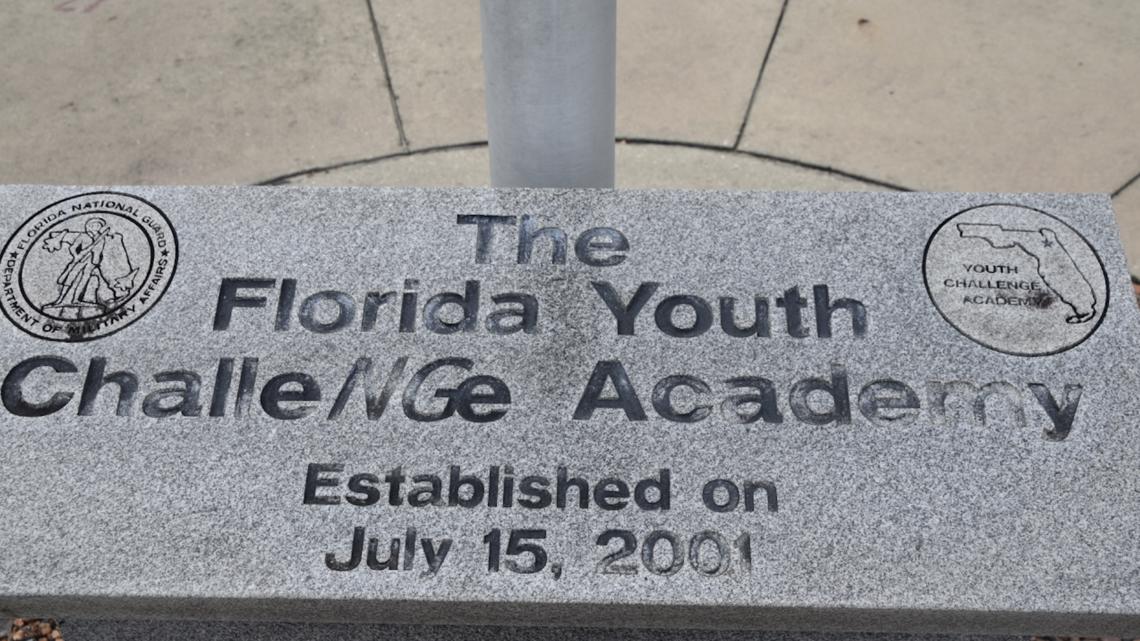
Class 50 will be the final residential class of the alternative program at Camp Blanding, the Florida National Guard announced.
STARKE, Fla. — The Florida Youth ChalleNGe Academy (FLYCA), a Florida National Guard-operated alternative program for youth, is closing its doors after nearly 25 years.
“The Florida National Guard has been proud to operate one of the nation’s top Youth ChalleNGe programs,” a Florida National Guard spokesperson told First Coast News. “During that time, the Academy graduated nearly 6,500 cadets, positively shaping the lives of young people across the state and strengthening families and communities. We remain deeply proud of the lasting impact this program has had on thousands of Florida’s youth.”
The FLYCA was established in 2001 and began its first class that July, but the National Guard Youth Challenge Program has existed in dozens of states since 1993. The community-based program trains and mentors at-risk 16-18 year old high school dropouts so that they can have success as adults.
“This decision was not made lightly,” the spokesperson told First Coast News. “As the operational demands on the Florida National Guard continue to grow, it is critical that we refocus our resources on our primary mission sets, particularly in today’s dynamic and increasingly challenging operational environment. Our Soldiers and Airmen are busier and more called upon than ever before, making it essential that we are ready and able to successfully execute our dual mission – supporting our national defense strategy and protecting the lives and property of Floridians when they need us most.”
The Florida National Guard said it plans to continue supporting its enrolled cadets past the residential portion of the program and provide assistance for its impacted staff and community partners.
“We are grateful to the dedicated professionals, mentors, and community partners who contributed to the Academy’s success over the past quarter century. Their commitment has made a meaningful difference in the lives of thousands of young Floridians,” the spokesperson said.
Among those impacted over the years is Amy Knight, a 2002 graduate.
“This program saved my life. It truly did,” Knight said. “I was a troubled teen, I was 16, I went through the Florida Youth Challenge Academy, and by the time I graduated in June of 2002, I was my best version of myself.”
After graduating from the program, Knight became a certified nursing assistant and now lives in Florida with her husband and children. She is among dozens of alumni who’ve reached out since news of the closure spread, many of them stunned and emotional.
“I’m heartbroken just because of the way it changed my life and countless others,” she said.
Keith Brock, who graduated from FLYCA as part of Class 5 in 2003, also loved the program. His sister graduated in 2017.
“It was very structured, very disciplined, but it was a good experience,” Brock said.
The Crenshaw family, who sent their son to FLYCA, said he earned his GED there and later joined the Navy at age 17.
“He smiles like crazy right now, he’s so proud of himself,” they said.
But the family also said their son was at the academy when a teenage girl took her own life.
A lawsuit filed in 2025 by the girl’s family alleges the academy failed to provide proper mental health care and supervision.
Court records show the academy’s mental health director at the time, Gwendolyn Boney-Harris, was not a licensed therapist in Florida. Criminal charges were filed against Harris in Clay County involving fraud. The case remains active.
The Florida National Guard has not cited the incident as a reason for the closure.
The Florida National Guard confirmed that Class 50, the current residential cohort, will be the last at the academy. Families say that graduation is expected in June.
“We are saddened to hear of this program ending,” a representative of the Woman’s Club of Keystone Heights said in a statement. “We’ve enjoyed connecting with the girls over the years and hearing their stories. They were truly special. The program has touched many families and will be missed.”
Despite the closure, many families insist the need for a program like FLYCA has not gone away.
“There really isn’t anywhere else to go unless you want your kid arrested,” the Crenshaw family said. “And that’s the worst thing, because then they’re in the system, and that never ends.”