
A special package of cargo touched down at Miami International Airport on Wednesday: a kidney that had been removed from a living donor across the country earlier that day, set for a transplant for a South Florida teenager.
When 18-year-old Arianna Crockett received her kidney Wednesday night, she became Joe DiMaggio Children’s Hospital’s first recipient of a remote-donation kidney transplant. The pediatric kidney transplant program at Joe DiMaggio launched nearly eight years ago, and as of early 2026, the surgeons have performed over 34 successful transplants. Crockett became the 35th.
“It’s very surreal, and nerve-wracking. So I’m nervous-cited, nervous and excited,” Crockett said during her final dialysis session a few hours before her transplant.
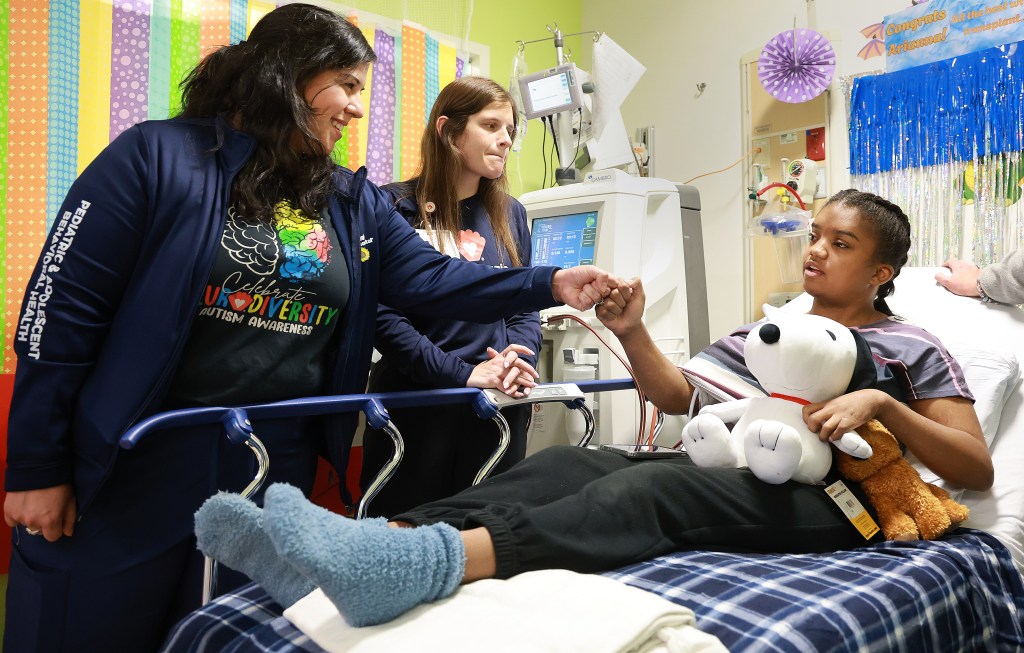
 Social worker Alexa Zucker, left, and nurse manager Sasha Medvinsky spend time with Arianna Crockett, hours before her kidney transplant surgery at Joe DiMaggio Children’s Hospital in Hollywood on Wednesday. (Carline Jean/South Florida Sun Sentinel)
More than 2,000 miles away from Hollywood, Sara Goodall arrived at a Colorado hospital on Wednesday morning for her first-ever surgery, the removal of a kidney. The 40-year-old mother, the wife of Crockett’s cousin, said she prepared for several months to make the donation, undergoing blood work, scans and a variety of tests to ensure she was not only a good match, but also in ideal health. She anticipated a four-week recovery, with only an overnight hospital stay.
Describing herself as “nervous-cited,” too, Goodall said she wanted to give “Ari” this opportunity, adding that she admires the teen’s positive outlook on life.
After going into renal failure in January, Crockett received dialysis treatment three times per week until her transplant on Wednesday night. Three weeks from now, she’ll be able to walk the stage and receive her high school diploma at Somerset Academy’s graduation ceremony.
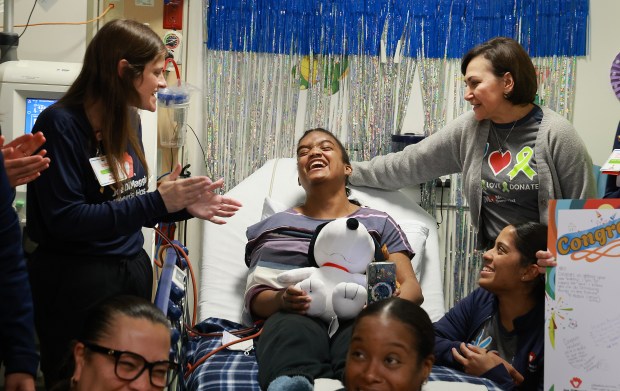
During her final dialysis session, members of Crockett’s family and hospital care team held a “dialysis party” at her bedside, where they held posters and sang a farewell song to her treatment.
“I’m gonna miss everybody here in the dialysis area. But I’m glad I’m leaving — I’m glad and not so glad at the same time, but it’s a good new step,” Crockett said after the party.
Crockett, who moved to South Florida from Jamaica in 2023, had only one kidney at the time of her surgery. She lost her first kidney when she was 8 years old after experiencing health problems nearly her entire life. According to her mother Tracy Evans, Crockett began to receive treatment for her health issues when she was about 3 months old, but the search for a diagnosis for her chronic condition remained inconclusive for most of her childhood.
After the family moved to America, Crockett was diagnosed with the extremely rare syndactyly-telecanthus-anogenital and renal malformations syndrome, or STAR syndrome, which impacts different parts of the body.
While she has struggled for many years, her condition took a serious turn in January when she went into complete kidney failure. Since then, she has been undergoing dialysis while awaiting a transplant.
Dr. Linda Chen, director of the living donor transplant program at Joe DiMaggio Children’s Hospital and Memorial Healthcare System, said about 20 children a year in Broward County suffer from kidney failure and seek a donated kidney. Waiting for a kidney match, or one from a deceased donor, could take many months or years. Because only adults can donate kidneys, finding an organ that is the right size for a child or teen can become problematic too, Chen explained.
Crockett, who has a rare blood type, is fortunate to have a family member come forward who is a good match, Chen said.
“Living donors are much, much better than deceased donors,” the doctor said. “She had three or four of her family members come forward, but for reasons, either medical reasons or compatibility reasons, they weren’t able to be a match for her, and so this is a gift across the miles. She is lucky.”
Chen said her hospital has partnered with the National Kidney Registry, which handled all the logistics.
Crockett began the transplant-matching process with the registry last year, and the family discovered Goodall would be a suitable match early this year. The day before Goodall went to the hospital for her full-day evaluation, Crockett went into kidney failure, making a prompt transplant even more crucial.
“It’s probably the best reason I could think of to have surgery,” Goodall said. “Any surgery is a risk, but this isn’t something that’s going to impact my health long-term. This will impact Ari long-term.”
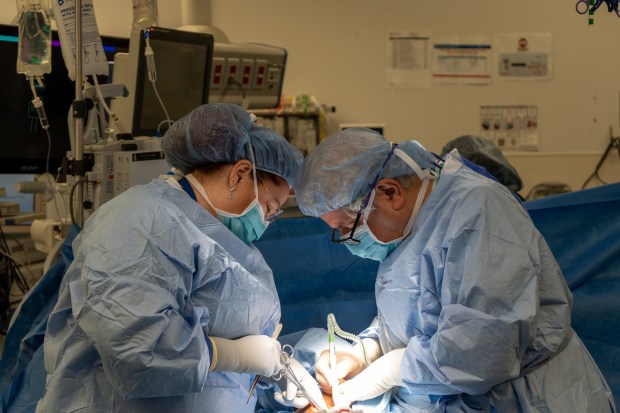 Medical staff during Arianna Crockett’s kidney transplant surgery at Joe DiMaggio Children’s Hospital. (Memorial Healthcare System/Courtesy)
Goodall’s kidney was flown to Miami inside a bright red StrongBox on an American Airlines cargo flight. It arrived at Joe DiMaggio via helicopter, and was transplanted within 12 hours. Crockett’s surgery itself took about three hours, and as of Thursday, her recovery has gone smoothly.
Crockett will recover in the hospital for a few days, and Chen hopes she can return home this weekend. She’ll return to the clinic post-operation so doctors can monitor her kidney function and response to immune suppression medications.
Chen said the surgery is life-changing for young people who sit in the hospital for three to four hours, three days a week, doing dialysis once they go into kidney failure.
“For kids, kidney failure is not just physiological; it’s a psychosocial thing,” she said. Crockett has been attending her last semester of school online, since she left class for the emergency room when she went into kidney failure.
According to experts, remote kidney transplants — which differ from traditional transplants in which the donor and recipient undergo their surgeries in the same hospital — are on the rise.
With a wider geographic reach and the ability to allow donors to recover at home post-operation, they make transplants more accessible.
“It’s much easier when you can do all of your testing and all of your surgical necessities and recovery close to home,” said Samantha Hil, the kidney registry’s vice president of marketing. “We like to remove barriers to donation so more people are able to donate.”
The National Kidney Registry’s remote transplant program began in 2008, and they have facilitated such transplants for adult and pediatric patients ever since. According to NKR marketing director Timothy Jagemann, most of transplants now facilitated by the organization are remote donations, and remote transplants from live donors tend to have better outcomes than direct or deceased donor transplants.
While kidneys from deceased donors tend to last eight to15 years, Jagemann added, those from living donors may last 20 to 40 years inside the recipient.
This year, over 30 pediatric patients are participating in NKR’s microsite program, which allows them to create websites with direct links to the donor intake process. Jagemann said that NKR hopes to find participants matches by the end of the year.
Now that surgery is complete, Crockett is recovering in a Joe DiMaggio room decked out in tropical decor by the nonprofit DecMyRoom. Her grandmother, Jennifer Lacroix, flew in from Jamaica earlier this week, and she will stay with the family in Deerfield Beach until June.
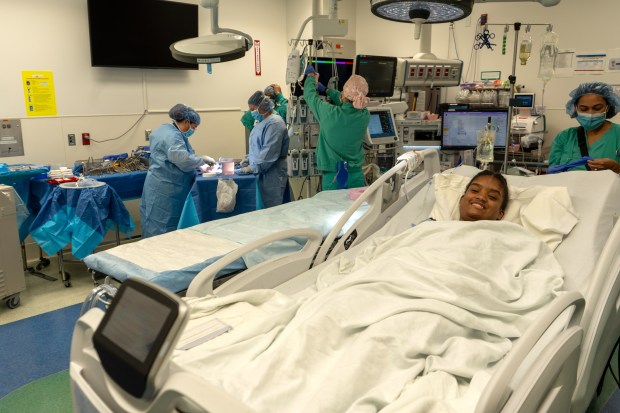 Arianna Crockett in the operating room for her kidney transplant surgery at Joe DiMaggio Children’s Hospital. (Memorial Healthcare System/Courtesy)
Evans, Crockett’s mother, called the transplant a “new lease on life” for her daughter.
“It’s been a lot, especially the ups-and-downs with dialysis, but we’ve been doing this all her life. She’s been there to adapt, doing different tests, different surgeries,” Evans said. “Now with the kidney, her immune system has to be rebuilt and everything is like a new normal for her.”
Looking ahead, Crockett said she’s excited to graduate and spend her summer recovering. She hopes to pursue an associate’s degree at Doral University, and later, become a veterinary technician.
In the meantime, she’s especially looking forward to returning to swimming, one of her favorite hobbies, and eating her favorite food, spaghetti — something she’s been unable to do for months due to the restrictive diet dialysis requires.
“I think it’s going to be good,” Crockett said of what she sees for her future. “I feel excited and happy.”