
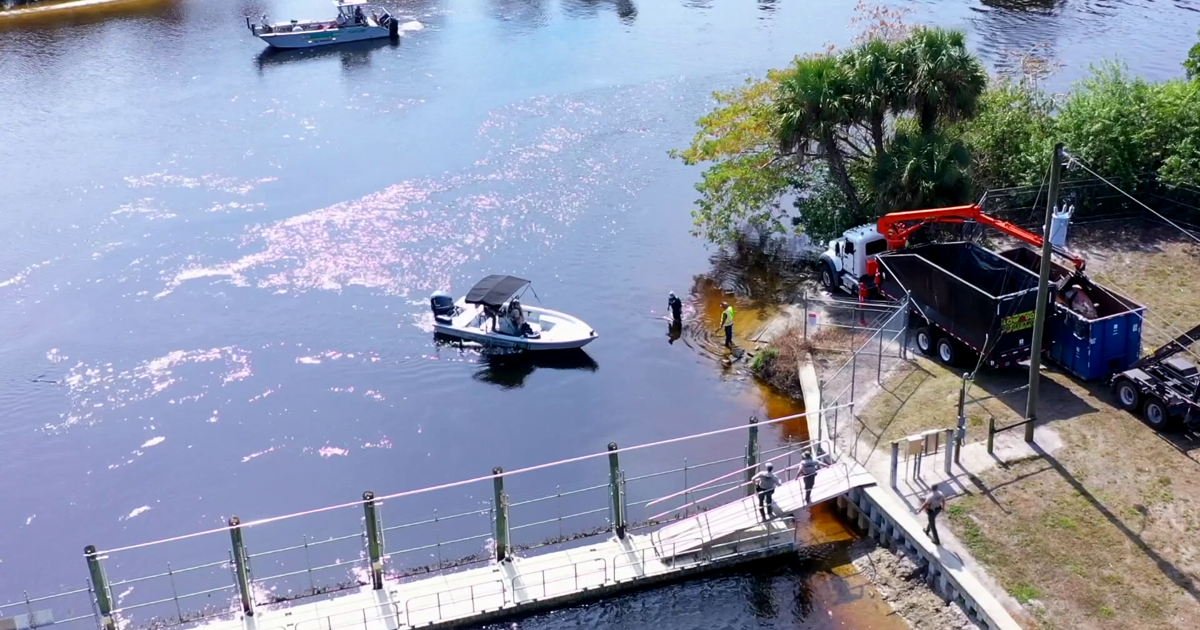
LEE COUNTY, Fla. — Lee County is seeing a sharp rise in manatee deaths in 2026, and new details uncovered by WINK Investigates are raising questions about what was happening at the same time many of those animals died.
According to data from the Florida Fish and Wildlife Conservation Commission (FWC), Lee County has recorded the highest number of manatee deaths in the state so far this year.
In February alone, 58 manatees died in Lee County, including at least 25 at Manatee Park.
FWC says the Manatee Park deaths are linked to cold stress — a condition that can become fatal when water temperatures drop below what manatees can tolerate.
But experts say what happened in Lee County this winter stands out.
“To have two dozen roughly come in over the span of about a week in such a concentrated area really is kind of outside of that statistical norm,” said Dr. Matt Ware, Assistant Professor of Conservation Biology at Florida Gulf Coast University.
Warm water is critical for survival
Manatees rely on warm water during colder months to survive. Unlike other marine mammals, they lack the insulation needed to withstand prolonged exposure to cold temperatures.
“Warm water is absolutely critical for our manatees,” Ware said. “As the water temperature drops below about 68 degrees Fahrenheit, they’re going to move out of the Gulf looking for warmer waters.”
At Manatee Park, that warm water typically comes from a nearby Florida Power & Light (FPL) plant, which discharges heated water into the Orange River.
In 2025, FWC data shows 33 deceased manatees were diagnosed with cold stress disease.
Records reveal plant outage during critical window
Through a public records request with the Florida Department of Environmental Protection (FDEP), WINK Investigates learned that the FPL Fort Myers plant experienced an unplanned outage beginning February 6 at 9 a.m., when both steam turbines were taken offline.
For several days, there was no supplemental heat.
Backup “donkey boilers” were not activated until February 11 at 11 p.m. to provide warm water. FPL says those boilers discharged water at 78 degrees, but the company does not have data showing how much of the surrounding water reached 68 degrees or higher — a key threshold for manatee survival.
The boilers were shut down February 16 as the plant began coming back online. Heat did not fully return to the discharge canal until late February 17, and full operations resumed February 19.
That timeline overlaps with a concentrated spike in manatee deaths in Lee County, particularly between February 14 and February 19, when many deaths were linked to cold stress.
“There was obviously a delay between when the plant had to shut down and when they had those supplemental heaters put in to continue to provide that warm water,” Ware said.
Ware added, “Now it’s up to us to try to figure out kind of what state those manatees were coming in at, how we might be able to identify what role that shortcoming had in the manatee deaths that we ended up experiencing and how we might be able to prevent that going forward?”
In a statement to WINK Investigates, FPL said, “it was at all times compliant with the terms of its license and that we strive to be good partners in helping protect Florida’s manatees, both now and in future cold weather events.”
However, when we asked for an on-camera interview and follow-up questions — including about timing of the response and water temperature data — the company said they have nothing to add.
Through the FDEP public records request, WINK Investigates learned there is a Manatee Protection Plan for the FPL facility, but that plan has not been updated since its installment in 1999.
“It would be nice to see in that plan some more kind of forceful language in the sense of what that response might be,” Ware said in terms of a shut down.
Experts call it a “perfect storm”
Local naturalist Rob Howell, also known as Ranger Rob, says the situation was likely the result of multiple factors happening at once.
“They had the power plant emergency shutdown, and on top of that, that was a really few cold weeks in Florida, and that was the coldest weeks we’ve had here for a long time,” Howell said. So, it was like a perfect storm for these guys and they didn’t come out on top.”
He says manatees in this region depend heavily on the power plant as a warm-water refuge — and may not have alternative options when temperatures drop quickly.
“If they learn where to go for warm water and then all of a sudden it’s not there, they don’t always have a plan B,” Howell said.
Deaths higher than previous years
FWC data shows a noticeable increase in manatee deaths in Lee County this February compared to recent years:
2026: 58 deaths2025: 38 deaths2024: 19 deaths
Experts say the spike is significant not just because of the total number of deaths, but because of how quickly and in the same area they occurred.
What happens next: calls for a plan moving forward
Experts say the focus shouldn’t just be on what happened — but on what changes could prevent it from happening again.
Ware says this moment should be used to evaluate how quickly systems respond when warm water is disrupted.
“There’s some soul searching to take a look at from all sides of this on how those procedures currently worked, was that sufficient, and where we might be able to improve that response time going forward?” Ware said.
He says even small improvements in response time could make a difference, especially during extreme cold snaps when manatees are already vulnerable.
“If we can shorten that amount of time as best we can, we’re going to get better outcomes,” Ware said.
Howell agrees, saying there needs to be a clearer backup plan when warm water sources go offline.
“They should have a plan B for if and when they need to shut boilers off,” Howell said.
Howell says manatees in this region depend heavily on the power plant — and without it, they may not have anywhere else to go.
“If it’s not there during the cold months, they have nowhere else to go,” Howell said.
Both experts say this event should serve as a wake-up call, not just for power providers, but for agencies and policymakers involved in manatee protection.
Not all of the manatees recovered this year have undergone necropsies, meaning some causes of death may never be confirmed. Experts say limitations such as staffing, facility space, and the condition of the animals can impact how many are examined.
For now, key questions remain part of the ongoing conversation — including whether the response to the power plant outage was fast enough, and whether more could have been done to protect the animals during a critical cold-weather period.
WINK Investigates has reached out to FWC for comment and is awaiting a response.