
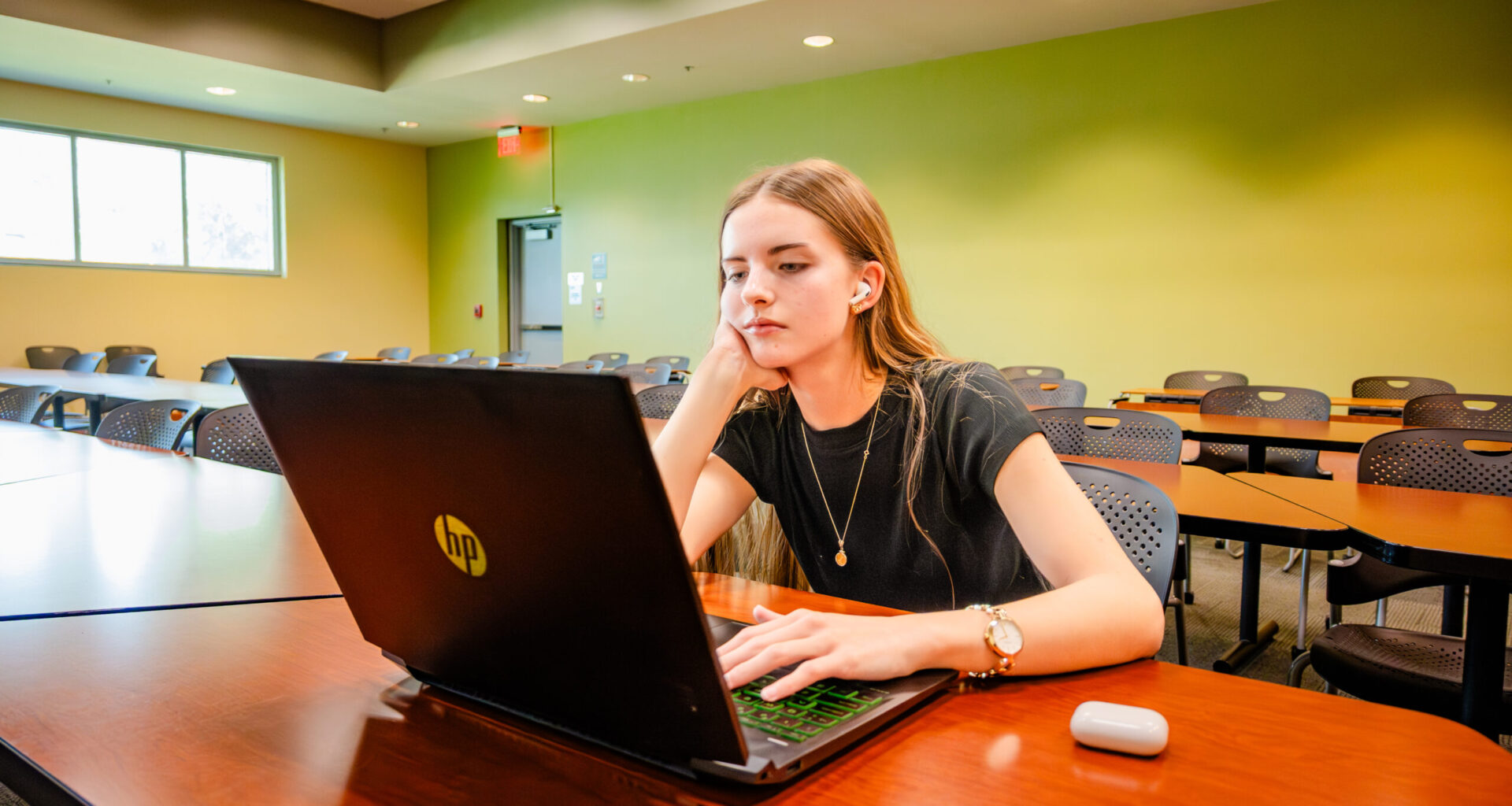
 I’ve noticed a severe lack of student engagement during class, and it needs to be addressed. ORACLE PHOTO/DYLAN SABOL
In my first class back from spring break this semester, I noticed something odd. One of my classmates decided that during the lecture was the perfect time to catch up on season three of Jujutsu Kaisen.
That’s when it really hit me that a lot of USF students just aren’t engaged in the classroom.
Obviously, not every student has this problem, but my Jujutsu Kaisen-watching classmate isn’t the only example of lack of engagement I’ve seen.
I have seen students scrolling the web, playing games and even swiping on dating apps in the middle of class.
I can’t even claim innocence — there have been times when the only thing I got out of a class was an attendance grade because the lecture just didn’t engage me.
As students, we pay for our classes, and wasting that money by not learning anything and just passing the class is not an intelligent thing to do.
Related: OPINION: USF students should knock on professors’ doors more often
Corvin Greene, a senior chemistry and biology major at USF, said students who don’t pay attention to class often affect those who do.
“If anything, it makes me do worse in class, because my classmates don’t care,” Greene said. “[In group work], I’m not only responsible for my grades, but theirs too.”
When working in groups, students who don’t pay attention often hold back their classmates who do.
At that point, it’s not only a decision that affects them, but also their classmates when they’re made to collaborate.
Whether it’s a lab or a group presentation, the dead weight those who don’t pay attention bring isn’t welcome and shouldn’t be tolerated.
But I think professors are just as responsible as students for the class environment. It’s their job to teach, and a major part of teaching is keeping students engaged.
Jordan Battle, an adjunct instructor of Africana Studies, said he sees the issue of students not paying attention as a multifaceted problem that falls on both the students and professors.
“I try to hold myself to a higher standard,” Battle said. “I need to show up better and connect these dots for them and make the material more relevant, so they want to pay attention.”
At the same time, Battle said he views technology as the main reason for students not paying attention in class.
“I would also say that another side of it is having technology in the classroom,” Battle said. “It for sure is problematic to students. I like them having their laptops out so they take notes in class, but it doesn’t always feel like that is what is on everyone’s agenda.”
The advent of the internet and technology has definitely contributed to students’ lack of engagement in class.
Short-form content, such as TikTok and Instagram Reels, has been shown to reduce users’ attention spans, according to the National Library of Medicine.
Related: OPINION: Discussing politics in the classroom shouldn’t feel unsafe
With technology affecting students’ attention spans, extra effort is needed to reel them back in.
Greene said that, as a student, they’ve paid more attention in class when the professor involves them.
“Whether that’s like a clicker question or mini quizzes or trying to answer something vocally, something like that,” Greene said.
Battle said he has some methods to get students to participate and take the burden of making the classroom engaging off himself.
“I have a grade that my students get, and it’s for attendance, participation and taking notes,” Battle said. “I make that be weighed a little bit more heavily. Then students tend to show up and raise their hand and participate.”
In that same vein, Battle said he finds ways to hold himself accountable as a professor.
“Showing up with energy, making my material relevant, reworking through some of the old PowerPoint slides and rethinking some more readings to make things feel connected to their everyday life,” Battle said.
These are all good steps to improve student engagement and create a better, more lively class environment for both students and professors.
As long as we keep this direction and both students and professors make an effort, we’ll see much more engagement in the classroom.