
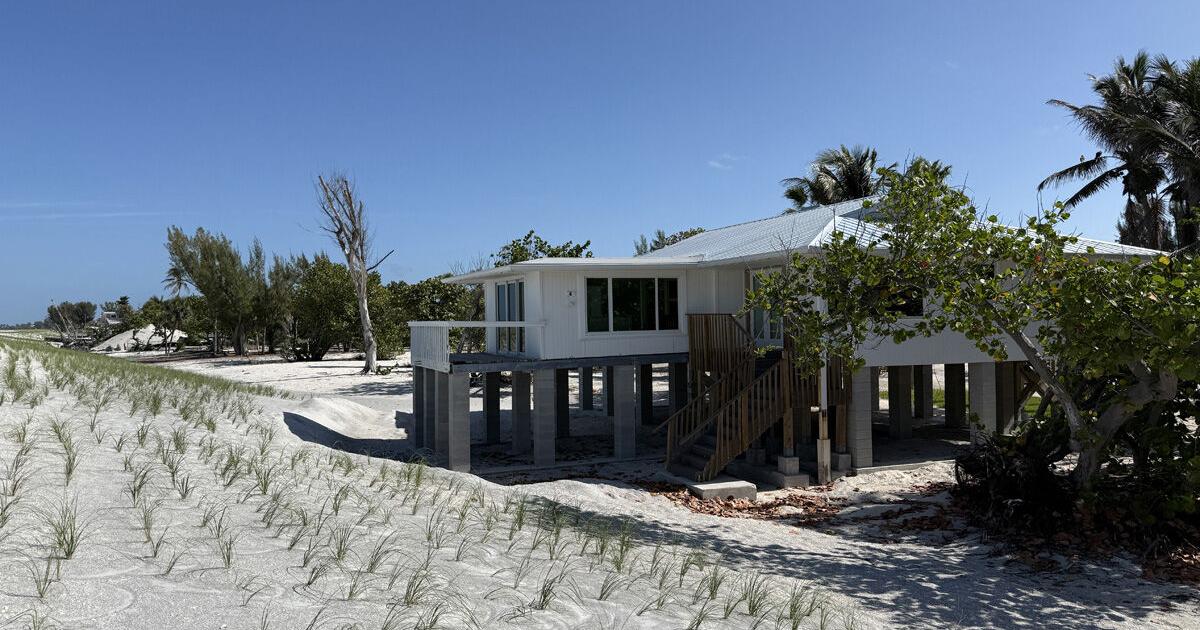
Robert “Bob” Rauschenberg spent more than four decades assembling 22 acres on Captiva Island, creating a buffer between where he created many of his more than 7,000 paintings and South Seas Resort.
The resort’s current ownership group paid $45 million March 31 for the land Rauschenberg spent decades protecting from South Seas Resort. It fell short of the highest bid by $2.9 million.
Rauschenberg began assembling the land as a counter to the resort’s rapid development on the northern end of Captiva in the 1970s, when it was known as South Seas Plantation.
“I have watched the mangrove along the South Seas Road destroyed and 24-hour landfill trucks speeding, tearing up the roads, all to overpopulate and strain an already delicate balance, and, I think, for no noble reason,” Rauschenberg told The News-Press in 1977.
The land spans from the Gulf to Pine Island Sound. About 10 acres fronting the beach lies vacant. A bayside, 9.81-acre parcel has a home that was used for the foundation’s artist-in-residency program. That land is still being used by the Captiva Island Fire Control District, which failed in its attempt to buy it. As recently as April 9, a helicopter used it for a medical emergency landing and takeoff, Fire Chief Jeff Pawul said. Near that is a historic fish house built on wood pilings by J.N. “Ding” Darling above the Pine Island Sound water.
There are eight other buildings spread across the rest of the land, including a 6,000-square-foot structure on Captiva Drive built by the foundation in 2021.
The transaction arrives with continued controversy, as the Captiva Civic Association is suing the resort over how it rezoned its land, looking to boost the number of units from 912 to 1,268. The resort’s legal team began writing new Land Development Codes with Lee County staff at least six months before public involvement in the process, emails between the resort and county staff show. There are seven active lawsuits relating to South Seas rezoning moving through the courts, and the association said it has spent $1.3 million so far in legal fees.

A sign marks South Seas Resort on Captiva Island, which recently purchased 22 acres of adjacent land once assembled by artist Robert Rauschenberg.
David Dorsey
The Rauschenberg Foundation announced it would sell the land in August 2025. Public records show it hired land-use attorney Neale Montgomery of Pavese Law Firm, who also worked for the eventual buyer in rewriting the Land Development Codes, to do due diligence of the land. She wrote a letter to Lee County’s zoning department Dec. 22, 2025, and received a response to her 17 questions Jan. 21, 2026, according to the zoning verification letter.
Montgomery could not be reached for comment regarding her role working for both the buyer and the seller.
There were at least three other bidders on the property.
Captiva Island Fire Control District received voter approval to spend up to $24 million for the 9.81-acre bayside parcel. It submitted an offer of $22 million to the Rauschenberg Foundation in October.
London Bay, which builds luxury condominiums across Southwest Florida, declined to comment on its bid because of a nondisclosure agreement.
An anonymous bidder attempted to get the land under contract for $47.9 million, according to a bid document dated Oct. 29, 2025, reviewed by Gulfshore Business. The document states the bidder would work with local groups to ensure the land served the public and preserved Rauschenberg’s legacy.
“Why would any functioning business, even if it’s a nonprofit, take less money than what someone else is offering?” said James Evans, CEO of the Sanibel-Captiva Conservation Foundation, who knew of the bid but not the bidder’s identity. “Especially when the group that was offering more money was the one that would have the community’s best interest in mind? And would be the one keeping Bob Rauschenberg’s best interests and legacy alive?”
Captiva broker Ken Suarez declined to comment on the anonymous bid because of a nondisclosure agreement.
Tyler Minix of commercial real estate services firm Newmark brokered the deal with South Seas on behalf of the foundation. He declined to comment because of confidentiality agreements.
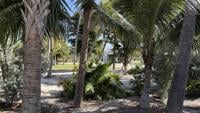
A bayside portion of the former Rauschenberg property includes a home used for the foundation’s artist-in-residency program and remains in use by emergency responders for helicopter access.
David Dorsey
Lisa Riordan, president of the Captiva Civic Association, called the transaction a “monumental betrayal” of Rauschenberg’s wishes.
“The sale of the Rauschenberg property to South Seas (WS SSIR Owner Two, LLC), constitutes a monumental betrayal by the Rauschenberg Foundation of the Captiva community that Bob Rauschenberg loved and personally sought to protect from overdevelopment,” Riordan said in an email. She declined to be interviewed. “The Foundation’s board of directors should be ashamed of what it has done, and we hope that the thousands of artists associated with Bob Rauschenberg and collectors of Rauschenberg works throughout the world can come to understand the extent to which the Foundation has failed the island community of Captiva and the legacy of Bob Rauschenberg.”
Christopher Rauschenberg, son of Bob Rauschenberg and president of the foundation, did not return two phone messages.
Peter Kraus, chair of the board of the foundation since 2024, did not return multiple calls seeking comment. He also is chair and CEO of Aperture Investors in New York.
Courtney Martin, executive director of the Rauschenberg Foundation, could not be reached for comment.
The foundation’s most recent IRS Form 990, for the period ending May 2024, reported about $200 million in investment assets. It distributed $23.5 million toward its charitable mission in its most recent fiscal year, more than twice what federal law requires. With annual operating costs exceeding $16 million, the land sale injects liquidity into an organization whose wealth is largely tied to art.
“Bob was not unaware that when he passed that the other people would be taking over and making decisions that he may or may not have agreed with,” said Mark Pace, who assisted Rauschenberg with the silk-screening process of his art. “But he also was explicit, and they did do it for a long time, he owned over 20 acres. He wanted it to be used as an artist-in-residency program. And they did that. From what I understand, maintaining the properties just became too expensive. But I don’t know that, because I haven’t been involved with the foundation for 10 years.”
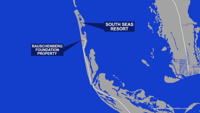
South Seas acquired a 22-acre waterfront property on Captiva Island once owned by late artist Robert Rauschenberg, with plans to integrate the site into its resort.
WINK News
Under current zoning, South Seas could build up to 66 units on the 22 acres. That number would rise if the resort owners attempt to rezone, as they did with the rest of the resort.
The fire district is continuing to use the bayside parcel for takeoffs and landings.
“As of now, they haven’t told us we can’t use it,” Pawul said of South Seas and the bayside portion of the land. As for future arrangements, Pawul said: “That will have to be figured out.”
South Seas President Greg Spencer, through Priority Marketing, declined to be interviewed. He said in a news release: “Given its location, this sale offered us a rare and compelling opportunity to acquire prime beachfront directly adjacent to our established resort, creating a seamless opportunity for integration and enhancements to the overall resort, including our new condominiums, hotels and world-class amenities.
“We look forward to honoring the legacy of this amazing artist through future art-related programming and by incorporating several buildings from the property into our resort.”
Friends of Rauschenberg expressed dismay over the land deal and described the artist’s deep ties to Captiva, where he hosted fellow artists and celebrities.
Rauschenberg began assembling the Captiva land in the 1960s, seeking a more natural environment for his work.
“He went on a quest to find where he should be,” said Lawrence Voytek, who worked for 26 years as Rauschenberg’s fabricator. “He ended up on Captiva. Back then, you had to take a ferry to get on Sanibel. He was driving right near where his property is. He saw a gopher tortoise walking across the road. He stopped. A wall of butterflies flew into him. He said, this is the place.
“He always said he wanted Captiva to be a place ‘where all my dreams can come true.’”
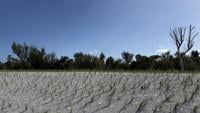
Native vegetation and dunes are seen on the Gulf-front portion of the 22-acre Captiva property assembled by artist Robert Rauschenberg, recently acquired by South Seas Resort.
David Dorsey
After Rauschenberg died, Voytek made 22 corked copper vials filled with portions of the artist’s ashes, some of which were later spread on the Captiva property.
Kat Epple, a professional flute player who often traveled with Rauschenberg, said the artist’s connection to the island went beyond his work.
“Bob was a beloved member of my spiritual family,” Epple said. “He’s the kind of person you would meet and would think, ‘What a great guy.’ You wouldn’t even have to know he was an artist. He’s kind of like a legendary, beloved character of Captiva.”
The news of the land sale disappointed Epple, she said.
“Of course, I don’t know all the details about why the foundation, financially, made that decision,” she said. “But I know it was not Bob’s intention to do that.”
Jessica Todd, a former artist-in-residence from 2014 to 2020, called the sale a loss for the community.
“Having researched the early landowners who entrusted Bob to preserve their beloved island, having learned about Bob and his legacy from those who knew him, and having acted as a careful steward of the land and his legacy for our resident artists, I think it’s an utter tragedy that the property will be absorbed into the resort,” Todd wrote in an email, clarifying she spoke for herself, not on behalf of the foundation. “It is a sacred place.”