
Home
»
AIRLINE NEWS
»
Travel Turmoil Hits Pittsburgh International Airport as Spirit Airlines and Republic Airways Ground 3 Flights Amid Numerous Delays, Impacting Major Airports in Boston, Fort Lauderdale, Atlanta, Austin, Charlotte and More
Published on
April 13, 2026
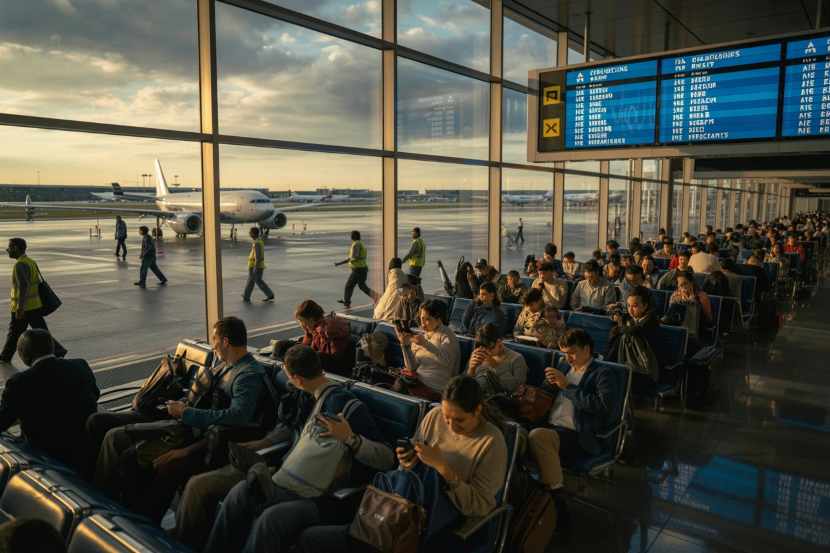
Image generated with Ai
Travel Turmoil Hits Pittsburgh International Airport as Spirit Airlines and Republic Airways Ground 3 Flights Amid Numerous Delays, Impacting Major Airports in Boston, Fort Lauderdale, Atlanta, Austin, Charlotte and More unfolds rapidly today. Travel turmoil grips Pittsburgh International Airport. Spirit Airlines and Republic Airways ground 3 flights. Consequently, numerous delays ripple outward. Moreover, major airports in Boston, Fort Lauderdale, Atlanta, Austin, and Charlotte feel the pressure. Passengers face uncertainty. Operations tighten. As a result, schedules shift across connected routes. Meanwhile, airline networks adjust in real time. Therefore, disruption spreads beyond a single hub. The situation intensifies through cascading delays. Travel turmoil hits Pittsburgh International Airport again as systems strain. Spirit Airlines and Republic Airways ground 3 flights amid numerous delays once more, reinforcing disruption. Ultimately, travellers encounter extended waiting times. Connectivity weakens. The aviation chain reacts instantly.
Affected Cities
The disruptions impacted several major and regional cities across the United States, including Pittsburgh, Boston, Fort Lauderdale, Atlanta, Austin, Charlotte, Washington, Dallas, DuBois, Houston, Orlando, Harrisburg, Fort Myers, St. Louis, Tampa, Jacksonville, Los Angeles, and Miami. These cities experienced a mix of cancellations and delays, reflecting a widespread operational impact across key domestic travel corridors and regional aviation networks.
Flight CancellationsAirportAirlineCancelled (#)Delayed (#)Pittsburgh International AirportSpirit22Pittsburgh International AirportRepublic11Overview of Flight Cancellations
Flight cancellations from the provided data indicate a relatively limited but strategically significant disruption across key airports. Pittsburgh International Airport recorded the highest impact, with a total of 2 cancellations in one instance and 1 in another, reflecting its position as the primary disruption hub. Boston Logan International Airport and Fort Lauderdale-Hollywood International Airport also reported 1 cancellation each, with Fort Lauderdale showing a notably higher percentage impact at 20%, suggesting concentrated operational strain despite lower volume. Across the remaining airports, including Hartsfield-Jackson Atlanta International Airport, Austin-Bergstrom International Airport, and Charlotte Douglas International Airport, no cancellations were recorded, indicating that disruption was not system-wide but rather isolated to specific nodes. Overall, while the total number of cancelled flights remains low, the distribution highlights targeted operational challenges, particularly centred around Pittsburgh and select high-traffic leisure and transit gateways.
What to Do if Your Flight Gets Cancelled: A Quick Guide
Flight cancellations can be frustrating, but knowing the right steps to take can help minimize stress. Here’s what you can do if you find yourself in this situation:
Stay Updated
Monitor your email, phone, and the airline’s app for rebooking confirmation or further announcements.
Stay Calm and Check for Updates
As soon as you learn your flight is canceled, stay calm and check for updates. Many airlines will notify you via text, email, or their app. Visit the airline’s website for real-time updates on the situation.
Advertisement
Advertisement
Contact the Airline
Reach out to the airline’s customer service either in person at the airport or over the phone. If you’re at the airport, head to the service desk. If you’re not, try calling or using the airline’s online chat system to avoid waiting in long queues.
Know Your Rights
Familiarize yourself with the airline’s policies regarding cancellations. Many airlines offer rebooking options or compensation, especially if the cancellation is within their control. In the EU, for example, passengers are entitled to compensation under certain conditions.
Advertisement
Advertisement
Consider Alternative Flights
Ask the airline about the next available flight. If you can’t find a suitable option, consider booking a new flight through another airline, or check for other forms of transport like trains or buses.
The disruption pattern reveals a contained yet impactful operational setback centred primarily around Pittsburgh International Airport, with limited cancellations but noticeable ripple effects across connected routes. While major hubs such as Boston Logan International Airport and Fort Lauderdale-Hollywood International Airport experienced minimal cancellations, the broader challenge emerged through delays and network imbalances. This suggests that airlines managed to avoid large-scale cancellations but struggled with schedule stability. Overall, the situation underscores how even small disruptions can cascade across the aviation system, affecting passenger confidence and operational efficiency.
Source: FlightAware
Advertisement
Advertisement
