
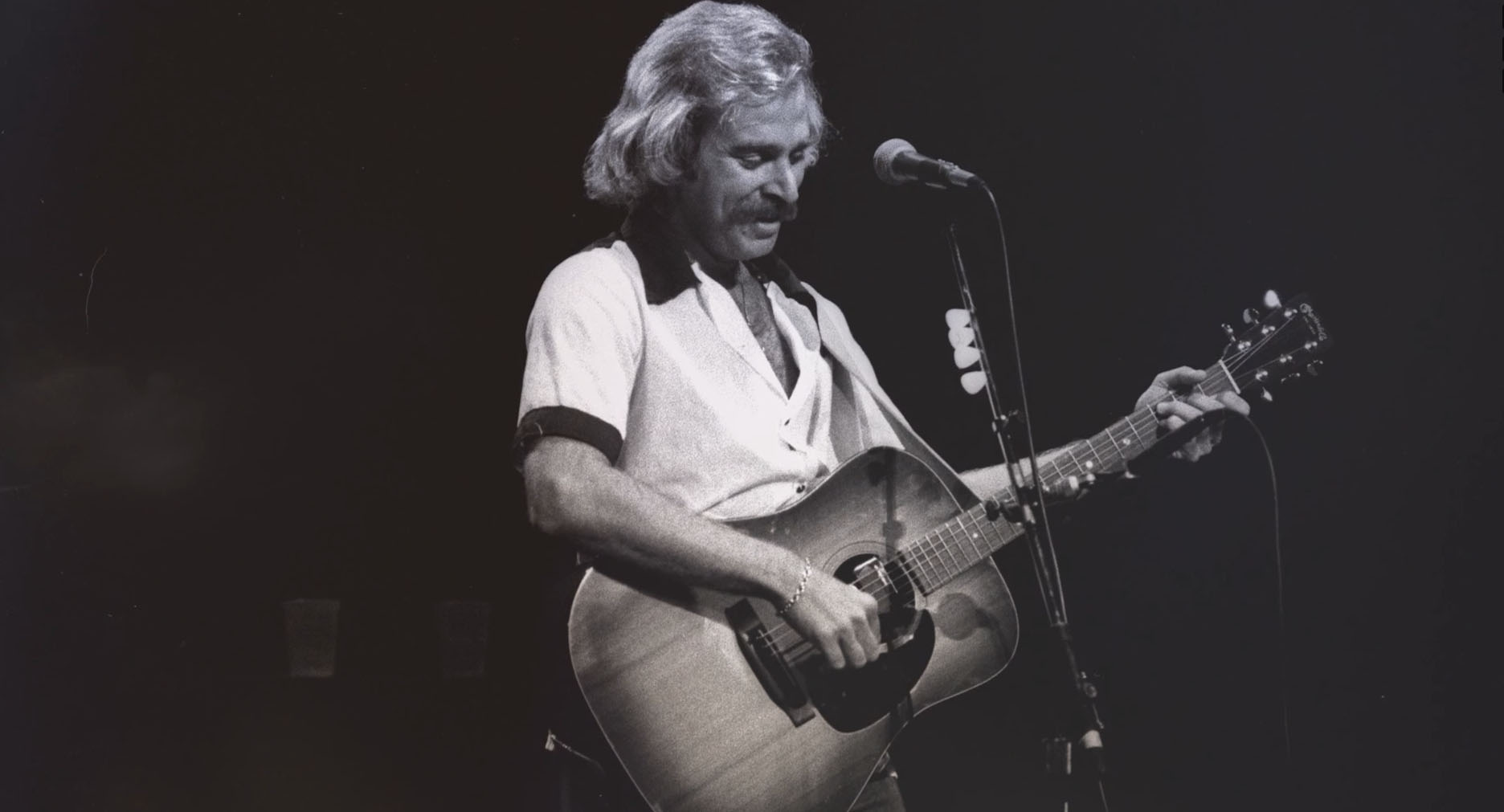
There isn’t much in filmmaker John H. Cunningham’s Occupational Hazard that card-carrying Jimmy Buffett fans won’t already know. But it’s one hell of a ride.
Buffett was charismatic and clever, a singer/songwriter who turned his beach, boats and bar music into a billion-dollar lifestyle industry.
He was a top concert draw for decades, always accompanied by a group of musicians he’d cheekily dubbed the Coral Reefer Band.
Occupational Hazard (the title comes from Buffett’s song “A Pirate Looks at 40”) will have its bay area premiere May 3 at the Sunscreen Film Festival. Subtitled The First Coral Reefers, it chronicles the names, faces (and foibles) of the band members in the 1970s and early ‘80s, Buffett’s formative years.
Buffett died in 2023.
“One of the last things Jimmy said, to friends and family, was ‘Keep the party going,’” Cunningham explains. “I like to say this is where the party got started.”
With his easygoing humor and carefree attitude, the well-read, intelligent and fiercely ambitious Mississippi native was made for Key West, where he relocated in 1971 and quickly made friends with local literati, outcasts and oddballs.
There were no legions of Parrothead faithful, liquor brands, restaurants, bars or RV resorts. No Margaritaville Holdings LLC. No bestselling novels.
There was just the music. And the band. In those days, the image created itself.
“People love or hate Jimmy Buffett based on the last 20, 30 years of who he was, and the big business aspects of things,” Cunningham relates. “But we really wanted to go back to the beginning, the whole origin story. And obviously it was a very different time.
“I also respected his business acumen and what he built, but at the same time I loved the pureness of those early times. And the sense of humor, the fake band members, he always had a great sense of humor. And he never really fit a genre per se.”
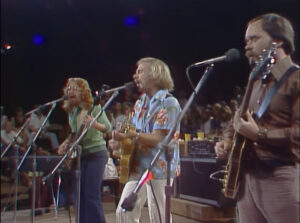
An early TV appearance: Harry Dailey, left, Buffett and Roger Bartlett.
The first-ever Coral Reefer, guitarist Roger Bartlett, stayed with Buffett through 1977 (he departed the band just before the singer’s one and only Top 40 hit, “Margaritaville”).
Bartlett, currently a resident of St. Petersburg, is the only surviving member of that early incarnation of the outfit.
That might well be because the Coral Reefers, as explained in the film, were serious about their alcohol and drug intake. “They always had a reputation for being a hard-partying group,” says Cunningham. “But you think of the Led Zeppelins, the Stones, the Who, the bad boys; in the film (road manager) Bob Lieberman says ‘We were just as bad as they were. We were just floating under the radar.’”
Bartlett is extensively interviewed, alongside vocalist Deborah McColl and keyboardist Michael Utley, both of whom were in the band during Buffett’s first flush of success.
Missing in action are Coral Reefer legends Greg “Fingers” Taylor (harmonica), Harry Dailey (bass), Phillip Farjado and Kenny Buttrey (drums). “These guys have passed on,” Cunningham explains, “so that was another thing, if somebody doesn’t tell this story, than all that information’s gone. And there are a lot of bands you could tell similar stories about.”
McColl was one of the last people interviewed for the documentary. “Yes, the partying and craziness was just part of the gig,” she says. “But it was also a wonderful time musically.”
Observed Cunningham: “The thing about a documentary is, you don’t know the storyline until you have all the interviews done. And the things she shared, in her story, became critical to the overall storyline.”
McColl (and Dailey, and others) were ultimately dismissed from the Coral Reefers, according to the film, when their prodigious drug intake rendered them unreliable.
Buffett, Cunningham observed, “was always a really genuine guy. What I loved about it was, these are the guys who got fired, a lot of them. And they still love him. They look back on those days, and it wasn’t the huge audience, we’re-making-millions kind of days, this was traveling in vans and buses. It got to be airplanes and stuff. But they still love him and respect him.”
Record producer Norbert Putnam describes how long it took him to convince a skeptical Buffett that adding Caribbean steel drums was a good idea. (The sound became a key element of Buffett’s music.)
Fellow singer and songwriter Keith Sykes details the uneasy recording sessions for the Volcano album on the island of Montserrat.
Jeff Bridges narrates Occupational Hazard, and country superstar Kenny Chesney, a Buffett collaborator, is among those interviewed. Mac McAnally, Buffett’s onstage right-hand man for the final 30 years of his life, speaks eloquently of his late friend.
But the real star power comes from Buffett himself, via vintage interview and concert footage. These were the days when every one of his signature songs, from “Come Monday” and “Cheeseburger in Paradise” to “Fins,” “Changes In Latitudes” and “Volcano” were being created.
The self-financed documentary is screening at four Florida film festivals, after making its debut in California.
“We were in Santa Barbara,” recalls Cunningham. “We did two shows out there, with a Q&A afterward. A couple people came up to us after the show, and one of them said ‘You know, I never liked Buffett. My parents listened to it, they brought me up on it … but I was curious, so I came.
“And after seeing those early years, I’m more interested.’”
Occupational Hazard: The First Coral Reefers screens Sunday, May 3 at 2:30 and 5 p.m., with John H. Cunningham (director) and Ted E. Haynes (producer).
For tickets, visit the Sunscreen Film Festival website.