
By Sol Moyano, The Invading Sea
As the use of renewable energy keeps growing in the U.S., Florida ranks among the top three states for generating power from the sun.
Florida ranked third in solar power generation in 2025, behind just California and Texas, according to a recent report from Climate Central, a nonprofit group of communicators and scientists who research climate-related issues.
Climate Central reports that solar and wind were used to generate 19% of the total electricity produced in the U.S. in 2025. The growth of solar and wind energy in recent years has been driven by cost reductions and improved technology, said Daniel Cohan, a professor of civil and environmental engineering at Rice University.
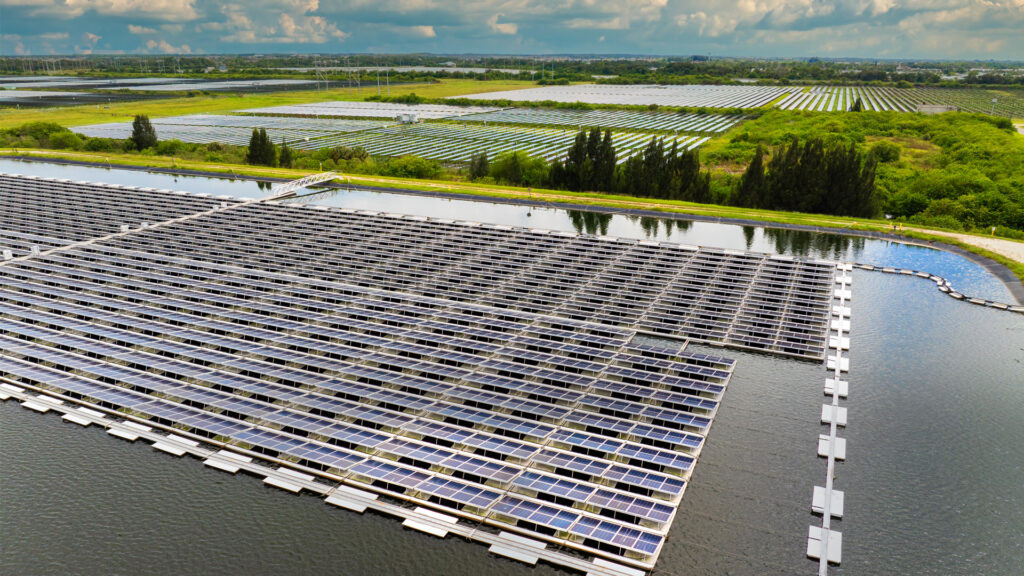 Floating solar panels next to a solar farm (iStock image)
“Solar and wind are now the cheapest sources of new electricity,” Cohan said. “They also avoid emissions from power plants, which are the second-leading source of greenhouse gas emissions in the United States and the main source of sulfur pollution.”
Texas, California, Florida, Iowa and Illinois saw the largest 10-year growth in combined solar and wind generation from 2016 to 2025, Climate Central’s report found, with Florida’s growth exclusively due to its use of solar power.
Climate Central reports that Florida generated 30,131 gigawatt-hours (GWh) of solar energy in 2025, behind only California’s 90,103 GWh and Texas producing 64,073 GWh.
Cohan said Florida, also known as the Sunshine State, has abundant sunshine, a competitive market for solar rooftops and growing amounts of solar farms. This makes it easier for Florida to be ranked high in terms of solar energy generation.
Florida now has enough installed solar capacity to power more than 2.4 million homes statewide and has seen more than 286,000 solar systems installed, according to the Florida Solar Energy Industries Association (FlaSEIA).
“For Florida homeowners, it’s about more than just clean energy – it’s about energy independence and affordability,” said Laura LaRosa, membership and communications specialist with FlaSEIA.
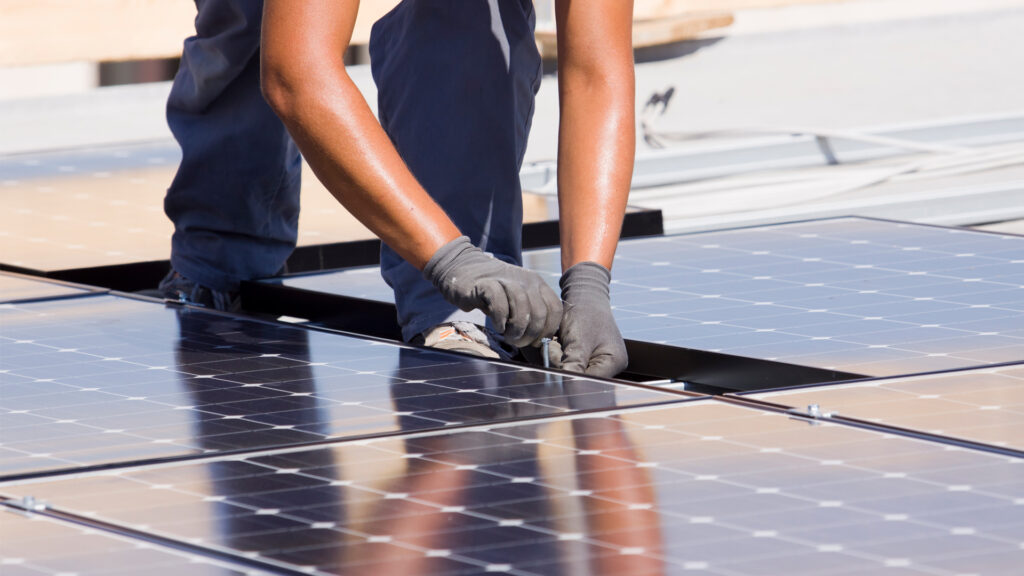 A solar panel being installed on a rooftop (iStock image)
LaRosa said rising electricity costs are pushing more Floridians to adopt solar to lock in lower, more predictable energy bills. Solar also reduces reliance on the traditional power grid, she said.
“Going without power for extended periods simply isn’t an option for many families,” she said.
Tim Michaud, an energy consultant with the solar energy company Tampa Bay Solar, said solar adoption in Florida is still at an early stage, with only about 4% of homes currently using solar. However, Michaud said that number is expected to grow as homeowners recognize financial benefits and the stability that solar systems provide during hurricane-related outages when paired with battery storage.
Michaud said the financial appeal of solar has become even stronger as electricity prices continue to rise across Florida. Incentives such as Florida’s solar sales tax and property tax exemption can make installing solar more affordable, while some utilities have net metering programs that allow excess energy to be sent back to the grid in exchange for credits on future bills.
The biggest benefit of solar, Michaud said, “is that it can eliminate your electric bill.”
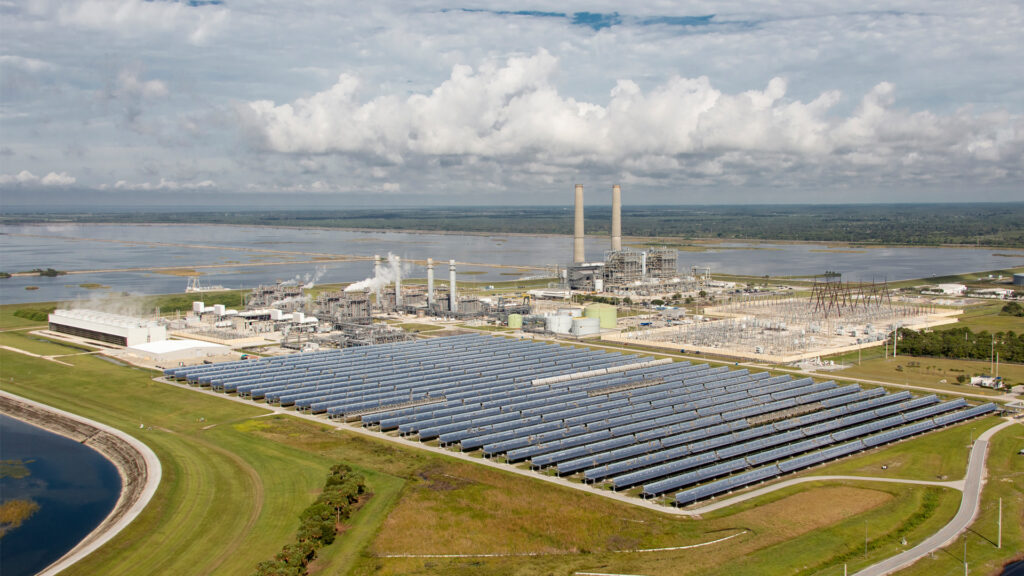 A solar array and natural gas power plant in Martin County (iStock image)
There are some drawbacks to Florida’s transition to renewable sources. Florida relies only on solar power for renewable energy and not also wind. Cohan said the state also has “arduous review and permitting processes for solar farms larger than 75 megawatts, so it doesn’t get as many large solar farms as some other states.”
The growth in renewable energy comes as electricity demand continues to increase. Electricity demand in the U.S. is expected to grow by 25% by 2030 and 78% by 2050,as compared to 2023, according to data by ICF International, a global advisory and technology services provider
With data centers also increasing demand for electricity, the U.S. has not seen electricity demand grow this quickly since 2000.
“Fossil fuels are still the leading source of electricity, but most of the growth is coming from solar, wind and batteries,” Cohan said. “However, the transition is happening nowhere near fast enough to protect our air and climate.”
Climate Central reports that the electric power sector now produces 25% of the heat-trapping pollution in the U.S.
“Renewable resources reduce the need to burn fossil fuels that cause those emissions,” Cohan said.
Sol Moyano is a senior majoring in multimedia journalism at FAU who is reporting for The Invading Sea in the spring 2026 semester. Banner photo: X
Sign up for The Invading Sea newsletter by visiting here. To support The Invading Sea, click here to make a donation. If you are interested in submitting an opinion piece to The Invading Sea, email Editor Nathan Crabbe. To learn more about coral bleaching, watch the short video below.