
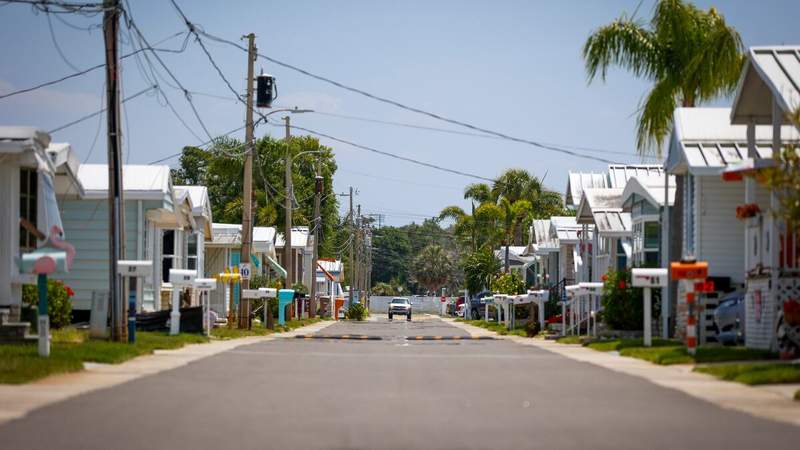
Wendy and Phil Durocher took their seats in a dim conference room in the annals of the Pinellas County courthouse and got ready to plead their case. They came armed with a binder of receipts, itemized spreadsheets and photographs of their storm-damaged mobile home, meticulously highlighted and annotated.
After months of agonizing, a county magistrate would soon decide if the Durochers would be allowed to keep their Palm Harbor home, deemed “substantially damaged” from flooding during Hurricane Helene.
Unless the Durochers could prove the county’s building department had miscalculated, their home would have to be torn down or elevated in keeping with Federal Emergency Management Agency rules.
Following the 2024 hurricane season, more than 1,400 Pinellas County homes were flagged for storm damage that exceeded half the structure’s value.
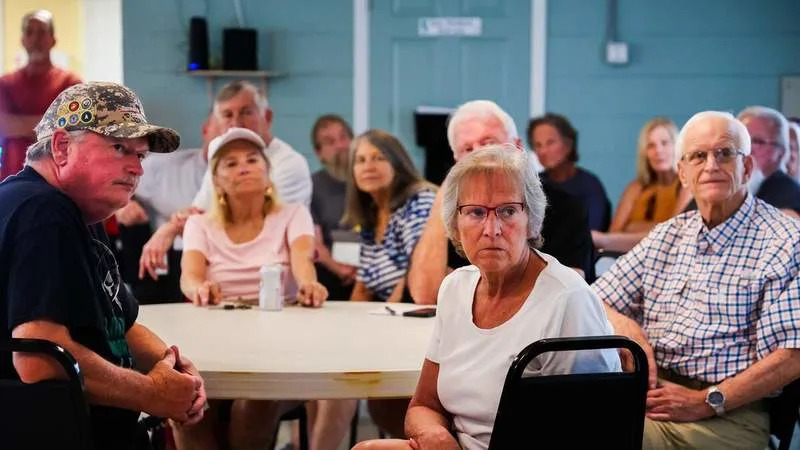
Eighteen months later, some are still trying to save their homes. More than 200, including the Durochers, have taken their battle all the way to magistrate court. Nearly all were owners ofmobile homes, the Tampa Bay Times found,which make up the majority of the 1,400 affected residences. Many are seniors on fixed incomes who’ve struggled to navigate the demanding, technical process.
While mobile homes have provided an affordable option for generations of retirees chasing the snowbird dream, they are more vulnerable to storm damage. In the face of worsening hurricanes, some fear strict FEMA guidelines could make this lifestyle a thing of the past.
Keven McAndrew, Pinellas County’s director of building development and review, said mobile homes remain an important part of the local housing stock. Though the county is taking measures to help mobile home owners, he said,some of these properties just aren’t safe from thisgrowing threat.
“As difficult as it may be to accept, in the end, there are going to be homes that are substantially damaged and have to be demolished or elevated or relocated,” McAndrew said. “That is the way the program that FEMA set up was intended to work.”
The Times interviewed over a dozen mobile home owners who said they thought they were allowed to start fixing their homes immediately following Helene. They didn’t learn their homes weresubstantially damaged until months later, after many had spent thousands making repairs.
Several said their homes were flagged for damage that didn’t exist, like ruined marble floors that were never there or countertops that were still usable. When they tried to get their status reversed, they said inconsistent instructions meanttheygot lost in the process.
More than 700 residents tried to save their homes by getting a reassessment from the building department. They submitted information to prove they had higher property values and lower repair costs than what was initially estimated. Nearly 430 homes were spared this way.
The rest would have to move forward with demolition or elevation. Or they could appeal through a county magistrate.
More than 80% of appeals came from mobile home owners, a Times analysis of court data found. Nearly a quarter came from Crystal Bay Mobile Home Club, the 55+ community nestled along Avery Bayou, where the Durochers live. The park has just over a hundred homes, and nearly all weresubstantially damaged after Helene’s floods.
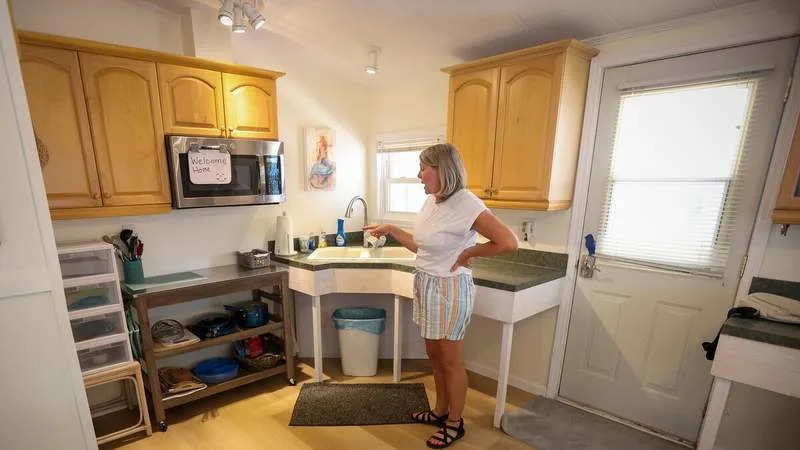
Saving her homeof four years became Wendy Durocher’s full-time job. For months, she spent every free moment gathering evidence, calling and emailing county employees and scouring government websites for any clues that could demystify the rules.
Despite the hours she spent preparing for her hearing, Durocher said it was hard not to feel intimidated. She and several others compared the experience to a criminal trial where they were expected to prove their innocence.
A week before the hearing, the county increased the estimated cost of damage to her home from $42,716 to $50,639 without explanation.
There were obvious errors in the county’s calculations, she said. They dinged her for subflooring that wasn’t damaged, three interior doors that never existed and baseboards that the county had measured incorrectly.
When she pointed to theflaws, she was met with a barrage of questions from the floodplain administrator.
“If we have to tear down our home based on the FEMA rules, then follow the rules correctly,” Durocher fired back.
“This is too serious of an issue to not get it right,” the 64-year-old said.
Dorucher left without an answer. Instead, she was given 10 days to submit more evidence.
McAndrew said there is“great sensitivity” in the county’s appeal process. Appeals are independent from the building department. Most petitioners were given more time to submit evidence following their first hearing.
Roughly a quarter of the 204 appeals filed were still in progress at the end of March, the Times found. Sixty-nine have been rejected. Another 43 people withdrew their appeals before a decision was reached.
Homeowners told the Times their appeals required an intense amount of research, accounting and technical knowledge.
The Durochers were among only 28 homeowners who succeeded in getting out of the“substantial damage” bucket so far. The couple and their neighbors chalked it up to Wendy Durocher’s sheer determination.
“Everyone doesn’t have the same set of skills that (Wendy) has,” Dave Oswald, another Crystal Bay resident said.
“They took a bunch of people like me — 78, Vietnam vet, cancer survivor — and they pulled the rug out from under me,” he said. “They want me to be an accountant, a contractor, a technician … all these things that I’m not capable of doing.”
Oswald tracked down receipts for building materials he’d purchased and paid for a private appraiser to re-assess his home’s value. He said he got conflicting instructions from county staff about what evidence would be considered.
His appeal was denied.
Ray Bartolucci, 60, had a hearing in October for his home in Sea Horse Mobile Home Park, another 55+ waterfront community south of Seminole. Thirty-nine people there have submitted appeals.
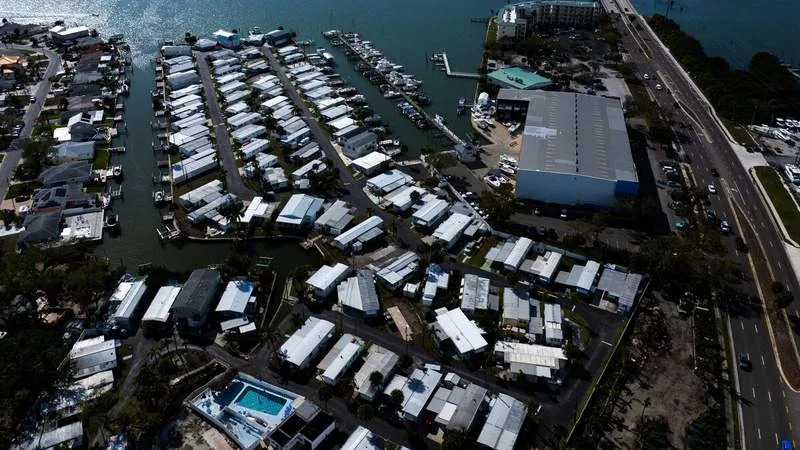
Bartolucci said the county gave no guidance on how to prepare. He, too, had receipts for building materials he used and a private appraisal he paid for, but the county told him none of that would be considered.
At the hearing, he said it seemed like no one reviewed the evidence he submitted.
“They totally dismissed every line item I referenced, every figure that I referenced,” he said.
He was given a week to gather more evidence. Around Christmas Eve, he got an email: Denied.
“We’re hurricane victims,” he said. “You would think they’d be wanting to help us. They’ve taken the human element totally out of the picture and used FEMA as their crutch.”
Bartolucci said he feels like he was punished for trying to be proactive. He rushed to meet the county’s initial requirements, which stated homeowners must appeal within 60 days of receiving a substantial damage letter. Now, county officials say there is no hard deadline.
Some didn’t even attempt to get out of substantial damage. They thought it was a lost cause.
Carol Westjohn, 68,said she didn’t have the energy to restore her home in Crystal Bay after it sustained three feet of water. Even if she wanted to elevate, she wouldn’t have been eligible for government grant programs because she’s not a Florida resident.
After pouring more than $70,000 into renovating her home over the years, she demolished it a little over a year after the storm, thinking she only had until June 1, 2025 to get it done.
She dipped into her retirement savings to buy a mobile homeat a different park in Dunedin. She still hasn’t sold her lot at Crystal Bay — it’s taken her months to find a buyer.
Now that the county has overturned some of her neighbors’ substantial damage designations and given the rest until Dec. 31 to start demolishing or elevating, she can’t help but wonder if she moved too quickly.
She tried to play by the rules, she said, “but the rules changed.”
In the early days, the county did not do a great job of communicating what was expected of homeowners, said Amy Edwards, a permitting expert who started a company called Pinellas Permits to help people untangle the web of post-stormbureaucracy.
“Many people, they did rush through the process,” she said. “I don’t think they realized just how serious the magistrate’s hearings are, considering their entire piece of real property is on the line.”
Edwards, who used to work for the county, said building officials there had never dealt with this level of destruction. Though it took time to work out the kinks, she said the process is now doing what it was designed to do: root out homes that are not storm-resilient.
McAndrew said the fallout hasn’t come as a surprise.
“We knew from the outset that mobile homes were going to be the most significant challenge for us,” he said.
In Pinellas, most of these properties are at least 50 years old and are not designed to withstand hurricanes. They deteriorate faster than traditional homes and are worth less to begin with. This leaves mobile home owners with little wiggle room when trying to prove the cost of repairs adds up to less than half their property value, Edwards said.
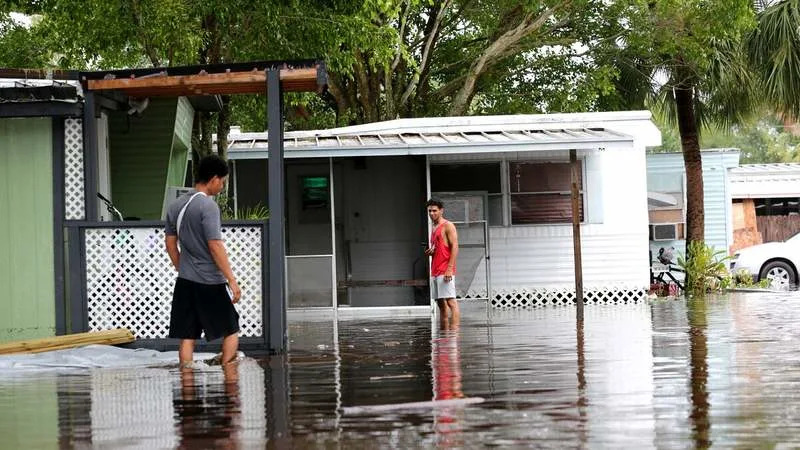
If the county doesn’t enforce substantial damage rules, it could lose out on benefits like FEMA disaster assistance and community-wide discounts through the National Flood Insurance Program.
Following Hurricane Ian, FEMA stripped tens of thousands of homeowners in southwest Florida of their 25% flood insurance discounts once inspectors discovered that several towns and counties had not followed the rules. Some municipalities, including Fort Myers Beach, have since had their discounts reinstated, but only after it agreed to kick business owners and residents out of more than 200 compromised properties.
The goal, McAndrew said, is not to penalize homeowners but to prevent them from facing repeated devastation.
“The idea is that you’re protecting lives and property,” he said.
McAndrew said the county set up a walk-in “support hub” for residents to get help through the reassessment process. Employees are being “as helpful as we can,” he said, to connect residents with grant opportunities and other assistance.
He said many homeowners submitted receipts that weren’t itemized, or the wrong type of home appraisals, preventing the evidence from being considered.
“None of us have ever had to manage an event of this magnitude,” McAndrew said,“there’s some really simple lessons learned that can be extremely valuable for all of our residents going forward. And there’s going to be a very concerted educational campaign.”
But that’s little consolation for retirees who worked their whole lives to afford a piece of Florida real estate.
“These are people with more years behind them than ahead of them,” said Crystal Bay resident Dave Lundwall. He filed for an appeal with the magistrate early on, skipping the building department reassessment entirely.
His appeal was denied for lack of evidence, and he wasn’t given an opportunity to submit more he said.
Lundwall,71, feels the process is inherently unfair for older residents. He wishes the rules wouldn’t apply to 55+ communities, where most people live on fixed incomes and don’t have the wherewithal to start over.
For many, these properties are second homes.
Oswaldhas been living part-time in Florida for 16 years, traveling from Michiganto beat the harsh winters. He and his wife loved the Crystal Bay community, with restaurants and shopping close by.
While they have a home up north, Oswald said they aren’t in a position to buy another in Florida. The county’s deadline will mark the end of their snowbird lifestyle.
“It’s going to be devastating,” he said. “We’ve made a number of wonderful friends we just love, and we’re going to lose all of that.”
For others, losing their mobile home means losing their only place to live.
Peter Richie, 82, has lived at Sea Horse full time since 2012. Since then, the disabled veteran’s health has declined due to Parkinson’s disease. He said his neighbors have always lenta hand, especially after Helene.
He is set to meet with the magistrate this month. If his appeal is denied, “I’ll be out on the street,” he said.
He can’t afford the half a million dollars it would cost to elevate his home. Andselling vacant land likely won’t leave him with enough money for a new place.
“Rents are high, places are expensive now,” he said. “Where am I going to go?”
A few Crystal Bay residents are awaiting the results of their appeal. Nearly half of those who filed have been denied. At Sea Horse, only one homeowner’s appeal was successful.
Some have started making arrangements to leave. Others are waiting for the county to force them out.
Residents said the past year and a half has done irreparable damage to their tight-knit communities. Longtime neighbors have moved. Others have been paralyzed by stress. At least six homeowners across both parks died in the midst of fighting their substantial damage designations.
“We’ve had sleepless nights,” said Sea Horse resident David Stephenson. “As a retired firefighter I’ve been through hell, but never this hell.”
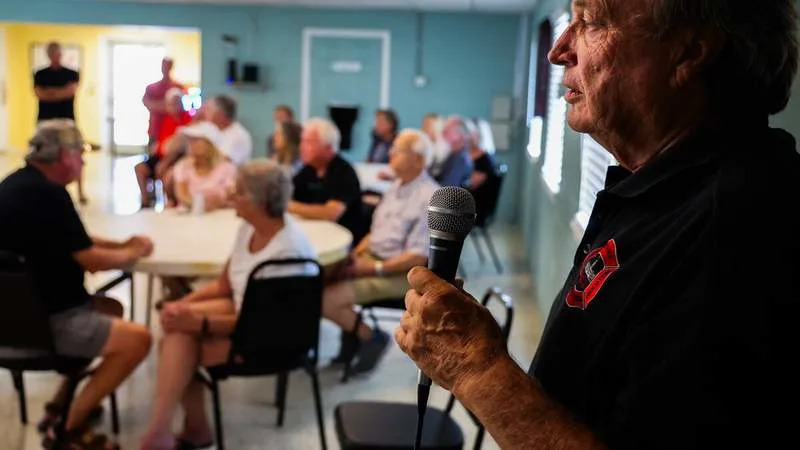
For those who stand to lose their homes, the prospect of selling the entire park to a developer is appealing — a way to recover at least some of their lost investments. At Crystal Bay and Sea Horse, that would require a vote from the homeowners association. Owners remain split.
“Most of the mobile home parks that were flooded are prime real estate,” Edwards said. If enough people there are deemed substantially damaged, “those parks are going to disappear off the map.”
It’s already happened to Twin City Mobile Home Park near the Gandy Bridge. In 2024, Pinellas County told all 82 homeowners they’d have to elevate or leave due to constant flooding. After months of back and forth, they were offered up to $40,000 each to relocate.
Residents there rented the land beneath their homes from Lakeshore MHC. After everyone moved out, that company rezoned the property to allow apartments to be built on the site.
Some mobile home owners said their experience has made them skeptical of the county’s motives.
DennisCatlock, 73,bought his Sea Horsehome in 2022. The Maine resident has been visiting Pinellas since the 1970s.
In recent years, he’s seen how rapidly the area has developed. Older mobile home parks pose a liability for the county, he said. Replacing them with condos and apartments would result in higher tax revenues and fewer headaches.
“Within the next decade they want to grab this land,” he said. “They want to take what made Florida what it is today — people from the north who come down for six months out of the year — and they want to force us out of here.”
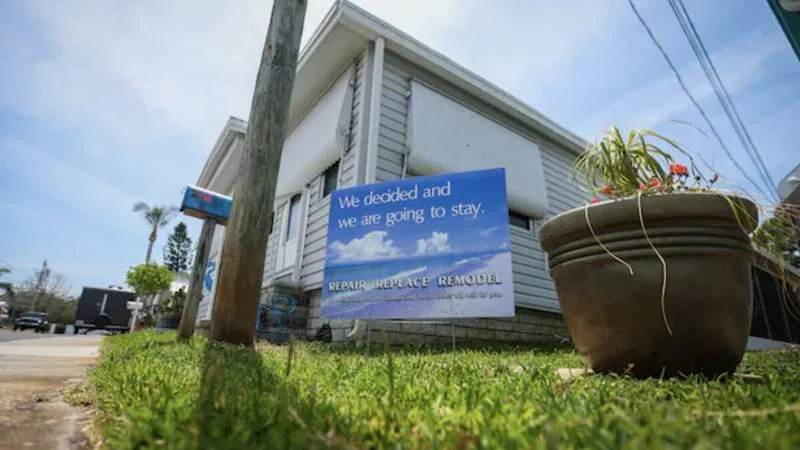
McAndrew said Pinellas is weighing options to protect these parks, a vital source of affordable housing,including allowing residents to park RVs on their land.
In the meantime, many mobile home owners are taking a wait and see approach. Even those who have had their appeals rejected refuse to believe this is the end of the line.
Bartolucci said he prays every day for a solution that would allow him to keep his slice of Florida sunshine. His two daughters have vacationed in Pinellas their whole lives, first at his father’s condo, now at his mobile home. He had hoped to pass the property on to them one day.
“I’m not going anywhere,” he said. “They’re going to have to drag me out of here.”