
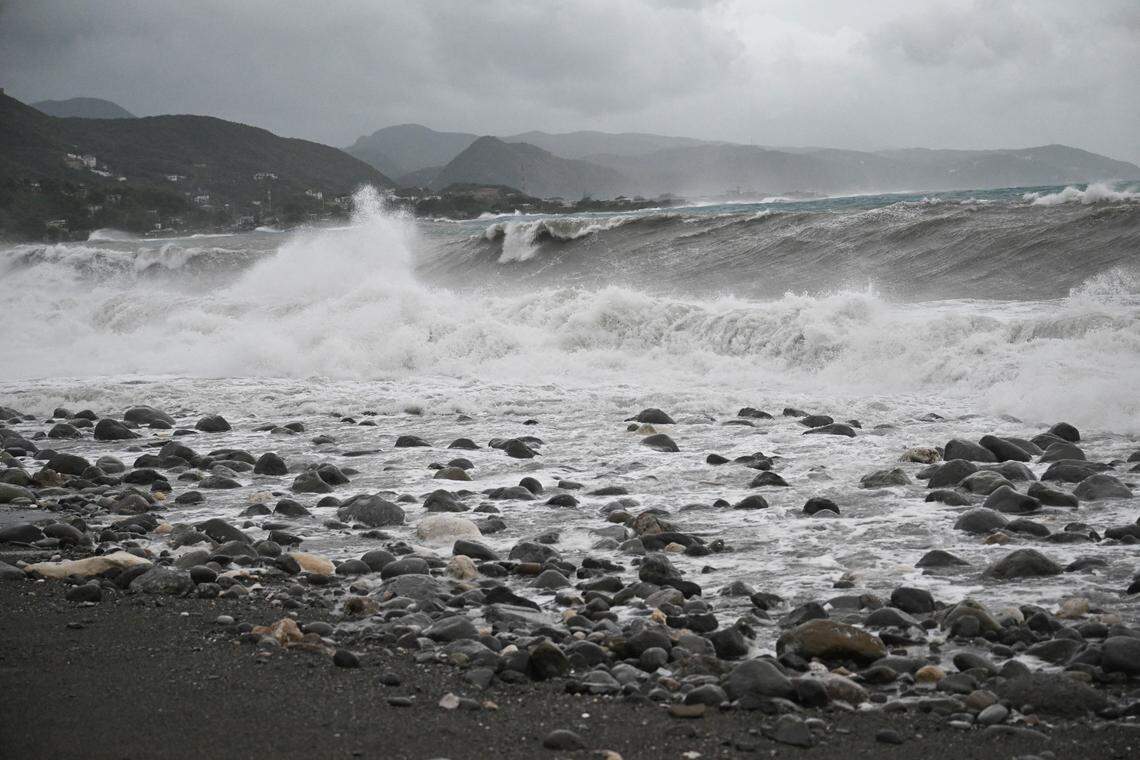
South Floridians may have something to be thankful for this week: Hurricane Melissa, now looming and churning with terrifying force across the Caribbean, is not headed our way. This is a scary one.
As we watch the monster storm on weather maps, our hearts ache for Jamaica, where the Category 5 storm appears to be squarely headed, barring last-minute shifts in paths or a weakening of strength.
As of 5 p.m. Monday, Melissa was deemed the strongest hurricane on the planet this year, reaching 175 mph. Landfall is expected just before daylight Tuesday near Black River, in the southwest portion of the island. Cuba and Haiti could be next in the coming days.
Many in South Florida’s large Jamaican diaspora, based largely in Broward County, are watching in anguish as Hurricane Melissa bears down on their homeland. For them, this isn’t just another storm; it’s an unfolding nightmare that threatens their loved ones just a 90-minute flight away.
Meteorologists’ forewarnings are chilling. They used words like “catastrophic,” “life-threatening” and “historic hurricane.” The commands heard again and again to Jamaicans are simple but haunting: “Prepare for the worst.”
Prime Minister Andrew Holness has told the island nation, “every corner of the island will feel the impact,” the Miami Herald reported.
Also being brutally tested by this storm will be Jamaica’s infrastructure resilience, which has been a focus of Holness’s administration. “Every road we rebuild and every housing project we approve must meet higher climate standards,” he said during a press briefing in Kingston. “Our goal is not only to recover faster after disasters, but to withstand them better.” Let’s hope he’s right.
For South Florida’s Jamaican families stuck on the sidelines, dread is the operative word. Each update brings both clarity of the scope of the damage that could be unleashed and also helplessness for relatives. “You feel it twice,” one Miramar resident said. “You feel safe – but you feel sick knowing they’re not.”
Across South Florida, Jamaican churches and community organizations have already sprung into action and are preparing to step in and help pick up the pieces. Full damage could take days to determine. And Melissa’s slow, agonizing crawl means Jamaica faces a prolonged, multi-day siege of wind and rain. As of Monday afternoon, the storm sat less than 150 miles from Kingston, inching north at only 5 mph and gathering strength along the way.
Forecasters warn that some parts of Jamaica could receive up to 40 inches of rain within four days, nearly two-thirds of Miami’s annual rainfall. Hard to imagine such destruction. The risk for flash floods and landslides is expected, particularly in Jamaica’s hilly interior, where steep slopes and fragile soil can give way without warning, according to news reports.
With a storm surge predicted to climb 13 feet above ground level, coastal towns face a difficult next few days. If the devastation is as expected, vulnerable communities could face days or weeks of isolation as roads, power and communication lines collapse under the storm’s assault.
South Florida will have to step up.
For now, flights have stopped, ports are closed and communications are beginning to fail. Jamaica is bracing for the kind of night that etches itself permanently into a nation’s memory.
The question now is how quickly and how fully the world can rally once the winds die down and Jamaica begins the long, painful work of recovery.
Our hearts are with you, Jamaica.