
High-ranking U.S. State Department officials faced tough questions on Capitol Hill over policy toward Cuba, including whether any negotiations are underway between Washington and Havana.
During a hearing of the House Foreign Affairs Committee, Cuba took center stage as lawmakers from both parties weighed in on the island’s political and economic crisis.
“The communist regime in Cuba is on life support,” said Maria Elvira Salazar, a Republican from South Florida.
Meanwhile, Texas Democrat Joaquín Castro pointed in part to U.S. policy as a contributing factor to the current situation, while also urging democratic reforms.
“I hope the Cuban government holds free and fair elections and they must engage in economic reforms,” Castro said.
Lawmakers pressed Michael Kozak, a senior State Department official and former diplomat in Cuba, about whether the U.S. is currently negotiating with Cuban leaders.
Kozak declined to provide details.
“If you want to get anywhere with talks of this kind, you don’t do it in public,” he said, suggesting that any potential discussions would remain confidential.
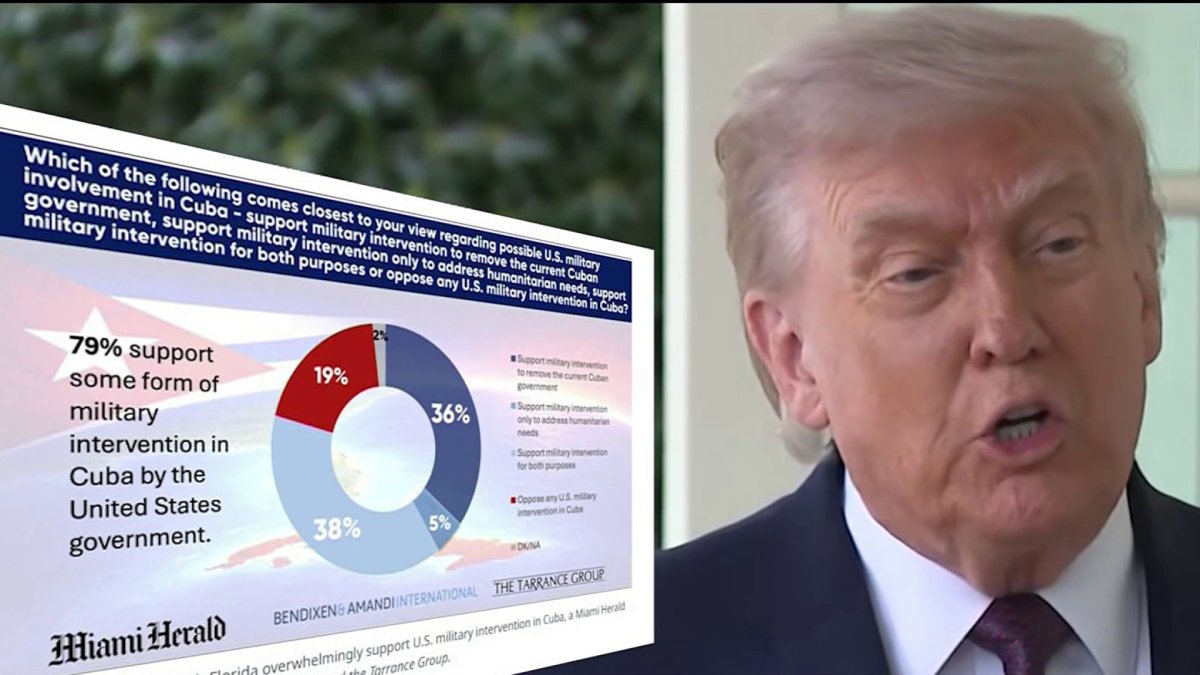
Poll shows strong support for intervention
As questions swirl in Washington, a newly released poll by the Miami Herald highlights strong opinions among Cubans and Cuban Americans in South Florida.
According to the survey:
79% support U.S. military intervention in Cuba
Nearly 70% believe negotiations with the Cuban government would not lead to meaningful change short of regime transition
The findings point to a hardline stance among many in the community, particularly amid ongoing economic hardship and political repression on the island.
At Florida International University, where leaders broke ground on the new Casa Cuba cultural and academic center, experts weighed in on the poll’s significance.
“The poll just published by the Herald proves something that we have been saying for over a month now — that there is a Miami consensus on how a transition should take place in Cuba,” said Sebastian Arcos, interim director of Cuban Studies at FIU.
Arcos noted that more recent Cuban arrivals to the U.S. tend to favor a transition that begins with sweeping political changes, including removing members of the Castro family from power.
Cuban American artist Willy Chirino also shared his perspective, expressing conditional support for intervention if diplomatic solutions fail.
“I’d rather have an intervention unless there is another way that we could do it diplomatically,” Chirino said.