

🎭 NEW! Orlando Theatre Newsletter
Sometimes our reality turns out to be someone else’s dream. Not necessarily in the metaphysical sense of a dreamscape that one might confuse for reality. Rather, a lived experience we take for granted may be just the kind of life someone else longs for. Kimberly Akimbo takes that theme and filters it through several different lenses in its two-act black comedy. For starters, we have the lead character – Kimberly Levaco, age 16, but she looks 66. She suffers from a rare condition that presumably is progeria (alluded to but never named in the libretto), in which her body ages 4.5 times faster than normal. So while other kids her age are at the awkward teenage stage of hormones and overstimulation, she’d already gone through menopause and has crow’s feet and laugh lines aging her face. For Kimberly, the reality of adolescence not only happened years ago, but it happened before she had the mental or emotional maturity to truly understand it. And now, at 16, she’s not expected to grow out of adolescence the way her peers eventually will.
🎭 NEW! Orlando Theatre Newsletter
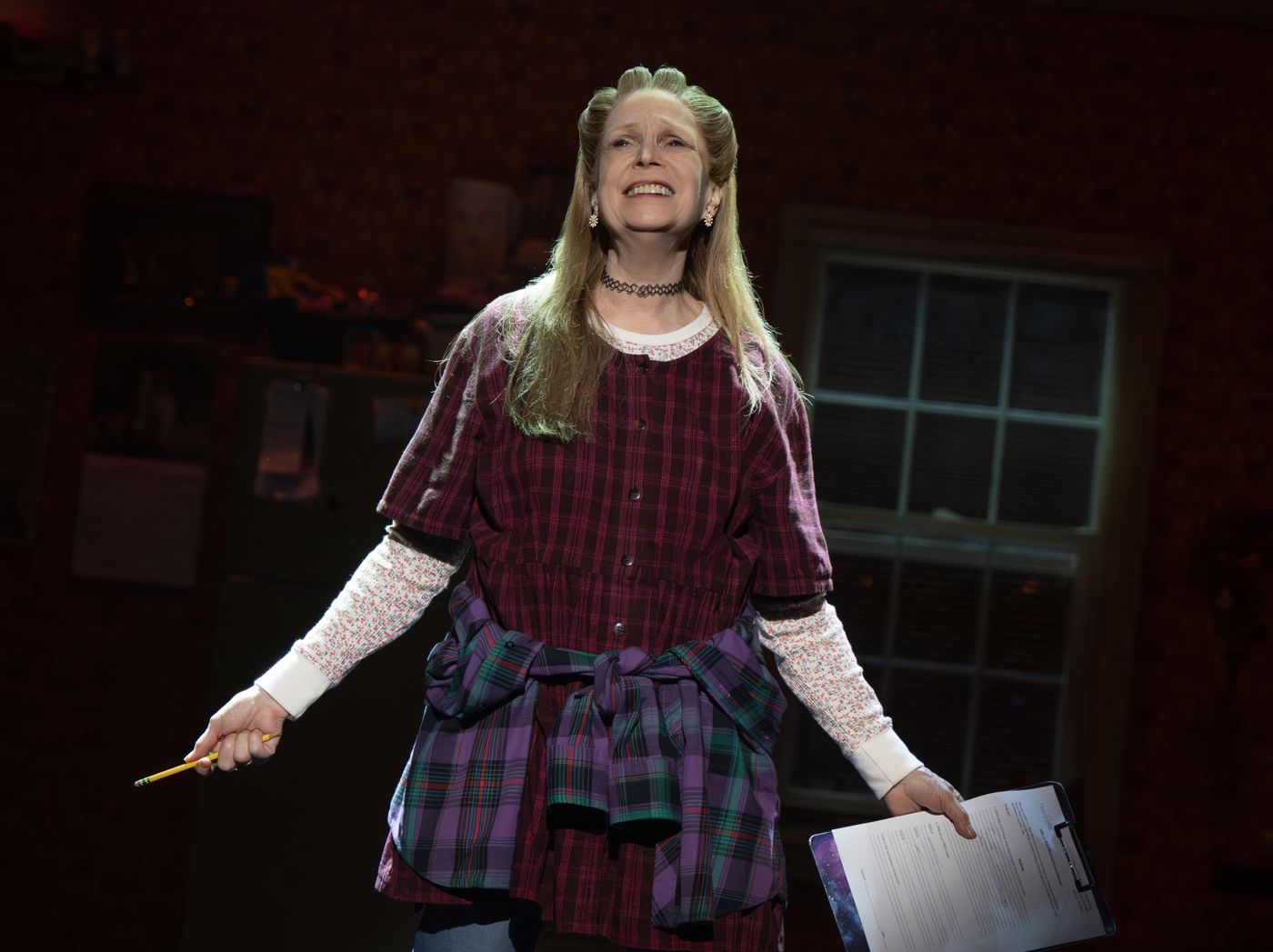
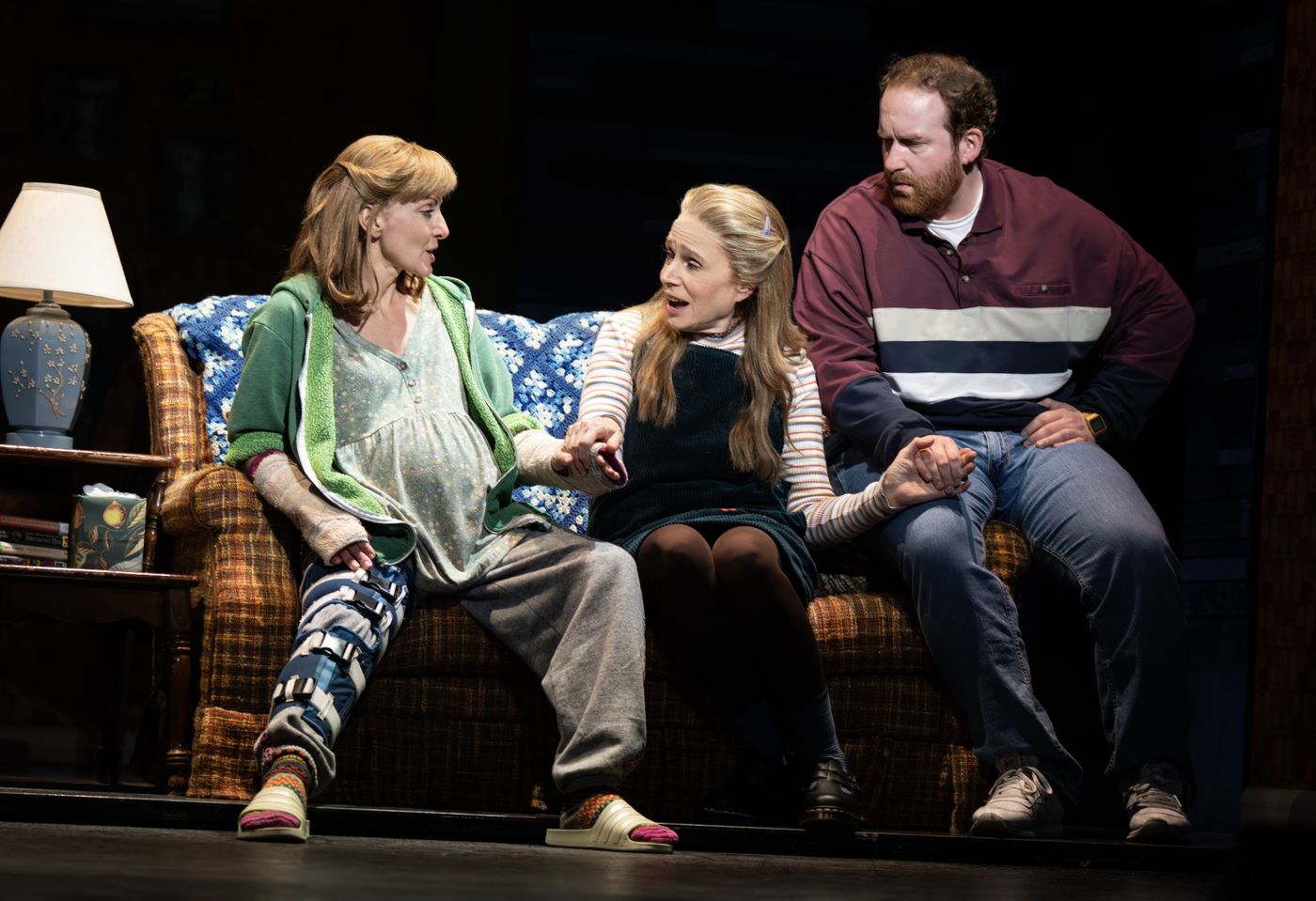
Likewise, Kimberly’s family dreams of normalcy in a more traditional way. Father Buddy and mother Pattie had Kimberly in their own teenage years. Now in their mid-thirties, they’ve gone through nearly half their lifetime as parents, only living with the knowledge that their firstborn will more than likely not age along with them into their own twilight years. And with a second baby on the way, Pattie begins recording home movie messages to prepare the baby for whatever life may throw at them in their second attempt at parenthood. Even though Buddy and Pattie spent the last sixteen years raising Kimberly, they haven’t fully matured in the traditional way as well. Buddy can barely hold down a job, having become an alcoholic due to his early jump into parenthood. Teenage pregnancy kind of throws off any pre-set, five-year plans. Both partners were forced to grow old, but not necessarily grow up.
Then there’s Kimberly’s compatriots. An outcast named Seth who feels ignored at home and has fairly idiosyncratic hobbies (playing the tuba and creating anagrams). He strikes up a friendship with Kimberly that gradually evolves into a mutual attraction that could potentially lead something more. Their classmates include a quartet of show choir teenagers – Martin, Aaron, Delia, and Teresa – all harboring crushes on each other but too afraid to admit it. Martin secretly likes Aaron, but Aaron gives puppy-dog-eyes to Delia, while Delia harbors feelings for Teresa, who otherwise holds a torch for Martin. For the quartet, the biggest drama in their life (aside from unspoken crushes) is beating their rivals from West Orange in a show choir competition. The realities of their lives run counterpoint to Kimberly’s dreams – typical teenage problems she can’t experience because she’s already, in some ways, an old woman. Life has not only passed her by, but it’s already making way for a tomorrow she will not be part of. She grew up too early and is now too late to enjoy it. And it leaves little time left now for any more dreaming.
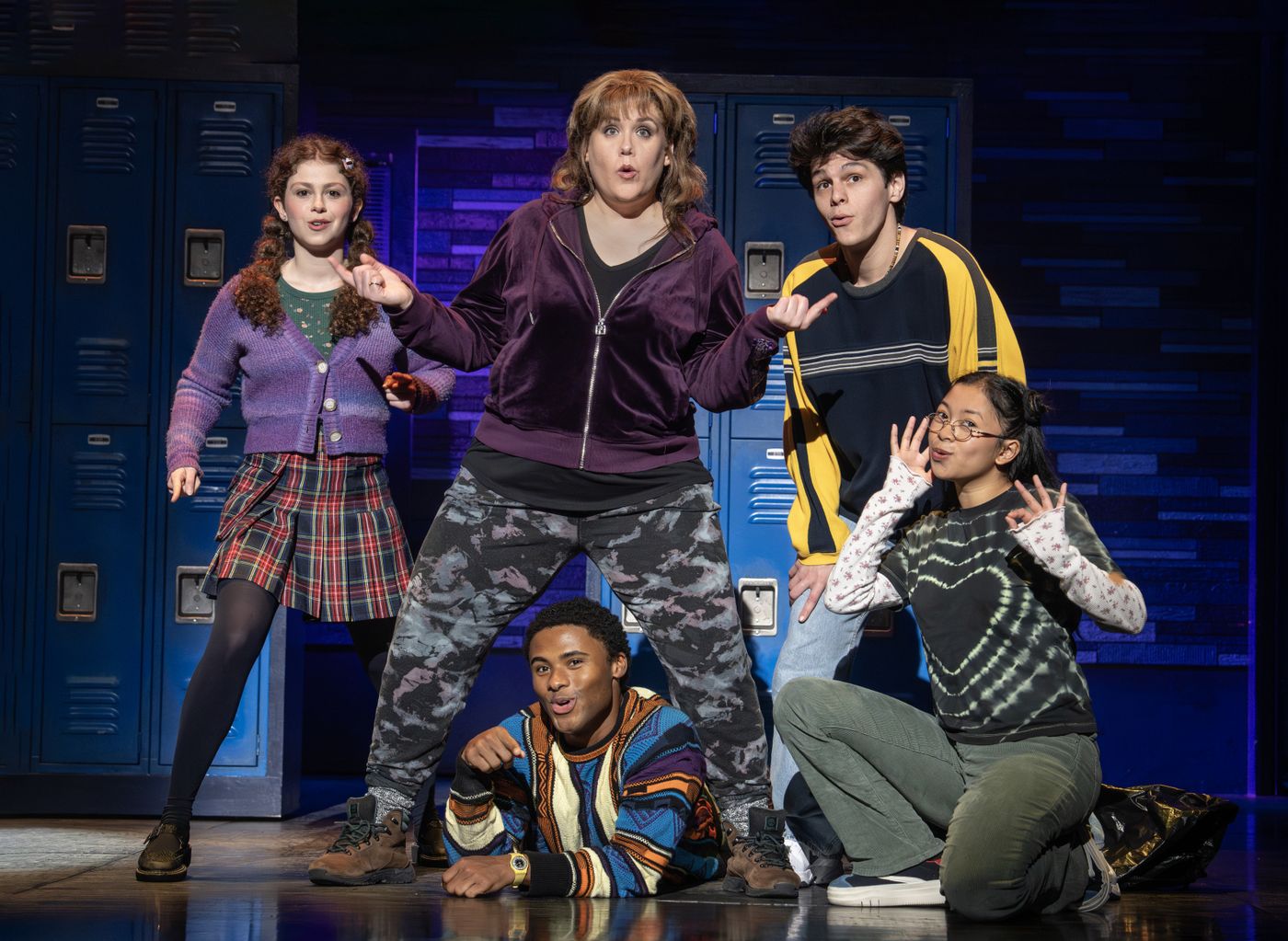
Amidst all this, Kimberly’s wacky aunt Debra suddenly shows up and stirs things up in the sleepy little suburb by roping in Kimberly and all her friends in her latest con: check washing. I’d say more, but Debra’s a wild card in this deck that’s best discovered going into the show blind. There’s absolutely nothing realistic about this show’s plot, its absurdity clearly must have been dreamt up itself by the author – playwright David Lindsay-Abaire – easily taking inspiration from 1971’s Harold and Maude, 1996’s Jack, and recycled “Beverly Hills, 90210” plot points of teenage longing. Lindsay-Abaire also manages to weave these disparate themes together into a sharp, subversive take on the suburban fantasy. Kimberly Akimbo may focus on a teenage girl whose optimism and hope sell the show as hopecore for the 21st century, but it also serves as an indictment of the post-war suburban promise that became the ideal goal for American families of the 1950s. Every character’s desire here is stemmed in wanting a form of “normalcy” that is otherwise denied to them. Kimberly wants to be a normal teenage girl. Her parents want a normal family dynamic. Seth wants a normal, romantic relationship. And the 90210-lite crowd want normal couplings despite the impossibility given each other’s mutually-oppositional direction of attraction.
Yet, even a desire for normalcy itself is flawed. It’s based less on the reality of life and more on that idealized, 1950s suburban fantasy that influenced pop culture for decades – “Father Knows Best,” “Leave It To Beaver,” “The Donna Reed Show,” etc. Such a lifestyle has become an impossible standard to meet in terms of how a real suburban family lives. It feels most apparent today, in a fractured and splintered country where the “nuclear family” is hardly the norm. We also live in an era where the tradwife lifestyle and all its implications of a 1950s-style household has suddenly become popular again – fake and manufactured they may be for clicks – with households of a more conservative consideration who would rather see Father as breadwinner, Mother as homemaker, and Children as normal.
Kimberly Akimbo, on the other hand, tells us that even on a stage: real life is anything but normal. And isn’t it a comfort?
The show relishes in its indictment of suburbia in a most delightfully subversive way. We see how that model can still be broken even if all the parts are there. Just because a nuclear family lives in a house in a small town, it doesn’t mean life will be hunky-dory for them. Just because the typical teenage friend group live comfortably enough to see small-stakes drama as life-altering, it doesn’t mean they’re the model students every high school should strive to teach. We learn that the suburban fantasy is not sustainable, primarily because such a fantasy can only ever be a dream. The reality of suburban living, as told by Kimberly Akimbo, shows there is much more nuance to everyday life than the nuclear family with a white picket fence and a wholesome dinner at eight. If everyone got what they wanted, after all, they wouldn’t want for more. So if anything must be considered normal in the life of Kimberly Levaco and company, it’s that their longing for something greater has become the norm to which they all share.
As mentioned earlier, Kimberly Akimbo thrives on being a “hopecore” kind of musical. A fellow theatre patron described the show with that term, even if I don’t fully ascribe to it myself. Hopecore itself is fairly recent trend in social media referring to edited videos that intentionally present content made to inspire joy and emotional positivity. The primary purpose of hopecore is to act as counteragent to the typical “doomscrolling” that otherwise pervades through social media. While I can understand how audiences may find Kimberly Akimbo to be hopecore – the bright pastels of its own logo being the first sign – I feel that it oversimplifies the message. We can be optimistic, yes, but we can’t always be joyful about it. The balance between our emotional highs and lows must still be maintained. And Kimberly Akimbo knows how to weave together that tragedy and triumph even if it does so with fairly over-the-top characters, depicted by performers who make sure we know how ridiculous they are.
The 2022 musical began its life roughly twenty years earlier as a straightforward play, which perhaps speaks to why its book is quite literate even if the songs are not. Don’t get me wrong, I enjoyed them within the context of the story. However, not enough of them felt truly “musical” enough. They didn’t feel traditionally hummable in the Broadway style, save for the Act One closer, “This Time” and Kimberly’s eleven o’clock number, “Before I Go.” But overall, the music of this musical felt almost secondary to its outrageous plot and over-the-top characters. Then again, it is all a matter of taste as the musical did win Tony Awards for Best Musical, Best Book, and Best Original Score. What didn’t speak to me clearly spoke to Awards voters and audiences who’ve enjoyed this show for the last five years. I reckon I might enjoy the content in its original mounting as a dramatic play, though I would have to see an actual production to better judge it.
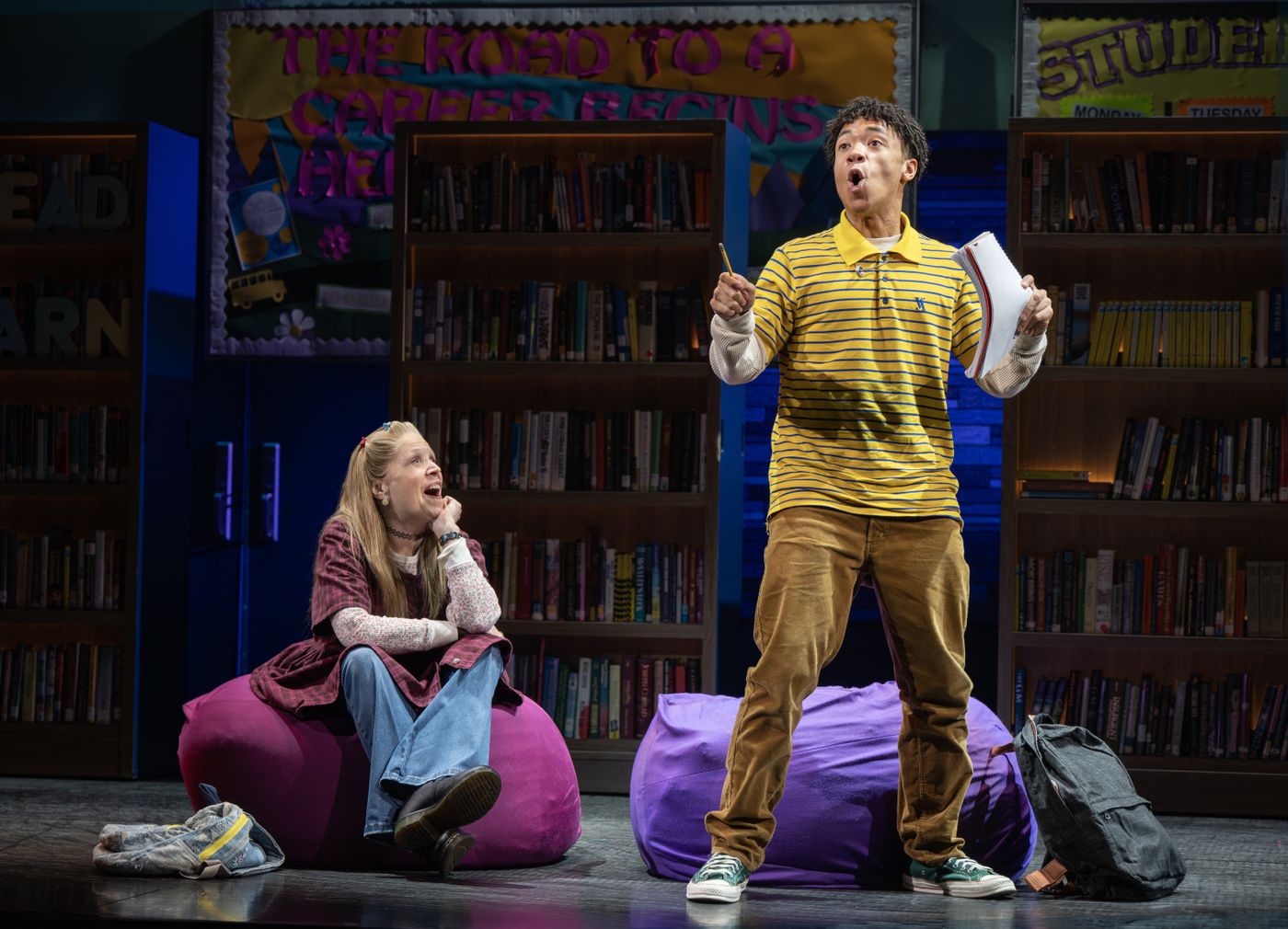
In the meantime, having seen this musical rendition, I can safely say it’s a musical that merits further discussion beyond how good the music is. The so-what of it all relies less on hooking you with a tune, but rather on making you think about how every aspect of its production ask you to question whether a dream is worth having. The entirety of this nine-person production is framed on stage with a distinctive outline of a suburban house. It is within this world that we see locales such as “Skater Planet,” the ice skating rink that Seth works at and the teenagers claim as their social hangout. The house also becomes the Levaco residence, right down to the ugly brown couch and the candy-corn-pattern wallpaper that signifies it definitely was built well before its 1999 setting. Clever flips of walls and movable set pieces also turn the house into the Bergen County high school’s classrooms and library, complete with hand-stapled bulletin boards, an overhead projector that would surely confuse Gen Alpha, and lockers adorned with 90s-style magazine posters.

Notably excluded from this set design is the treehouse that Kimberly writes to Make-A-Wish Foundation. She goes through possible wishes she can ask of them, before settling on a treehouse. And that, right there, serves as part of the musical’s commentary on the myth of suburbia. The treehouse itself – its desire for one and ultimate absence from the show – serves as a metaphor for how the ideal suburb itself does not exist. It’s the message within the message that is Kimberly Akimbo. We may have even just the barest, physical structure of a house on that stage, but everyone is simply “playing house” inside it rather than facing their realities. Kimberly doesn’t actually want a treehouse. She wants the fantasy of a stable, problem-free household. In some ways, Buddy and Pattie don’t actually want a second child. They want a chance to have raised Kimberly “right.” Do any of the show choir teenagers actually want each other, or did they long for those prospective romantic partners because they’re literally the only people they hang out with?
Within the Ibsen-esque definition of what a house is, Kimberly Akimbo tells its audience: not even the house wants to be a house. It’s an ice skating rink. It’s a school library. It’s a beat up old car that has the most awkward conversation between Buddy and Seth. Everything in this story, even a non-entity like the idea of a house, wants what they can’t have. In order for that drama to keep moving forward, everybody will always want something, but nobody should get it. That, if anything, is the reality of suburban life. Even those living in it now still find themselves wanting more. A bigger house. A newer car. A nicer neighbor. The dream of suburban living is, as interpreted through the lens of Kimberly Akimbo, a nightmare for those in it.
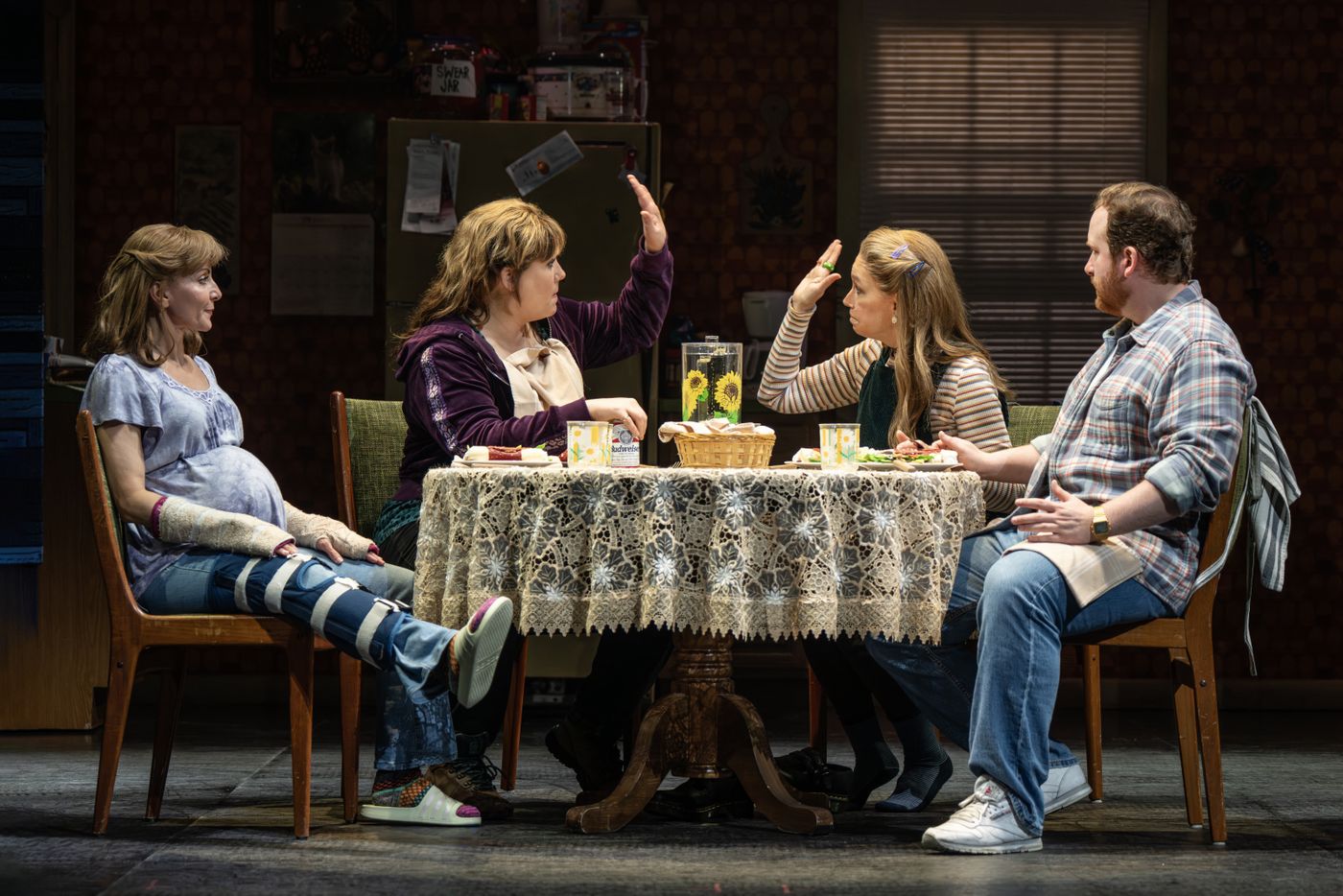
Kimberly Akimbo’s national tour began in 2024, though a shake-up in the cast during its second leg sees a variety of new performers in the roles. Central Florida’s own Dr. Phillips Center has now seen the Walt Disney Theater transformed into late-90s suburban Jersey for a special week in April. As a former Jersey resident, the locality of this show – passing cultural references and that distinctive Northeast vibe – made for an especially nostalgic experience. Such details in the dialogue may not speak to every audience member, but there is still a shared understanding that anyone who grew up in late-90s suburban America will recognize the style of living depicted on that screen. And even those who were born too late to enjoy a pre-cell-phone lifestyle can wistfully look back at this regrettably bygone era with that same “I was born in the wrong decade” longing that 90s kids had for the 1950s.
Ann Morrison’s approach to Kimberly Levaco requires her to tap into the memory of her younger self. As a result, she never uses her performance to suggest that she’s an older woman playing younger. Rather, she creates within her interpretation of Kimberly a genuine, 16-year-old girl who just happens to look like a pensioner. If anything, it does reinforce the old adage, “age is in the eye of the beholder.” Morrison’s Kimberly is played straight amidst the more outlandish characters around her. Somebody’s got to be the mature one, so even though she’s only sixteen years old, she inherits that role. The one time Morrison allows herself to – ahem – act her age is during “Before I Go.” The song’s written for a mature voice, for someone who’s lived through life to understand what they lyrics mean. And it allows Kimberly – as interpreted by Morrison – to finally be the old woman she’s tried for the last two hours to not be.
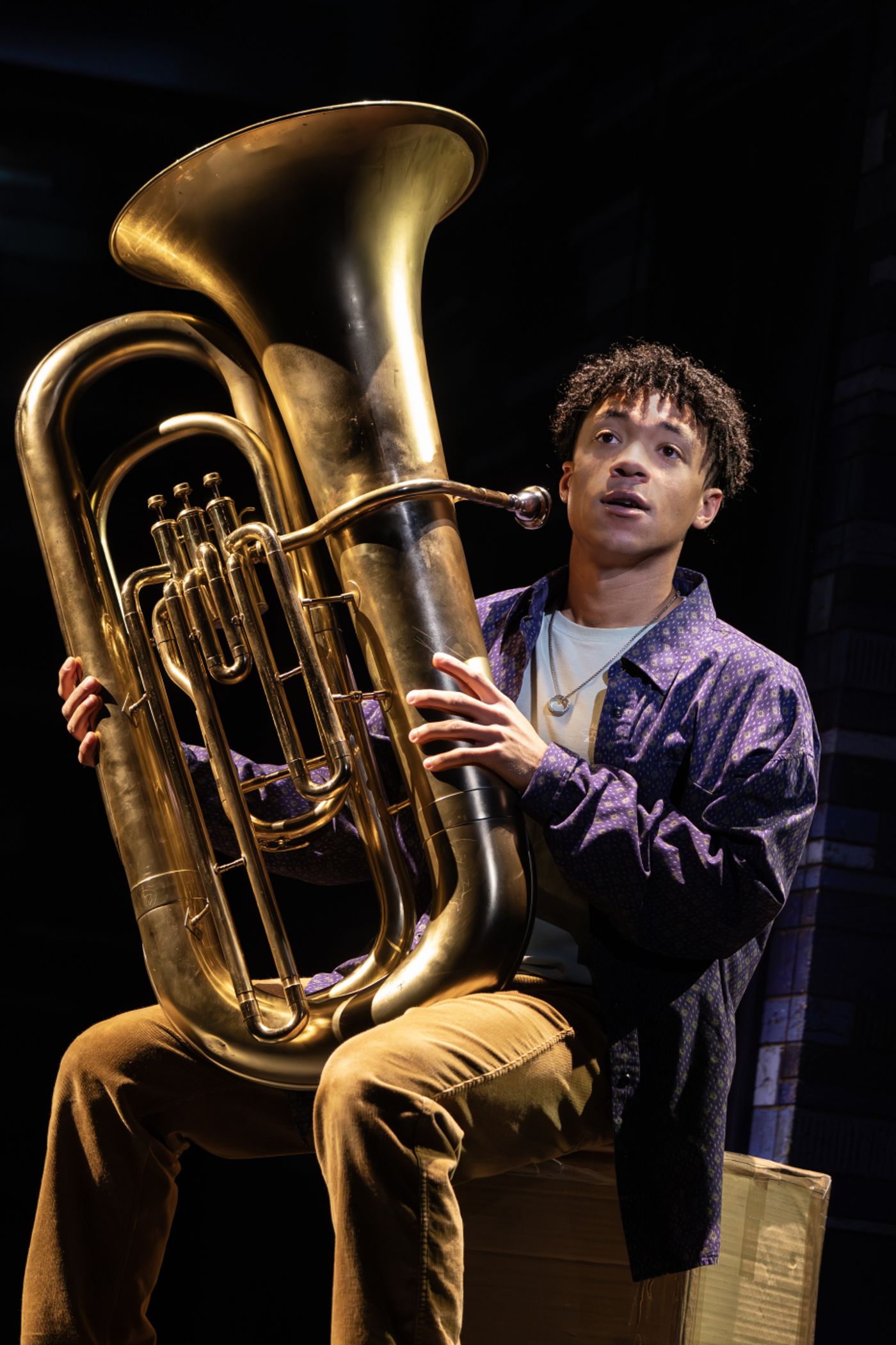
Marcus Phillips brings a wholesome approach to the character of Seth, one which hinges primarily on a vocal delivery that suggests the “Aw, shucks!” bashfulness that pretty much cemented “The Adventures of Ozzie & Harriet”’s David and Ricky Nelson as everyone’s favorite boys next door. It does sometimes paint Seth more as a caricature of that character type, again offering a subversive take on the suburban ideal. But there are a few instances in the show that allow Phillips to give Seth some depth – talking about his late mother in one scene, then musing on about how his father now ignores him in another. He’s got amazing chemistry with Morrison, which is essential and necessary so that their teenage romance reads as sweet and innocent, rather than come off as some May-December awkwardness due to the performers’ real-life age difference.
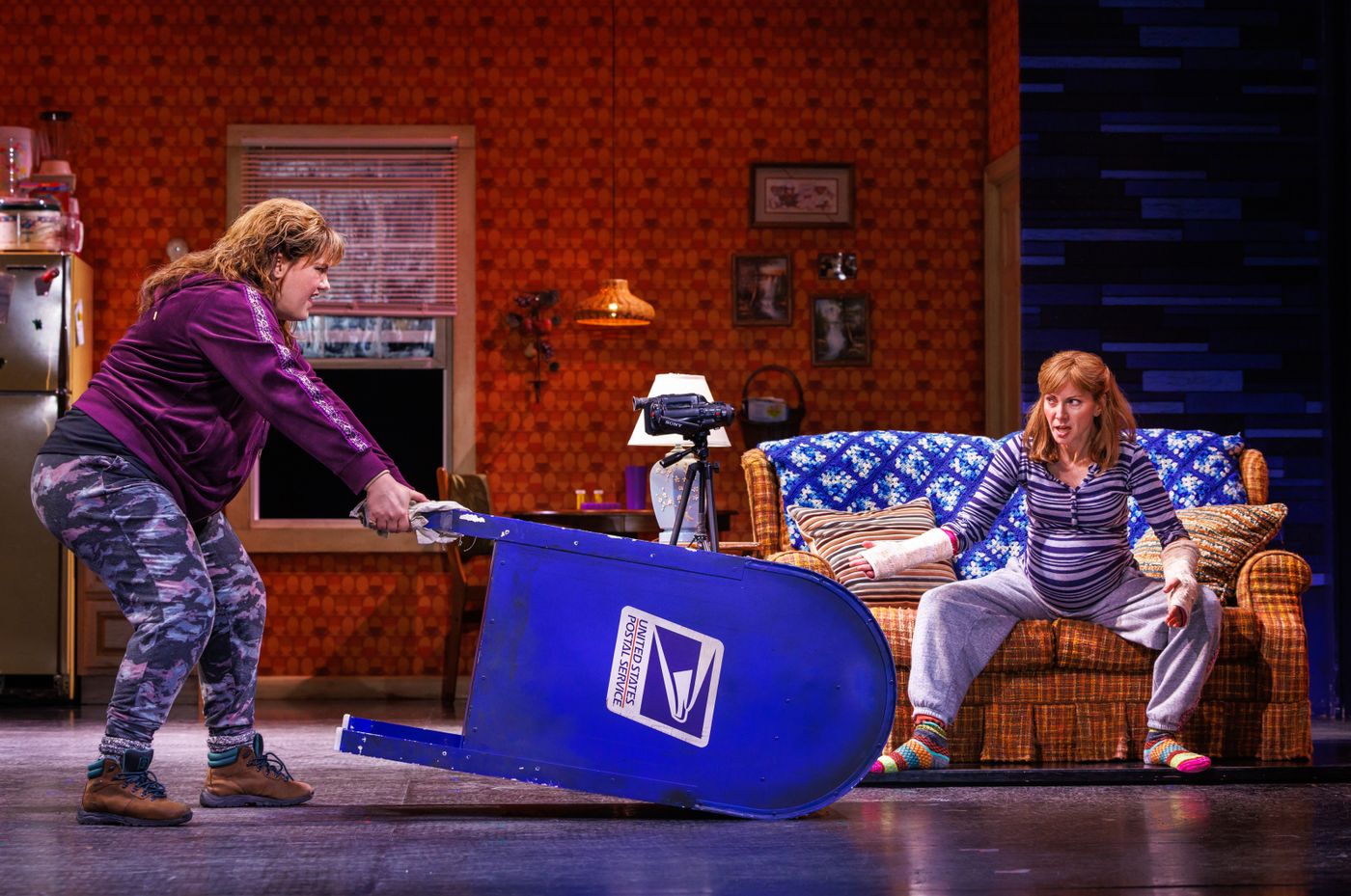
The three outrageous adults of the show – Buddy, Pattie, and Debra – are brought to life by Jim Hogan, Laura Woyasz, and Emily Koch, respectively. Each one of them seems to be in competition with each other regarding who can chew the most scenery. Which, to be frank, is what I’d expect from the characters themselves. Kimberly Akimbo plays as much with the idea of ageism as it does with deconstructing the suburban fantasy. We get younger characters with more sense, while the elders to whom they should look up end up coming across as the ones who’d rather engage in nonsense. As a result, Buddy, Pattie, and especially Debra garner the most laughs from the audience. The dichotomy between “act your age” and “forever young” has never been so distinct. Koch, especially, bears the brunt of physical comedy in this show, which allows her to sink her teeth into owning the stage for such absurdities as dragging a mailbox across the living room. Despite Debra being given a lot of physical tasks, it’s kind of ironic that Woyasz’ Pattie – clad in two casts on her arms and a leg brace in Act Two – doesn’t get as much physical antics. However, she often gets some of the better lines in the play, bouncing off both members of her family, as well as her sister Debra. Finally, Jim Hogan’s Buddy goes for the “loud is funny” approach to his character, though it genuinely feels in tune to the character’s own vices – a struggling alcoholic who tries to be better, but knows his own weaknesses.
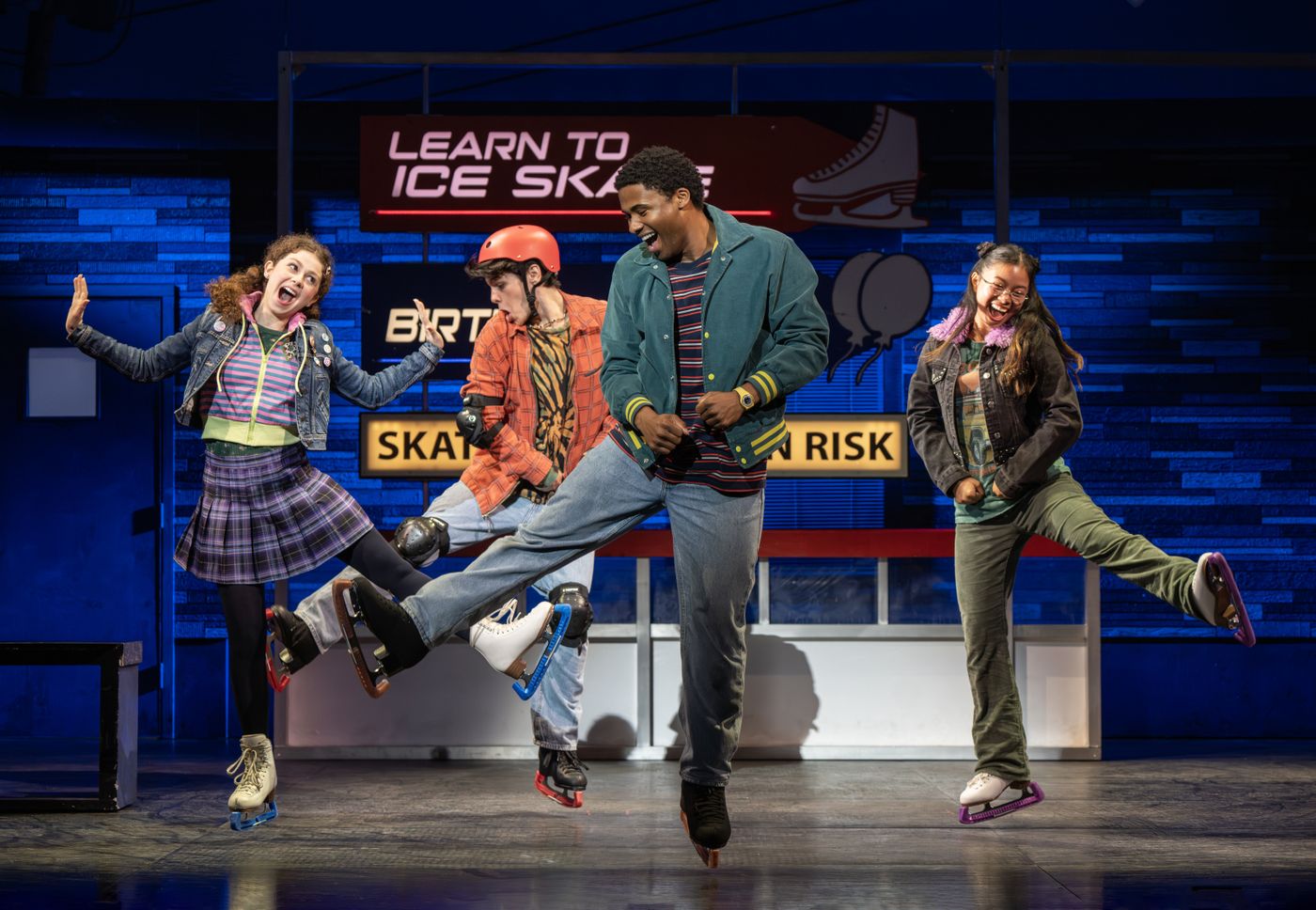
Initially, I didn’t fully understand the purpose of the Greek Chorus teenagers, as I called them in my head. They didn’t interact enough with Kimberly or Seth at first, making it seem like a separate B-plot taking up time on the stage. However, I realized just how vital their shared experiences and neuroses were when Kimberly made a glib remark at one point on how “getting older is my affliction, getting older is their cure.” They represent the lost youth Kimberly will never have. The easygoing, low-stakes drama that a teenager thinks is the end of the world. And I grew to appreciate their silly little one-way-love-quadrangle even more as a result. The foursome – Gabby Beredo (Delia), Skye Alyssa Friedman (Teresa), Darron Hayes (Martin), and Max Santopietro (Aaron) – are extremely likable in their roles, giving each character a distinctive trait that never lets them fall into typical teenage caricature. And, as needed with Kimberly and Seth, the chemistry between all four of them must be good otherwise the audience would never believe they’re all pining for each other.
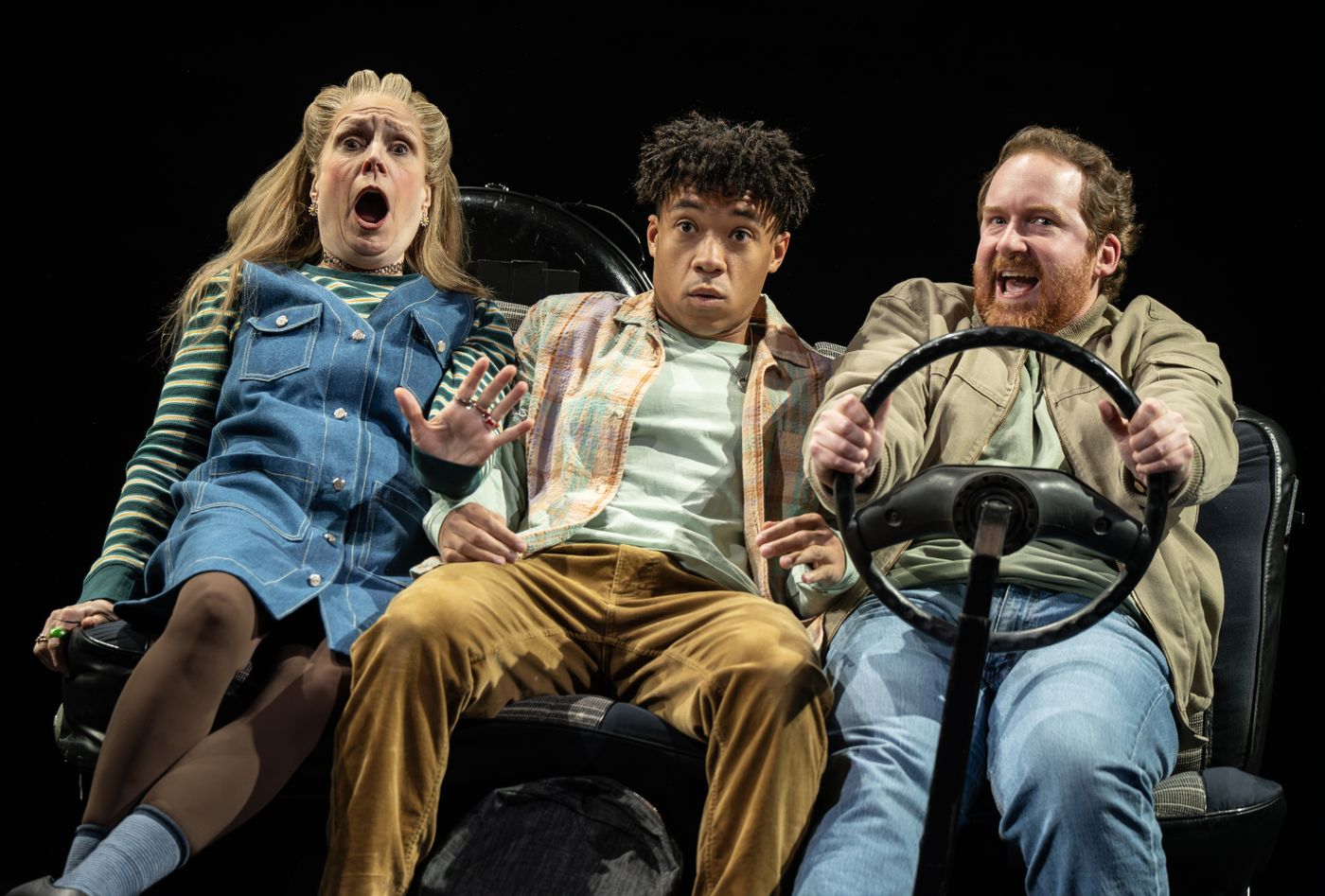
Kimberly Akimbo manages to turn a nine-strong cast into a fairly layered tale that balances multiple plots, interlocking journeys, and a hugely-metaphoric approach to its subject matter in a very adult lens. Despite being about teenagers in high school, the dialogue definitely is written for an adult audience. Language gets fairly colorful, a more euphemistic way of saying that every character cusses like a sailor at least two or three times throughout the night. It’s definitely material I would recommend a parent screen first for their adolescent youth, since the hopecore of it all doesn’t ever suggest some of the more… graphic lines uttered on the stage.
Even if the hopecore of Kimberly Akimbo isn’t always fully achieved, the show still has a lot to say about dreaming for something beyond one’s means. It takes the familiar architecture of the American suburban dream – the house, the family, the promise of normalcy, the late-90s Jersey backdrop so vividly conjured this week at Dr. Phillips Center – and gently pulls it apart to reveal the longing beneath it. For one week, the Walt Disney Theater could proudly call itself a little corner of suburban New Jersey, complete with all its awkward tenderness, absurdity, and yearning, but the show’s reach extends far beyond locality or nostalgia. We are gifted a variety of flawed, imperfectly perfect characters who never view themselves as the bad guy, which is always a good sign of great writing. The villain is the hero of their story, after all. What these characters go through, and how they justify their actions, could objectively make them all “villains” in a sense. Yet who are we to judge them for wanting more than the cards that life has dealt them? We leave that judgment to a higher power, if possible, and go off on our own Great Adventure otherwise. What lingers after that curtain comes to a close is not simply the setting, nor even the outlandish premise, but the ache that every character carries for the life they imagined they were supposed to have. In that sense, Kimberly Akimbo reminds us that the dream itself was never the point; it is the wanting, the hoping, and the continuing onward in spite of disappointment. After all, much like Kimberly Levaco, we’ve got just one life to live, and it’s later than we think.
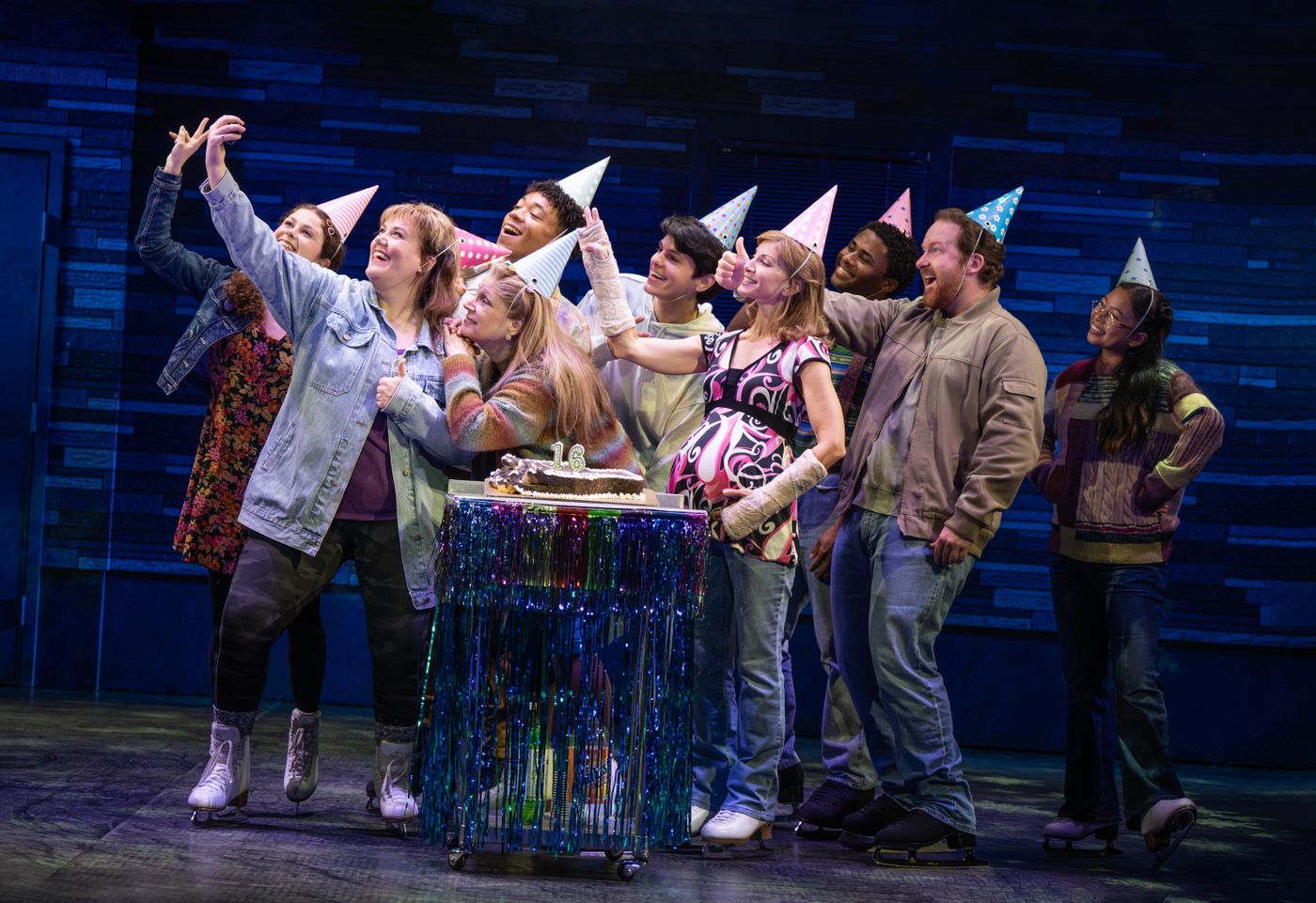
KIMBERLY AKIMBO plays at Dr. Phillips Center April 14 through April 19. Tickets can be acquired online or at the box office, pending availability.
Reader Reviews