
HomeNewsSt Pete Drops Parking Rules Near SunRunner Stops
St. Petersburg eliminates parking minimums for developments near SunRunner stops
2026-04-17, Moovit News Team
St Pete Drops Parking Rules Near SunRunner Stops
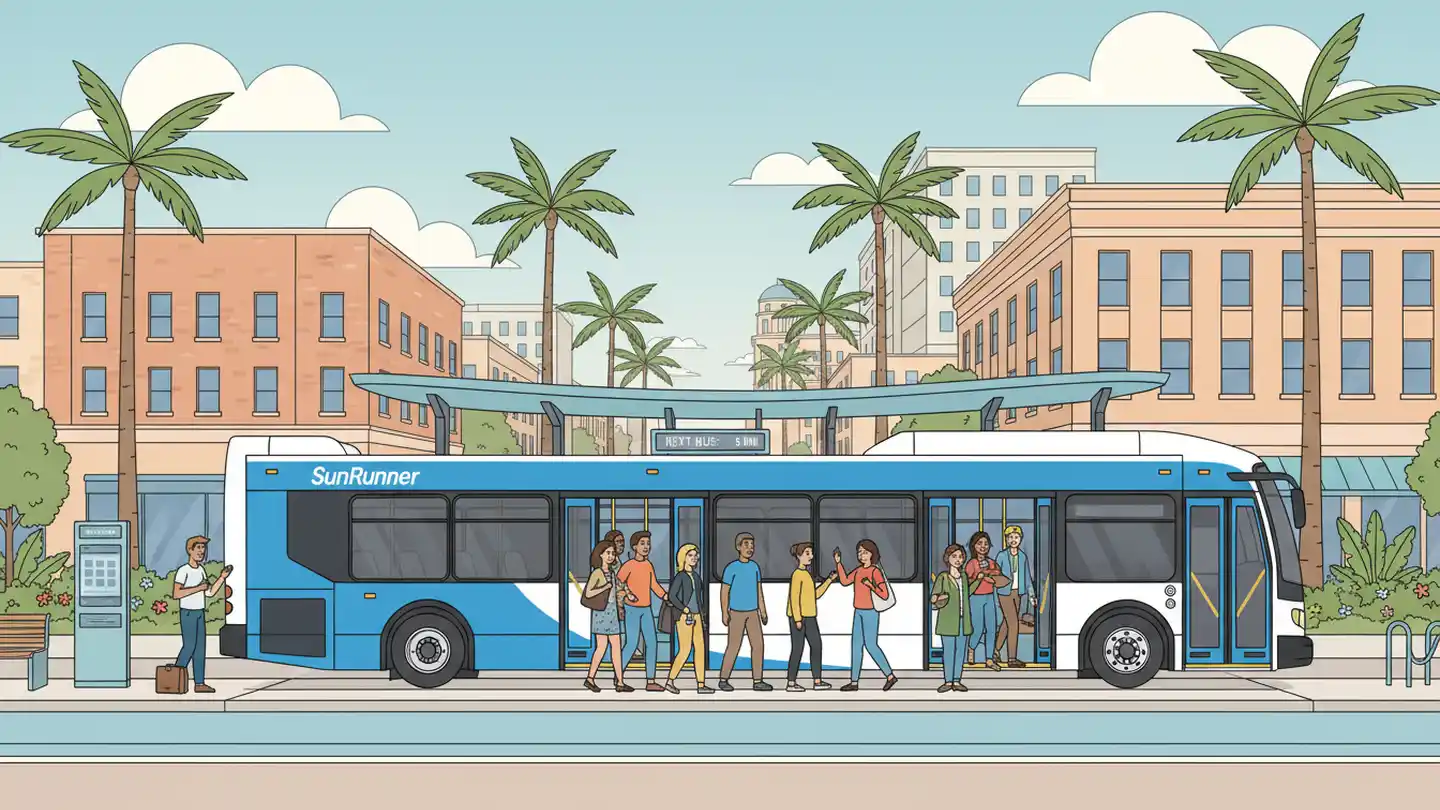
St. Petersburg developers won’t need to build parking spaces for new projects along Central Avenue and near SunRunner bus stops under changes the City Council advanced. The council voted 6-0 to eliminate minimum parking requirements for properties within a quarter-mile of the rapid-bus line, spanning from 19th Street South near Interstate 275 west to Pasadena Avenue. A final vote’s scheduled for May 14.
 14 Years of Transit Planning
The parking changes cap 14 years of planning that began with studies on boosting public transit and led to the 2022 launch of SunRunner service between downtown and the beach. The initiative builds on 2023 zoning reforms that rezoned approximately 3,000 properties along city thoroughfares, allowing single-family homes to be converted into duplexes, triplexes, or fourplexes. City officials said the parking waiver’s voluntary and opt-in, giving property owners flexibility while moving away from vehicle-dependent development patterns. Transit activists and the Central Oak Park Neighborhood Association support the changes, believing they’ll create more walkable communities and encourage SunRunner ridership.
Exemptions and Community Concerns
The ordinance includes an exemption for buildings 50 years or older after the preservation group Preserve the ‘Burg raised concerns about effects on the Grand Central District. The Historic Kenwood Neighborhood Association has expressed concerns about parking spillover into residential areas, requesting residential parking permits or impact studies before implementation. Officials haven’t said whether the city will conduct impact studies or implement residential parking permits in response to neighborhood concerns. The voluntary nature of the waiver means developers can still choose to include parking if they determine it’s necessary for their projects.
 Final Vote Set for May
The City Council will hold a second and final vote on the new ordinance on May 14. If approved, the changes would take effect immediately, though officials haven’t specified how quickly developers might begin using the parking waiver for new projects. The city typically reviews development applications on a case-by-case basis, and officials said they’ll monitor how the voluntary parking waiver affects development patterns along the transit corridor.
Impact on Transit Riders
The zoning changes aim to encourage denser, transit-oriented development along the SunRunner corridor, potentially increasing ridership and creating more walkable neighborhoods. Property owners and developers will need to decide whether to include parking based on their projects’ specific needs and market demands. Moovit provides real-time SunRunner schedules and trip planning for riders navigating St. Petersburg’s evolving transit network.