
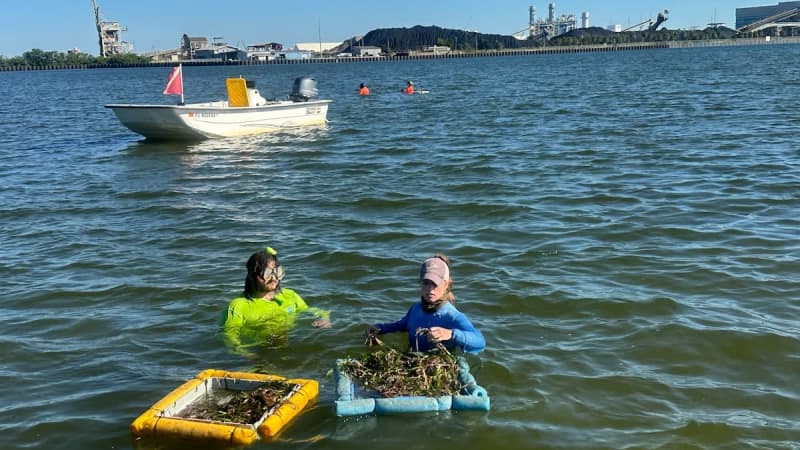
After a short, idyllic boat ride down an Apollo Beach canal, a small group of nonprofit leaders watched the lengthy and laborious process of planting seagrass on a recent Thursday.
With Tampa Electric’s Big Bend Station looming in the background, a small team spent several hours in the water planting 4,800 bundles of seagrass they hope will provide both habitat and nutrition for marine wildlife for years to come.
Workers dipped under the shallow waters, wrenched loose chunks of dirt with a handheld tool and planted the bundles individually. The floating trays heaped with seagrass were pushed along gradually as the team filled in a previously inaccessible tract of land.
The acre of vegetation lies in an area that’s proven to be a symbol of Tampa Bay’s delicate balancing act between urban expansion and the preservation of its most treasured wildlife.
The effort is part of a state-funded initiative to accelerate seagrass recovery in areas where the plants had been depleted by pollution, red tides or damaging algae.
The nonprofit Ecosphere Restoration Institute received $5 million in funding for seagrass planting in 2022. They have since planted 100 acres around the state. They have also received funding to plant another 70 acres over the next two years.
Thomas Ries, the organization’s president, said some of the permits would go to a location in Old Tampa Bay and another at Wolf Branch Creek Nature Preserve near Ruskin.
The planting Oct. 16 was part of a “public-private partnership” with Tampa Electric. It’s the third acre planted recently in waters abutting the Big Bend Station near Apollo Beach.
The first 2 acres were funded by the state through Ecosphere, while this month’s acre was paid for by Tampa Electric at about $35,000, according to Ries.
The land, which is privately owned by TECO, will be placed under a conservation easement to ensure its protection. The easement is a perpetual interest in a property that can be used to shield it for purposes of protecting natural resources.
Ries said he has mostly worked on public lands throughout his 37-year career restoring natural systems in Florida.
The opportunity to partner with a company to retrofit private lands excited him.
“TECO stepped up,” Ries said. “They didn’t have to do this. They see what we see. There are places out here that are critically important to restore or protect.”
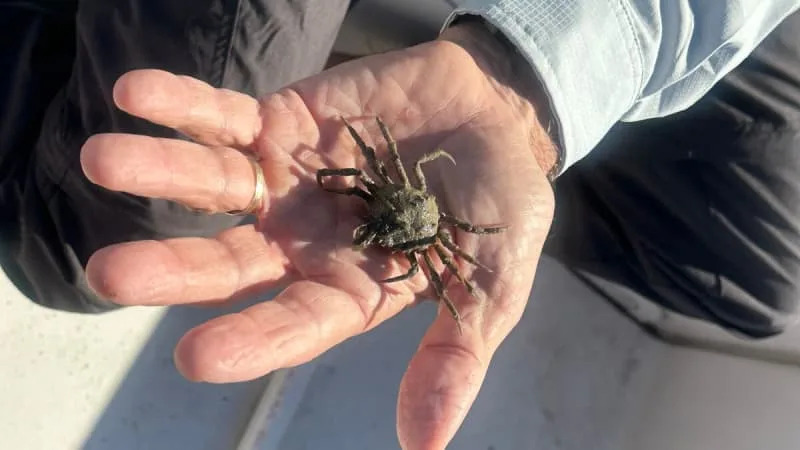
Florida’s roughly 2.2 million acres of seagrass help to maintain water clarity and provide shelter for a variety of marine life, according to the Florida Department of Environmental Protection.
They also provide food for water birds and marine mammals like manatees.
Widespread urbanization from the 1950s to the 1980s led to a steep drop-off in seagrass coverage, according to the Tampa Bay Estuary Program.
But after its designation as an “estuary of national significance” by the Environmental Protection Agency in 1990, Tampa Bay saw a series of restoration efforts that were heralded as an international model of success, according to Tampa Bay Estuary Program executive director Ed Sherwood.
Seagrass levels in Tampa Bay peaked in 2016 at more than 40,000 acres, according to data from the Southwest Florida Water Management District.
But recent years have seen a step backward. Between 2016 and 2022, seagrass levels throughout Tampa Bay declined by 28%, or 11,518 acres, according to data from the district.
“Now we’re just looking at ways to improve water quality and get that back,” Sherwood said.
Water quality conditions remained surprisingly stable last year, in spite of record-breaking rainfall and flooding from hurricanes Helene and Milton.
Back-to-back years of drought in 2022 and 2023 reduced the impacts from stormwater runoff, allowing the bay to stabilize, according to the Tampa Bay Estuary Program’s “State of the Bay” report.
According to the report, last year saw an increase of 1,407 acres. Seagrass levels in the bay currently sit at about 31,500 acres.
The acre of turtle grass, one of seven species found in Florida’s marine waters, was planted this month with help from AquaTech Eco Consultants.
The grass was sourced from Anclote Key, taken back to a nursery and bundled in preparation for planting.
The Big Bend Power Station’s ongoing transition from coal to natural gas has lowered water temperatures nearby by about 7 degrees, Ries said. That makes it more conducive to sustaining seagrass.
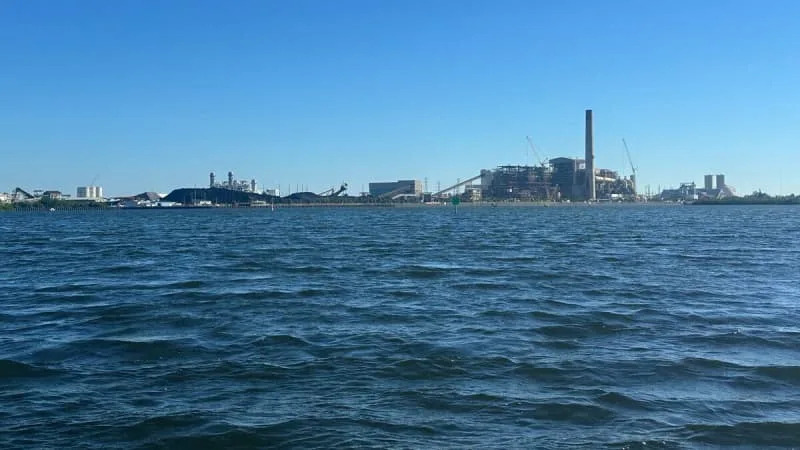
Attempts to plant in the same place 12 years ago failed to take root, potentially due to the higher temperatures generated from the use of coal, Ries said.
While this transition bodes well for seagrass, long-term consequences for the manatees that warm themselves at power plants throughout the state remain to be seen.
Ries believes the waters are cooled enough for seagrass, but warm enough for manatees to find refuge when winter temperatures plunge into the 30s and 40s.
Although bay waters will soon be too cold for more planting this year, the seagrass planted now should be ready for manatees to feed on come January and February, Ries said.
“At the end of the day, everybody who lives, works and plays in Tampa Bay wants to see clean water and a healthy habitat,” Sherwood said. “That’s why we live here in the first place.”
The Tampa Bay Times launched the Environment Hub in 2025 to focus on some of Florida‘s most urgent and enduring challenges. You can contribute through our journalism fund by clicking here.