
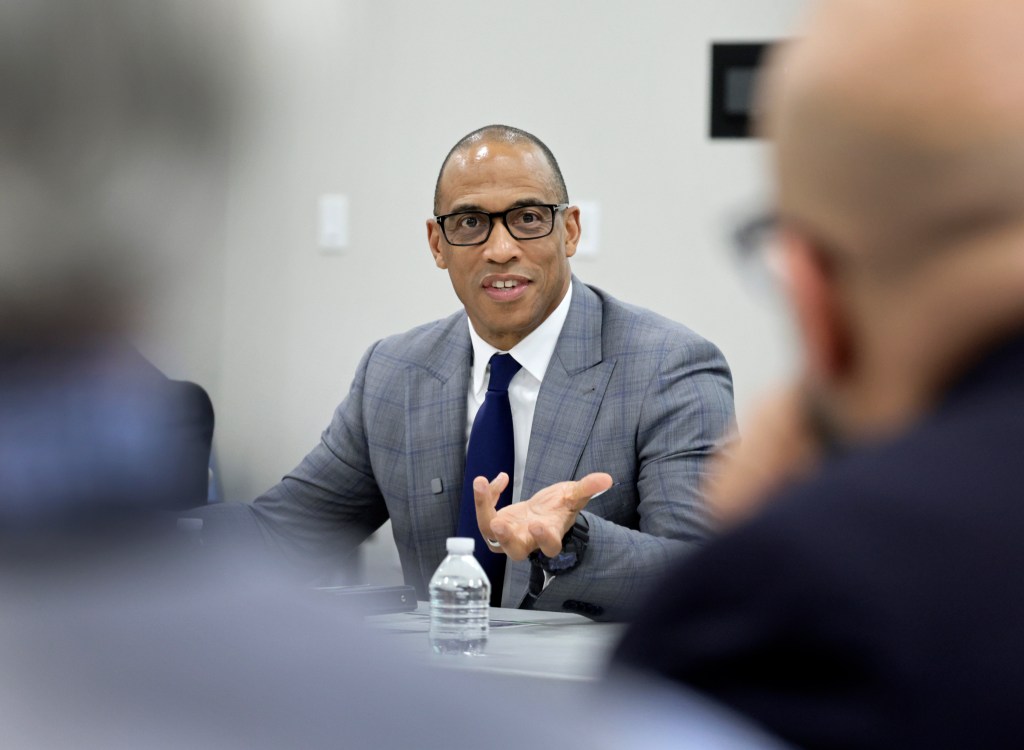
U.S. Housing and Urban Development Secretary Scott Turner paid a visit to Fort Lauderdale to talk up the federal “Opportunity Zones 2.0 Program,” a Trump Administration effort to boost housing and business prospects in distressed communities.
Convening with representatives of FloridaCommerce, the Urban League of Broward County, CareerSource Broward, the Greater Fort Lauderdale Alliance, Business Development Board of Palm Beach County and developers, Turner said the program is now in better shape than it was at its inception, with streamlined rules and improved accountability.
“When you look at the first round of opportunity zones, it took a while to get the rules finalized and there was great anticipation,” he said in an interview at the Urban League’s community center on Wednesday.
“Opportunity Zones 1.0 has been tremendous and transformative and brought in $100 billion in investment into distressed communities around our country — urban, tribal and rural — 400,000 new housing units created, a half a million jobs and a million people lifted out of poverty.”
Turner, a Texas native and a retired nine-year veteran of the National Football League, was confirmed by the U.S. Senate in February of last year as the 19th secretary of HUD.
He previously served as executive director of the White House Opportunity and Revitalization Council. During that time, he led an interagency initiative, working with state, local, tribal, and territorial governments to revitalize economically distressed areas, according to his biography.
Opportunity Zones came into being under the 2017 Tax Cuts and Jobs Act passed by Congress and signed into law by President Trump. The goal was to stimulate economic development and job creation in distressed areas around the country by providing tax incentives to investors who would back the projects.
Since the program’s inception, the federal government has sought to encourage investors, businesses, developers, and financial institutions, among others, “to reinvest capital gains into distressed census tracts to foster job creation,” according to the FloridaCommerce website.
“The benefit is deferral, reduction, and potential elimination of taxes on capital gains and not rebates or grants,” the agency says. “The One Big Beautiful Bill of 2025 made the program a permanent part of the tax code and further refined the program.”
There will be additional reporting requirements under the new program, “and a two-year overlap period” between 2027 and 2028 when maps under both the original and latest versions of the program will be in effect.
“The goal of the new legislation is to broaden investments to include more operating businesses and rural areas,” the state agency says.
A website operated by the South Florida Regional Planning Council shows there are 98 zones in Southeast Florida, with 30 in Broward County, 67 in Miami-Dade and one in Monroe.
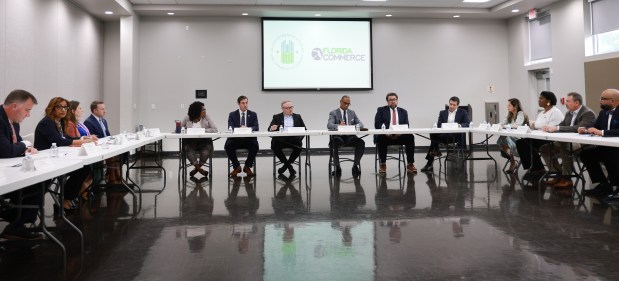 U.S. Department of Housing and Urban Development Secretary Scott Turner speaks at a roundtable discussion on “Opportunity Zones” at the Urban League of Broward County in Fort Lauderdale on Wednesday. (Carline Jean/South Florida Sun Sentinel)
Timeline to pick new zones
State and federal officials have a tight timeline for selecting Florida zone locations under 2.0, which are based on distressed Census tracts in need of fresh economic development.
According to FloridaCommerce, new zones will be nominated by governors starting July 1. Their picks will be qualified by the U.S. Treasury by Dec. 31, 2026, taking effect on Jan. 1, 2027.
In an interview, Jason Mahon, deputy secretary of economic development at FloridaCommerce, said the agency since January has been seeking community feedback statewide to identify “good places to have opportunity zones.”
Those interested can visit FloridaJobs.org/OpportunityZones.
The effort, Mahon said, has included 58 roundtables and meetings with 3,200 local leaders and nonprofits.
“There are across the state 1,300 eligible Census tracts,” he said, adding that Gov. Ron DeSantis will be able to nominate 304 of them for potential certification by the U.S. Treasury.
The goal is to name the ones that “would have the highest impact in the community to create a lot of jobs and create a lot of new opportunities for people living in these areas.”
“We have been meeting a lot with folks in South Florida,” he said, including in Miami-Dade, Broward, Palm Beach and St. Lucie counties.
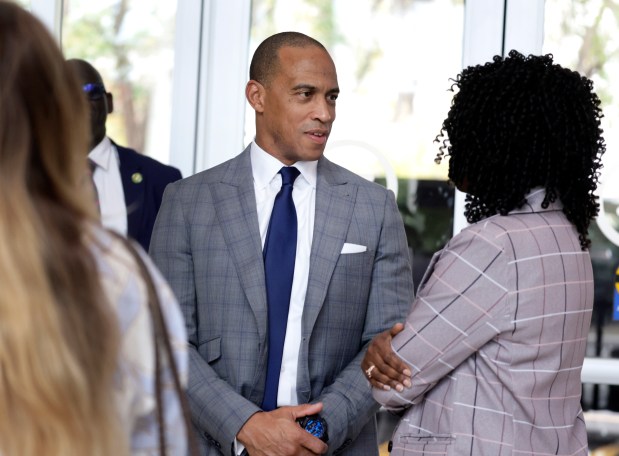 HUD Secretary Scott Turner greets Urban League staff before a roundtable discussion on “Opportunity Zones” at the Urban League of Broward County in Fort Lauderdale on Wednesday. (Carline Jean/South Florida Sun Sentinel)
Turner credited the state with moving quickly to spool up the 2.0 program by conducting in-person briefings and online workshops.
“As you see here today here in Broward County and the state of Florida, a lot of work has already been done with getting ready to launch Opportunity Zones 2.0 and that’s very encouraging,” Turner said. “Florida has done a tremendous job.”
David Coddington, senior vice president of business development at the Greater Fort Lauderdale Alliance, told the South Florida Sun Sentinel that he sees promise on the business side of the program.
For example, the alliance is working with FloridaCommerce and the local marine industry to convert a tract of land at Port Everglades into a zone “and make it more attractive for an investor to come in.”
It could dovetail with the president’s initiative to revitalize the nation’s long-flagging shipbuilding industry.