
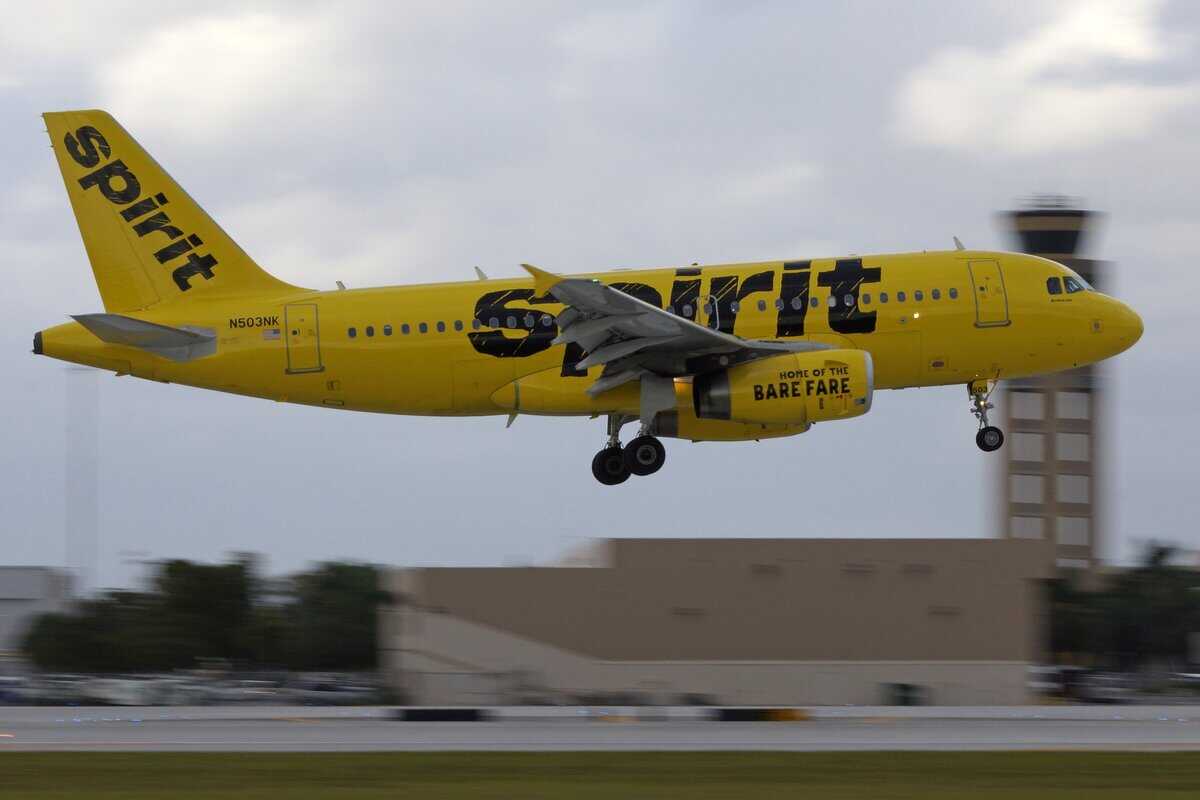
 Spirit A 319 at Fort Lauderdale By JTOcchialini – N503NK Yellow Bird FLL JTPI 4×6 3790 @ 1/60th, CC BY-SA 2.0, https://commons.wikimedia.org/w/index.php?curid=41398278
The reported potential for a U.S. government bailout of Broward County-based Spirit Airlines represents a significant shift in federal aviation policy. First reported by Bloomberg and The Air Current earlier today, the situation has rapidly evolved into a high-stakes negotiation involving the White House and major federal departments. The Federal Government appears ready to shift from a policy of regulating the industry but allowing them to sink or swim on their own, to potentially investing in airlines.
Spirit Airlines is the largest carrier at Fort Lauderdale-Hollywood International Airport and has a bout a 27% market share there.
The Situation at a Glance
Spirit, currently navigating its second Chapter 11 bankruptcy in less than two years, is facing a severe liquidity crisis. While the airline had previously planned to emerge from bankruptcy by summer 2026, a “fuel shock” driven by geopolitical tensions in the Middle East has pushed jet fuel prices to unsustainable levels.
Key Financial Indicators
MetricStatus (as of April 2026)Stock TickerFLYYQ (OTCMKTS)Market CapApproximately $48 MillionReported Loan RequestUp to $500 MillionFinancial StrengthRated 3/10 (High debt levels)
The Proposed Bailout Structure
According to Bloomberg, Spirit has floated a proposal that mimics the government’s recent intervention with Intel Corp.
The Equity Stake: In exchange for an infusion of cash, Spirit has offered the U.S. government an equity stake (likely via warrants). This would make the federal government a partial owner of the airline, rather than just a creditor.
The Catalyst: President Trump has publicly voiced support for the idea, citing the protection of 14,000 jobs and the importance of competition in the budget travel sector.
Agency Involvement: Transportation Secretary Sean Duffy and the Commerce Department are reportedly reviewing options, including emergency funding or temporary relief from federal excise taxes.
Why This Matters
This potential intervention is controversial for several reasons:
Shift from “Laissez-Faire”: Critics, including groups like the Cato Institute, argue that moving from blocking mergers (such as the failed JetBlue-Spirit deal which the Biden DOJ challenged) to direct government ownership is a “dubious federal intervention.”
Market Precedent: Unlike the COVID-era CARES Act, which was a broad industry-wide rescue, a Spirit-specific bailout would be a targeted rescue of a single struggling carrier, potentially upsetting competitors like Frontier and United.
Liquidation Risk: Without this lifeline, creditors are concerned Spirit may be forced into Chapter 7 liquidation, which would mean the total cessation of operations and the sale of assets (primarily its Airbus A320 fleet).
Recent Market Impact: Following the Bloomberg reports and President Trump’s supportive comments on CNBC, Spirit’s shares (FLYYQ) surged by over 47% on April 22, 2026, as investors bet on a federal rescue package.
Related