
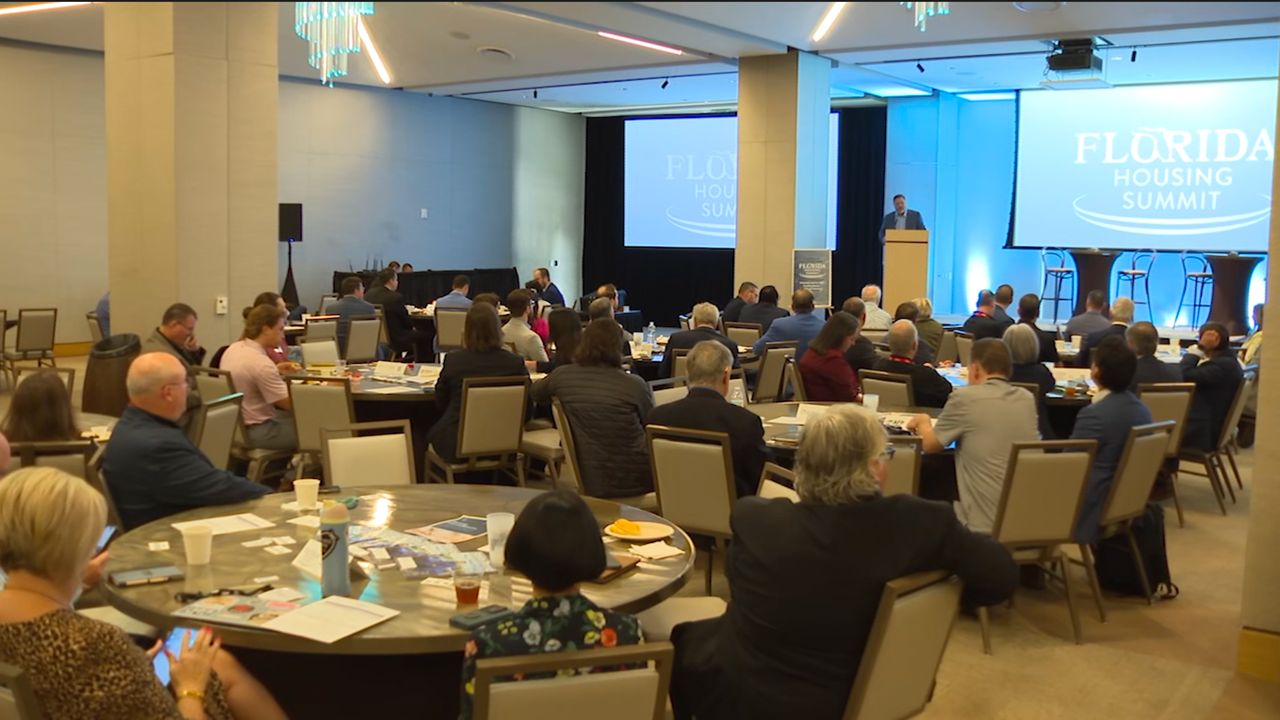
TAMPA, Fla. — Housing affordability is now a defining issue for many Floridians, according to discussions at this week’s Florida Policy Project Summit.
Industry leaders, including realtors, builders, business owners, and elected officials, have gathered to address mounting concerns over the state’s housing market.
What You Need To Know
The Florida Policy Project hosted its third annual summit in St. Petersburg this week
Affordable housing took center stage, focusing on interest rates, market trends, and insurance premiums
The Florida Policy Project says young homebuyers and seniors are the most affected by affordable housing challenges
Business leaders, elected officials, realtors, and builders participated in the one-day summit
Housing affordability is now a defining issue for many Floridians, according to discussions at this week’s summit.
The average home price in Florida currently ranges between $375,000 and $420,000. That is roughly double what buyers faced before the COVID-19 pandemic.
At the same time, rising interest rates have compounded the challenge, significantly increasing monthly mortgage costs and the overall financial burden for homeowners.
These factors have created a difficult environment for prospective buyers, particularly those entering the housing market for the first time.
Young adults are bearing the brunt of the affordability crisis. Limited savings for down payments and wages that have not kept pace with housing costs are making homeownership increasingly out of reach.
Jeff Brandes, President of the Florida Policy Project and former state senator, emphasized the broader implications of the trend: “Domestic migration is down 90% in Florida, and family formation is slowing in the state. So we really need to think about that issue of affordability. It is by far the number one issue that voters are thinking about—how do I make this work?”
Seniors represent another vulnerable group. Many live on fixed incomes, leaving them with little flexibility to absorb rising housing expenses. As property-related costs increase, including insurance and taxes, affordability challenges continue to grow for this population as well.
There are some indications that conditions may be stabilizing. Home prices have leveled off from their post-pandemic peaks, and property insurance rates have begun to decline. Experts attribute this, in part, to a quieter hurricane season and increased participation from insurance providers in the Florida market.
At the state level, the Live Local Act aims to encourage the development of affordable housing through incentives for builders. However, the Florida Policy Project argues that more action is needed.
Specifically, the organization points to local governments as key players in addressing the crisis. Cities and counties are being urged to rethink land-use policies and prioritize higher-density housing options, particularly in urban areas, to expand supply and improve affordability.
As housing costs remain a top concern for voters, policymakers across Florida face increasing pressure to deliver solutions that make homeownership—and stable housing—more attainable for all residents.