
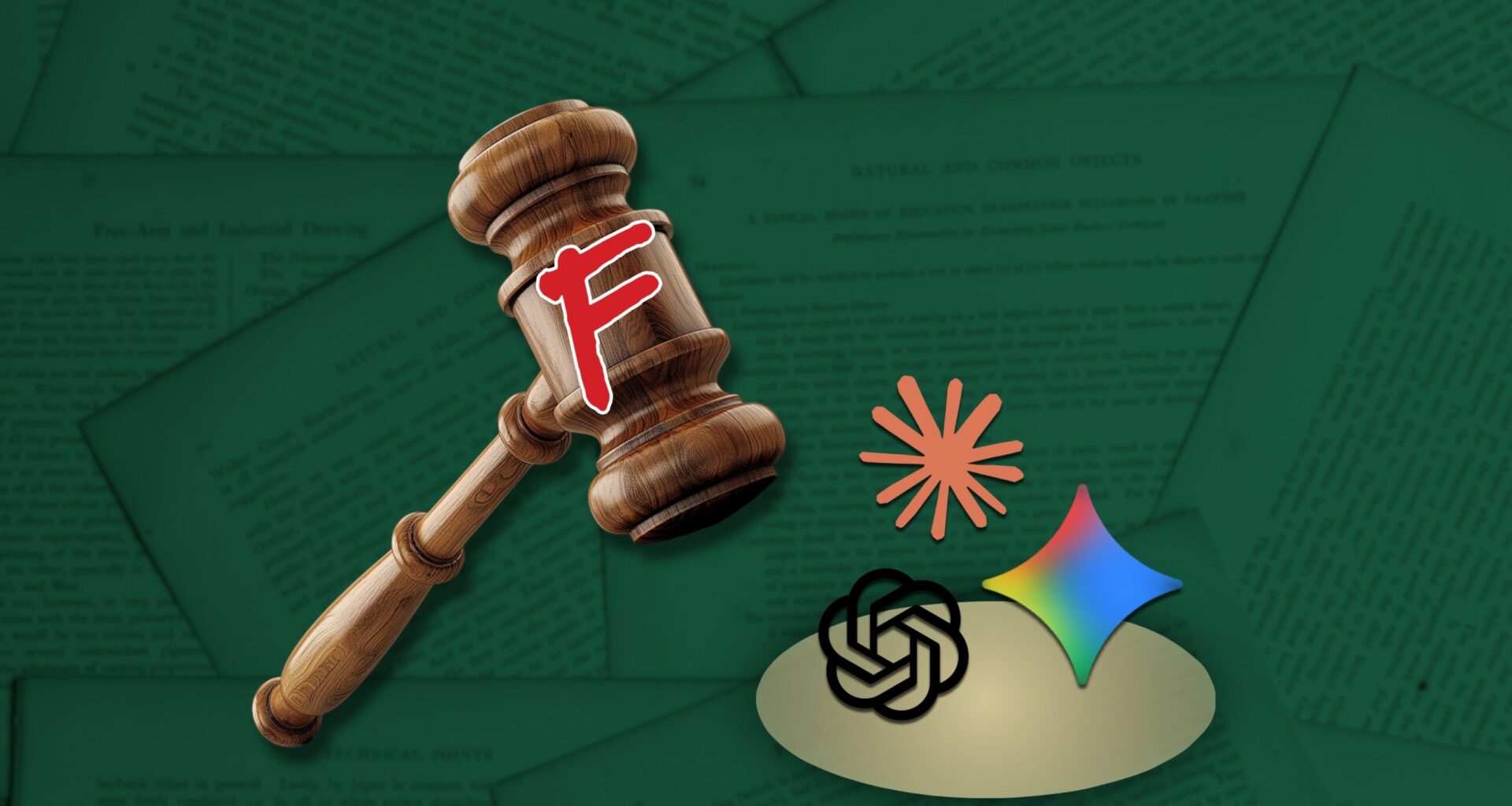
 USF does not have a university-wide policy for generative AI, meaning professors decide how the systems are used from class to class. ORACLE GRAPHIC/AYRON ESPINO-NARDI
USF’s generative artificial intelligence ethical guidance policy covers how programs can be used academically — but it leaves enforcement and implementation to professors.
The university’s Guidance for Ethical Generative AI Usage refers to GenAI, such as ChatGPT, Gemini and Claude, which can automatically create content including writing, pictures, videos and code.
USF’s syllabus templates allow faculty to allow or restrict AI based on the needs of their courses. The university also states it aims to implement AI as a tool rather than as a replacement for student work.
Still, students who use AI are personally responsible for any factual errors or mistakes the program produces, according to USF.
Academic consequences may include penalties in grades, failing an assignment or further action, according to the Syllabus and Course Guidance on Artificial Intelligence.
USF spokesperson Althea Johnson said there is no central database to track the number of AI-related student conduct cases at the university.
Due to USF’s case-by-case policies, professors and students alike said they must manage how they allow and use AI in college.
Related: USF’s Bellini College of AI marks rapid growth in its first semester
Deepak Singh, a Judy Genshaft Honors College affiliate faculty member, teaches a course titled “Deep Reading in the Age of AI.”
The course is dedicated to relearning how to thoroughly read fiction instead of skimming or using summaries, according to the course catalog.
Therefore, Singh said he prioritizes human intelligence over artificial summaries in his class.
“I don’t necessarily teach about AI. I teach how to read closely and slowly,” Singh said. “In the age of AI, you can just ask [it], ‘Hey, give me a rough, long summary of the story.’ It will spit out something, but you haven’t read it.”
To combat the temptation of shortcuts, Singh has restructured how his classroom functions by dedicating the first 15 to 30 minutes of class to reading short stories together.
“I don’t ask [students] to read before, because sometimes people don’t read,” Singh said. “Instead of artificial intelligence, they’re using their own intelligence to interpret the story.”
As for his course syllabus, Singh allows his students to use AI at their own risk.
“Whether you want to use ChatGPT or not, I’m not saying use it or not use it,” Singh said. “But I will be able to tell, and I might not be able to give you my heartfelt feedback.”
Still, Singh warned that students who become reliant on AI for assignments risk becoming trapped in a “loop” that disintegrates their ability to think independently.
“You can use your brain, you can think critically and come up with your own ideas,” Singh said. “Why would you think that AI can do a better job?”
Related: Florida Attorney General talks DEI, artificial intelligence regulations at USF
Although some professors have more lenient policies when it comes to AI usage, some students said they avoid it due to personal ethics.
Jadyn Doe, a freshman integrated public relations and advertising major, said she chooses not to use AI even in courses where she is allowed to.
“I don’t like using generative AI,” Doe said. “It’s kind of against my morals.”
Doe said AI often devalues human work and believes its results lack the original thought higher education requires.
“It’s taking away [students’] ability to write effectively and read effectively,” Doe said.
Therefore, Doe said professors should not be allowed to mandate the use of AI in their classrooms.
“I know some of my friends here who have been required to use generative AI in assignments,” Doe said. “I think [syllabi] should explicitly say that if a student doesn’t want to use generative AI, then they shouldn’t have to.”
Related: OPINION: Students shouldn’t use AI for mental health guidance
Taison Rocha, on the other hand, said AI is a part of his professional toolkit as a senior cybersecurity major.
Rocha said major cybersecurity companies, such as ReliaQuest, which partners with USF, are actively encouraging AI proficiency due to its use in the workplace.
This means AI policies in his major are flexible due to those industry standards, he said.
“For some of my assignments, I have to automate tasks using AI,” Rocha said. “I have to submit code made by AI and everything.”
Still, Rocha said AI can cause friction between students and professors, recalling being falsely flagged for AI use in an information security class.
“There are a lot of students who are going through the same thing, where we get flagged [even when we did] not use AI.” Rocha said. “Is [the professor] supposed to trust us, or is he supposed to trust the tools that are given to him to detect AI?”
Websites like ZeroGPT, GPTZero and Grammarly all feature AI detection tools. However, none achieve 100% accuracy and should not be used to penalize students, according to the sites.
And while Rocha said the accusation did not escalate beyond a conversation, he said he wishes there was more leniency for students and AI use.
“I would say [the policy] would be better if it were even looser because right now it sounds like AI is the future,” Rocha said. “ I just think a [more open] AI policy would help people go into the workforce better.”