
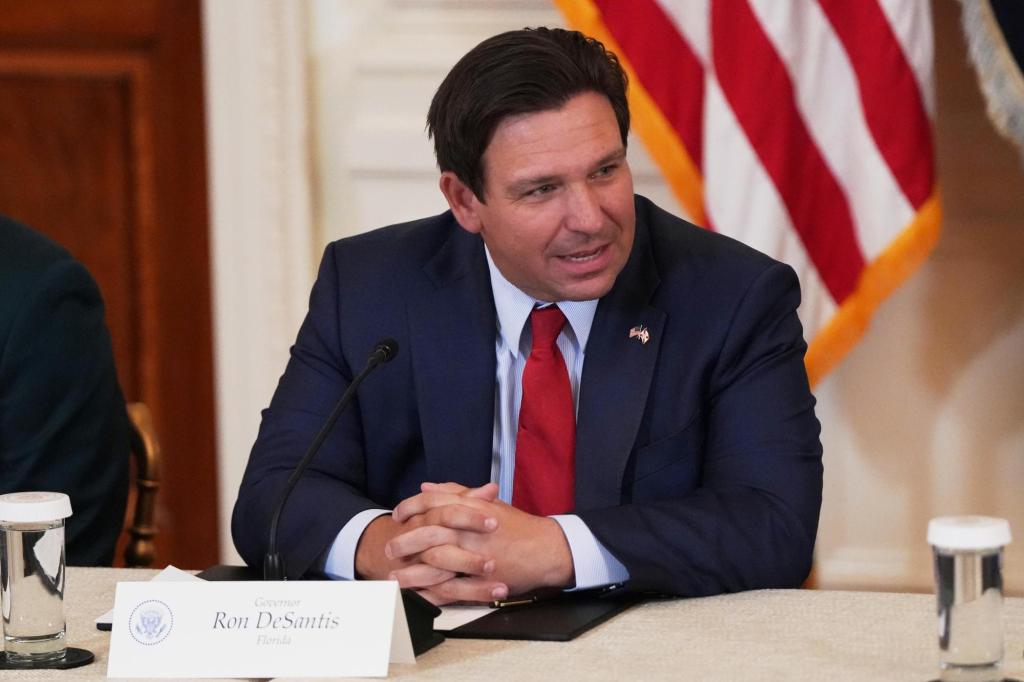
“White males” have been discriminated against through diversity, equity and inclusion programs, Florida Gov. Ron DeSantis proclaimed Wednesday as he signed legislation which prohibits counties and cities from funding or promoting DEI initiatives.
The Republican governor defined DEI as “an ideological construct that is designed to promote a particular political agenda, particularly to the detriment of disfavored groups” in remarks at a press conference in Jacksonville.
“The disfavored groups, No. 1, obviously, would be white males, and I think they’ve been discriminated against,” DeSantis said. “And it’s it’s like a lot of people are, ‘Oh that’s fine. That’s fine.’ No, it’s not fine. It’s wrong.”
While the governor is entitled to his opinion, his views differ from “everyone else’s,” said Evelyn Foxx, president of the NAACP branch in Gainesville.
“If you talked to 100 white men, they wouldn’t feel the same way” as DeSantis, Foxx said when asked Wednesday about his comments. “The governor is out of touch with people, and that is the bottom line.”
DeSantis’ remarks were some of his sharpest yet about the purported impact of DEI programs on white men — underscoring the priority the lame duck governor has placed on the controversial issue.
Supporters say the purpose of DEI is to remedy the effects of long-term discrimination against certain groups. But a nationwide push by conservatives to limit diversity programs has led many companies, schools and governments to pull back on those initiatives, particularly during the current Trump administration, and DEI has been a frequent target for the governor.
Florida’s Democratic lawmakers have warned that the legislation signed by the governor was overbroad and potentially unconstitutional, and local officials across the state fear the new law could harm traditional events ranging from Pride parades to St. Patrick’s Day, Lunar New Year and other festivals celebrating a host of cultures.
“If you don’t value diversity, equity and inclusion, then don’t go to the parade,” Orlando Commissioner Patty Sheehan said in February when the bill was being debated in Tallahassee.
Bill sponsor state Sen. Clay Yarborough, R-Jacksonville, argued at the time that the legislation wouldn’t prevent local festivals from occurring, and local governments would still be allowed to issue permits and provide public safety protection. But he acknowledged it would prevent local governments from spending money to promote or even sponsor them.
Under the legislation, residents can sue local governments for violations, making future decisions on festivals, parades and even proclamations a potential minefield. If local officials are found to have funded DEI initiatives in violation of the law, they can be removed from office, a tool DeSantis has been quick to use.
“When people know there is accountability they are much more apt to toe the line,” DeSantis said at the Jacksonville news conference.
DeSantis also said Wednesday that Asian Americans had faced discrimination in university admissions and that people should be judged on their merits not their demographic backgrounds. If people still face barriers because of discrimination, there should be policies to “even the playing field,” he said.
“But that is not the same as trying to socially engineer certain outcomes to the detriment of groups that some of the intellectual elite disfavor,” DeSantis said.
During his two terms in office, DeSantis’ administration has championed legislation which prohibits public colleges and universities from spending money on DEI programs and promoted the “Stop WOKE Act,” which restricts how race and sex are taught in schools.
Last year, Orange County abruptly ended its fledgling DEI and sustainability grant programs for arts and cultural organizations, citing fear of jeopardizing state and federal government funding.
Orange County also suspended its Minority/Women Business Enterprise program, which helped award contracts to minority and women-owned businesses, and Orlando did the same with its similar program.
Florida Attorney General James Uthmeier, appointed last year by DeSantis, has pushed similar initiatives in his time in office, including ordering the NFL to stop enforcing the “Rooney Rule” requiring teams to interview minority candidates for coaching positions.
No new African American head coaches were hired by teams in 2026, and only three African Americans currently have head coaching jobs in a league in which about 70% percent of players are Black. The NFL has vowed to continue the rule.
Uthmeier also announced on Martin Luther King Jr. Day that he would refuse to “defend or enforce” state laws that include race-based contracting preferences and minority representation requirements for government boards.