
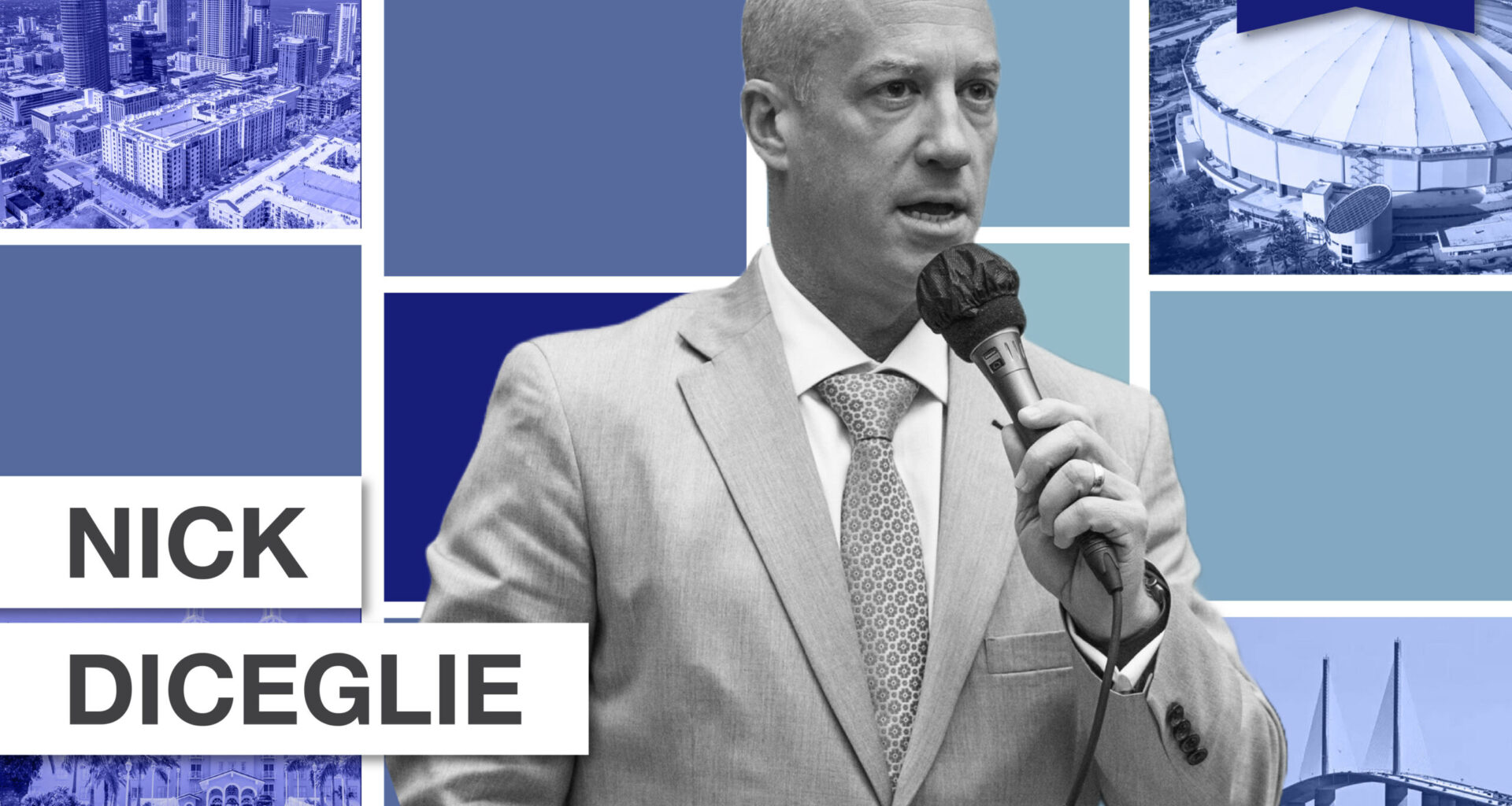
With a key Senate appropriations gavel and growing influence back home in Pinellas County, St. Petersburg Republican Sen. Nick DiCeglie is emerging as one of the top lawmakers shaping Florida’s policy priorities — and the funding behind them.
DiCeglie has steadily expanded his footprint in Tallahassee since he was first elected to the Legislature in 2018, turning Committee leadership into tangible influence over both legislation and spending. While the House often gets credit for pushing back against the Senate and Governor’s Office, Senators like DiCeglie have stood steadfast — and some of his policies have been caught up in sharp policy divides between chambers as a result.
As Chair of the Appropriations Committee on Transportation, Tourism and Economic Development, DiCeglie helps steer funding tied to major statewide priorities, from infrastructure to economic development. He also serves as Vice Chair of the Governmental Oversight and Accountability Committee.
Beyond those leadership posts, DiCeglie holds seats on Committees that include Appropriations, Agriculture, Environment and General Government; Commerce and Tourism; Judiciary and Rules; and the Joint Select Committee on Collective Bargaining.
DiCeglie also has a growing role within the Pinellas County delegation, in which he currently serves as Vice Chair and will Chair for the upcoming 2026-27 term. The leadership roles allow him to set local bill agendas, coordinate priorities and act as a key conduit between Tallahassee and one of the Tampa Bay area’s most politically active counties.

His hand in shepherding local priorities from the delegation level through legislative debate — and ultimately helping secure funding — places DiCeglie among a small group of lawmakers with outsized influence at every stage of the process.
“I have enjoyed watching Nick DiCeglie in the Senate and his steady rise in influence. He is willing to take on tough issues and is not afraid of difficult conversations. He approaches his work with a practical, solutions-oriented mindset that continues to earn him respect across the Senate,” said Sunrise Consulting Group President and CEO Shawn Foster.
Before moving to the Senate, DiCeglie spent two terms in the House building a record on tax policy and government transparency. Outside of elected office, has owned Solar Sanitation Inc. since 2001 and also leads Hope Villages of America, a nonprofit focused on addressing hunger, homelessness and domestic abuse — experience that shapes his approach to infrastructure, economic development and governance.
DiCeglie continues to carve out a policy lane tackling issues with direct impact on coastal communities, spending two consecutive sessions advocating for hurricane recovery policy aimed at protecting residents’ ability to rebuild following a storm.
“Pinellas County, and really the entire region, remains very fortunate to have Nick DiCeglie representing them in the Senate. The plain and simple truth is that he goes nonstop for his constituents every day of the year,” said Jeff Johnston, President and Partner of Johnston & Stewart Government Strategies.

“We are all beneficiaries of the work he has spearheaded relating to hurricane recovery and he continues to be relentless in his endeavor to create a clear, concise, and fair framework for Florida in that space. However, the Senator’s work reaches well beyond those issues. The thing about Nick is he thoroughly considers policy and appropriations. He will listen to every side of an issue, he regularly brings all parties together to try find a compromise, he always tries to get to the best possible solution. You won’t find a more passionate advocate than Nick DiCeglie. You also won’t find a more unapologetic Mets fan or a prouder Italian.”
After sponsoring a sweeping storm response law last year (SB 180), he returned this Session with a follow-up measure to address what he described as “unintended consequences” — although those come from language introduced into the measure by the House. This year’s proposal would have unwound those provisions, which at the local level have been legally interpreted in ways that can limit local governments’ ability to pursue comprehensive plan changes unrelated to storm recovery.
The legislation (SB 840) aimed to better balance rapid rebuilding efforts with local control over broader development policy not related to hurricane recovery, but it ultimately stalled in the House amid broader interchamber tensions.
“Nick DiCeglie has been an effective voice for practical infrastructure and recovery issues in the Senate. His recent push on transportation and hurricane-recovery measures reflects the kind of results-oriented leadership Florida needs,” RSA Consulting President and CEO Ron Pierce said.
Beyond hurricane recovery, DiCeglie’s work this Session reflects a broader policy footprint that spans infrastructure, local government operations and the mechanics of how government functions.
The fate of one marquee effort — a wide-ranging transportation package — illustrated DiCeglie’s influence in a roundabout way. The measure (HB 543), sponsored by DiCeglie in the Senate and Sarasota Republican Rep. Fiona McFarland in the House, ultimately failed after DiCeglie held firm on his version of the bill and McFarland defended hers — an impasse that helped sink the broader package over key negotiation points between the two legislators.
Although the bill was broad and touched many aspects of transportation policy, McFarland’s version of the bill received strong pushback from advocates of those with disabilities over one particular provision that would have allowed for double parking when handicap parking spots are not available. The provision was added to address concerns raised by advocates over another measure passed last year that allows pregnant women to park in handicap parking spots.
Both versions of the transportation package received broad support throughout the Committee stages. But when push came to shove, DiCeglie offered up only his version of the bill — which walked back last year’s law — for consideration. When McFarland refused to accept that version of the measure, it died near the finish line.
At the same time, DiCeglie demonstrated an ability to deliver on consensus policy, carrying a firefighter cancer benefits bill (SB 984) that passed both chambers without opposition. He also garnered support for efforts to modernize how government operates, including legislation establishing a state-backed digital currency pilot program (SB 1568) and requiring local governments to accept electronic payments (SB 1612).
His legislative portfolio also places him squarely in ongoing debates over the balance of power between state and local government, with proposals addressing building permitting (SB 1234), impact fees and local financial transparency (SB 1566).
He has also engaged in broader ideological debates, including legislation targeting diversity, equity and inclusion programs in health care education and state agencies (SB 1710) — placing him within larger Republican efforts to reshape how public institutions approach hiring, training and funding.
“Nick DiCeglie is hardworking, grounded, and knows how to deliver for his community,” Corcoran Partners Managing Partner Matthew Blair said.
At No. 12, DiCeglie is firmly cemented in the Legislature’s upper tier, with a growing role in the negotiations that shape major policy — positioning him as a lawmaker whose influence is on the rise as those decisions become even more consequential.
___
As for methodology, the Tampa Bay region is defined as Pinellas, Hillsborough and Pasco counties, with Hernando, Polk and Sarasota included when their elected officials impact Pinellas or Hillsborough.
A politician is defined as someone currently in office or actively running for office.
Panelists ranked their Top 25, with a first-place vote earning 25 points, second place earning 24, and so on down to 1 point for 25th. Those totals were combined to produce the final list.
We also want to thank our experienced and knowledgeable panelists, who were essential to developing the 2026 list: Vinik Family Office Chief of Staff Christina Barker; former St. Petersburg City Council member Robert Blackmon; Mercury Public Affairs Managing Director Ashley Bauman; Michael Corcoran and Matt Blair of Corcoran Partners; former Sen. Jeff Brandes; Stephanie Cardozo of The Southern Group; Shumaker, Loop & Kendrick managing partner Ron Christaldi; political consultant/strategist Barry Edwards; Vicidial Group President Matt Florell; Sunrise Consulting Group President Shawn Foster; businessman Michael Griffin; St. Pete Catalyst Publisher Joe Hamilton; Clay Hollis of Tucker/Hall; Natalie King of RSA Consulting Group; Moffitt Cancer Center VP of Public Affairs and Communications Merritt Martin; political consultant Chris Mitchell; Mike Moore of The Southern Group; RSA President and CEO Ron Pierce; Tucker/Hall CEO Darren Richards; political consultant Jim Rimes; political consultant Preston Rudie of Catalyst Communications Group; TECO Vice President of State and Regional Affairs Stephanie Smith; lobbyist Alan Suskey of Shumaker Advisors; and Michelle and Peter Schorsch, publishers of Florida Politics.