
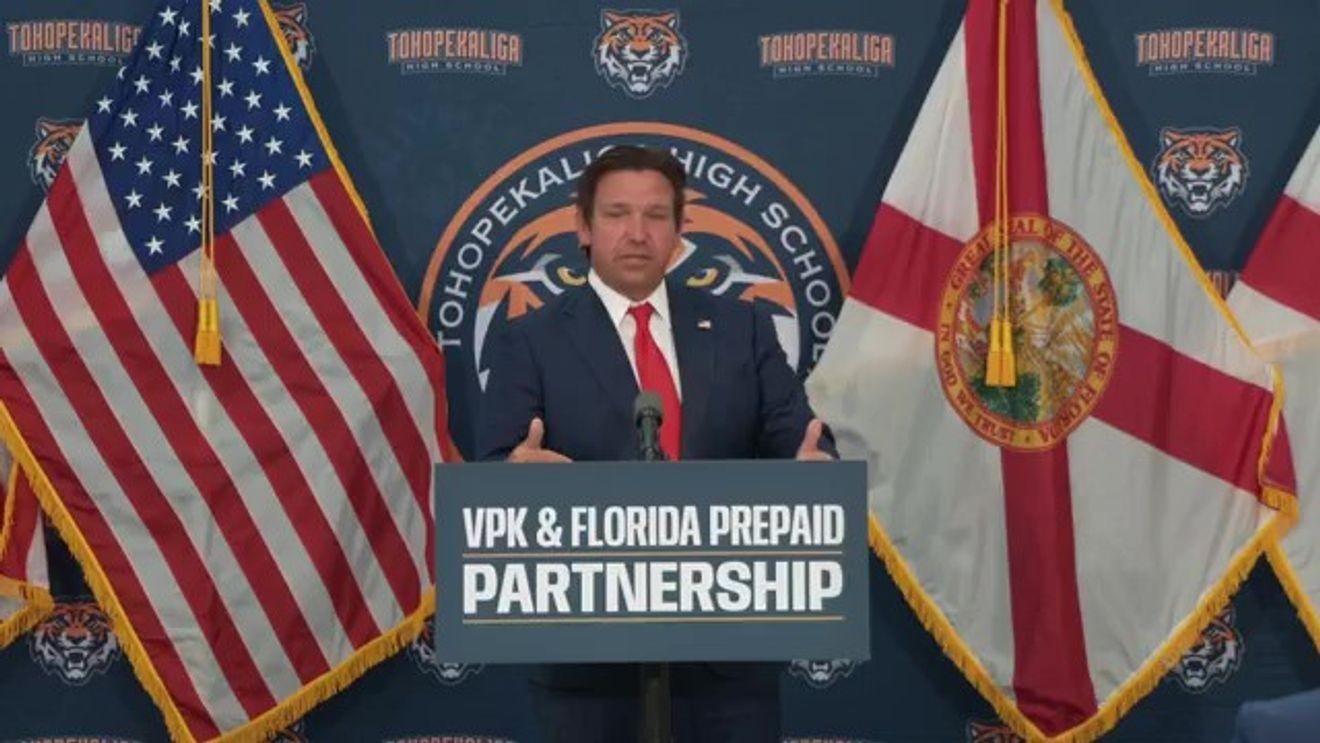
KISSIMMEE, Fla. (CBS12) — Gov. Ron DeSantis visited Central Florida on Thursday to highlight Florida’s approach to college affordability, announcing gains in the Florida Prepaid College program while also weighing in on college athletics reform, property tax relief, and other statewide issues during an extended press conference.
DeSantis said Florida has maintained the most affordable public higher education system in the nation by freezing tuition at state universities since 2019. He noted that in-state students pay an average of about $6,300 annually and said no other state has avoided tuition increases for as long. DeSantis also highlighted the Bright Futures Scholarship program, which can cover up to 100% of tuition for qualifying students, allowing many Floridians to graduate with little or no student debt.
“If you’re a good student and you’re working hard, you can go to college in Florida tuition-free, effectively,” DeSantis said. “We’ve had zero — not one penny — of increase in tuition since I’ve been governor.”
The governor pointed to Florida Prepaid College as a key factor in affordability, saying the program has returned more than $1 billion in rebates to families after tuition hikes projected years ago failed to materialize. He said families have also saved an additional $2.6 billion because contribution rates were lowered to reflect frozen tuition. More than 1.2 million families participate in Florida Prepaid, and over 646,000 students have used the program to attend college.
DeSantis announced a partnership between Florida Prepaid and the state’s Voluntary Prekindergarten program, allowing families to open a 529 college savings account at the same time they enroll a child in VPK. Participating families receive a $100 seed deposit and are eligible for monthly $1,000 savings raffles. State officials said more than 13,000 families have enrolled in the program within the first four months.
See Related: Florida Prepaid unveils user-friendly website, calculator to simplify college savings
Education Commissioner Anastasios Kamoutsas said the initiative encourages families to plan for higher education earlier and connects early learning with long-term academic success. He said more than 3.1 million children have participated in Florida’s VPK program over the past 20 years, with more than 70% demonstrating kindergarten readiness.
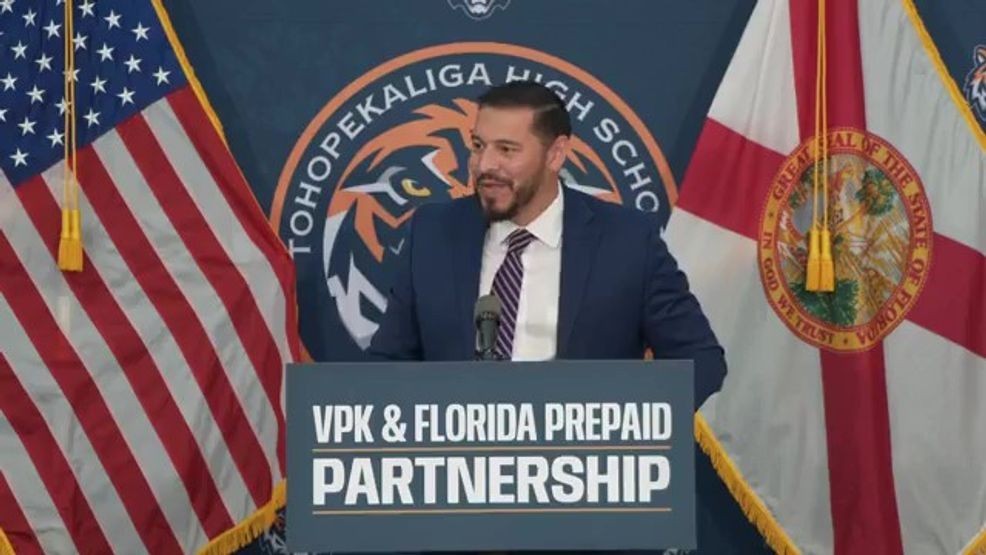
APRIL 23, 2026 – Gov. Ron DeSantis used a press conference to promote Florida’s no‑tuition‑increase policy, expanded Florida Prepaid and VPK college savings partnership, and rebates to families, while also addressing NIL reform in college sports, medical marijuana policy, property tax relief proposals heading toward a potential November ballot, and defending Florida’s broader fiscal management. (Florida Governor’s Office)
The governor also addressed issues outside education during a question-and-answer session. DeSantis discussed the rapidly changing landscape of college athletics, criticizing the current name, image, and likeness system as unsustainable. He said he is serving as vice chair of the president’s NIL commission and supports federal action to restore guardrails around athlete compensation.
“NIL was supposed to be about endorsements and licensing,” DeSantis said. “It wasn’t supposed to be perpetual free agency where boosters are constantly paying players to keep them from transferring.”
DeSantis also said recent federal moves to reclassify marijuana would not affect Florida’s existing voter-approved medical marijuana program, which he said the state has implemented and followed for years.
On property taxes, DeSantis argued that Floridians need relief as local property tax collections have nearly doubled since 2019, growing from about $32 billion to roughly $60 billion statewide. He said structural changes would require voter approval and indicated lawmakers are working toward placing a proposal on the November ballot.
“If Floridians want relief, property tax is the best thing you can do,” he said, arguing revenue growth has far outpaced inflation and population increases. DeSantis said any plan could focus on homesteaded properties while maintaining taxes on nonhomesteaded homes, such as vacation rentals.
The governor also defended the state’s fiscal management, noting Florida has quadrupled its rainy-day fund and paid off more than half of its historic state debt during his tenure. He joked about creating a Florida debt clock that would count down, instead of up, as a contrast to the growing national debt.
DeSantis said the combined efforts reflect Florida’s broader strategy of reducing costs for families while maintaining a stable budget, adding that excess government funds should be returned to residents whenever possible.
“When you have excess funds,” he said, “you’ve got to get that back into families’ pockets.”