
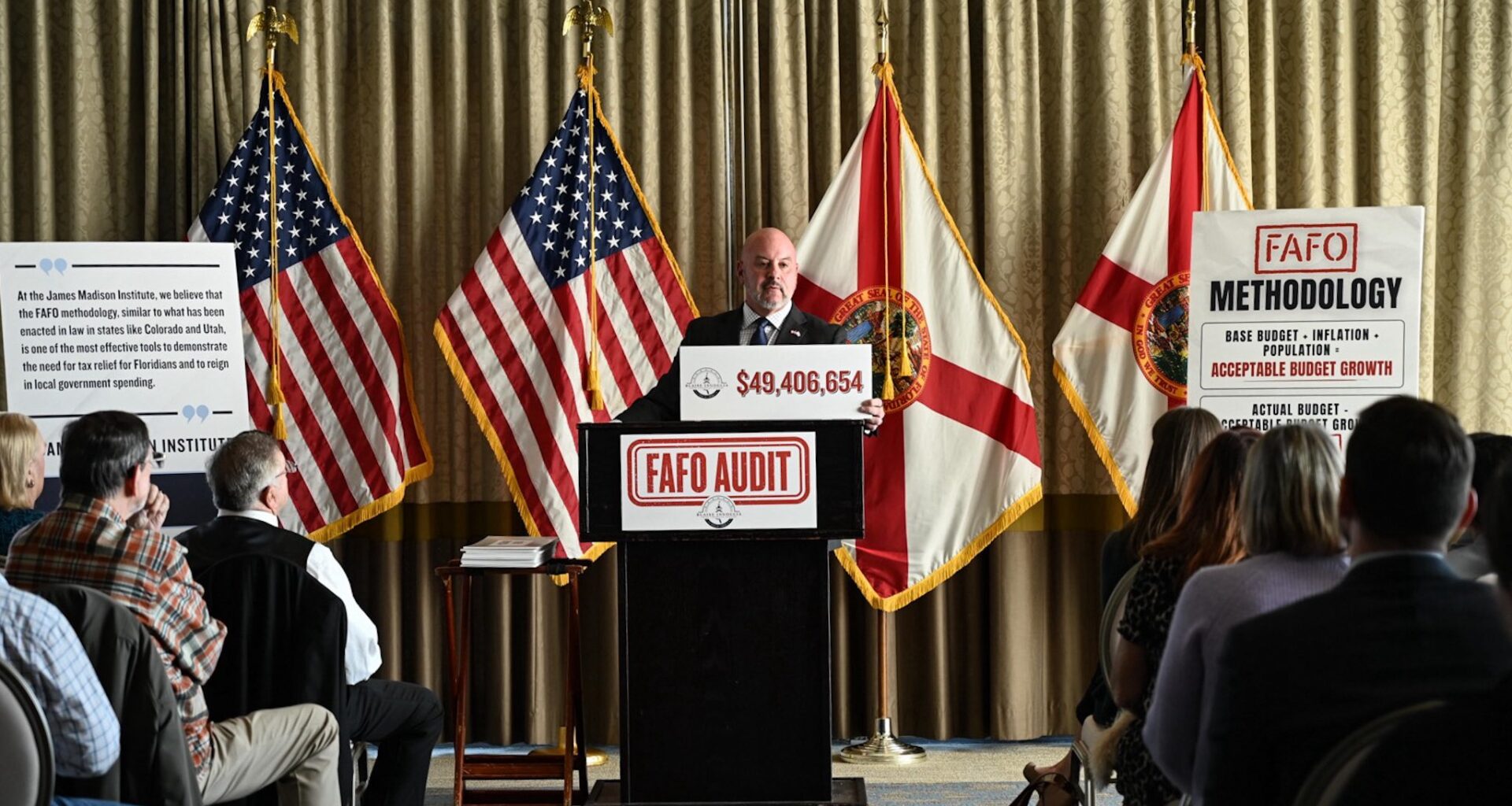
An independent audit of St. Petersburg’s finances found no evidence of mismanagement, undercutting recent claims from Chief Financial Officer Blaise Ingoglia that the city engaged in tens of millions of dollars in “wasteful” spending.
The audit, covering the fiscal year ending September 2025, reported no material weaknesses, no instances of noncompliance tied to the city’s financial statements, and no findings requiring disclosure under government auditing standards. It also classified St. Petersburg as a “low-risk” auditee, a designation reserved for governments with a strong track record of financial oversight.
The findings contrast criticism from Ingoglia, who earlier this year said the city overspent by $49.4 million based on a Department of Government Efficiency analysis comparing budget growth to population increases and inflation. The criticism came during one of many press conferences hosted by Ingoglia across the state to blast local governments for overspending — messaging that reinforces ongoing calls for property tax reform.
The independent audit — which instead examines whether public funds are properly tracked, controlled and spent in accordance with laws and regulations — found no issues with St. Petersburg spending.
Independent auditors did not identify fraud, misuse of funds or breakdowns in financial oversight, illustrating the disconnect between the state’s push to scrutinize local government spending and what, exactly, qualifies as overspending.

The financial report shows much of the recent spending increase was tied to extraordinary hurricane response costs, including nearly $93 million for debris removal alone — with many of those expenses expected to be reimbursed through federal and state disaster aid.
Even as revenues rose alongside increasing property values, the city reduced its millage rate for the fourth consecutive year. The report also points to major capital investments, including the reopening of the President Barack Obama Main Library after an extensive renovation and the opening of the Joseph E. Savage Sanitation Complex to replace aging facilities.
State analysis relies on policy benchmarks — often measuring how much a government’s budget has grown rather than evaluating whether dollars were spent improperly — unlike the independent audit, which applies established governmental auditing standards to detect compliance failures.
During his January press conference, Ingoglia said St. Petersburg’s general fund budget grew by nearly $133 million over six years — an increase of roughly 48% — despite population growth of about 11,500 residents during that period. By comparing how much spending should have increased given the rate of population growth, his Office concluded the city overspent by $49.4 million.
St. Petersburg Mayor Ken Welch has defended city investments scrutinized by Ingoglia’s Office, and said the independent audit supports his assertion that taxpayer dollars are not being wasted in St. Petersburg. He has argued the state’s review was designed to support a predetermined push for property tax reform, not to serve as a true audit of city finances.

“As an accountant by trade, I take immense pride in this outcome,” Welch wrote on social media.
“This independent audit affirms the City of St. Petersburg’s strong and transparent fiscal stewardship and responsible management of public resources. It underscores that our financial decisions are grounded in sound governance and reflect a clear understanding of how local government delivers essential services to our community with accountability.”