
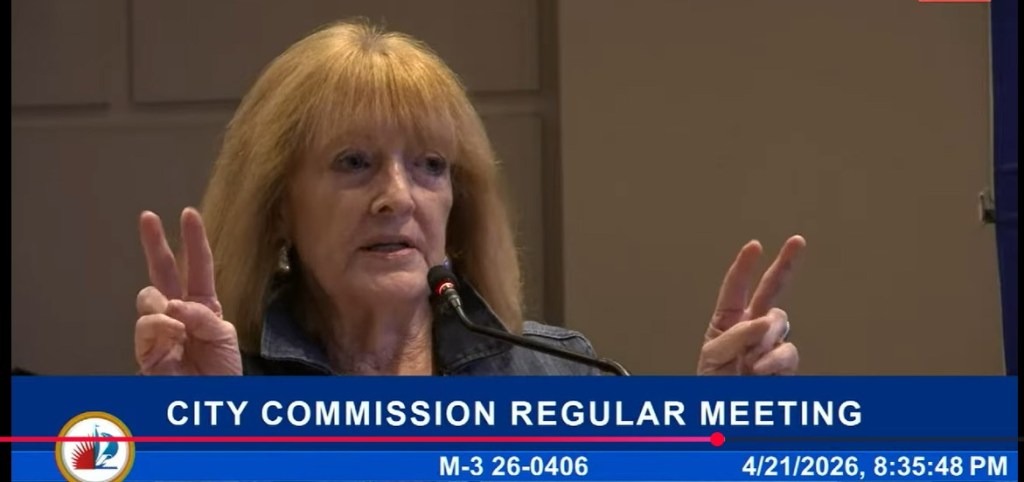
The people are winning n in Fort Lauderdale — for now.
Facing overwhelming opposition, the City Commission wisely backtracked Tuesday and deferred action on a costly and grandiose new City Hall proposal. Sanity prevails — for now.
City Hall Partners
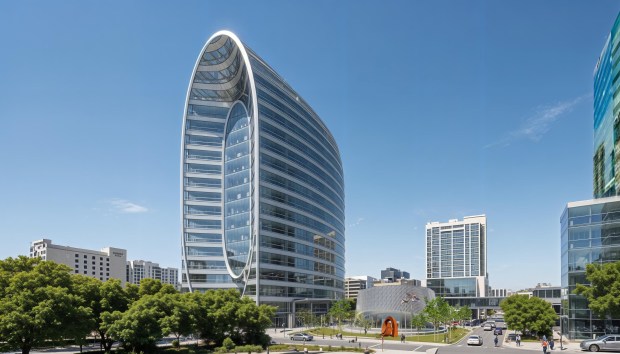
A rendering of the proposed design of a new City Hall by Fort Lauderdale City Hall Partners.
Instead, the city will take two months to explore alternatives, including three older, existing buildings — none of which would saddle the financially stressed city with debt that, according to city calculations, could total $724.8 million over 30 years.
It’s an eye-popping amount of money for a futuristic-looking building when the commercial real estate market is woefully depressed and workers’ future workplace habits are likely to be dramatically altered by artificial intelligence.
Whether this is a case of temporary fiscal sanity remains to be seen. But it was the proper action, and the credit goes to an engaged citizenry and three highly skeptical commissioners: Pamela Beasley-Pittman, John Herbst and Ben Sorensen.
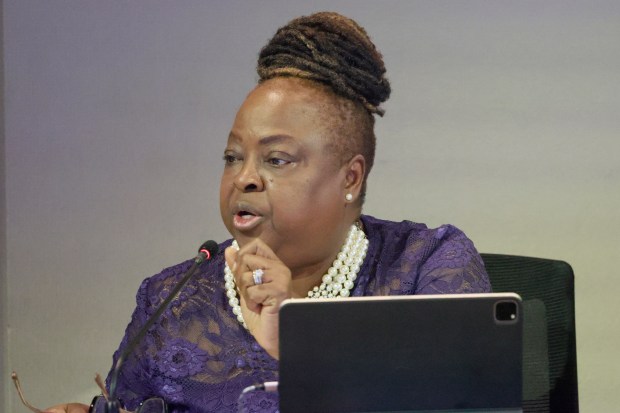 Pamela Beasley-Pittman at a city commission meeting on April 1, 2025.
City Hall sticker shock
In a moment of high drama, Beasley-Pittman, who had supported the plan by the top-rated FTL City Hall Partners firm, turned against it after residents forcefully urged the city to slow down and spend less money.
The crowd had just heard a torrent of numbers, including up to $18,883,885 million in the developer’s “soft” upfront expenses for design, engineering, travel, “outreach” and other “soft” costs.
“I can see $18 million going to affordable housing,” Beasley-Pittman said. “Slow this down.”
She became the crucial third vote to reject an interim financing agreement to move the project forward, joining Herbst and Sorensen, who are firmly opposed.
“I don’t think we’re ready,” Mayor Dean Trantalis said, sensing the mood of the board.
Herbst, a CPA and former city auditor, is the only commissioner who has opposed this venture from the outset. He said the financing plan is far too generous to the developer and would be a huge burden on taxpayers.
Sorensen, who in December made the motion to push the project ahead, has recently mobilized opposition and insists that less expensive options be explored, such as One East Broward Blvd., 101 N.E. Third Ave., and the soon-to-be vacated downtown federal courthouse.
Persistent P3 problems
After a massive flood destroyed the old City Hall in 2023, Fort Lauderdale could have sought bids for a design-build project with a pre-determined guaranteed maximum price.
Instead, commissioners allowed project developers to seize the initiative through a public-private partnership, or P3 — a proven high-risk approach in Fort Lauderdale.
A previous P3 to develop the so-called One Stop Shop site into a food and entertainment venue, was a spectacular fiasco. It collapsed a year ago when financing fell to pieces. It was a house of cards, plain and simple.
People in Fort Lauderdale were taken aback by the odd, oval shape in the preliminary designs, even before they saw the price tag.
“No wonder people are alarmed,” resident Nancy Thomas told commissioners. “As soon as the Sun Sentinel put that design in the newspaper — whoa!”
The equity stake
Beyond the bottom line, the most controversial part of the financing plan would require the city to give the lead developer, Plenary America, an equity stake in the project.
The developer would finance 10% of the project by lending the city $24 million, and the city would repay the loan at 11% interest — even though the city, with its sterling credit, could borrow the money on its own at 4.5% interest. Over 30 years, the equity stake would cost taxpayers $90 million, Sorensen repeatedly pointed out.
“I think it’s dead,” Herbst said of the equity stake after Tuesday’s meeting.
Herbst compared the equity stake to an expensive extended warranty, a lucrative revenue stream that new car buyers are pressured to buy right before they leave a dealership.
The day before the city hit the brakes, we editorially called this project “a boondoggle that the city can’t afford.”
We stand by that, although Trantalis criticized “inflammatory editorials in newspapers (and) all kinds of hysteria that’s created.”
What played out in Fort Lauderdale this week was not hysteria.
It was an angry and worried populace demanding some desperately needed fiscal sanity.
Residents should be grateful that a majority of commissioners agreed. But this is no time for city residents to declare victory. Not yet.
Study the numbers and keep asking questions. An engaged citizenry will not be ignored.
The Sun Sentinel Editorial Board consists of Opinion Editor Steve Bousquet, Deputy Opinion Editor Dan Sweeney, editorial writers Pat Beall and Martin Dyckman, and Executive Editor Gretchen Day-Bryant. To contact us, email at letters@sun-sentinel.com.