
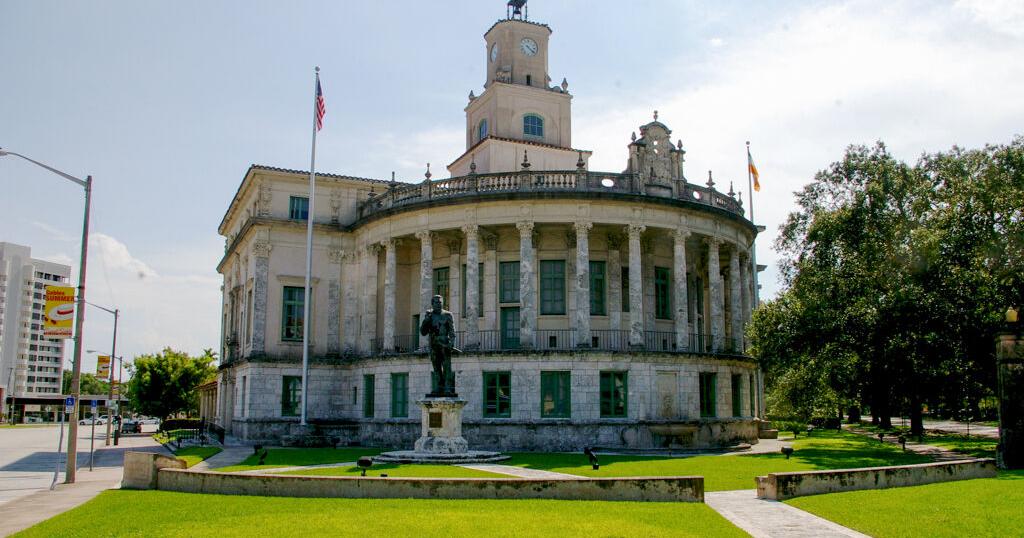
Coral Gables municipal elections are moving to November to coincide with statewide and national races, following a Special Election on Tuesday, when voters approved the change and weighed in on seven other proposed charter amendments.
The measure to reschedule all future elections from April in odd-numbered years to November in even-numbered years (Amendment 1) passed with 66% support.
Only a simple majority of more than 50% of the vote was needed for passage.
The change will shorten current officials’ terms by about four months. The first affected will be Mayor Vince Lago and City Commissioner Melissa Castro, who would otherwise have been up for re-election in April 2027.
Supporters, including Lago, said the change will boost turnout and reduce costs, from roughly $125,000 for stand-alone April elections to about $20,000 when held alongside national contests, according to Axios.
Opponents warned that local issues could be overshadowed on crowded ballots and lead to less-informed voting.
“Today, our community spoke clearly, and that is what democracy is all about. I want to thank every resident who took the time to participate in this election While the vote-by-mail process drew criticism from some, the results show that more people engaged in this election than in 2023, and that is a positive step forward for Coral Gables,” Lago said in a statement to Florida Politics.
“The approval of these measures, particularly moving our elections to November, reflects a shared commitment to strengthening participation and ensuring that more voices are heard when we choose our city’s leadership. For years, turnout in local elections has been too low, for example lower than 20 percent in the 2023 April runoff. That is not the level of engagement our community deserves.
“This change is about building a more inclusive and representative process, one that aligns with higher-turnout election cycles and encourages broader civic participation, not one driven by narrow interests. It is also important to note that this decision is not in my personal interest. In fact, it shortens my current term by five months. But leadership required putting the long term good of the community first.”
Tuesday’s election was unusual in its method. It was decided by mail-in ballots alone, with voters either sending their ballots by postage or hand-delivering them to the Miami-Dade County Supervisor of Elections Office before 7 p.m. on Election Day.
There were no polling places or early voting sites. But that didn’t appear to affect participation much. A partial tally by the Supervisor of Elections showed more than 28.2% of Coral Gables’ 30,432 registered voters cast ballots Tuesday. In the city’s election last year, which included in-person voting, 29.6% of voters participated.
Other proposed charter amendments included:
— Amendment 2: Prohibit the City Commission from changing the election date by ordinance, effectively requiring voter approval for any future changes. It is designed to lock in the November election schedule if Amendment 1 passes. Passed with 62.6% support.
— Amendment 3: Allow City Commissioners and certain appointed officials to remove members they appointed to boards or committees before their terms expire, without a Commission-wide vote. Such removals now typically require majority approval of the Commission. Failed with 39.2% support.
— Amendment 4: Require the city to convene a Charter Review Committee every 10 years beginning in 2035, formalizing a process the city has historically followed. Passed with 66.4% support.
— Amendment 5: Authorize the city to contract with Miami-Dade County or a private entity for Inspector General services that include investigations of fraud, waste and abuse and providing oversight, with subpoena power. The idea followed recent political tensions and calls for increased transparency. Passed with 68.7% support.
— Amendment 6: Require voter approval for any increases in elected officials’ pay beyond standard cost-of-living adjustments tied to inflation. Currently, the Commission can approve additional raises by majority vote, as they did in 2023. Passed with 77.8% support.
— Amendment 7: Eliminate runoff elections in mayoral and Commission races. Candidates could win with a plurality — the most votes — rather than a majority. Failed with 33.5% support.
— Amendment 8: Require the city to maintain a general fund reserve equal to 25% of its operating budget and mandate a four-fifths vote of the Commission to spend those funds or change the policy, except in emergencies. City officials described the reserve proposal as a financial safeguard for crises such as hurricanes. Passed with 63% support.