
A proposed general obligation (GO) bond is advancing through St. Petersburg’s approval process with city officials signaling support for a potential voter referendum — even as questions emerge about whether the messaging will resonate with voters.
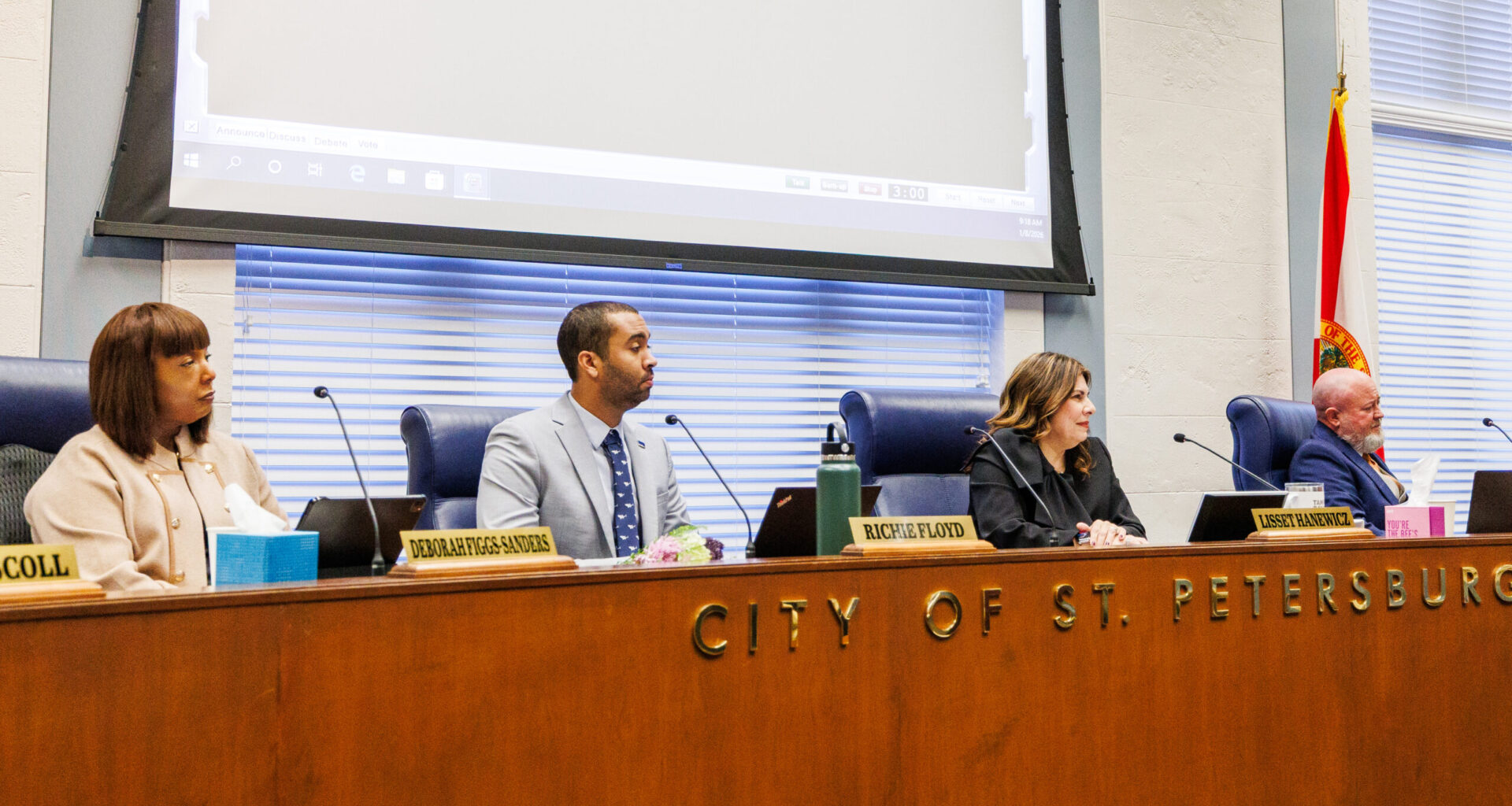
The St. Petersburg City Council’s Budget, Finance, and Taxation Committee met for a presentation about the proposed GO bond, which would accelerate roughly $600 million in resiliency and stormwater infrastructure upgrades planned by the city with an infusion of upfront cash.
Although a GO bond would add debt obligations to the projects, local officials said fast-tracking needed infrastructure improvements would help prepare the city for potential major storms faster, and likely at a lower price point.
“While pay as you go avoids interest payments, it does carry high risk of inflation, construction delays, and in many cases higher total costs due to rising material and labor prices,” Public Works Administrator Claude Tankersley said. “Construction delays also carry the risk of flooding events occurring before those resilience upgrades can be constructed.”
Tankersley argued that funding the resilience projects through a GO bond creates a more proportionate funding model for the community.

“The current model uses utility fees paid by water, sewer and stormwater utility customers to pay for resilience enhancements,” he said. “However not all city property owners are utility customers and not all utility customers are property owners. So using the GO bond in addition to utility fees distributes costs across all city residences and businesses.”
The proposed language does not tether potential funds to specific projects, but officials are publicizing projects that could receive bond funding if approved by St. Petersburg voters.
Those projects largely center on stormwater and resiliency infrastructure tied to the city’s St. Pete Agile Resilience (SPAR) program, including drainage improvements in flood-prone neighborhoods, expanded canal capacity, stormwater pump stations and potential tidal gate systems. City officials said the bond would accelerate a subset of SPAR projects, which amount to roughly $2.7 billion in projects currently planned over decades.
District 2 Council member Brandi Gabbard said she supports most of the proposed projects associated with the GO bond funding, but argued the list of more localized improvements is not equitably distributed across the city — raising concerns about how the plan will be received by voters who do not see their communities reflected in the project list. She acknowledged that the projects are not final, but said the current framing could make it difficult to build public support either way.
“I just met with Riviera Bay the other night, the President is here today — she came to listen,” Gabbard said.

“It is just going to be a really hard pill for them to swallow. All 1,200 homes sustained some level of damage during Hurricane Helene; 116th Road improvements are not going to help them. So I just think that particular piece of it is going to be very challenging for people. I support us putting this forward to the residents and having them make a choice, I just think in some areas of the city we’re going to have to do better to help them understand the impacts.”
The discussion also touched on broader questions about how far the city should go in hardening certain infrastructure against future storms. District 3 Council member Mike Harting said the city often spends significant money to prevent damage that could have been prioritized to other important necessities.
He used the example of a recent issue at the Northeast water plant, where workers shut down the facility for roughly 12 hours due to Hurricane Milton. He questioned whether funds spent in resiliency upgrades to address the issue were worth the cost of other projects that went unfunded in exchange.
“Please don’t misunderstand, I’m just talking philosophically, but we spent millions of dollars since then to make sure that 12 hours doesn’t happen again,” Harting said. “In that bubble that seems like the right thing to do, but those millions of dollars could have gone to projects that we can’t fund now because of that. So, how do we go through that process of how resilient is too resilient? That’s a tough question.”
District 6 Council member Gina Driscoll also raised concerns about how to communicate the financial impact to voters, particularly as the bond would be repaid through property taxes. She too signaled support for the effort, but appeared shaky on messaging to local residents who may prefer the city not to go into hundreds of millions of dollars into debt.
“What do you say when a resident says, ‘Why didn’t you just take o.96 mils from what I’m already paying and put that into a separate fund? Because you guys are taxing us enough. And maybe you need to take it out of what I’m already giving you and start living within your means, government, like we have to?’” Driscoll said.
“How do we respond to that? Because that’s a question that I can’t answer.”