
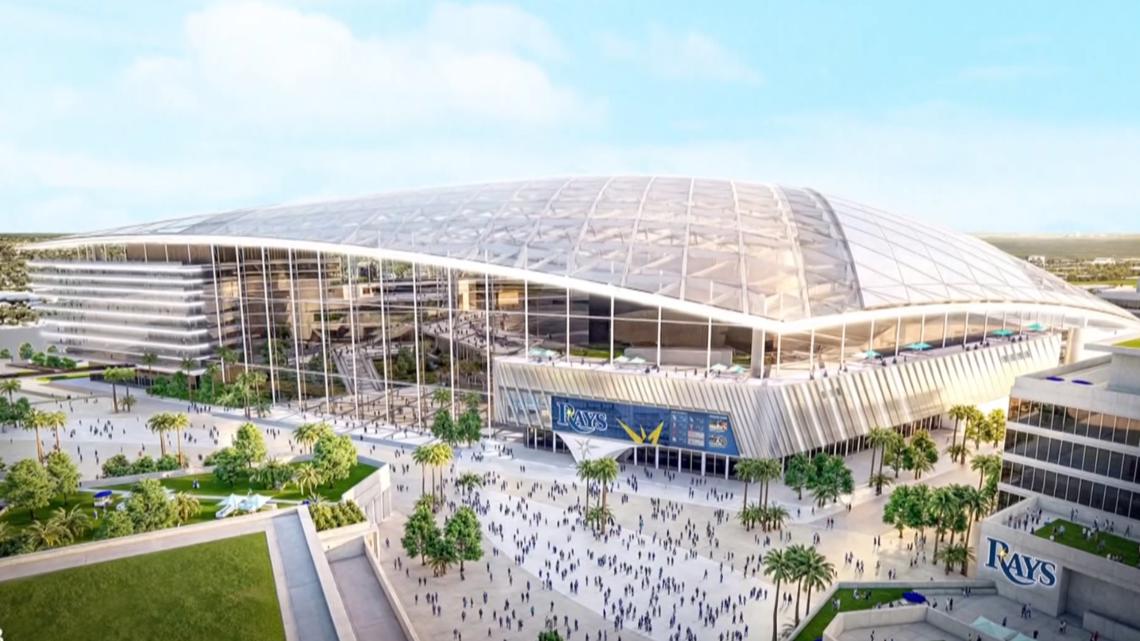
A newly obtained county memo raises legal and financial concerns about the Rays stadium deal, warning the June 1 timeline is likely unrealistic.
TAMPA, Fla. — Hillsborough County attorneys are raising significant concerns about a proposed agreement to build a new Tampa Bay Rays stadium, warning in a newly obtained memo that key parts of the deal remain unresolved and the current timeline is likely unrealistic.
The memo, obtained by 10 Tampa Bay News, outlines preliminary feedback from county attorneys in response to a draft memorandum of understanding submitted by the Rays earlier this month.

This story continues below.
At the top of the list: timing.
The Rays’ proposal calls for final project agreements to be completed by June 1. But county attorneys say that deadline cannot reasonably be met until the broader terms of the deal are agreed upon, and even then, negotiating key agreements could take an additional 60 to 90 days.
The memo also raises legal concerns about the structure of the agreement itself. Attorneys caution that language requiring both sides to use “best efforts” to finalize the deal could create legal obligations if negotiations fall apart. They say the MOU must clearly state it is non-binding and subject to approval by all parties.
What the Rays are proposing
The concerns come as local leaders continue reviewing the Rays’ draft agreement, which lays out a preliminary framework for a stadium project estimated to cost at least $2.3 billion.
Under the proposal, a minimum of $1 billion would come from public funding, including $750 million from Hillsborough County and $251 million from the City of Tampa.
That public share would be financed through bonds paid back over time using tax revenue, including the Community Investment Tax (CIT), a voter-approved half-cent sales tax typically used for infrastructure and public safety projects.
The draft states that using CIT funds for the stadium would not impact funding for those needs, but county leaders previously pushed back on that assertion, nothing the revenue would be committed long-term to paying off stadium debt.
The proposal also includes multiple revenue streams for the Rays, including naming rights, a ticket surcharge of up to $3.50, and directing 85% of new property tax growth from the development back to the team for future upgrades.
Under the proposed terms, the Rays would pay $10 per year in rent, citing their upfront investment and ongoing responsibilities.
County Attorney Julia Mandell previously noted the draft is “purely the work product of the Rays organization” and has not been reviewed or analyzed by any government entities.
Funding risks and unanswered questions
In the memo sent to the Rays Thursday, attorneys highlight several financial concerns, particularly around the use of CIT funds.
They say the Rays would be required to backstop any shortfall if tax revenues do not meet projections, with that guarantee needing to be secured by a third-party credit mechanism.
Attorneys also emphasize the county will not agree to any funding structure that could negatively impact its bond or credit rating. They say the Rays, not taxpayers, must take on risks tied to interest rates and bond issuance costs.
The memo further underscores a lack of clarity around private financing, with county leaders seeking more details on where the Rays’ funding would come from, how much each source would contribute and when those funds would be available.
It also makes clear that public funding cannot exceed private investment.
Construction and planning gaps
Beyond funding, attorneys point to several gaps in the project’s planning.
The memo says additional details are needed on construction timelines, contractor selection and cost estimates, as well as how public and private dollars would be allocated throughout the project.
County leaders also stress that public agencies must have oversight of design and construction for any portions funded with taxpayer dollars.
What happens next
The memo is preliminary feedback from the county has provided to the Rays on the proposed deal, and attorneys note that additional issues could emerge as negotiations continue.
Local leaders are still moving forward with public discussions. The Tampa City Council is scheduled to hold a workshop on May 5 at the Tampa Convention Center.
Both the county and the city have pushed votes on the deal back several times, and this latest memo strongly hints that the tentative early May votes will be delayed again.
In a statement, the Rays told 10 Tampa Bay News, “We are working diligently on the list of questions provided to us by the county and city and will share our responses with them soon. With the right public-private partnership, we can build a world-class ballpark by 2029 and remain focused on doing so.”