
The Athletic has live coverage of the 2026 NFL Draft.
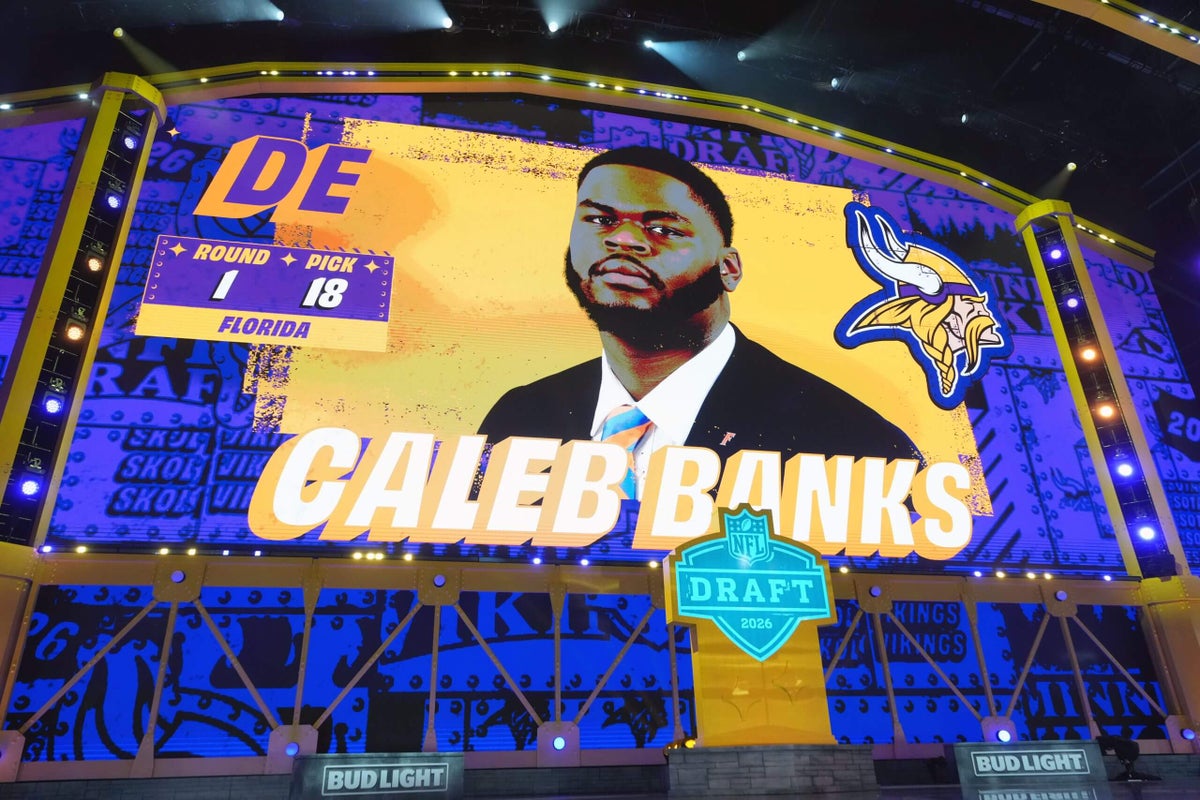
The Minnesota Vikings selected Florida defensive tackle Caleb Banks with the 18th pick of the first round of the 2026 NFL Draft. He was the first defensive tackle chosen.
It was easy to see why Banks entered last season with buzz as a potential top-20 pick. The 6-foot-6, 327-pound Michigan native has the frame and athleticism you’d expect from a top draft prospect, and he was coming off a breakout 2024 (seven tackles for loss, two forced fumbles). A foot injury limited him to only three games in 2025 — including the final two contests of the Gators’ lost season — and restricted his testing during the NFL scouting process.
Banks’ production is muted. He amassed only 48 tackles (10.5 for loss) over two seasons at Louisville and three at Florida. Still, Gators teammates and coaches spoke highly of him, and he won a team award last spring for his contributions to Florida’s culture. His flashes of success, when healthy, made him an intriguing prospect.
‘The Beast’ breakdown
Banks ranked No. 52 in Dane Brugler’s top 300 big board. Here’s what Brugler had to say about him in his annual NFL Draft guide:
“Banks is a towering athlete with the fluid athleticism and unique physical traits to be impactful against the pass and the run. He is long and strong enough to claim early wins when he stays disciplined in his initial attack. But his taller stature can zap his power and take him out of plays, as he allows blockers to out-leverage him and stay attached. He leaves too much production on the field, although his tackling should improve with better conditioning.”
Nick Baumgardner grades the pick
This is bold (if that’s the right word). When Banks is healthy and engaged with his technique, he’s a serious problem. On talent alone, he’s definitely DT1 in this class. However, he’s not a very consistent player, and despite the athletic potential, he could be a bust. Banks, who is 6-6, 330 pounds, has had two serious foot injuries in less than a year.
Many teams dropped Banks out of the first round after he broke his foot at the combine. The Vikings could’ve had a perfect fit to fill a need here with Oregon safety Dillon Thieneman. Instead, they make a serious gamble on a recently injured — albeit very talented — athlete. Too big a risk for my taste, though I could easily be proven wrong in a year. We’ll see.
Grade: C+
Mike Sando’s assessment
The Vikings taking an injury chance on Banks is interesting, given all the injury issues the team has faced over the past couple of seasons. Last offseason, Minnesota loaded up on older veterans in free agency. Injuries were an issue. And, of course, the team has had a hard time keeping 2024 first-round pick J.J. McCarthy on the field.
That is sometimes the tradeoff in the back half of the first round. If you want a potentially elite talent there, you’re going to be taking risks on something else. It might be easier to take chances when there isn’t a full-time GM in place!
How he fits
Defensive tackle was perhaps the Vikings’ biggest need.
The team released veterans Javon Hargrave and Jonathan Allen earlier this offseason. Besides Jalen Redmond, a budding star on the interior, Minnesota didn’t have much depth. Youngsters Levi Drake Rodriguez and Tyrion Ingram-Dawkins have shown promise, but neither of them has the upside of Banks.
The most critical short-term question is his health. Banks fractured the fourth metatarsal in his left foot the night before the combine and underwent surgery. Last year, he missed games with a foot injury. Health will be of the utmost importance for the 23-year-old to reach his ceiling.
Depth-chart impact
When healthy, Banks should immediately step in and play on the interior next to Redmond. His pass-rush skill set may require some work. But if he can remain on the field, he should develop while working with new defensive line coach Ryan Nielsen.
The potential of Minnesota’s front is hard to deny. The team has three dynamic edge rushers in Jonathan Greenard, Andrew Van Ginkel and Dallas Turner. Add Banks to the mix, and defensive coordinator Brian Flores should be licking his chops at the possibilities.
They also could have picked …
Had the New York Jets passed on Oregon tight end Kenyon Sadiq at No. 16, that would have been a possibility. The Vikings also could have selected Oregon safety Thieneman, a popular projection throughout the 2026 draft cycle. Another alternative would have been USC’s Makai Lemon, a receiver whom the Philadelphia Eagles selected two picks later. That the Vikings chose Banks at No. 18 — and decided not to trade back before taking him — shows how convinced they were about wanting to add him to the roster.
Fast evaluation
You cannot overstate the level of risk here. The Vikings are betting that Banks, who only played in three games last season and has had multiple foot surgeries, is not only going to stay healthy but also progress into an elite pass rusher. The lack of premium defensive tackles in this draft class left the Vikings in a precarious position. They decided to roll the dice with maximum risk. The reward is tantalizing, but the risk is harrowing.