
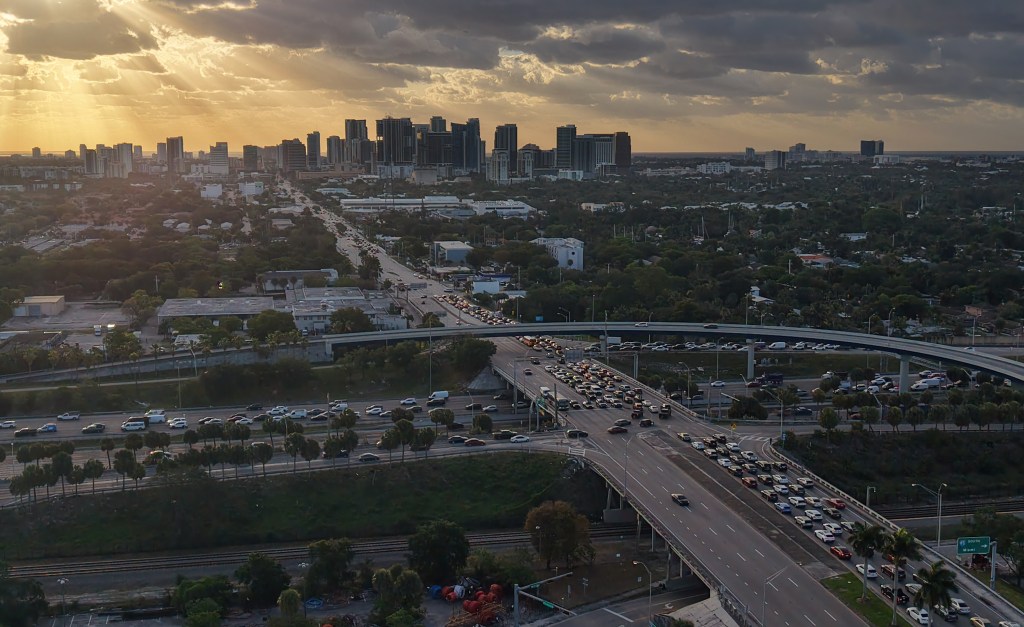
A state plan calls for the I-95 exit of Broward Boulevard to be turned into a “diverging diamond,” a reconfiguration of the large crossing that aims to make the commute easier for thousands of drivers.
On any given day, drivers may get fed up waiting there in traffic. It’s an opportune site for a diamond-like configuration — a crisscross layout that some passers-by consider unusual. They say it feels as though they’re driving on the wrong side of the road. But the state deems the crossings a safety improvement.
The Broward exit is just one of several in the planning stage for a diverging diamond, a Department of Transportation spokesman recently told the South Florida Sun Sentinel.
Others in the planning stage are I-95 exits in Martin and St. Lucie counties.
What are diverging diamonds?
The first South Florida diverging diamond interchange was completed on Dolphin Expressway in Miami-Dade in 2018. Another one opened at the Glades Road exit of I-95 in Boca Raton in January 2023. More diverging diamond interchanges are in the design phase in Palm Beach County along I-95, including at Hypoluxo Road, Lantana Road and 10th Avenue North. Others exist across the state, including in Manatee, Brevard and Nassau counties.
The crisscross interchanges make it so drivers only have one light before getting onto an on-ramp. The state says the result is drivers facing less time sitting in traffic. And there are fewer “conflict points” for cars and pedestrians.
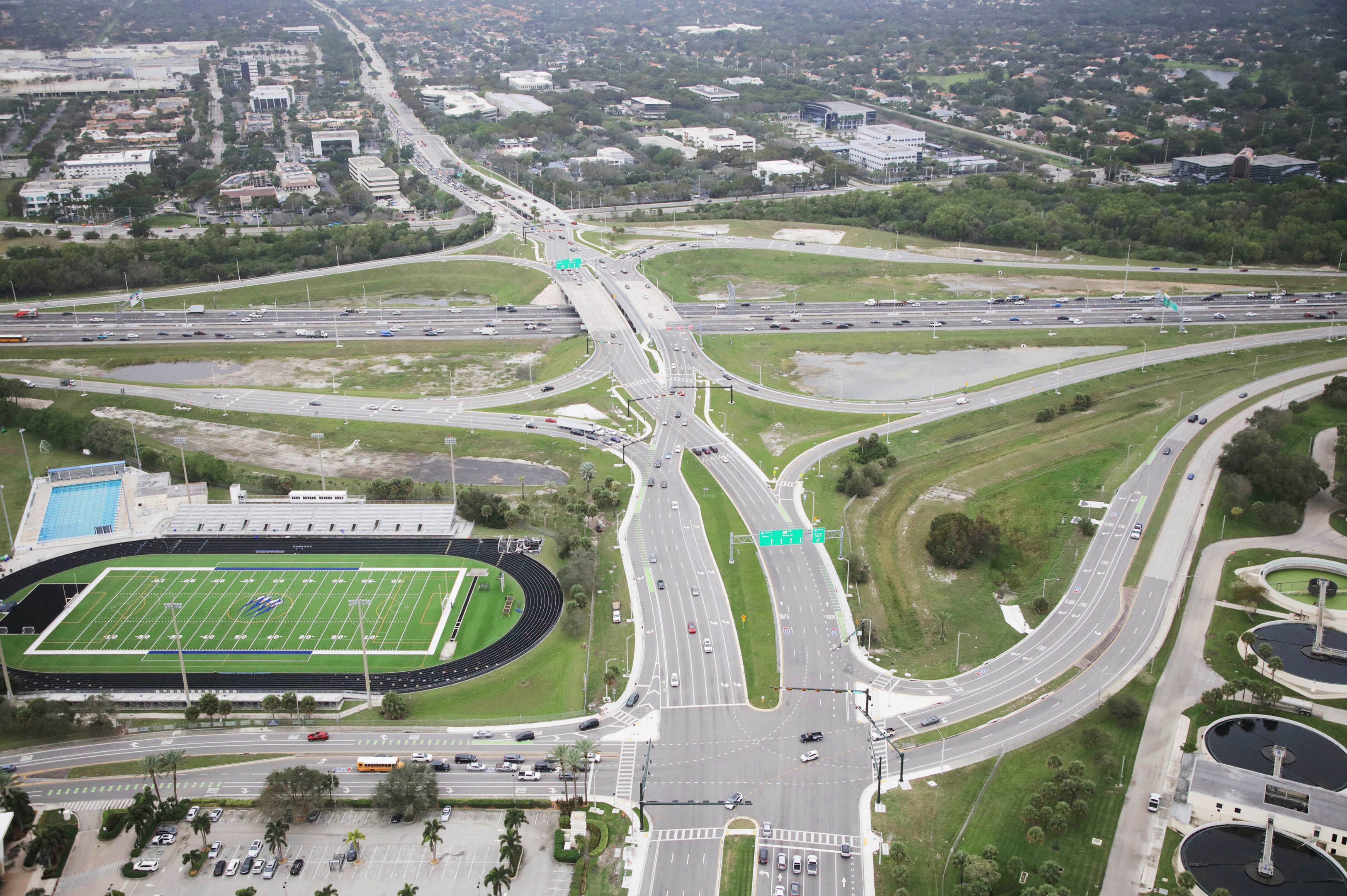
An aerial photo shows the diverging diamond interchange at Glades Road from January 2024. (Courtesy/Florida Department of Transportation)
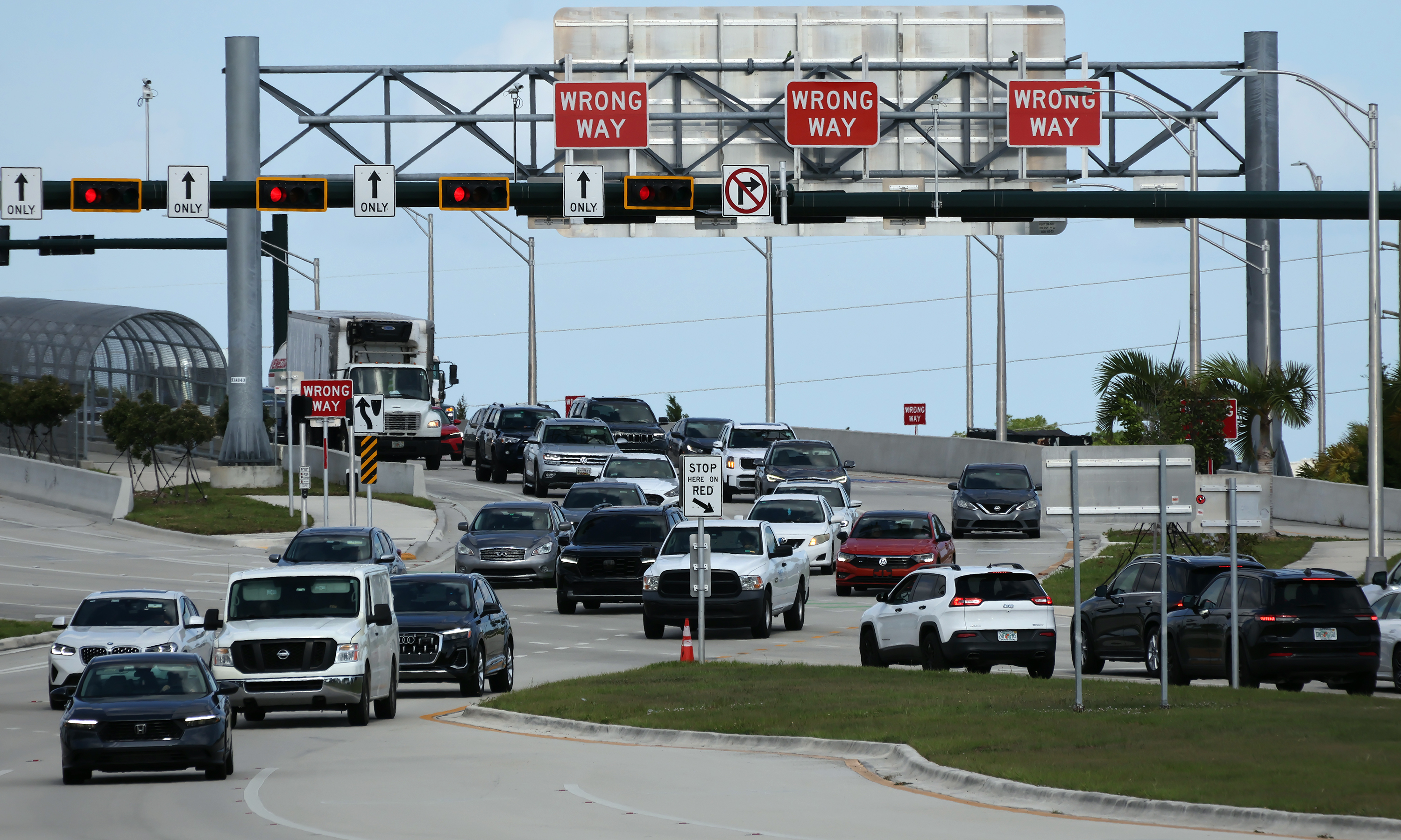
Vehicles navigate the I-95 and Glades Road diverging diamond interchange in Boca Raton on Wednesday, April 22, 2026. (Joe Cavaretta/South Florida Sun Sentinel)
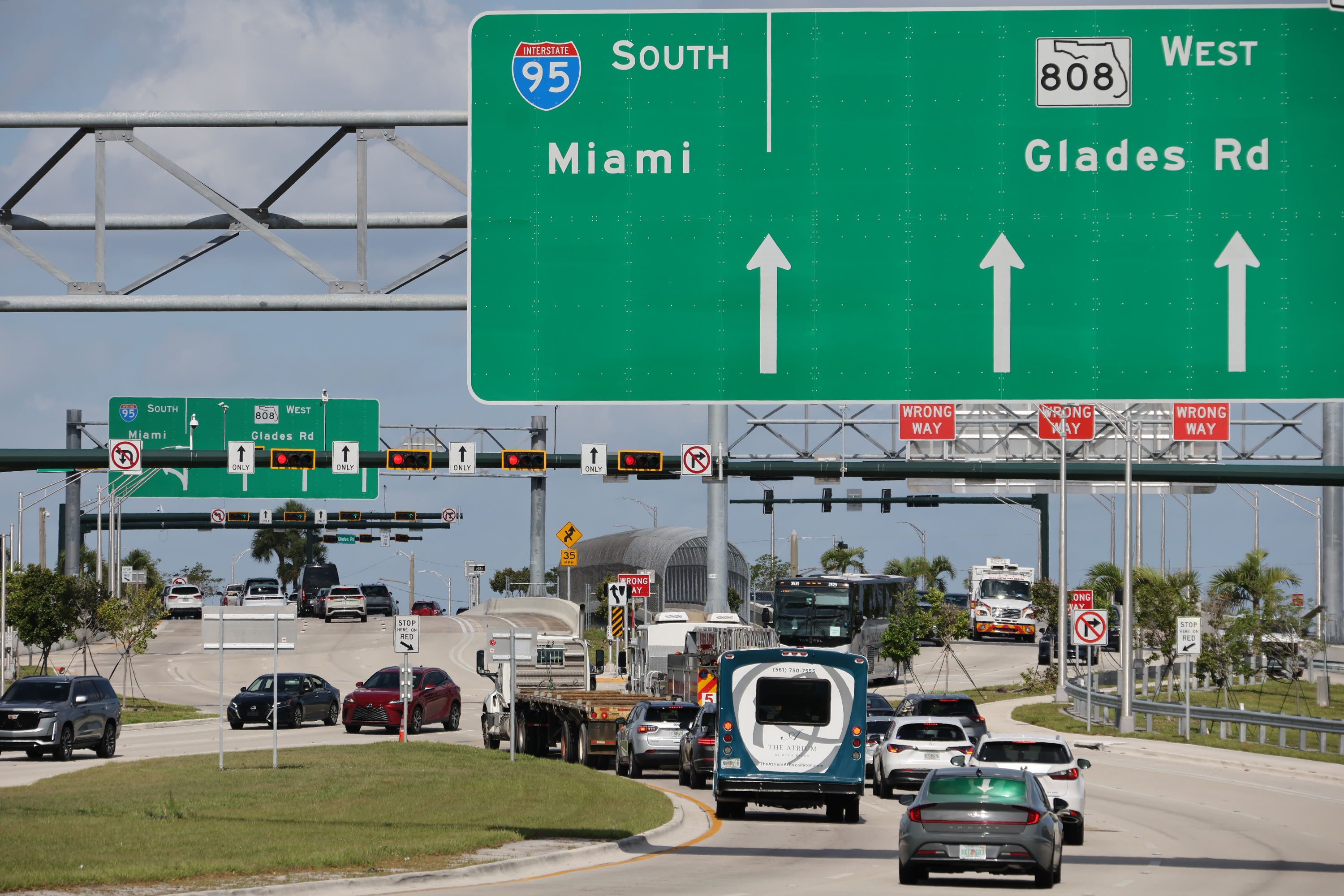
Vehicles navigate the I-95 and Glades Road diverging diamond interchange in Boca Raton on Wednesday, April 22, 2026. (Joe Cavaretta/South Florida Sun Sentinel)
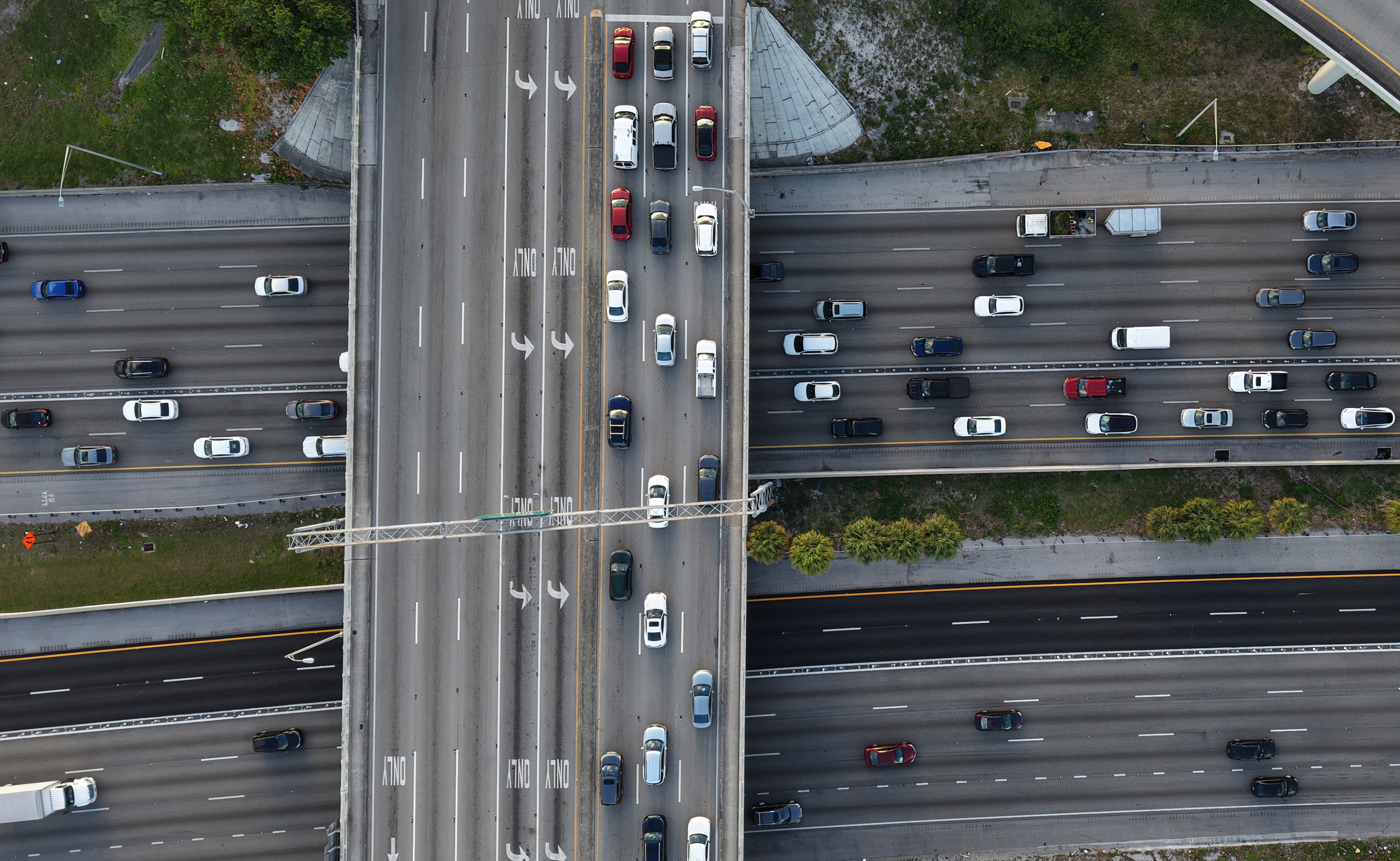
Traffic flows at the intersection of I-95 and Broward Boulevard on Wednesday, April 22, 2026. A diverging diamond interchange is proposed for the location. (Joe Cavaretta/South Florida Sun Sentinel)
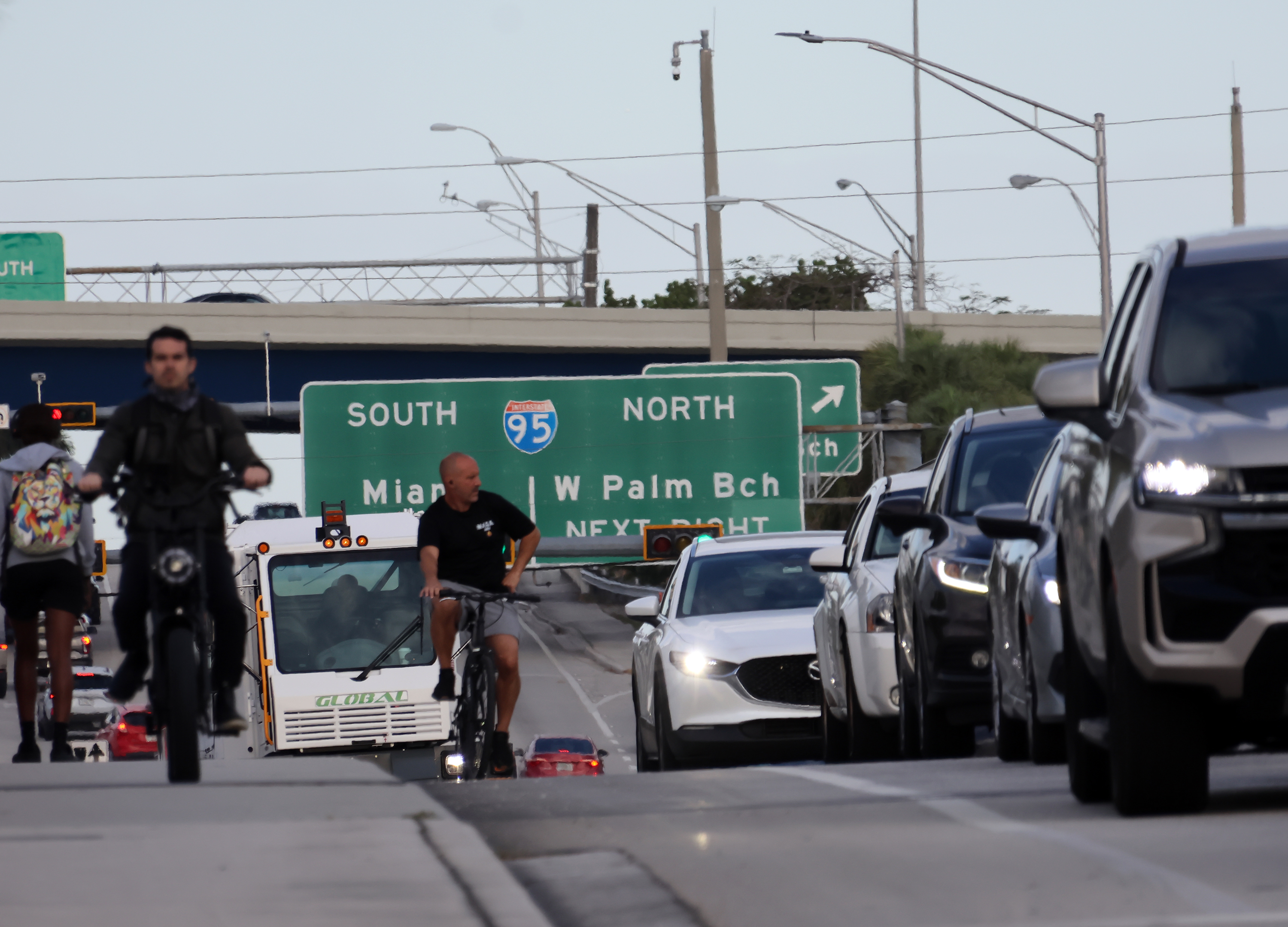
Commuters travel through the I-95 and Broward Boulevard interchange during the morning rush hour in Fort Lauderdale on Wednesday. A diverging diamond interchange is proposed for the location. (Joe Cavaretta/South Florida Sun Sentinel)
Show Caption
1 of 5
An aerial photo shows the diverging diamond interchange at Glades Road from January 2024. (Courtesy/Florida Department of Transportation)
As defined by the transportation department, a diamond interchange “allows the two directions of traffic on the crossroad to temporarily divide and cross to the opposite side to gain access to and from the freeway more easily.”
Minding safety
The state transportation department says these crossings are safer than traditional ones because they reduce speeds and cut out the need for the traditional left turns onto the interstate most drivers are used to.
Of the diverging diamonds so far built in Florida, “no formal evaluations have been conducted” to gauge the results, a state FDOT spokesman said. But the department provided the Sun Sentinel past documentation in Missouri and Utah, as an indication that the crossings work.
Most recently, WPTV-Ch. 5 cited police records that show the Glades Road diverging diamond in Boca Raton has seen a reduction in accidents. Nearly two-dozen accidents happened over a one-year period from early 2023 to early 2024, up from 16 accidents the year before, the station reported. But then it dropped to 10 accidents from early 2024 to early 2025, and there were 13 from February through December last year, it showed.
What’s next
The diverging diamond interchange at I-95 and Broward Boulevard is the only one planned for an I-95 exit in Broward because no other location along the highway is feasible for a diverging diamond interchange, said Cesar Martinez, a district planning and environmental administrator for the Florida Department of Transportation.
The interchange planned for Broward Boulevard is expected to be completed by 2031, but that hinges on adequate funding, which comes from the state and federal government, Martinez said. The money has to cover all the department’s projects.
“When it comes to setting priorities, our No. 1 priority for funding allocation is safety. So safety projects are the No. 1 followed by maintenance and operations, so maintaining our existing highways and bridges as well as bridge replacement,” he said.
Any remaining funding then goes to “new projects, new stuff” — such as a diverging diamond interchange, Martinez said.
Costs have increased in recent years for materials such as asphalt and steel, Martinez said, which is a challenge the department must contend with.
“It’s a balancing act,” Martinez said.