
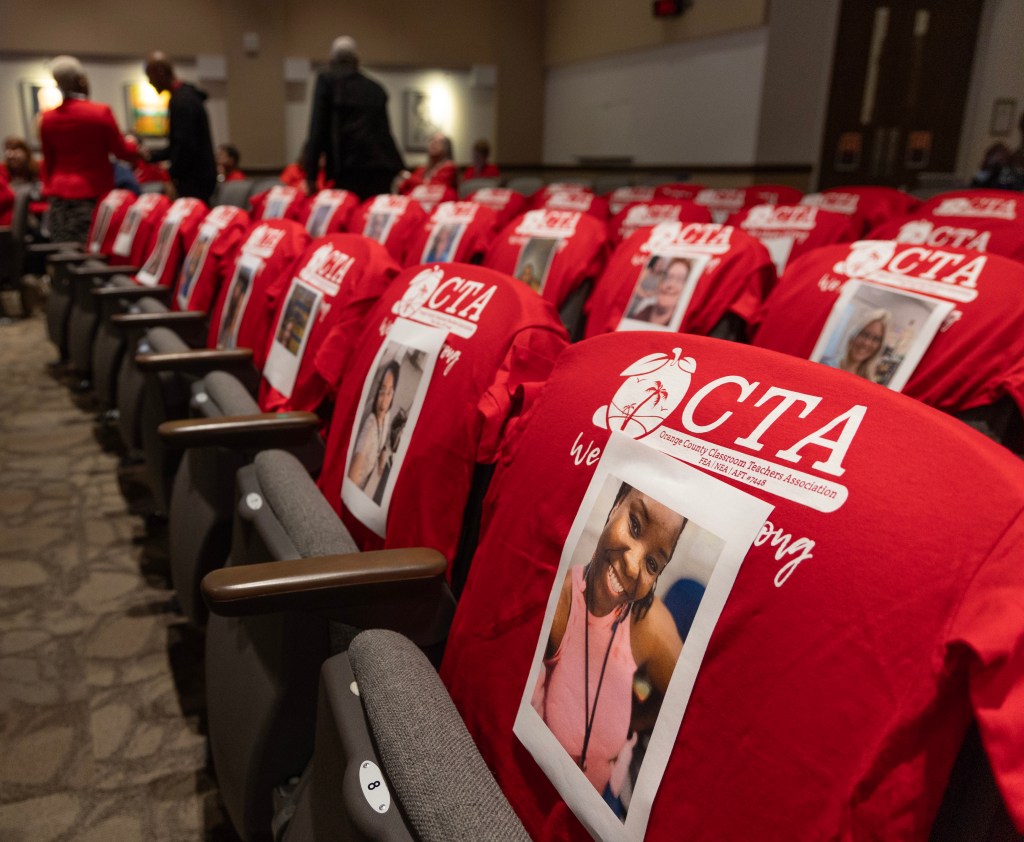
Orange County Public Schools said this week it cannot reach an agreement with its teachers union on steep, district-proposed cost hikes for health insurance it argues are crucial to avoid a financial crisis.
As a result, the district declared impasse, a declaration that contract negotiations were at a standstill and that sends the two sides to a magistrate who will hear arguments from administrators and union leaders. A final decision will rest with the Orange County School Board.
The union called the impasse decision “deeply disappointing” and said it wanted to continue negotiations, hoping to find alternatives to the district’s health insurance proposals, which were “not affordable for anyone.”
But in a statement, OCPS said the increases are the only way to stay afloat. With enrollment declining, the district faces a $145 million budget shortfall next year if nothing changes, representing “an unsustainable loss that would jeopardize resources needed to support students, employees and school operations.”
The proposed insurance hikes for teachers are significant.
In one of the health plans, for example, an OCPS teacher who insured a spouse or domestic partner would see the bi-weekly, per-paycheck costs rise from about $300 this year to $675 next year.
The deductibles, now at $300 for individuals and $600 for families, would jump to $2,000 for individuals and $4,000 for families.
OCPS has proposed raises of less than 1%, so the higher health insurance costs would effectively mean a pay cut for many of its about 13,000 teachers, said Clinton McCracken, president of the Orange County Classroom Teachers Association.
“That’s not affordable for anyone, especially considering what our educators are paid,” McCracken said.
The district’s proposed 2026-27 insurance costs for teachers represent an almost 400% increase from current figures, he said.
OCPS operates a “self-insured” employee benefits trust and contributes part of its budget to provide health insurance benefits to employees. The district blames rising healthcare costs nationwide for the proposed premium and deductible price hikes, claiming that without hiking employee contributions, the district’s insurance plans wouldn’t be financially sustainable.
“Without changes, projections show the trust would require significant additional funding to remain solvent. This year alone, $86 million is being transferred from the General Fund to sustain the trust. Addressing this now helps prevent more disruptive changes later,” the district wrote on its website about the proposed increases.
Its statement said, “District leadership and the School Board are pursuing solutions to protect employees, preserve access to quality care and ensure long‑term sustainability.”
OCPS, like many Florida school districts this year, lost thousands of students and has been forced to make cuts to staffing and schools to accommodate the resulting per-student funding loss.
At the end of this school year, seven half-empty OCPS schools will close their doors as most schools enroll fewer students than they did the previous year.
OCPS is also cutting 200 district-level positions, most of which are unfilled, in a money-moving maneuver to send funds to departments that more directly impact students.
McCracken said the union presented several different plans during bargaining negotiations that would keep costs affordable for teachers while sustaining the benefits trust, but the district wasn’t receptive.
The union proposed contracting directly with a hospital, he said, or using a concierge medicine service where employees would pay an annual fee to have a doctor on retainer.
“The district continues to default to the same approach, rejecting options that fall outside what they’re used to, and taking the easier route of passing the cost on to employees instead of doing the work to find better solutions,” he said.
Typically, a magistrate who presides over an impasse hearing listens to testimony from both sides and then issues a report recommending which positions should be followed. That report goes to the school board, which then holds its own impasse hearing and makes a decision.
But by state law, the board is not an impartial player. It approves the district’s budget that sets the parameters OCPS administrators use in negotiations with the union.