
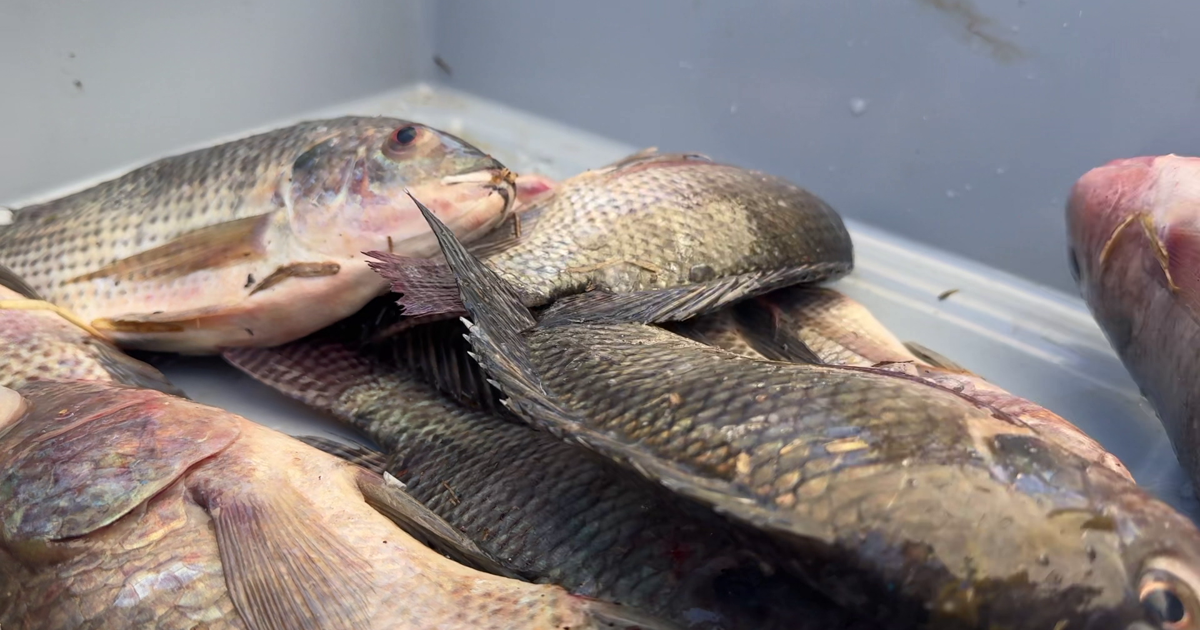
FORT MYERS, Fla. (WINK) — Anglers hauled coolers full of invasive fish to Bass Pro Shops in Fort Myers on Sunday, capping a weekend roundup aimed at removing non-native species from Southwest Florida freshwater and helping researchers learn more about how those fish are spreading. Tilapia, sailfin catfish and cichlids made up much of the haul at the final weigh-in, where fish were sorted by species, counted and weighed.
One team of 14-year-olds, calling themselves the “Tilapia Killers,” brought in 288 fish totaling 240 pounds.
“We have a bunch of fish, because there was this huge drain that was being drained,” team member Simeon Davy said. “Using a three-foot by three-foot net, and just casting them out.”
Organizers said the event goes beyond competition. Michael Sipos said the roundup is designed not only to remove invasive fish from local waterways, but also to support research.
“The tournament’s as much about data collection and outreach and education as it is bringing in fish,” Sipos said.
Sipos said agencies and researchers use the roundup to better understand where invasive species are showing up and what can be learned from them after they are caught.
Information on where species are found is shared with the U.S. Geological Survey’s nonindigenous aquatic species database, he said, and other partners study mercury levels in the fish to improve freshwater fish consumption recommendations for the region. Some of the fish are also used for composting research or donated for classroom dissections at FSW.
Florida is especially vulnerable to invasive species because of its many ports of entry, ornamental plant and pet trades, long coastline and wide range of ecosystems, Sipos said. He said prevention remains the most effective management tool.

“So we’re just trying to educate people and bring awareness to the invasive species issue, because pretty much the most effective management tool that we have is prevention,” Sipos said. “So if they are not coming in and not getting released, that’s the easiest and most effective way for them to not really affect us.”
Sipos said organizers also used the event to teach people about the risks of releasing aquarium fish into the wild. Some species sold in pet stores can outgrow home tanks, he said, leading owners to dump them into local waters. Even stopping a small number of releases would make the event worthwhile, he said.
“So, you know, if we could stop one person, two people, from this big event, from dumping them, that’s good enough for me,” Sipos said.