
Florida turns into one of the world’s birding hot spots each spring as millions of birds traverse the Sunshine State on a typical night during the spring.
The spring migration starts in late March but peaks in late April and early May, when dozens of species make epic flights to summer feeding grounds well north of subtropical Florida.
“It is the big push for the spring migration,” said Megan Hatten, Southwest Florida shorebird manager for Audubon. “We had a lot of birds that seemed to stay down here a little longer, may be because of the rains we had a few weeks ago, but now that conditions have cleared up, it seems everyone left to migrate to making their moves north.”
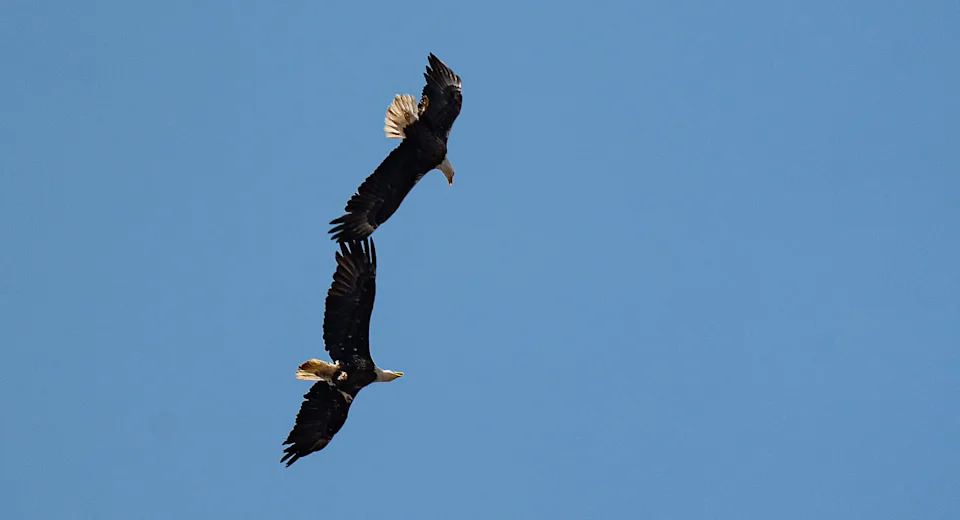
A pair of bald eagles briefly spar in the vicintiy of the SWFl Eagle Cam nest on Monday, March 2, 2026. F23, the female bald eagle has not been seen at the nest since Friday.The identity of these two eagles is unknown.
Hundreds of millions of birds are expected to fly across the United States Thursday night, according to the website birdcast.org.
Maps from birdcast.org show most of the activity ranging from Florida west to Texas and then north through the Midwest and then to Canada.
Some 250 million migratory birds are expected to fly on the night on April 23, according to birdinfo.
Many species of birds have both migratory and year-round populations, so part of the population will travel north for the summer while others will stay in Southwest Florida.
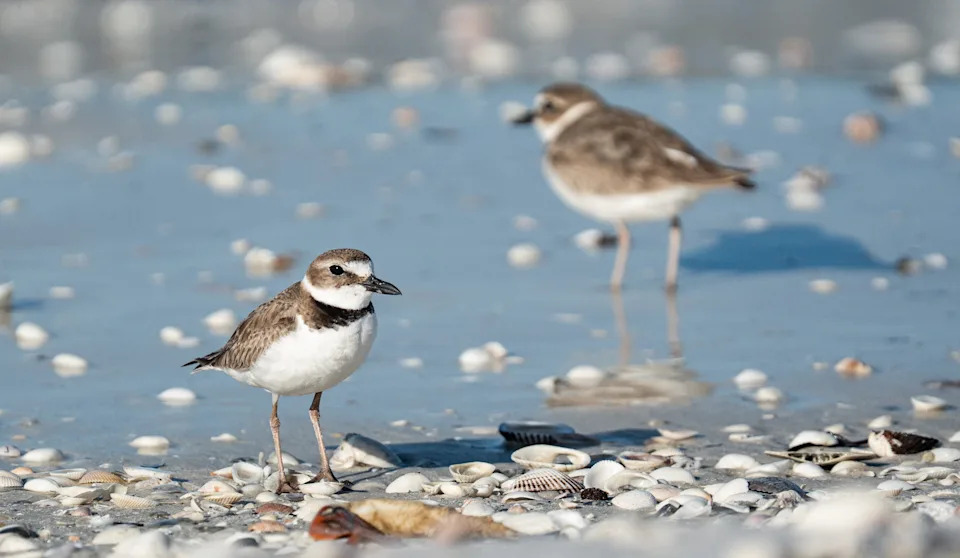
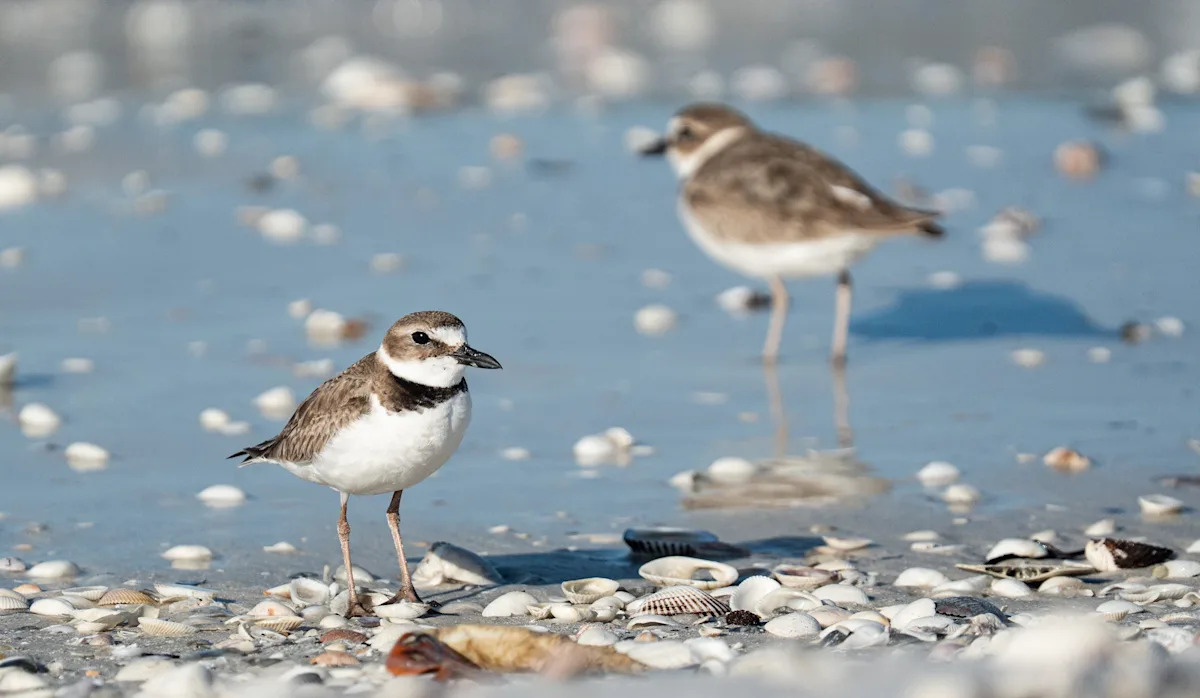
Wilson’s Plovers hang out on Dickman’s Island in Collier County on Wednesday, March 11, 2026. Dickman’s Island is in the Ten Thousand Islands National Wildlife Sanctuary. It is coming up on nesting season for shorebirds including the Wilson’s plovers and Audubon Florida is asking visitors to be aware of the small birds that nest on SWFL beaches. Parts of the island was getting staked out to create undisturbed room for the nesting birds
Keith Laakkonen, director of Corkscrew Swamp Sanctuary and an avid birder, said movement this week has been impacted by strong winds from the north.
The National Weather Service recorded a gust of 36 miles per hour April 21 at Southwest Florida International Airport.
“Things are a bit slow this week due to northerly winds (but) then they move to eastern,” Laakkonen said. “North winds really deter birds from leaving Cuba and the Caribbean since they would have to fly into a headwind.”
For birders, spring is a real treat because so many species are passing through the area.
But it can be difficult, at times, to see the birds because they fly at night, offshore and well overhead.
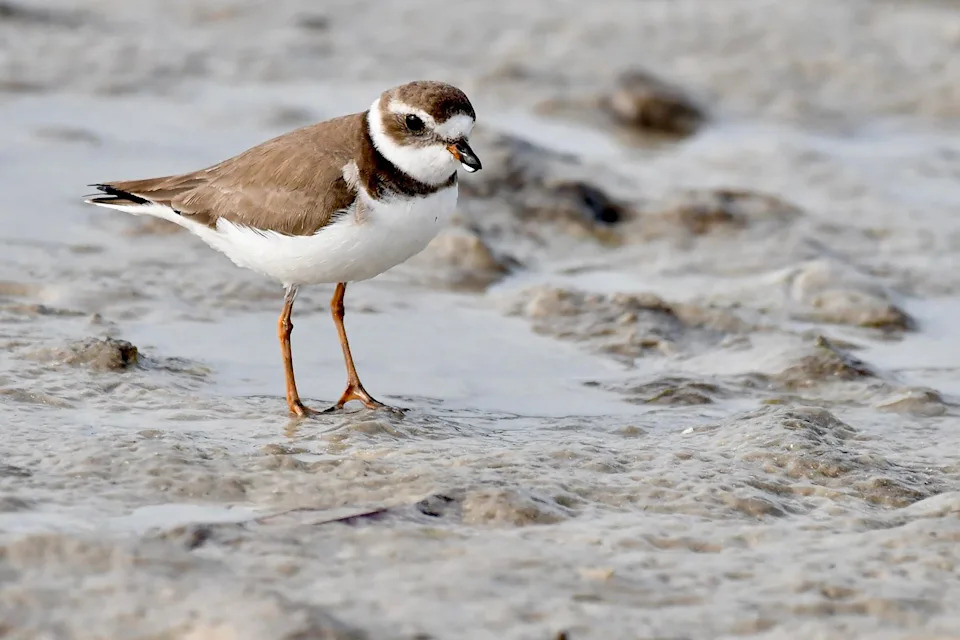
Semipalmated plover; taken at Tigertail Beach, Marco Island.
Migratory birds will rest in certain conditions
“While easterly winds would not be as much of an issue, except it pushes the birds offshore, fewer will land in Southwest Florida,” Laakkonen said. “Southerly and westerly or just light winds would be better for birders looking to see some new migrants.”
There is another way to get a sense of how many birds are passing through the area on a given day.
“You can actually see them on radar at night from the Key West radar, seeing birds leaving Cuba,” Laakkonen said.
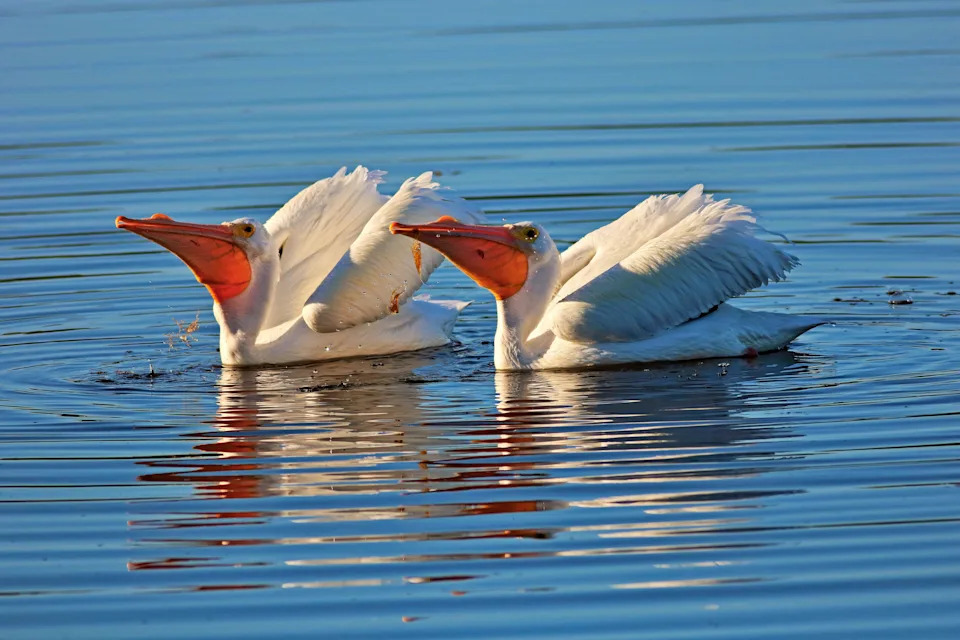
A pair of American white pelicans frolic in the water at Ding Darling Wildlife Refuge. Taken with a Canon Rebel T6i at f/5.6, ISO=250 and 1/1600 sec.
The peak of the spring migration will take place over the next several weeks as the birds move to feeding and breeding grounds to the north.
“They will occasionally wait if the winds are too bad,” Hatten said. “It can also help them to use less energy.”
So, where can the public see these beautiful winged creatures?
“They will rest in areas of good foraging, so depending on the species that could be shoreline, mudflats, prairies and woodlands area,” Hatten said. “But likely people would see them all over, including their back yards.”
The flocks this time of year can be so massive that they show up on weather radar.
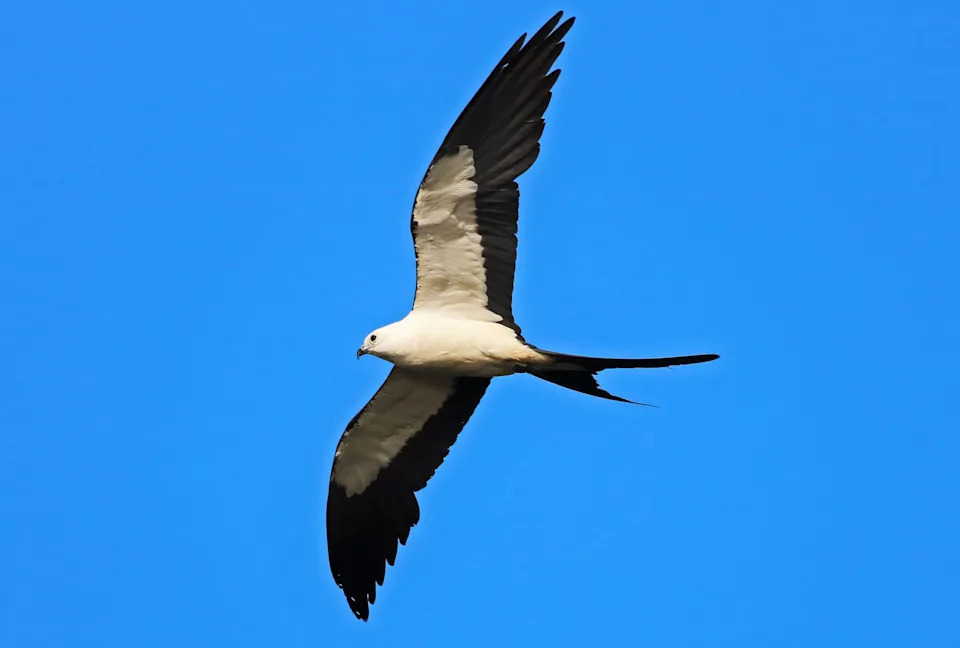
A swallow-tailed kite high above the Sanibel Causeway. Taken with a Canon Rebel T6i at f/5.6, ISO=250 and 1/1600 sec.
Christianne Pearce, a meteorologist with the National Weather Service, said she sometimes notices flocks while viewing NWS radar systems.
“Sometimes you can see (the birds) on our radar,” she said. “When the birds leave their nest, it looks kind of like a ripple in the water. It starts in a small circle and they’re leaving from one particular location. you see it in the morning if it’s a big enough.”
More: ‘The people’s commissioner’ for two decades – Donna Fiala dies at 88
And: Marco Island longtime resident, politician, Erik Brechnitz dies at 87
Also: On dead, another arrest after U.S. 41 crash near Port of Everglades
Chad Gillis is an environment reporter and can be reached by email at cgillis@news-press.com.
This article originally appeared on Marco Eagle: Peak spring migration: Millions of birds visiting Southwest Florida