
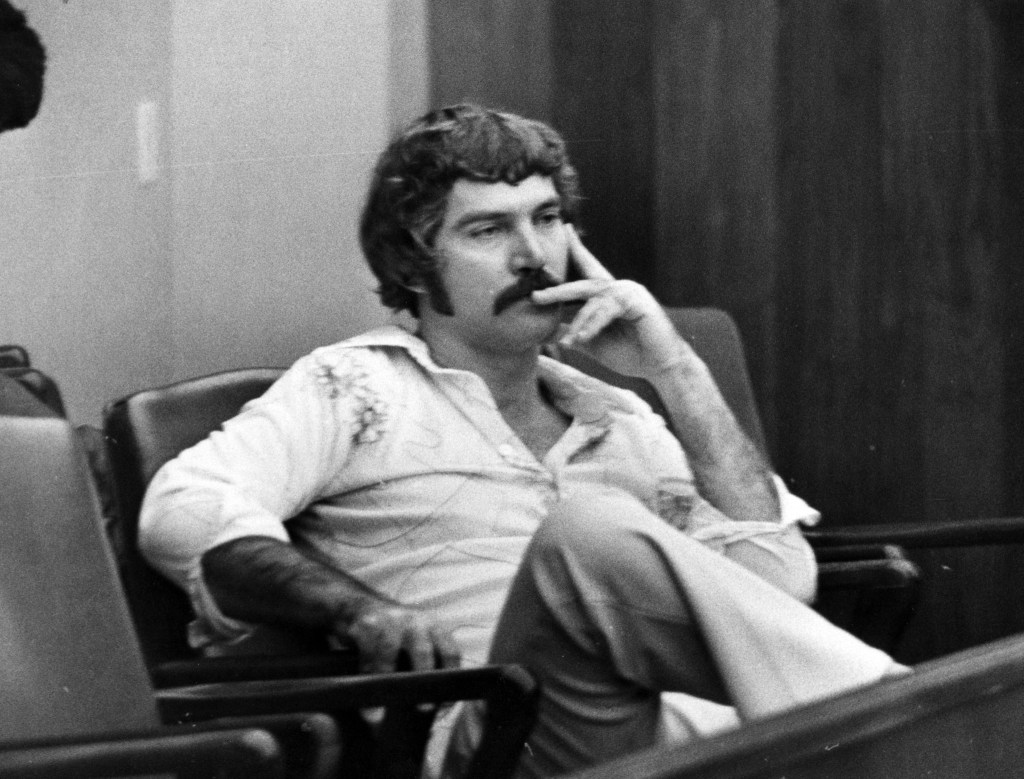
James Franklin Rose has been waiting a lifetime to be put to death.
Last week, Florida Gov. Ron DeSantis signed the warrant authorizing the May 21 execution of Richard Knight, 47, who was convicted of the 2000 murder of Odessia Stephens and her 4-year-old daughter Hanessia Mullings in Broward County. On Friday, a formal request for a stay of execution was submitted for Knight over the crime that took place in 2000.
The one Rose committed took place 24 years earlier.
In 1976, Rose kidnapped and murdered Lisa Berry, an 8-year-old girl from Hollywood. Berry was taken from a Fort Lauderdale bowling alley, killed and dumped in a Davie canal. Broward Circuit Judge M. Daniel Futch Jr. sentenced Rose to death for the crime in 1977, less than a year after the murder. What followed was a series of appeals and reversals that kept Rose on (and off) death row for nearly 50 years.
Today Rose remains incarcerated at the Union Correctional Institution in Raiford. His sentence was most recently affirmed in 1998. But he stands as South Florida’s longest-serving death row inmate, second only to William Zeigler, who was convicted of murder and sentenced in Duval County in July 1976. The judge who sentenced Zeigler, Maurice M. Paul, died in 2016 at age 84.
Futch, who sentenced Rose, died in 2009.
“I don’t think a lengthy prison term on death row defeats the purpose of the death penalty,” said former Broward prosecutor Tony Loe, who prosecuted Knight and is now in private practice. “It’s frustrating that it takes so long for a sentence of death to be carried out, but it’s also important that we make sure we are making the correct decision.”
For Rose, the time for reasonable doubt has long passed. His conviction and sentence have survived multiple challenges.
According to court records, Rose met up with his former girlfriend, Barbara Berry, about 9 p.m. on Oct. 22, 1976, at the Brunswick Lauderdale Lanes, a bowling alley on South State Road 7, where she worked as a barmaid.
Berry’s 8-year old daughter was with her, and she accompanied Rose to the snack bar area of the bowling alley.
It was the last time Lisa Berry was seen alive.
Rose’s white van was later seen behind a Pantry Pride store, near the bowling alley. The victim’s green sweater and pink pants were found behind the same store the next afternoon. Her blouse was in Rose’s van. Her body was found in a canal 10 miles away, four days after she was last seen.
He was convicted and sentenced to death in 1977, but the Florida Supreme Court granted him a new sentencing hearing in 1982. A year later, he was again sentenced to death. He was scheduled to die on Sept. 3, 1986, but the state Supreme Court granted him a stay. In 1992, the court ordered another sentencing hearing after he argued he had received ineffective counsel. Another jury again sentenced him to death in 1998 but no execution date has been set.
Most recently, Rose was represented by noted defense lawyer Richard Rosenbaum, a leading expert on death penalty cases. Rosenbaum passed away last month, and court records do not show the appointment of a successor in Rose’s case.
Florida executed a record 19 death row inmates in 2025, and so far in 2026 has executed five more. A sixth execution is scheduled for Tuesday; James Ernest Hitchcock, 69, was convicted in the 1976 rape and murder of his step-niece in her bedroom in Orange County.
Two years ago the state made it easier for judges to sentence convicted killers to death, with a majority of eight out of 12 jurors needed to forward the recommendation. Before that, jury recommendations had to be unanimous, a requirement that allowed a single dissenting juror to spare the life of a convict and condemn him to life in prison.
Floridians for Alternatives to the Death Penalty criticized what it called the state’s inconsistent application of capital punishment.
“Florida’s unique execution selection process puts sole discretion in the hands of the Governor and affords him full and complete secrecy in the selection process,” FADP stated in a release. “This authority has no checks and balances, no one to oversee the reasons behind the selection process. No one to ensure that as long as Florida continues to have a death penalty, it should at least be administered with transparency, reliability, and basic human decency.”
Rafael Olmeda can be reached at rolmeda@sunsentinel.com or 954-356-4457. Follow him on Twitter (X) @OlmedaNews.