
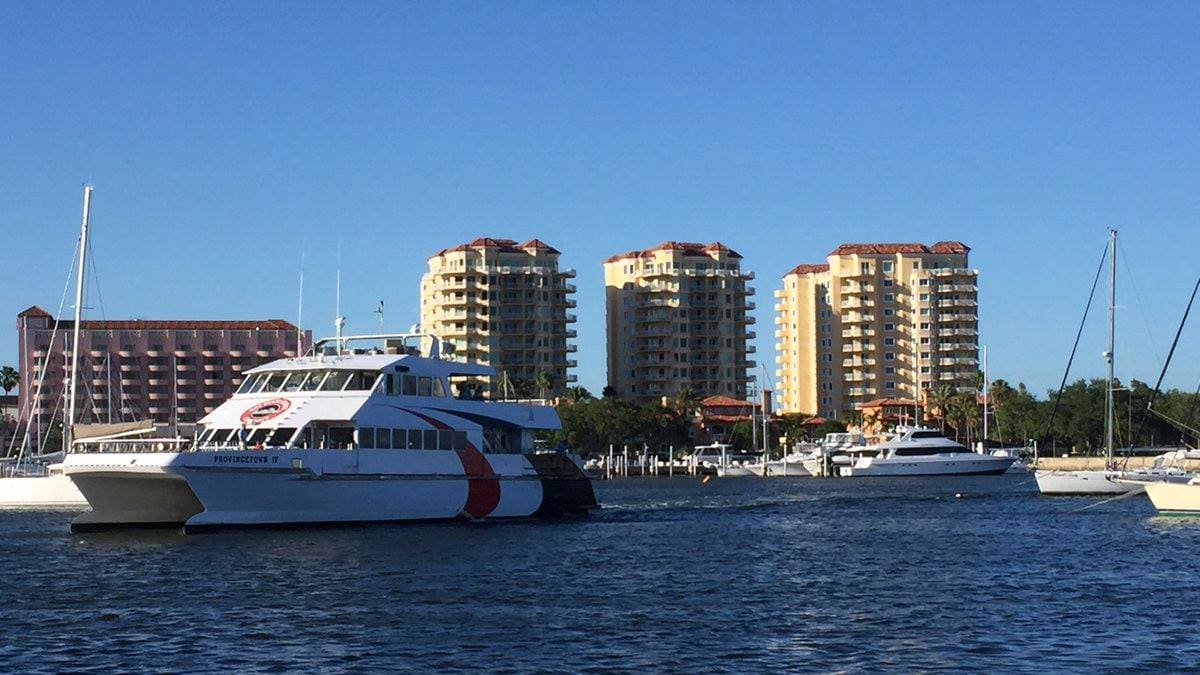
The Pinellas Suncoast Transit Authority (PSTA) is moving forward with a plan to relaunch cross-bay ferry service with expanded capacity, daily operations and a fixed Tampa dock location — marking a significant step toward restoring water transit between Tampa and St. Petersburg.
The PSTA announced Monday that the future Tampa Bay Ferry will operate with two vessels — a shift from the single-boat model used by the former Cross-Bay Ferry, which shut down last year, allowing for seven-day-a-week service and improved reliability.
The PSTA’s Board is expected to vote this week on whether to move forward with purchasing and renovating two out of three vessels available for purchase using a $4.8 million federal grant.
“We’re committed to creating this service the right way, so it’s sustainable for the long term,” PSTA CEO Brad Miller said in a statement. “That’s why everyone should be impressed by the effort of the Hubbard’s Marina team, working with our staff, to maximize taxpayer dollars and get two boats with this one federal grant.”
The agency confirmed that ferries will dock at the east end of the Tampa Convention Center, placing arriving passengers directly in downtown Tampa near the Harbour Island bridge. The prior Cross-Bay Ferry used the same location, though officials said contingency plans will be needed during major events like Gasparilla, when the dock is unavailable.

A St. Petersburg docking location has not yet been finalized and will be announced at a later date.
If approved, PSTA and its operating partner, Hubbard’s Marina, would move into the next phase: inspecting, negotiating and acquiring the vessels, followed by renovations that could include new interiors, engine upgrades and onboard amenities such as a bar offering snacks and beverages.
PSTA is targeting a one-way ticket price of $10, which is less expensive than the former Cross-Bay Ferry, and the service would launch as soon as the vessels are retrofitted, tested, and delivered to Tampa Bay.
Local leaders said the project is a transportation and economic development play.
“This is the kind of forward-thinking investment that helps our region grow responsibly,” Tampa City Council Chair Alan Clendenin said. “A frequent and reliable ferry system strengthens the connection between our cities, supports economic activity on both sides of the Bay, and adds a transportation option that fits the way people want to move around today.”

Council member Lynn Hurtak — who also serves on the board of the Hillsborough Transportation Planning Organization — emphasized that multimodal transportation options help reduce road congestion.
“This ferry service is shaping up to be a win-win for everyone, on both sides of the Bay,” Hurtak said. “We’ll be taking cars off the road, opening up new transportation options for locals and tourists, and activating two great cities in really exciting ways.”
Tampa Convention Center Executive Director David Ingram said the dock location positions downtown as a key gateway for visitors arriving by water.
“Welcoming people into the heart of Downtown Tampa is our specialty,” Ingram said. “By helping connect visitors from across the Bay and around the world, we’ll be supporting businesses and driving economic impact to the Tampa Bay region.”