
A massive landfill in the tiny town of Bushnell is building a new rail line as it prepares to receive thousands of tons of trash from Miami-Dade County per week via rail.The Heart of Florida Landfill has drawn the ire of locals who have complained in the past of noxious odors wafting across their properties miles away, but the latest string of issues is two-fold: hauling trash from across the state and a new leachate disposal well being constructed on the site.’Not for our benefit’Residents who spoke with WESH 2 said they feel Sumter County is quickly becoming the new dumping ground for big-city trash issues.”It’s not for our benefit, not for our welfare,” said Sumter County resident Hoss Hacker.Hacker lives on acreage in Sumterville just a couple of miles from the landfill.”Some locals call it Mount Sumter over there,” he said. “You just think they could do something in their own area to deal with their trash.”Heart of Florida, owned by a company called Waste Connections, entered into a contract with Miami-Dade County back in 2015 to increase capacity there. The contract was recently amended to allow for transfer of waste via to Waste Connections’ Heart of Florida Landfill in Sumter County.Miami-Dade County considers Heart of Florida as “contracted capacity,” along with Waste Connections’ JED Landfill in Osceola County.Construction of a rail spurBut the plan to haul garbage via rail is a new one, and requires the construction of a rail spur at the landfill along County Road 475.Miami-Dade County said it is expecting to begin transporting 4,800 tons of garbage per week via rail to Heart of Florida come this summer.The agreement is until 2035 with two 10-year renewals possible, meaning 250,000 tons of Miami garbage per year could wind up in Sumter County until 2055, with an additional 62,000 tons transported to the landfill via truck.”I don’t see how it couldn’t smell,” said Lake Panasoffkee resident Debra Arcus.Arcus has been working to educate fellow residents living in and around Sumter County about what’s coming.She said she wants to know the protocols that will be in place once the trash begins arriving via rail.”That was one of my questions: do you wash it out immediately or is it going to sit?” Arcus said.” not only disappointed in the fact that it’s coming, but disappointed in the fact that those decisions were made and none of the public had any input into it prior to it taking place.”WESH 2 reached out to Heart of Florida but did not hear back. The landfill has informed county and city officials of its plans.”The City of Bushnell has not taken a formal stance on the landfill’s stated plans to transport municipal solid waste from Miami-Dade County,” said Morgan Wilson, Assistant City Manager for Bushnell.”Under Article I, Section 8 of the United States Constitution, commonly referred to as the Commerce Clause, regulation of interstate commerce is reserved to the federal government. As such, local governments are preempted from regulating or prohibiting activities that fall within that protected interstate framework.”Capacity issue brewing for yearsMiami-Dade, meanwhile, has a capacity issue that’s been brewing for years.In 2023, a waste-to-energy facility called the Resource Recovery Facility (or RRF) in Doral, burned to the ground.The fire knocked out a critical component of Miami-Dade’s solid waste capacity.WESH 2 contacted Miami-Dade County which replied to our questions via email.”Given the scale of Miami Dade’s waste generation and the loss of the RRF, securing reliable, permitted disposal capacity is essential to maintaining uninterrupted waste services for nearly 3 million residents,” said Frank Calderon with the Miami-Dade County Department of Solid Waste Management.Calderon said Miami-Dade generates an estimated five million tons of garbage per year, more than twice the annual average for waste.The county’s two landfills are nearing capacity.”This event significantly reduced local disposal capacity and required the County to shift large volumes of waste to landfills and private partners,” Calderon said. “The County continues to manage waste responsibly while pursuing long term solutions to restore and expand capacity.Currently, Miami-Dade’s plans for how to handle a future waste-to-energy facility are tied up in bureaucracy, with a goal of building a “Sustainable Solid Waste Campus” but no solid place for it selected.”As part of this effort, the County is currently reviewing a joint financial proposal submitted by Florida Power & Light (FPL) and FCC Environmental Services (FCC), with requirements that at least 40 % of the County’s waste be managed through non-combustion methods such as recycling, composting, and reuse,” Calderon said.A problem with overconsumption and wasteMalak Anshassi, an assistant professor in the Department of Environmental Engineering at Florida Polytechnic University, said she believes American society has a problem with overconsumption and waste.”The fact that Miami is one of the most densely populated places in Florida, I don’t think it’s that surprising to expect that one of the best opportunities for them to deal with their waste at this point is to be able to haul it,” she said.Anshassi said need to deal with their garbage, and that transporting it via rail is not unheard of.”There are specific requirements in place where the waste does need to be managed once it’s arriving and starts decomposing, and as it’s decomposing, it produces landfill leachate and landfill gas,” she said.Still, Sumter County residents like Arcus and Hacker believe Miami-Dade shouldn’t be offloading its garbage problem on Sumter’s back for the financial benefit of Waste Connections.According to Miami-Dade County records, the Waste Connections Florida Transfer and Disposal fee paid by Miami-Dade to Waste Connections once rail transport begins will be $72.25 per ton for both rail and truck.”I think the landfill is assuming this region is just going to get used to it and quit complaining,” Arcus said. “We’re not going to get used to it, we’re not going to quit complaining, we’re going to keep pushing the issue.”On Tuesday, WESH 2 will explore the issues and complaints surrounding Heart of Florida’s plans for a leachate disposal well on the site.
BUSHNELL, Fla. —
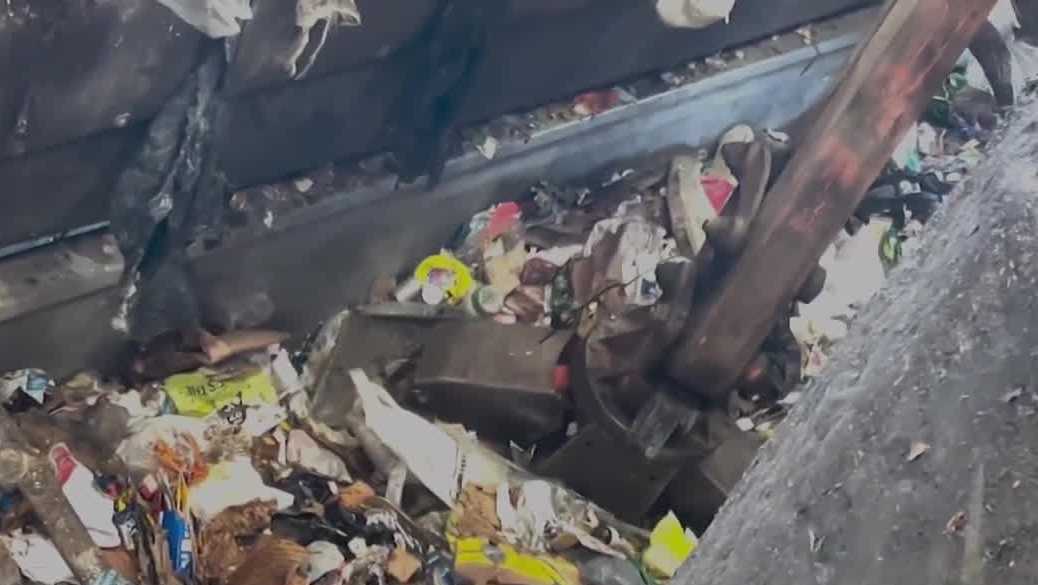
A massive landfill in the tiny town of Bushnell is building a new rail line as it prepares to receive thousands of tons of trash from Miami-Dade County per week via rail.
The Heart of Florida Landfill has drawn the ire of locals who have complained in the past of noxious odors wafting across their properties miles away, but the latest string of issues is two-fold: hauling trash from across the state and a new leachate disposal well being constructed on the site.
‘Not for our benefit’
Residents who spoke with WESH 2 said they feel Sumter County is quickly becoming the new dumping ground for big-city trash issues.
“It’s not for our benefit, not for our welfare,” said Sumter County resident Hoss Hacker.
Hacker lives on acreage in Sumterville just a couple of miles from the landfill.
“Some locals call it Mount Sumter over there,” he said. “You just think they could do something in their own area to deal with their trash.”
Heart of Florida, owned by a company called Waste Connections, entered into a contract with Miami-Dade County back in 2015 to increase capacity there. The contract was recently amended to allow for transfer of waste via to Waste Connections’ Heart of Florida Landfill in Sumter County.
Miami-Dade County considers Heart of Florida as “contracted capacity,” along with Waste Connections’ JED Landfill in Osceola County.
Construction of a rail spur
But the plan to haul garbage via rail is a new one, and requires the construction of a rail spur at the landfill along County Road 475.
Miami-Dade County said it is expecting to begin transporting 4,800 tons of garbage per week via rail to Heart of Florida come this summer.
The agreement is until 2035 with two 10-year renewals possible, meaning 250,000 tons of Miami garbage per year could wind up in Sumter County until 2055, with an additional 62,000 tons transported to the landfill via truck.
“I don’t see how it couldn’t smell,” said Lake Panasoffkee resident Debra Arcus.
Arcus has been working to educate fellow residents living in and around Sumter County about what’s coming.
She said she wants to know the protocols that will be in place once the trash begins arriving via rail.
“That was one of my questions: do you wash it out immediately or is it going to sit?” Arcus said.
“[I’m] not only disappointed in the fact that it’s coming, but disappointed in the fact that those decisions were made and none of the public had any input into it prior to it taking place.”
WESH 2 reached out to Heart of Florida but did not hear back. The landfill has informed county and city officials of its plans.
“The City of Bushnell has not taken a formal stance on the landfill’s stated plans to transport municipal solid waste from Miami-Dade County,” said Morgan Wilson, Assistant City Manager for Bushnell.
“Under Article I, Section 8 of the United States Constitution, commonly referred to as the Commerce Clause, regulation of interstate commerce is reserved to the federal government. As such, local governments are preempted from regulating or prohibiting activities that fall within that protected interstate framework.”
Capacity issue brewing for years
Miami-Dade, meanwhile, has a capacity issue that’s been brewing for years.
In 2023, a waste-to-energy facility called the Resource Recovery Facility (or RRF) in Doral, burned to the ground.
The fire knocked out a critical component of Miami-Dade’s solid waste capacity.
WESH 2 contacted Miami-Dade County which replied to our questions via email.
“Given the scale of Miami Dade’s waste generation and the loss of the RRF, securing reliable, permitted disposal capacity is essential to maintaining uninterrupted waste services for nearly 3 million residents,” said Frank Calderon with the Miami-Dade County Department of Solid Waste Management.
Calderon said Miami-Dade generates an estimated five million tons of garbage per year, more than twice the annual average for waste.
The county’s two landfills are nearing capacity.
“This event significantly reduced local disposal capacity and required the County to shift large volumes of waste to landfills and private partners,” Calderon said. “The County continues to manage waste responsibly while pursuing long term solutions to restore and expand capacity.
Currently, Miami-Dade’s plans for how to handle a future waste-to-energy facility are tied up in bureaucracy, with a goal of building a “Sustainable Solid Waste Campus” but no solid place for it selected.
“As part of this effort, the County is currently reviewing a joint financial proposal submitted by Florida Power & Light (FPL) and FCC Environmental Services (FCC), with requirements that at least 40 % of the County’s waste be managed through non-combustion methods such as recycling, composting, and reuse,” Calderon said.
A problem with overconsumption and waste
Malak Anshassi, an assistant professor in the Department of Environmental Engineering at Florida Polytechnic University, said she believes American society has a problem with overconsumption and waste.
“The fact that Miami is one of the most densely populated places in Florida, I don’t think it’s that surprising to expect that one of the best opportunities for them to deal with their waste at this point is to be able to haul it,” she said.
Anshassi said need to deal with their garbage, and that transporting it via rail is not unheard of.
“There are specific requirements in place where the waste does need to be managed once it’s arriving and starts decomposing, and as it’s decomposing, it produces landfill leachate and landfill gas,” she said.
Still, Sumter County residents like Arcus and Hacker believe Miami-Dade shouldn’t be offloading its garbage problem on Sumter’s back for the financial benefit of Waste Connections.
According to Miami-Dade County records, the Waste Connections Florida Transfer and Disposal fee paid by Miami-Dade to Waste Connections once rail transport begins will be $72.25 per ton for both rail and truck.
“I think the landfill is assuming this region is just going to get used to it and quit complaining,” Arcus said. “We’re not going to get used to it, we’re not going to quit complaining, we’re going to keep pushing the issue.”
On Tuesday, WESH 2 will explore the issues and complaints surrounding Heart of Florida’s plans for a leachate disposal well on the site.