
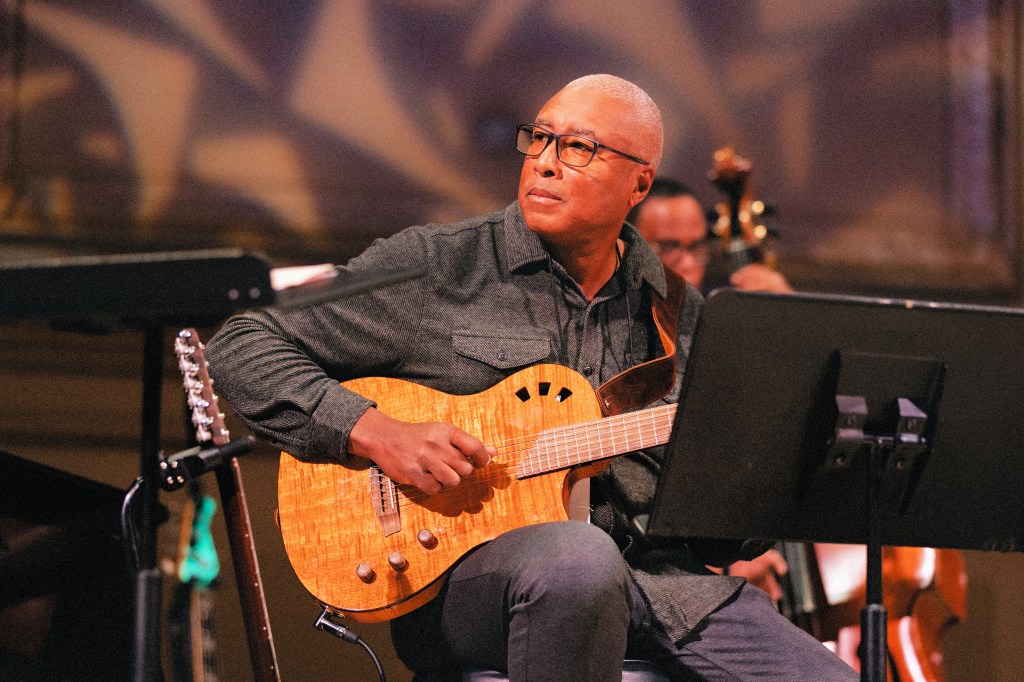
Baseball great Bernie Williams, who took his first swings as a New York Yankees prospect in Broward County 40 years ago, is coming back to play in South Florida — this time with a guitar instead of a bat.
The Latin Grammy-nominated jazz musician will perform with opera star Jonathan Tetelman in a Florida Grand Opera program at Miami’s Arsht Center for the Performing Arts on Wednesday, May 6. The Opera & All-Stars concert, which is scheduled to include salsa icon Willy Chirino, former Miami Dolphin Bryant McKinnie, New York basketball legend Stephon Marbury, ESPN journalist Darren Rovell and other figures from sports and media, is part of FGO’s Voices of Wellness initiative in honor of Mental Health Awareness Month.
Williams made his debut at New York’s Carnegie Hall in January, accompanying Tetelman, the Chilean-American tenor who has performed in leading opera houses around the world, with selections from Giacomo Puccini’s “Tosca” (“E lucevan le stelle”), Mexican composer Agustín Lara’s “Granada,” and other music. Williams also performed originals “Para Don Berna” and “Ritmo de Otoño,” the latter from his 2009 album, “Moving Forward,” which included guest appearances from Bruce Springsteen, Jon Secada and Dave Koz.
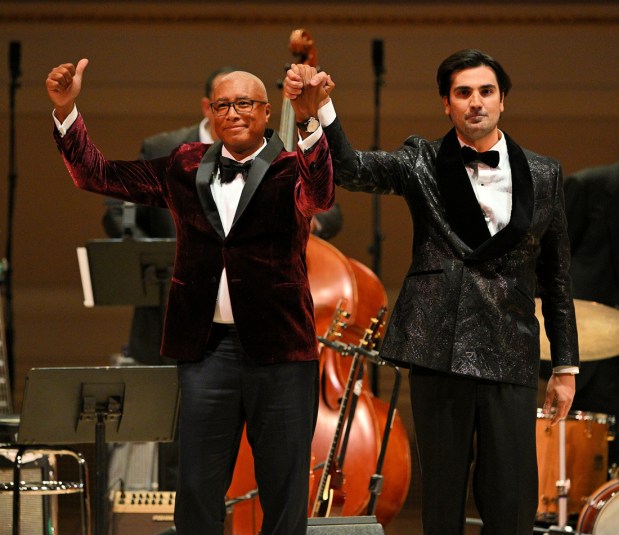 Former baseball star Bernie Williams, left, at Carnegie Hall in New York City with Jonathan Tetelman, the opera star whom Williams calls “a beast.” (Bill Menzel/Courtesy)
The 57-year-old Williams, who won four World Series titles during his time playing on the hallowed grass at the original Yankee Stadium, admits that he was “absolutely” intimidated by Carnegie Hall. Speaking by phone from Dorado in his native Puerto Rico, where he recently resettled to be close to family, Williams reflected on the unique joy he gets from music, the value of the arts, and missing baseball.
FGO concert
Williams’ collaboration with Tetelman at Carnegie Hall — joined by musicians from The Metropolitan Opera, a choir from the Manhattan School of Music and special guests — was a sellout. The concert was created by Adam Unger, a classically trained opera singer, former Yankees draft pick, and the founder of production company All-Star Encore, “where sports, music and culture collide.”
A second edition with Florida Grand Opera made sense for many reasons, Williams said, citing Miami’s cultural influence and South Florida’s nickname as New York’s “sixth borough.”
“Miami seems like, obviously, a good choice, because of my Latin background, my affinity for the music, and my ties to the Florida region, with the Yankees,” Williams said. “And it’s a great combination with [All-Star Encore] and Florida Grand Opera. I think they’re trying to revitalize and make opera music more accessible to people that may not be either into it or relate to it or not even know about it. So I think it’s a great fit.”
The set list is designed with casual arts consumers in mind, he said.
“We’re gonna have the usual suspects, as I’ve been calling them. Some of the greatest arias in the genre, performed flawlessly by Jonathan Tetelman. I mean, he’s a beast, man. He’s a force to be reckoned with, and I am so fortunate to be collaborating with him in this project,” Williams said.
Carnegie Hall vs. Yankee Stadium
Williams has a degree in jazz performance from the prestigious Manhattan School of Music and the Latin Grammy nomination, and he has performed for the unforgiving fans at Yankee Stadium and, even more daring, at Fenway Park, home of the rival Boston Red Sox, where he did a solo-guitar version of “Take Me Out to the Ballgame” for teammate Derek Jeter’s final game in 2014.
None of that prevented the butterflies Williams felt at Carnegie Hall.
“[Yankee Stadium] is the only thing that I can relate it to, that might be similar. It takes a similar amount of work, and you face the same kind of pressure, but at a slower pace. The game of baseball was so fast, and things happen to you in a blink of an eye. With [music], you have an opportunity to set everything up and perform, but at the same time, you don’t go there playing chopsticks,” Williams said, laughing. “It doesn’t matter who you are. I mean, winning four World Series and winning batting titles and Gold Gloves and all that in baseball did not help me.”
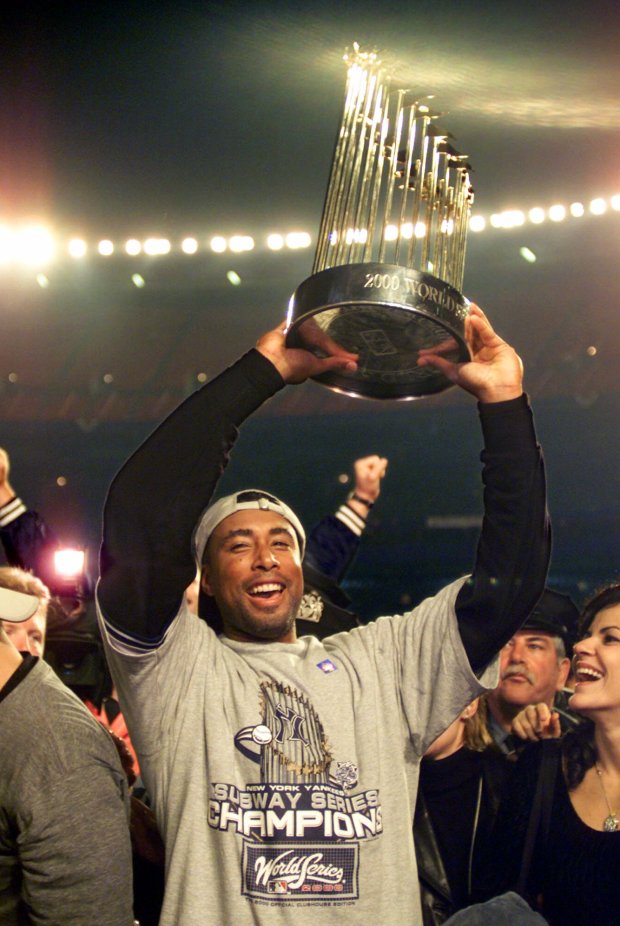 Bernie Williams holds the World Series trophy after the New York Yankees beat the crosstown rival Mets in 2000. (Amy Sancetta/AP file photo)
Memories of South Florida
One of the all-time great New York Yankees — his No. 51 was retired in 2015 — Williams signed with them at age 17 and first came to South Florida from Puerto Rico “right out of high school” in the spring of 1986. At the time, the Yankees held spring training at Fort Lauderdale Stadium, but had its minor-league training fields in Hollywood, where Williams was sent.
“I remember we were fishing at some sort of a merchant marine academy, or something like that. Mr. Steinbrenner had some ties with the shipping industry. It just seemed that was a nice little fit for us. We had a couple of fields that we used to do our training as minor leaguers. Everything else, from the big league standpoint, was in Fort Lauderdale,” he said.
“It was a whole lot of uncertainty, a lot of excitement, not knowing what was going to happen in the future. I was feeling a little intimidated by the people that were ahead of me, trying to make it to the big leagues. There was a sense of competition, a sense of camaraderie, because I established some really good relationships with some other minor leaguers that were from Latin descent, you know, Dominicans, Venezuelans and Puerto Ricans as well. I started really discovering the [attitude] of battling and surviving, in a different culture and a different language. I think all those elements were, I guess, meeting in one place, and it was a really, really interesting time in my life.”
Arts vs. athletics
An interest in drawing and music came first for Williams, who started learning guitar from his father at around age 7. Baseball and track came later. Williams understands that trying to master both athletics and the arts at the same time can be challenging, both for young people and their parents. But he doesn’t believe these interests have to be in conflict with each other.
“It sounds kind of difficult, but as a kid, I was very curious. And I have, for lack of a better way of describing it, just an inquisitive attitude for everything. I had a whole bunch of these sort of essential traits — you know, persistence, discipline, things that I could apply to anything that I would set my mind to do. … And I started making all these connections with life as a musician. The effort of getting a good piece of music together, the amount of work that takes, the determination to kind of stick with it and not give up, give it 100%. The pressure that I felt performing in front of people and how to overcome that. There are a lot of great [lessons] that I was able to get from learning an instrument and being involved with music,” Williams said.
‘It has been a really, really great journey of discovery. And the cool thing about it is, unlike baseball, music never ends.’ — Bernie Williams
“The whole thing about timing, being on time. Also, from the music aspect, timeliness is just an essential part of music. One note at the right time in the right place can tell you so much more than the other 10,000 notes rambling around,” he said. “So I started making all these associations with life and music and then, subsequently, sports. … I still rely on those things for my everyday life. It was not necessarily to choose between one or the other, because to me they were all interrelated.”
Musical role models
When Williams was in high school in Puerto Rico, he studied classical guitarists such as Julian Bream and Eliot Fisk, while secretly indulging his “rebellious” side with the music of Led Zeppelin, Black Sabbath and Van Halen. When he came to the States to play baseball, he discovered blues and jazz.
“I made a little bit of a transition, because I felt really excited about playing electric guitar, playing with a pedal board, and having all this sound. But once I started playing blues and rock, [I thought] maybe there’s something more to it. And then I really started hearing people like George Benson and John Scofield and Pat Metheny and people that had this rocking sound on their guitar, but they have this great jazz vocabulary. Then I started getting into Chick Corea and Dave Weckl and Yellowjackets. … Then I went back to the source, when I started studying the history of jazz, then to the real source of it with the blues, the interconnecting tissue that blends everything together in my mind,” Williams said.
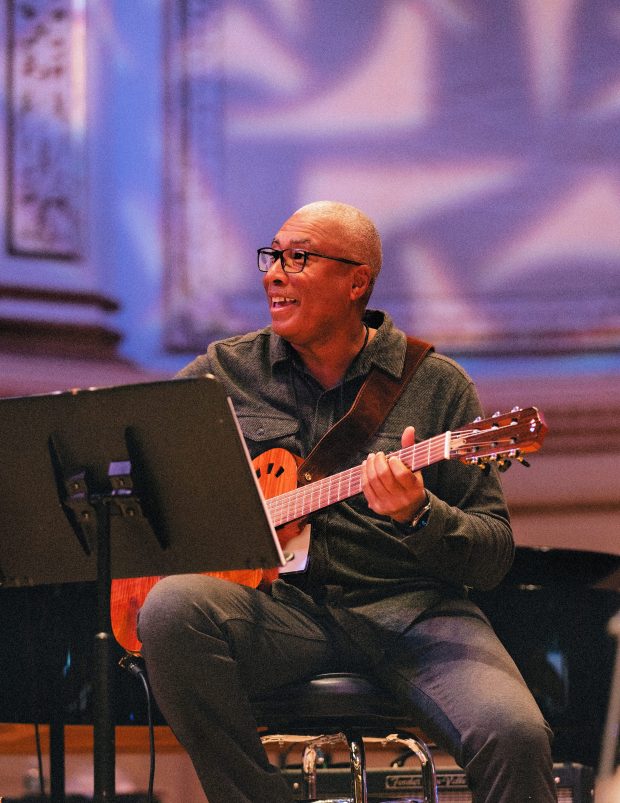 Bernie Williams at rehearsal for his Carnegie Hall debut in January. (Julio Miranda/Courtesy)
“It has been a really, really great journey of discovery. And the cool thing about it is, unlike baseball, music never ends. I mean, there’s so much music, so much to learn. I always feel like, every time I pick up the guitar, I’m learning something new about myself as well as the instrument,” he said. “That’s a more enjoyable journey than it was with, you know, somebody throwing at you 95 mph.”
Baseball role model
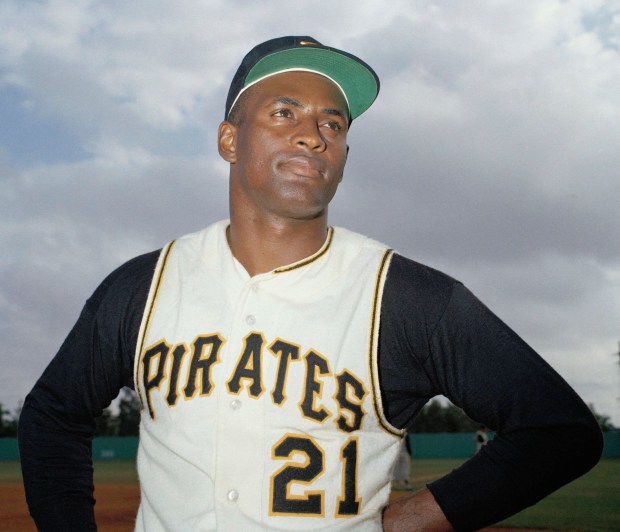
Williams said that if you ask a baseball player from Puerto Rico who their role model is, you’re likely to get the same answer. But it’s “very, very important,” he said, to keep saying his name: Roberto Clemente, the Puerto Rican star who died in a plane crash in 1972 while delivering aid to earthquake victims in Nicaragua.
“Obviously he was a great player and worthy of the Hall of Fame, but it’s what he did with the platform that was given to him, the way that he utilized that platform to better the lives of people in his community. He was so admired for that. And then, the last thing he was doing at his tragic death, doing what he loved to do. He was helping people, yes, and these were people that were not in his own country. I mean, that put him in the rare echelon of not only great baseball players, but great heroes of Puerto Rico. So, in my mind, there was not any other person to emulate more than him.”
AP Photo
Roberto Clemente died in a 1972 plane crash while on an aid mission for Nicaraguan earthquake victims. (AP file photo)
Does he miss baseball?
Williams retired in 2006 with an impressive .297 batting average, and doesn’t rule out being able to get a hit in today’s game. “I might have one good swing left,” he said, laughing.
Yes, he misses the game.
“Every day. It was a great honor. … What I missed the most is those 3 1/2 — back in the day — four hours of pure competition, not knowing what was going to happen in the course of the game. You could be a hero, you could be a joke, you could be everything in between,” he said. “Having that excitement and uncertainty about what’s going to happen, based on your hard work, playing at the highest possible level that you can play in the sport. Competing with people with like minds, you know, and having the psychological and physical competition, confrontation, and earning their respect. I mean, to me, that was what made the game so, so enjoyable and such a blessing for me.”
Florida Grand Opera’s Opera & All-Stars concert will be at 8 p.m. Wednesday, May 6, at the Arsht Center for the Performing Arts, 1300 Biscayne Blvd., Miami. Tickets start at $25 at My.FGO.org.
Staff writer Ben Crandell can be reached at bcrandell@sunsentinel.com. Follow on IG: @BenCrandell.